Oregon Rules for the Road Down to the Sand
It's a familiar scenario for many Oregon off-road enthusiasts: you've loaded up your ATV or UTV, driven for hours, and finally arrived near your favorite dunes or trail system. But then you hit a paved road, or a gravel county road, wondering if you can legally ride your machine the last mile or two to the staging area or directly onto the sand. This guide is here to unravel the complexities of Oregon's road rules for ATVs and UTVs, specifically addressing how to navigate those crucial stretches that connect you to the open-throttle fun.
Understanding Oregon's ATV Classification for Road Use
Before you even think about putting a tire on pavement, it's absolutely crucial to understand how Oregon classifies your off-highway vehicle (OHV). This isn't just bureaucratic red tape; it directly impacts what roads you might be allowed to ride and what equipment your machine needs. Oregon doesn't treat all ATVs and UTVs equally, especially when it comes to road access.
The Four Classes and Their Road Implications
Oregon groups OHVs into four distinct classes, and their definitions are key. Your standard quad is usually a Class I, which is designed for a straddle seat and handlebars, typically under 50 inches wide. Then you have Class II, which are those beefier machines like Jeeps, dune buggies, and even some custom-built rigs that are designed for off-road but might have more street-legal potential. Class III covers off-road motorcycles, like dirt bikes. Finally, Class IV encompasses side-by-sides (UTVs), which are often more than 50 inches wide and have a steering wheel and bucket or bench seats, similar to a car. You can dive deeper into [Oregon's Four ATV Classes Explained] to get the full rundown.
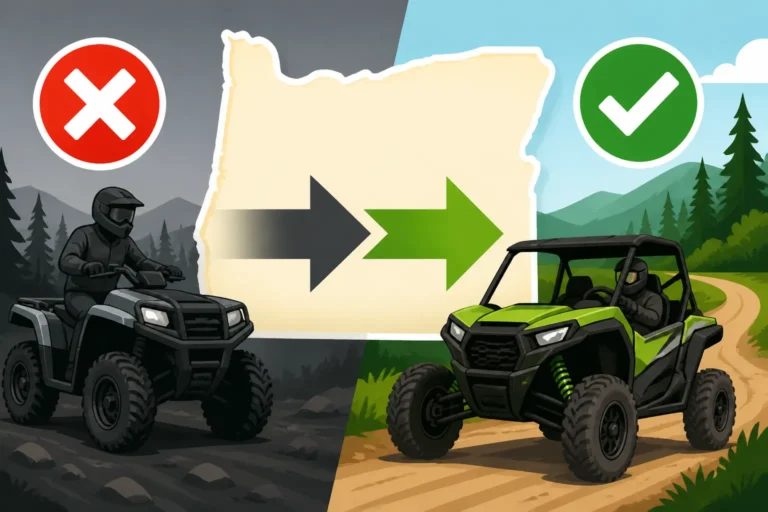
The distinction matters because, in Oregon, Class I, Class III, and most Class IV machines are generally not considered street-legal in the traditional sense. They are built for dirt, sand, and trails. Trying to ride your typical sport quad or side-by-side down a public highway is usually a no-go, and can land you a hefty fine. However, Class II machines have a specific pathway to becoming street-legal, which means they can traverse public roads like any other vehicle, provided they meet all the necessary requirements. This is a common point of confusion for many riders, especially those who come from states with more lenient road-legal ATV laws.
The "Street Legal" Myth for Most ATVs and UTVs
When people ask, "Are ATVs Street Legal in Oregon?", the short answer for most quads and side-by-sides is "not really." For your typical Class I ATV, such as a Polaris Scrambler or a Honda TRX450R, or a Class IV side-by-side like a Can-Am Maverick or a John Deere Gator, you simply cannot title and register it for general street use like a car or motorcycle. The Oregon Department of Motor Vehicles (DMV) does not register these vehicles for highway use, period. This can be incredibly frustrating when you're just trying to get from your campsite to the trailhead, or to the nearest gas station.
So, for the vast majority of riders, thinking about how to ride down the sand isn't about making your machine street-legal in the broad sense. It's about understanding the specific, limited exceptions and designated routes Oregon does allow, and what you need to do to legally use those. If you've spent good money on aftermarket accessories, maybe even from a reputable brand like SuperATV, to enhance your machine's off-road performance, you might still need to invest in a few specific items to comply with the road-use rules, even on those limited access points.
Navigating Designated Highway Access Routes and Specific Road Types
Oregon understands that off-road vehicles sometimes need to cross or briefly use public roads to access riding areas. That's why they've created specific allowances and designated routes. However, these are not blanket permissions to ride anywhere. Riders need to be extremely diligent about knowing where they can and cannot go.
Oregon's Only Two Designated ATV Routes
Oregon has established specific "Highway Access Routes" where OHVs can legally operate on certain public roads. As of now, there are only two such routes in the entire state: Lakeside and Sumpter. Yes, just two. These routes are designed to connect OHV users to nearby riding opportunities, allowing them to ride short distances through towns or on specific roads. You can find detailed information about [Oregon's Only Two Designated ATV Routes: Lakeside and Sumpter].
If you're heading to the Oregon Dunes National Recreation Area, specifically the popular riding spots around the Umpqua National Forest or Lakeside, you might encounter the designated route there. This allows riders to travel on specific town roads, usually marked, to get to the staging areas or directly to the sand. Similarly, the route in Sumpter provides access for riders in that eastern Oregon area. It's not about making your machine fully street-legal; it's about following a very specific, approved path. Outside of these two very limited routes, assume public paved roads are off-limits unless specifically signed otherwise. This means no casual rides to the grocery store or cruising main street, unless your machine is a street-legal Class II.
Rules for Forest Roads, County Roads, and Crossing Highways
Beyond the two designated routes, the rules get a bit more nuanced. Many riding areas in Oregon are accessed via unpaved forest service roads or gravel county roads. Generally, you can ride ATVs and UTVs on unpaved roads maintained by the U.S. Forest Service or Bureau of Land Management (BLM), unless they are specifically closed to OHV use. This is where maps and local signage become your best friend. A road might look open on a map, but a temporary closure sign due to logging, fire danger, or wildlife protection will always take precedence. The same goes for gravel county roads; some counties allow OHV use on their unpaved roads, while others do not. You absolutely must check local ordinances. Don't assume.
When it comes to crossing a highway, Oregon allows ATVs and UTVs (including Class I and Class IV machines) to cross a paved highway at a right angle, provided it's done safely and quickly. This means stopping at the edge of the pavement, checking for traffic in both directions, and crossing directly across to another legal off-road area or a continuation of a forest or county road. It's a quick dash, not a cruise. You are not allowed to ride along the highway. This is a critical distinction and often misunderstood. [Oregon Rules for Crossing a State Highway] provides more context on this.
| Road Type | Allowed for Most ATVs/UTVs (Class I, III, IV)? | Special Conditions/Notes |
|---|---|---|
| Designated OHV Routes | Yes | Only Lakeside & Sumpter. Must have permit & required equipment. |
| Unpaved Forest Roads | Yes | Unless posted closed. Check maps & current conditions. Must have permit & required equipment. |
| Unpaved County Roads | Varies by County | Check local county ordinances. Must have permit & required equipment. |
| Paved State Highways | No | Except for direct, perpendicular crossing. Absolutely no riding along the highway. |
| Paved City Streets | No | Except for designated routes in Lakeside/Sumpter. |
| Private Roads | Yes | Only with owner's permission. No permit required if solely on private land. |
Essential Equipment and Rider Requirements for Road Sections
So, you've found a legal road section or a designated route to get to the sand. Great! But simply being on a permissible road isn't enough. Your machine and you, the rider, need to meet specific requirements to be legal and, more importantly, safe.
Machine Requirements for Road Use
Even for brief road use or on designated routes, your ATV or UTV needs certain equipment. This isn't just about legality; it's about visibility and safety in an environment where you might be sharing space with full-sized vehicles.
- Oregon ATV Operating Permit: Absolutely non-negotiable for riding on any public land or designated route in Oregon. This permit, which displays a decal on your machine, shows you're legal to ride. You can learn more about [Oregon's ATV Operating Permit].
- Headlights and Taillights: If you're riding at night, or even in low visibility conditions like coastal fog, your machine needs operational headlights and taillights. Many off-road machines come with these, but make sure they're working correctly. Consider adding brighter LED lights or auxiliary lights from a brand like SuperATV if your stock lights are dim, especially if you anticipate riding near dusk or dawn.
- Brakes: This might seem obvious, but your brakes need to be in good working order. You'll be interacting with traffic, even if briefly, and you need to be able to stop reliably.
- Muffler and Spark Arrester: All OHVs operating on public land in Oregon, including designated routes, must have an approved spark arrester and meet specific sound limits. This is a big deal, especially if you have an aftermarket exhaust. Rangers do check this.
- Safety Flag/Whip: Especially crucial for the dunes! If you're heading down to the sand, you'll need a safety flag or whip attached to your machine, typically at least eight feet from the ground. This ensures you're visible over the rises and dips of the dunes. Check [Oregon Dune Flags and Whips] for specifics.
- Mirrors: While not explicitly required for Class I, III, or IV OHVs on designated routes, mirrors are always a good idea for road sections, providing better situational awareness. For Class II machines attempting full street legality, mirrors are mandatory.
Rider Requirements and Safety Gear
Just as important as your machine's setup is your own preparedness. Oregon has strict rules for riders, particularly concerning safety gear and age.
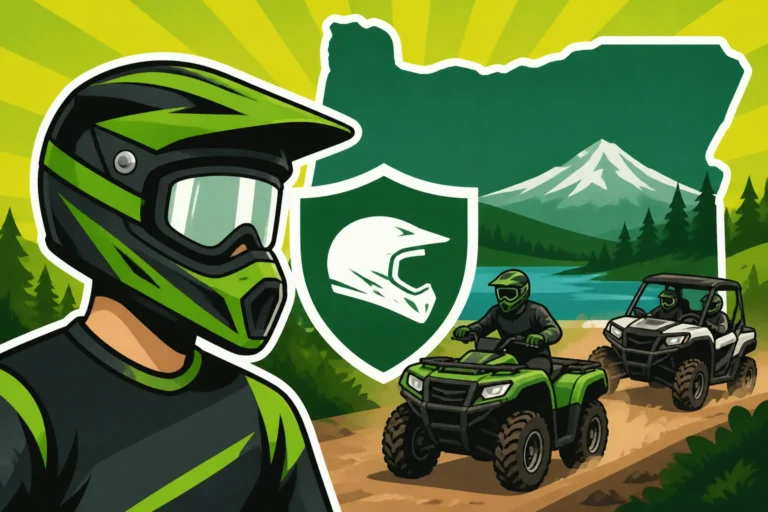
- Helmet Law: This is a big one. Anyone riding an ATV or UTV in Oregon, regardless of age, must wear a DOT-approved helmet. There are no exceptions for adults on ATVs, though certain Class IV UTVs with factory-installed roll cages and seatbelts might allow adults to go without a helmet if they are belted in. However, for anyone under 18, a helmet is always required, even in a side-by-side with a roll cage. It's always safest to wear one, regardless. [Helmet Rules for Oregon Riders] details these requirements.
- Safety Education Card: Most riders need an Oregon ATV Safety Education Card. There are specific age and machine class rules, but generally, if you're riding an OHV on public land, you'll need one. Even experienced adult riders who have been doing this for decades are typically required to complete the free online course.
- Driver's License: While a specific "ATV license" isn't generally required for off-road use, if you're riding on a designated route or any public road where permitted (e.g., a street-legal Class II machine), you must possess a valid driver's license. For Class IV UTVs, the operator needs a valid driver's license if they are 16 or older.
Common Mistakes and How to Avoid Them on Oregon Roads
Riding off-road is fantastic, but trying to merge that fun with public road use in Oregon can be a minefield of potential violations and safety risks if you're not careful. Avoiding common pitfalls will save you headaches, fines, and potentially even accidents.
Assuming All Gravel Roads Are Fair Game
One of the biggest misconceptions riders have is that any unpaved or gravel road is open to OHVs. This is simply not true in Oregon. While many Forest Service and BLM roads are open, county roads have their own rules. A county might decide to open certain gravel roads to OHVs, but this is a specific ordinance, not a default. Just because you see tire tracks doesn't mean it's legal. Always check with the local county sheriff's office or the land management agency (Forest Service, BLM) for the specific area you plan to ride. A quick phone call or check of their website before you head out can prevent a costly ticket. You wouldn't want to get pulled over on a logging road that's temporarily closed, or on a county road that prohibits OHVs, especially after investing in protective gear or aftermarket parts from SuperATV to make your machine trail-ready.
Ignoring the "Designated Route Only" Mentality
Many riders from other states are accustomed to more liberal road-riding laws for their ATVs and UTVs. They might see "street-legal UTV" kits advertised and think they can just bolt on some turn signals and a horn and be good to go on any Oregon road. This is a dangerous assumption. Outside of the two specific Highway Access Routes in Lakeside and Sumpter, and the very limited rules for crossing a highway or riding some unpaved public roads, your Class I, III, or most Class IV machines are not allowed on public paved roads. There is no simple "Oregon Street Legal UTV Requirements" checklist that allows you to drive your side-by-side around town like a car. The focus must be on accessing the designated off-road areas, not on general road travel.
Neglecting the Oregon ATV Operating Permit and Safety Card
It seems so basic, but it's a mistake we see all too often. Riders, especially those visiting from out-of-state, sometimes assume their home state registration or permit is sufficient. Oregon has its own system. If you're going to ride on public land here, you need an Oregon ATV Operating Permit. Period. The same goes for the Oregon ATV Safety Education Card. While Oregon does have reciprocity with certain states for safety cards, it's always best to be sure. Trying to ride your side-by-side down to the sand without the proper permit decal visible or without having your safety card handy can quickly turn a fun day into a frustrating interaction with a ranger or local law enforcement. Always ensure your permit is current and properly displayed, and keep your safety card with you.
Disclaimer
This article is for general informational purposes only and does not constitute professional advice. Laws, prices and regulations vary by location and change over time. Consult a qualified professional for guidance on your specific situation.