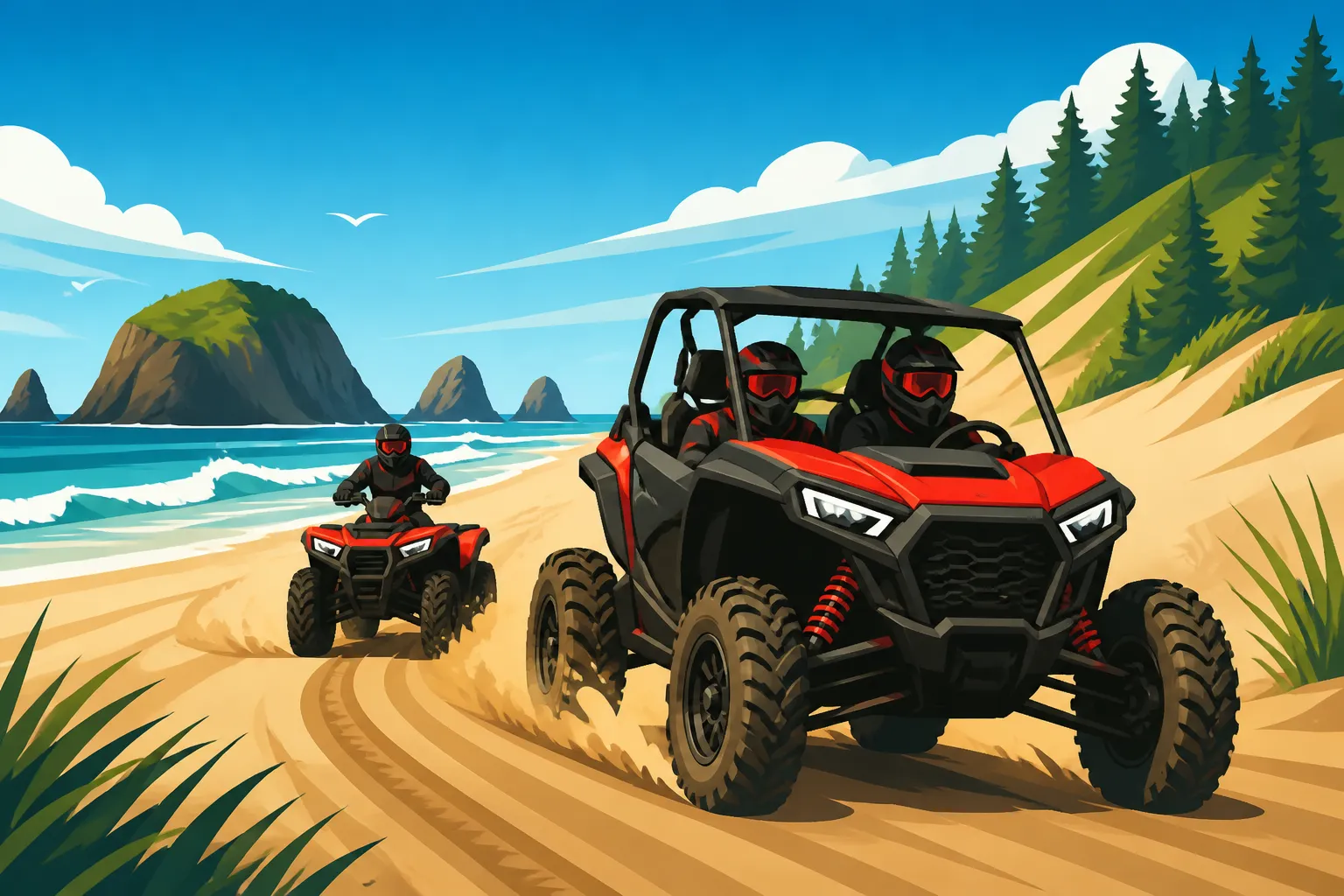
Umpqua Beach Two and Three
Umpqua Beach Two and Three offer access to a distinctive stretch of Oregon’s coastal dunes, but first-time visitors can find the staging-area names, beach conditions, and route boundaries confusing. This guide explains how to plan a ride, choose between the two access points, prepare for sand and changing visibility, and check the rules and closures that can affect your day.
Understanding Umpqua Beach Two and Three
Where the two access areas fit
Umpqua Beach Two and Umpqua Beach Three are riding access areas in the southern part of the Oregon Dunes National Recreation Area, near Winchester Bay and Reedsport. They put riders in the Umpqua Dunes landscape, where open sand, dune features, and coastal conditions can make a day feel very different from a forest-trail ride. The two names are easy to mix up, especially when you are looking at a map on a small phone screen or trying to follow a group convoy.
Treat them as separate access points, not interchangeable labels for one guaranteed route. Your best starting point depends on where you are coming from, what access is open, and which staging area suits your group and vehicle. Before leaving home, check the land manager’s current map and any posted notices. A familiar route from a previous trip may not be the right choice on a later visit if closures, habitat protections, or access conditions have changed.
The wider landscape is part of [The Oregon Dunes National Recreation Area], a long coastal riding destination with different staging areas and management details. Umpqua Beach Two and Three are not the only places to ride in the region, and a visit here should not be planned as though every dune or stretch of beach is open to vehicles. Know the boundaries for your chosen access before unloading.
What makes the riding experience different
Expect a sand-focused outing rather than a marked trail network where every turn is clearly defined. Dune terrain can change with wind, weather, and traffic, and a line that looked straightforward from a distance may hide a steeper face or a soft pocket. That uncertainty is part of the appeal for experienced riders, but it can be stressful for beginners and families if everyone heads out without agreeing on a route or regrouping plan.
Coastal weather also shapes the ride. Fog can reduce contrast, while wind may move sand across tracks and make familiar features harder to recognize. Even on a bright day, the combination of glare and pale sand can make it difficult to judge a dune’s slope. Keep your riding within open, designated areas, give other vehicles room, and avoid assuming that a visible track is an authorized route.
If you are comparing this area with other coastal options, [Oregon Dune Riding Areas Compared] can help frame the differences among riding locations. For a broader sense of how access points sit along the coast, [Oregon Dunes Staging Areas From North to South] is another useful planning topic. Use those comparisons to narrow your choices, then confirm the details for Umpqua Beach Two or Three with current official information.
Choosing an access point and planning your day
How to decide between Two and Three
Start with practical questions: Which staging area is open? Where will your group be coming from? What vehicle are you bringing? Are you meeting another party, carrying a trailer, or riding with someone who has never driven on sand? These questions matter more than trying to pick the access point that sounds most exciting. A smooth arrival and a clear plan can make the whole day feel easier.
If your group has mixed experience, choose the access point that gives you the simplest way to prepare, communicate, and regroup. Agree in advance on a meeting spot, a turnaround time, and what to do if someone becomes separated. Keep the first outing conservative. A short ride with a successful return is more enjoyable than a long exploratory loop that leaves a new rider anxious, tired, or short on fuel.
| Planning question | Why it matters | What to do |
|---|---|---|
| Is the access open? | Closures can affect staging and riding areas | Check current official notices before departing |
| Where is the correct entrance? | Nearby roads and access points can be easy to confuse | Confirm the site on an official map and watch for signs |
| Who is in the group? | Experience and vehicle type affect pace and route choices | Set a conservative route and regroup plan |
| What are conditions like? | Fog, wind, tides, and soft sand can change the day | Review local conditions and adjust expectations |
| What does the visit require? | Permits, safety credentials, and site fees are separate considerations | Check requirements for your machine, rider, and destination |
Navigation apps can help with general orientation, but do not treat an app track as permission to ride a route. Some riders use onX Offroad as a planning aid to review terrain and keep a location reference available. Check the map details before the trip, download any useful information for offline use if the app supports it, and still follow the signs and official maps at the site. A phone battery can fail, and an app cannot tell you that a route has just been closed.
Allow time for arrival and setup
A rushed arrival makes it easier to overlook details: checking straps, securing loose gear, confirming that every rider understands the plan, or finding the correct staging area. Give yourself time to park and unload without blocking other visitors. Keep tow vehicles and trailers in appropriate spaces, and do not assume that an open patch of sand or roadside shoulder is suitable parking. Follow posted directions and avoid blocking access for emergency or maintenance vehicles.
Before riding, do a short group check. Confirm that each vehicle is mechanically ready, that riders have the required equipment, and that everyone knows how to reach the meeting point. If the group includes children or less experienced drivers, explain the basic rules in plain language: stay within the designated area, keep a safe following distance, stop where others can see you, and do not cross the path of a moving vehicle to get someone’s attention.
Consider carrying a printed or downloaded map in addition to a phone. [Oregon Trail Maps Worth Carrying] is a helpful topic to review if you are deciding what backup information to bring. You can also use onX Offroad as one layer of your planning, but confirm boundaries and closures through official sources. A navigation display is most useful when everyone understands that it supports decision-making rather than replacing signs, local rules, or good judgment.
Preparing for sand, beach conditions, and visibility
Sand and vehicle handling
Soft sand asks more of both the driver and the machine than a hard-packed trail. A vehicle may lose momentum unexpectedly, especially when climbing or turning on a soft slope. Avoid abrupt steering and heavy throttle changes. If you are new to dunes, practice in an open, manageable area before attempting steeper terrain. Let an experienced rider demonstrate appropriate technique at a safe distance rather than following close behind and trying to copy their line immediately.
Tire pressure is one subject riders often discuss when preparing for coastal sand. The right setup depends on the vehicle, tire, load, terrain, and manufacturer guidance; there is no single setting that works safely for every machine. Make adjustments only within suitable recommendations for your vehicle and equipment. Do not use a pressure change as a substitute for knowing how to recover safely or choosing a route that matches your skill level.
Bring recovery gear suited to your machine, and make sure someone in the group knows how to use it. A tow strap should be used carefully, with clear communication and no one standing in a dangerous position near tensioned equipment. If a vehicle is stuck, stop the rest of the group at a safe distance, assess the situation, and avoid several people attempting different recovery methods at once. [Soft Sand and Tire Pressure on the Coast] provides a related topic to consider before your trip.
Beach access, tides, and changing visibility
If your ride plan includes the beach, check the area’s rules and conditions before entering. Beach access is not an invitation to ride anywhere along the shoreline, and restrictions may protect wildlife or limit vehicle travel in particular sections. Stay out of marked closures, keep clear of sensitive habitat, and do not assume that a route shown in an older trip report remains open. [Riding the Southwestern Edge of the Umpqua Dunes] and [Tides and Beach Riding] are relevant topics for understanding why shoreline riding needs extra planning.
Tides deserve attention because the usable beach can become narrower, and the surface can vary between firmer and softer sand. Do not ride close to the water simply because the sand appears smooth. Salt water, waves, and wet sand can create hazards for both people and equipment, and the safe route may change with conditions. If you are unsure about the beach, stay in designated riding areas away from the waterline and follow any posted direction.
Fog and glare can make it harder to judge distance, see other riders, and recognize changes in terrain. Slow down when visibility drops, leave more room between vehicles, and agree that anyone can call for a stop if they are uncomfortable. A tall, visible flag is an important part of dune riding where required; check the applicable rules and make sure the flag is securely fitted and easy for others to see. For more preparation, review [Fog and Visibility on the Dunes] and [Oregon Dune Flags and Whips].
Rules, permits, and site requirements
Check machine and rider requirements before travel
Oregon OHV requirements can depend on the machine’s class, where it is operated, the rider’s age, and whether the vehicle or rider qualifies for an exemption. Do not assume that owning a machine or having used it elsewhere automatically covers a ride at Umpqua Beach Two or Three. Before loading up, check the current permit and reciprocity requirements that apply to your vehicle. [Oregon ATV Permit Reciprocity List] is a useful starting point for visitors, while [Oregon ATV Permit Decal Placement] can help owners confirm where a decal belongs.
Rider education requirements matter, too. Check what safety card or other credential is required for each rider and machine type, including for young riders. A parent’s card or an adult’s experience does not necessarily satisfy another rider’s obligation. Review [Oregon ATV Safety Card Requirements] ahead of time so that a missing credential does not derail a weekend that took weeks to organize.
Also remember that a vehicle permit and a recreation-site fee are not the same thing. Depending on the location and the services or access involved, separate site fees or passes may apply. Check [Oregon Day Use Fees Explained] and the current information for the exact staging area you plan to use. Keep any needed documents accessible, rather than buried in luggage or left in the tow vehicle.
Closures, boundaries, and responsible riding
Rules can vary across land ownership and management boundaries. A route may pass near areas managed for different purposes, and one map layer may not show every temporary restriction. Check official notices before the trip and again when you arrive. Pay attention to signs at the staging area and on the route; if a sign conflicts with what an app or an old map appears to show, do not ride past the sign while trying to resolve the discrepancy.
Seasonal wildlife protections and other closures can affect where riding is allowed. Avoid riding around barriers or crossing into a closed area to reach a preferred dune. These restrictions help protect habitat and can also keep riders away from hazardous or unstable terrain. If the route you planned is closed, change the plan rather than trying to find an unofficial shortcut.
Responsible riding helps preserve access for everyone. Keep noise and speed under control near staging areas, give pedestrians and parked vehicles ample space, and do not leave litter or damaged equipment behind. When riders respect boundaries and share the area thoughtfully, they help reduce conflict with other visitors and support continued recreational access.
A smoother ride for beginners and returning visitors
Build a simple route and regroup plan
A good first ride does not need to cover a large area. Pick a manageable destination within open terrain, explain the route to everyone, and set a visible regroup point. If someone in the group is unsure about a steep feature, let them pass rather than pressuring them to follow. Agree on a turnaround time before anyone gets tired or the light begins to change.
For a larger group, designate a lead and a sweep rider who stays behind the last vehicle. Keep spacing generous, particularly where visibility is limited. Stop only in places where other riders can see you and safely pass. If someone needs help, signal the group clearly and move out of active travel lines before discussing the problem.
A map-based app such as onX Offroad may help a group discuss general orientation before setting out, especially when riders are unfamiliar with the area. Share the plan in plain language too: “We will regroup at the marked staging access” is more useful than assuming everyone can interpret the same screen. Make sure riders know that they can turn back without being left behind or criticized.
Pack for an exposed coastal ride
Conditions on the coast can feel different from the weather at home or in town. Bring layers, eye protection, water, food, and basic first-aid supplies. Keep phones and important documents protected from sand and moisture. A simple dry bag can make a meaningful difference when windblown sand and coastal dampness get into pockets or vehicle storage.
Before departure, check fuel and the machine’s basic condition. Look over tires, brakes, lights, and any safety equipment required for your setup. Carry tools and recovery equipment appropriate to the machine, but do not attempt repairs beyond your ability in an exposed or unsafe location. Tell someone who is not riding with you where you plan to go and when you expect to return.
Finally, leave room in the plan for a change of conditions. Fog, wind, fatigue, a closure, or a mechanical issue can all shorten a ride. Returning early is not a failed outing; it is often the sensible choice that keeps a fun day from turning into a risky one. With a clear plan, realistic expectations, and respect for posted restrictions, Umpqua Beach Two and Three can be an enjoyable way to explore Oregon’s coastal dunes.
Disclaimer
This article is for general informational purposes only and does not constitute professional advice. Laws, prices and regulations vary by location and change over time. Consult a qualified professional for guidance on your specific situation.