Tillamook Forest an Hour From Portland
A ride in the Tillamook State Forest can feel wonderfully close to Portland, until traffic, a confusing forest-road junction, or a closure sign changes the plan. This guide explains how to choose an OHV area, prepare your machine and paperwork, navigate responsibly, and make a day trip work without assuming every road or trail is open to ATVs.
Planning a Tillamook State Forest ride from Portland
Choose an OHV area before you leave
The Tillamook State Forest is a broad working forest, not one single, clearly bounded riding park. OHV areas and trail networks are spread across the Coast Range, and the route from Portland can involve winding roads and changing conditions. Browns Camp is a familiar starting point for many riders, while Trask, Jordan Creek, and Nestucca are other names you may see when researching riding options.
Those areas are not interchangeable. A family looking for a straightforward first outing may want a different network from experienced riders hoping to spend the day exploring varied terrain. The right choice also depends on your machine, the routes open for it, and whether your group wants a short ride or a full day on the trails. Read [Oregon's Tillamook State Forest Trails] and [Oregon OHV Areas Near Portland] before settling on a destination.
Make your choice using current maps and land-manager information, rather than a general pin or an old trip report. A trail shown on a saved map may have changed status, and a forest road that looks like a convenient connector may not be open to your machine. If a map app such as onX Offroad helps you compare access points and keep track of your position, treat it as a navigation aid—not proof that a route is currently open or legal.
Allow extra time for the drive and the approach
The title promise of an hour from Portland is best treated as an approximate idea of proximity, not a guaranteed door-to-trail travel time. Your starting point, traffic, weather, and the exact riding area all affect the trip. After leaving the main highway, expect forest roads to take longer than they look on a map. A short distance can involve turns, narrow stretches, and slower driving than you would experience on an urban commute.
Before setting out, identify the correct staging area and save its location. Download maps or other navigation information for offline use if you expect weak cell service. Let someone at home know where you plan to ride and when you expect to check in. Those small steps are especially helpful if your group gets separated, a route is closed, or a machine needs attention.
Avoid choosing a destination based only on a search result or an old social-media post. Check the latest trail and access notices, then confirm that your chosen staging area is reachable. For a wider look at options closer to the city, [Oregon Riding Areas Near Portland] can help you compare possible outings.
Prepare your machine, permits, and gear
Check the paperwork before the weekend
Paperwork is easier to sort out at home than at a staging area. Before you leave, confirm that your machine’s Oregon OHV permit requirements are met and that you understand the rules that apply to its class. Oregon’s permit system distinguishes among machine types, so do not assume that the same requirements apply to every quad, motorcycle, side-by-side, or other off-highway vehicle. [Oregon ATV Permits Explained] is a useful starting point if you need to identify the permit basics.
Rider education requirements can depend on the machine class and the rider’s age or circumstances. Check the applicable rules before the trip, particularly if you are bringing a young rider or borrowing a machine. The overview at [Oregon's ATV Safety Education Card] can help you work out what to verify.
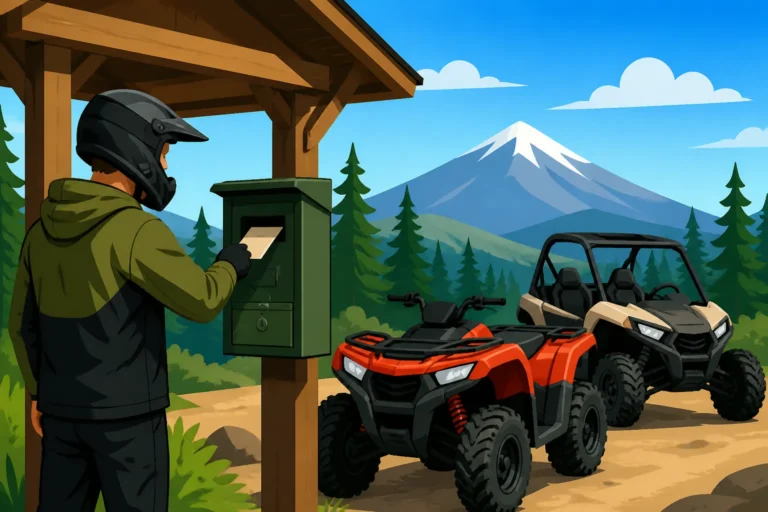
Inspect the permit decal and make sure it is attached where it can be seen and read. A decal hidden by equipment, covered in mud, or peeling away can create an avoidable problem. Review [Oregon ATV Permit Decal Placement] ahead of time, and pack any documents you may need in a protected place. A phone screenshot can be handy, but do not rely on a charged phone as your only plan for navigation or essential trip information.
Do a practical pre-ride inspection
A forest ride puts more strain on a machine than a quick trip around the yard. Check tires, brakes, throttle, steering, lights, and visible fasteners. Look for fresh leaks, damaged guards, and anything loose that could become a problem after a few miles. For a side-by-side, check seat belts and the condition of the passenger area. For a quad, make sure each rider has the right protective equipment and knows how the machine handles.
Bring basic items for the conditions and the length of your planned ride: water, food, weather-appropriate layers, first-aid supplies, and a way to handle common mechanical issues. Carry tools that match your machine rather than a bulky kit you do not know how to use. A small repair can be manageable when you have the right equipment; the same problem can end a day when the group has no way to address it.
Oregon’s equipment rules matter, too. Check the requirements for spark arresters and sound before heading out, especially if the machine has an aftermarket exhaust. [Oregon Spark Arrester and Sound Rules] explains why those checks are part of responsible preparation. A machine that is too loud or does not meet applicable requirements can create trouble for you and affect other forest users.
| Planning item | What to check before leaving Portland | Why it matters |
|---|---|---|
| Riding area | Confirm the specific OHV area and its access points | The forest is large, and not every entrance leads to your intended trail network |
| Trail status | Review current closures and restrictions | Conditions and access can change |
| Machine | Confirm its class, permit needs, and equipment condition | Requirements and suitable routes vary by machine |
| Rider readiness | Check age-related education rules, gear, and experience | A route that suits one rider may be too challenging for another |
| Navigation | Save maps and staging locations for offline use | Cell service may be unreliable |
| Day plan | Set a turnaround time and check-in plan | Helps the group avoid rushing or riding back in poor conditions |
Ride the trail network, not assumptions
Use trail signs and current maps together
At the trailhead, take a few minutes to look over posted notices and the maps available on site. Match what you see on the ground with the route you planned. Pay attention to vehicle restrictions, directional rules, difficulty indicators, and closure signs. If an intersection does not match your map, pause and reassess instead of guessing which branch is correct.
A digital map can make it easier to see your position and understand nearby routes, particularly when multiple forest roads and trails appear similar. onX Offroad can be useful for planning and orientation, but map details are not a substitute for signs or current land-manager updates. Save relevant maps before leaving an area with reliable service, and carry a backup plan in case your phone battery runs down or the device is damaged.
Do not assume that a forest road is an OHV trail just because it is wide, unpaved, or already marked on your navigation app. Public access, vehicle access, and permission to ride an ATV are not always the same thing. Stay on routes open to your machine and respect gates, signs, and temporary closures. [Oregon Trail Closures to Check First] is worth reviewing before you go.
Choose routes that suit the least experienced rider
A group’s pace is usually set by the rider who needs the most time—not the one with the most powerful machine. If someone is new to off-road riding, start with routes that match their comfort and skill. Talk through basic trail etiquette before setting off: leave room between machines, stop where others can see you, and make sure everyone knows what to do if the group becomes separated.
Riders should be honest about fatigue and changing conditions. A muddy or rough section can feel manageable early in the day and much less enjoyable after hours of riding. If a route is beyond someone’s ability, turning around is a sound decision, not a failed outing. For help matching a route to a newer rider, see [Oregon Trails for a Beginner].
Keep an eye out for hikers, cyclists, other OHV riders, and people working in the forest. This is a shared landscape, and it is also a working forest. Slow down near staging areas and intersections, give other users room, and avoid kicking up unnecessary dust around people. If a logging truck or other work vehicle is present, give it space and follow posted directions. A little patience is much better than forcing a close pass on a narrow road.
Make the day trip comfortable and flexible
Build a realistic schedule
For a Portland day trip, the ride itself is only part of the day. You still need time to drive to the staging area, unload, check the machines, review the map, and get everyone organized. Leave room for a slower return drive, too. Trying to squeeze in one last loop near dusk can turn a relaxed outing into a stressful one, especially if the group is tired or unfamiliar with the route back.
Choose a turnaround time before you start. That gives the group a clear point to head back even if the day is going well. If you are riding with children, newer riders, or people who have never visited the forest, plan a shorter first outing and keep extra time for breaks. A good first visit often ends with everyone wanting to come back, rather than with the group racing to load up before dark.
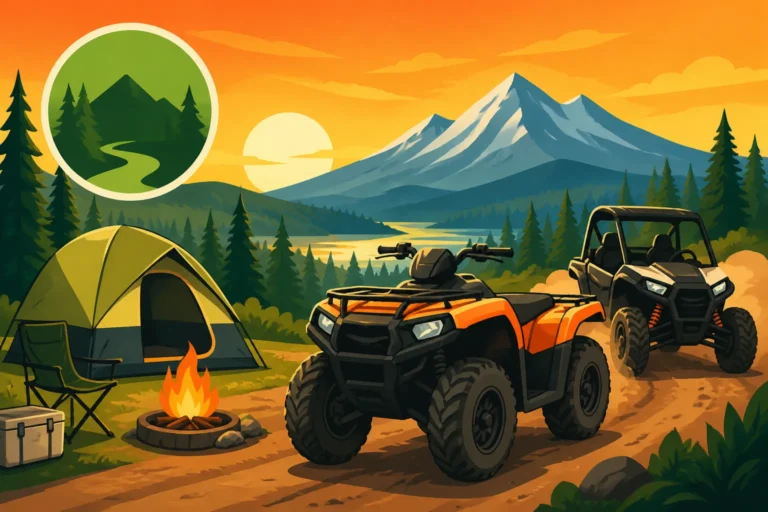
If you intend to stay overnight, research the specific campground and its access rules rather than assuming every riding area has the same facilities. Check whether reservations or fees apply and whether the campground suits your trailer and vehicle. [Oregon OHV Camping With Hookups] may help if electrical connections are important to your trip.
Have a backup plan for closures or changing conditions
A closure, rough weather, or a full staging area can disrupt a carefully planned ride. Decide in advance what your group will do if the destination is unavailable. That could mean switching to another suitable riding area, shortening the outing, or turning the trip into a forest visit without riding. Avoid improvising by following an unfamiliar road just because it appears to head toward another trail.
Conditions can differ across the Coast Range, and a route that was comfortable on a previous visit may not feel the same after rain or other changes. Check notices close to departure, and pay attention to conditions when you arrive. If a trail is posted closed or looks unsafe, do not ride around the barrier. [Tillamook Forest an Hour From Portland] is a useful topic to revisit when planning a future trip, but the details of a particular day should always be confirmed before you go.
The forest is close enough to Portland to make a day ride appealing, but it still rewards thoughtful planning. Pick a specific OHV area, verify access and trail status, prepare the machine and paperwork, and let the group’s ability set the pace. With a realistic schedule and a willingness to change plans, the drive can lead to a much more relaxed day on the trails.
Disclaimer
This article is for general informational purposes only and does not constitute professional advice. Laws, prices and regulations vary by location and change over time. Consult a qualified professional for guidance on your specific situation.