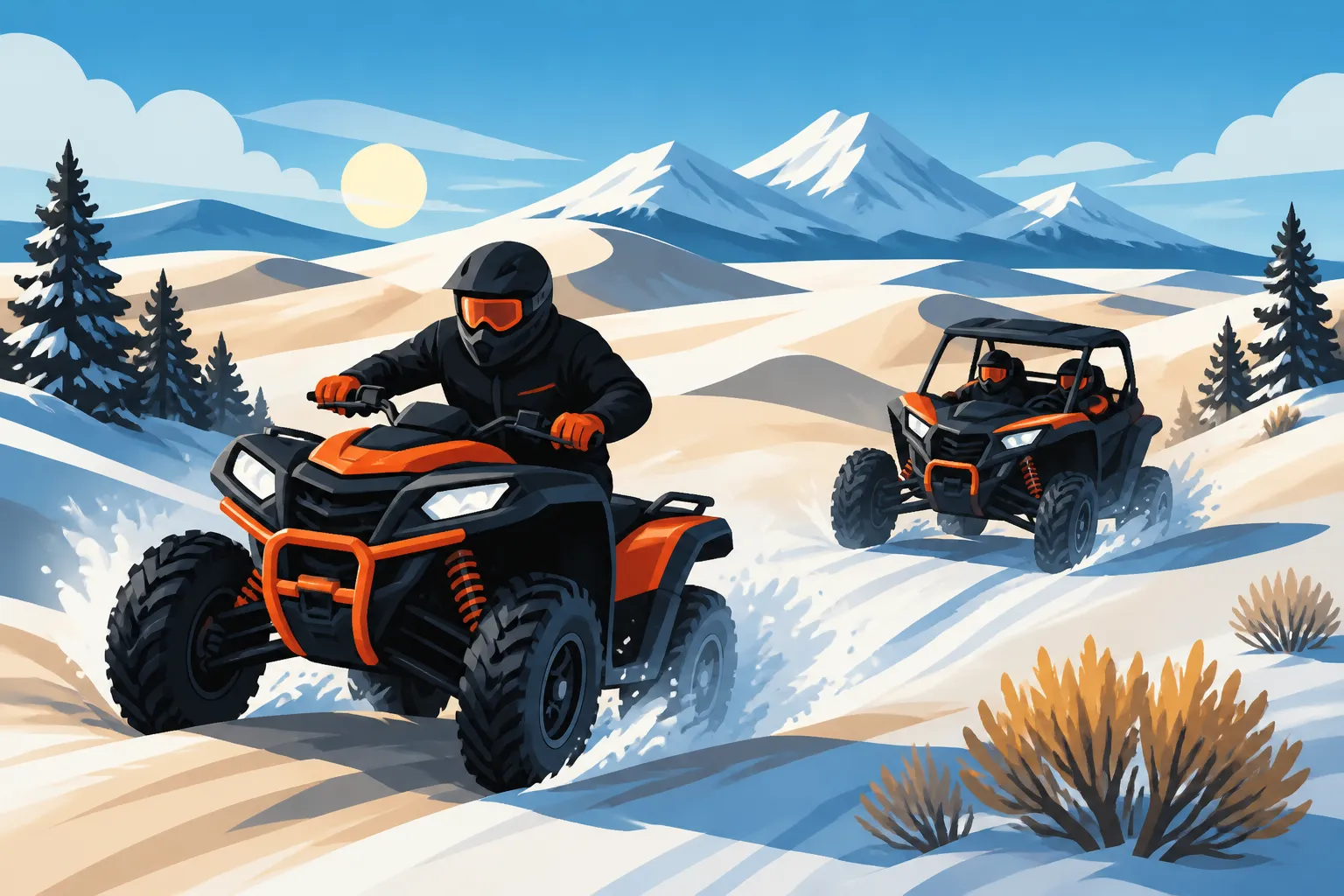
Christmas Valley Dunes in an Oregon Winter
Winter riding at Christmas Valley Dunes can mean quiet open sand, crisp high-desert mornings, and a very different day from a summer trip. It can also mean frozen ground, sudden weather changes, and fewer nearby services. This guide explains how to plan a safer winter visit, read the conditions, prepare your machine, and avoid assuming that a familiar route is open.
What winter riding at Christmas Valley Dunes is really like
A high-desert ride, not a coastal dune weekend
Christmas Valley Dunes sit in Lake County, in Oregon’s high-desert interior. That setting shapes the winter experience: conditions can be cold and exposed, and weather may change the feel of the sand and approach roads quickly. A sunny forecast does not necessarily mean a warm ride, especially when you are moving through open terrain with little shelter from wind.
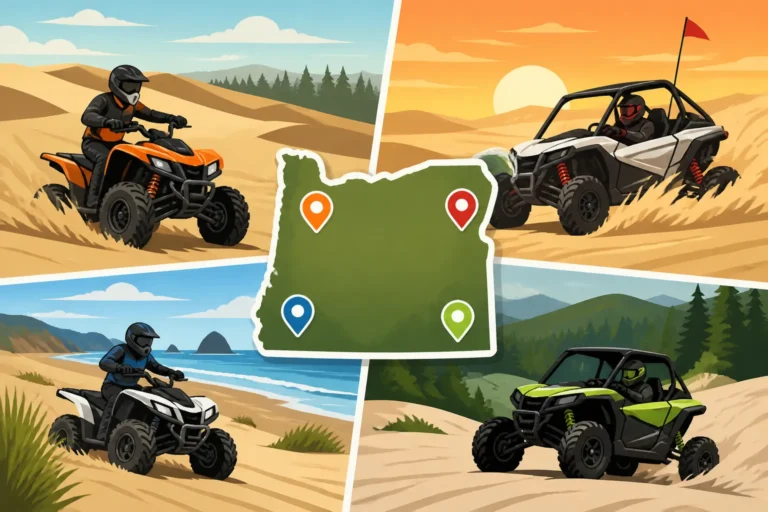
The dunes are also different from the Oregon Coast. Coastal sand, fog, salt air, and beach access bring their own concerns; inland dunes are more about temperature swings, dry ground, winter precipitation, and remote travel. If you have only ridden near Florence or Winchester Bay, do not assume the same preparation will suit Christmas Valley. [Inland Dunes Versus Coastal Dunes] offers a useful way to think about those contrasts.
A winter day can be wonderfully peaceful, but quiet conditions are not a guarantee of easy conditions. There may be fewer riders around to notice a problem, and cold weather can make a minor delay feel much longer. Plan to be self-sufficient rather than counting on another group to lend a tow strap, tools, or a warm ride back.
How to set expectations before you leave
Treat the dunes as an outdoor recreation area where conditions and access need checking before each trip. A trail or staging point that worked on your last visit may be affected by weather, maintenance, land-management decisions, or a temporary closure. Look for current information from the responsible land manager and check notices close to departure, not only when you first start planning.
It also helps to build flexibility into your day. If the access road is muddy, icy, or otherwise unsuitable, the sensible choice may be to change plans rather than push a truck and trailer into a difficult situation. If the riding surface is harder or slicker than expected, slow down and choose conservative lines instead of trying to ride at your usual pace.
Winter is a good time to plan around daylight, not just the number of hours you hope to ride. A late start can leave less time to deal with a stuck machine, a puncture, or a navigation mistake before dark. For a seasonal perspective across the state, see [Oregon Riding Seasons by Area].
Check access, routes, and the riding surface
Confirm current closures and access details
Before towing out, verify that the area you intend to use is open and that your planned access route is suitable for your vehicle and trailer. Check road and recreation notices from the relevant land manager, and pay attention to signs at the site. A line on a digital map is not permission to ride, and a route that appears continuous may end at a gate, a closure, or land you are not authorized to cross.
This matters especially in winter, when storms can affect roads and recreation areas with little notice. Do not rely on an old screenshot, a saved route, or a report from a different season as proof that access is still available. [Oregon Trail Closures to Check First] is a helpful reminder to make closure checks part of trip planning rather than an afterthought.
If you use a navigation app such as onX Offroad, download the information you need before leaving reliable service. Offline maps can help you understand your location and retrace a route when a phone has no signal. Still, treat the app as a navigation aid, not an official access ruling: posted signs and current land-manager guidance take priority.
Read the sand and choose your lines cautiously
Winter weather can change how a route feels under your tires. Moisture may firm some sand, while freezing and thawing can create uneven, slippery, or deceptively soft patches. Conditions can vary across a short distance, so do not assume a passable section means the next slope or basin will behave the same way.
Start with a conservative pace and assess the surface as you go. Keep enough distance from other riders to avoid sudden stops in dust or spray, and give yourself room to respond if a machine loses traction. On unfamiliar terrain, take a moment to look for a safe line rather than committing to a steep face or a narrow section simply because it appears rideable from a distance.
Avoid riding around a closure, cutting across fragile ground, or making a new route where none is designated. Those shortcuts can damage the area and may put you in a place where recovery is difficult. Carry a map you can use without cell service, and compare it with on-site signs. [Oregon Trail Maps Worth Carrying] covers why a backup map remains useful even when you normally navigate by phone.
Plan the trip around winter logistics
Check weather, daylight, and the drive in
Look beyond the forecast for the dunes themselves. Check the weather along your entire drive, including the roads used to reach Lake County and the return route. A clear destination forecast does not eliminate the chance of icy roads, wind, precipitation, or poor visibility somewhere along the way.
Allow extra time for the tow vehicle and trailer. Winter road conditions can make a familiar trip slower, and a trailer is harder to manage if the road is slick or the shoulder is soft. If conditions look questionable, consider postponing rather than trying to recover a trailer from a difficult spot. Your riding plan should include a realistic return time and a decision point for turning around.
Before leaving, tell someone where you are going, which access area you plan to use, and when you expect to check in. Share a backup plan if you change locations. Cell coverage can be limited in remote areas, so do not treat a phone as your only way to get help or communicate a delay.
Prepare for remote conditions and limited services
Bring more than the equipment you expect to need on a perfect ride. Pack warm layers, gloves, water, food, a first-aid kit, a flashlight or headlamp, and a way to stay warm if you are delayed. Keep essential items accessible rather than buried under riding gear or cargo. A dry bag or sealed container can protect clothing and paperwork from dampness, grit, and spills.
Prepare for a machine problem that takes longer than a quick trail-side fix. Basic tools, a tire repair kit suited to your tires, recovery gear, and a charged battery pack can make a difference. Know how to use your recovery equipment before you need it, and avoid attempting a pull that could tip a machine or put people in the line of tension. If your group has several machines, agree on who carries which shared supplies.
Fuel and basic supplies should be planned before you leave town. Do not count on finding fuel, food, parts, or a repair service immediately beside the riding area. If you are staying overnight, confirm your lodging or camping plans independently and bring what you need for the expected conditions. [Christmas Valley Dunes for an Overnight] can help you think through a longer visit rather than a single riding day.
| Winter planning issue | What to check or pack | Why it matters |
|---|---|---|
| Access | Current land-manager notices and posted signs | A saved route may not reflect a closure or changed access |
| Weather | Forecast for the dunes and the full drive | Conditions can differ between the riding area and the road |
| Navigation | Offline map, charged phone, and backup route | Cell service may not be dependable |
| Clothing | Warm layers, gloves, dry spare clothes | Wind and a delay can make a ride feel much colder |
| Recovery | Appropriate tools, tire kit, and recovery gear | Help may not be close by |
| Schedule | Daylight margin and a check-in plan | A small problem can push a ride toward dark |
Get the machine and paperwork ready
Inspect the ATV or UTV before the trip
A winter inspection is more than a quick look at the tires. Check tire condition and pressure according to the machine manufacturer’s guidance, inspect brakes and steering, and confirm that lights work. Look for loose fasteners, damaged belts or hoses, and leaks that could become a larger problem once you are away from home. If your machine has been stored for a while, give it a proper service check before loading it.
For UTVs, check seat belts, doors or nets, roof attachments, and any equipment that keeps occupants secure. For ATVs, confirm that your riding gear fits and that you can operate controls comfortably with gloves on. A cold-weather ride is a poor time to discover that a stiff zipper, dead battery, or loose cargo strap is making basic tasks harder.
Carry only what you can secure safely. Tools, fuel containers, and recovery equipment should not shift around or interfere with the operator. Keep heavy items low and firmly tied down, and make sure passengers know not to reach outside the protective area while the machine is moving.
Confirm permits, safety requirements, and site rules
Oregon’s OHV requirements depend on the type of machine, where it is being operated, and the rider’s circumstances. Before going, check the applicable operating permit and safety-card rules, and confirm whether an out-of-state permit or card is accepted for your situation. Do not assume that a machine’s street registration replaces an OHV requirement, or that one group member’s paperwork covers everyone.
If you are riding a sand rail or another machine with a different configuration from a quad, check how it is classified before relying on a general ATV assumption. [Oregon ATV Permit for a Sand Rail] explains why machine type matters. Keep required documents accessible and make sure the permit decal is attached and readable as required, rather than tucked away where it cannot be checked.
Also review site-specific rules for the area you plan to use. A valid permit does not authorize riding on every road, every parcel, or every closed route. If you are visiting from another state, review [Oregon ATV Reciprocity With 18 States] and confirm the details that apply to your permit and safety credentials before you travel.
Ride conservatively and leave the area in good shape
Use a group plan that works in cold weather
Agree on the group’s pace and a simple way to communicate before leaving the staging area. Decide who leads and who stays at the back, and pause at agreed points so no one has to guess whether the group has turned or stopped. If someone is inexperienced, pair them with a rider who is comfortable helping without pressuring them to keep up.
Cold hands and fatigue can affect judgment. Take breaks before people become chilled or exhausted, and be willing to shorten the ride if conditions are more demanding than expected. A UTV’s cab or a warm vehicle may feel close on a map, but it can take time to reach when a machine is stuck or a rider is injured.
Keep extra space around other machines, especially when visibility is reduced by terrain or weather. Make turns and stops predictable, and do not ride close enough to another vehicle that a sudden loss of traction leaves no room to react. If the group separates, stop in a safe place and regroup rather than sending riders off in different directions to search.
Protect the terrain and make a clear decision to turn back
Stay on routes and within areas where riding is allowed. Do not drive over vegetation, through marked habitat, or around barriers. Respect other visitors and avoid unnecessary noise near camps or homes. A good trip is not only one where everyone returns safely; it is also one that leaves the area usable for the next group.
Be ready to change your plan. If the approach is unsafe, the surface is beyond your group’s ability, a rider is becoming cold, or the machine is developing a problem, turning back is a sound decision—not a failed outing. In winter, the margin between a manageable inconvenience and a serious recovery situation can shrink quickly.
When you finish, inspect the machine and your gear before loading. Remove debris, check for damage, and make sure nothing has been left behind. If you used a saved route or navigation app such as onX Offroad, note any useful observations for your next trip, but do not treat your experience on one day as a guarantee of future access or conditions. For broader comparisons of where to ride, [Oregon Riding Areas Open Year Round] and [Oregon OHV Areas Near Bend] can help you consider alternatives when winter conditions change your plans.
Disclaimer
This article is for general informational purposes only and does not constitute professional advice. Laws, prices and regulations vary by location and change over time. Consult a qualified professional for guidance on your specific situation.