Oregon Beach Riding at Horsfall Outside Plover Season
Horsfall can look like a simple stretch of open sand, but beach access changes with snowy plover protections, posted closures, tides, and riding-area boundaries. This guide explains how to plan a legal, safer ATV or UTV ride near Horsfall, what to check before unloading, and how to protect your machine from coastal sand and salt.
Understand Horsfall Beach Access and Seasonal Closures
Where Horsfall fits in the Oregon Dunes
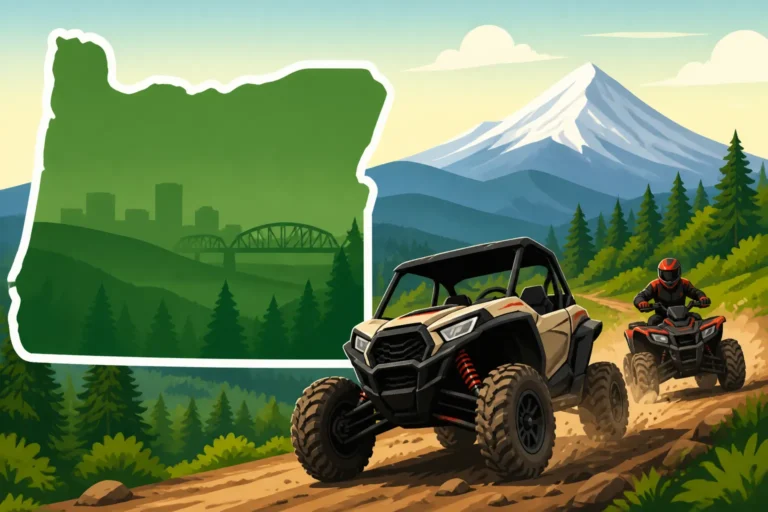
Horsfall is part of the Oregon Dunes National Recreation Area near North Bend and Coos Bay. The area includes more than a beach: dunes, sand roads, staging areas, and other riding terrain each have their own boundaries and rules. A route that appears to lead toward the ocean does not automatically mean you may ride onto every section of beach.
Before you leave home, get familiar with the overall recreation area and the places designated for motorized use. The guide to [The Oregon Dunes National Recreation Area] can help put Horsfall in context, while [Oregon Dunes Staging Areas From North to South] is useful when you are comparing access points. Horsfall is a distinct option, not a blanket pass to ride the whole coastline.
That difference matters when you arrive with a trailer, excited passengers, and machines ready to go. If the nearest access spur is closed, a protected area is fenced, or the beach itself is seasonally restricted, you may need to stay in another open riding area or choose a different destination. Treat the designated route and current signs as the actual riding plan, rather than assuming that all visible sand is open.
What plover season means for beach riders
Western snowy plovers nest on parts of the Oregon Coast, and vehicle restrictions help protect nesting habitat. At Horsfall, beach access can be affected by seasonal closures, commonly covering a period from mid-March into September. The exact boundaries and dates can vary, so check current land-manager information and signs before planning a beach ride. The overview of [Snowy Plover Season on the Oregon Coast] explains why these protections affect vehicle access.
A seasonal restriction is not just a warning to stay away from a few marked nests. Closures may cover a larger beach section or access corridor, and fencing or signs can mark protected habitat. Do not ride around a barrier, cross a fenced area, or use tire tracks left by someone else as proof that a route is open. A track can remain after a closure begins, and another rider’s mistake does not make a route legal.
For timing, consult [Why the Beach Closes to Vehicles on March 15] and [When Oregon Beaches Reopen to Vehicles in September], then confirm what applies to the particular section you intend to use. Dates are planning clues, not a substitute for current notices. If you are visiting near a seasonal change, check again shortly before you tow out; a calendar date alone cannot tell you whether an area has reopened or whether a separate closure is in place.
Confirm the Route Is Open Before You Unload
Check maps, signs, and land-manager notices together
A reliable pre-ride check uses more than one source. Start with the land manager’s current information for the riding area, review an up-to-date map, and then read the signs posted at the entrance and along your route. Maps can help you orient yourself, but posted closures and current notices may reflect changes that are not obvious on an older printed map.
A mapping app such as onX Offroad can help you understand your position, locate mapped routes, and plan how to reach an area. Use it as a navigation aid rather than as permission to ride. An app cannot tell you that a road has just been closed, that a plover protection boundary has shifted, or that a sign at the staging area prohibits access. If the map and a current sign appear to disagree, stop and follow the posted restriction while you seek clarification.
It helps to do this check before the drive, not while a line of vehicles waits behind your trailer. Make a short list: confirm seasonal beach access, identify the open staging area, note any route closures, and find out whether a separate day-use fee or pass applies. [Oregon Trail Closures to Check First] is a useful reminder that conditions can change because of wildlife protections, maintenance, fire danger, storms, or other management needs.
Keep riding-area boundaries clear
At a place with dunes, beach, access roads, and protected habitat close together, the boundary between permitted and prohibited travel can be easy to miss. Look for signs at intersections and at transitions from a road or dune area toward the shoreline. If a route is blocked, marked closed, or leads into a protected area, do not try to find a way around it.
This is especially important when riding in a group. The first machine may pass a sign without noticing it, and the riders behind may assume the route has already been checked. Agree in advance that anyone can call a stop if they see a closure marker, fence, habitat sign, or route that does not match the plan. A quick pause is much better than having the whole group ride into a restricted area.
If you are using onX Offroad, download the relevant map information before leaving a reliable signal area and make sure everyone knows how to identify the staging location and return route. The app can help with orientation, but it should sit alongside—not replace—signs, official notices, and common-sense boundaries. When you cannot confirm that a route is open, choose a clearly marked open route instead.
Prepare Your ATV or UTV for the Beach
Sort out permits, safety requirements, and access fees
A beach trip can involve separate requirements that are easy to mix up. An OHV operating permit for the machine, a rider safety requirement, and a parking or day-use fee are not necessarily the same thing. Check what applies to your machine, where it is registered, and who will be operating it. Visitors should review [Oregon ATV Permit for a Nonresident] rather than assuming an out-of-state sticker automatically covers every Oregon requirement.
Rider requirements also depend on factors such as machine class and age. Review [Oregon ATV Safety Card Requirements] before the trip, especially if children or less-experienced riders are joining you. Keep required documents accessible, not buried beneath camping gear or packed in a toolbox you cannot reach once the trailer is unloaded.
Do not assume that purchasing a permit covers parking, or that paying a site fee covers the machine permit. Confirm both separately with the relevant land manager or permit provider. Checking those details at home avoids the frustration of reaching the staging area only to discover that the group has a machine or rider requirement still to resolve.
Check tires, recovery gear, and visibility
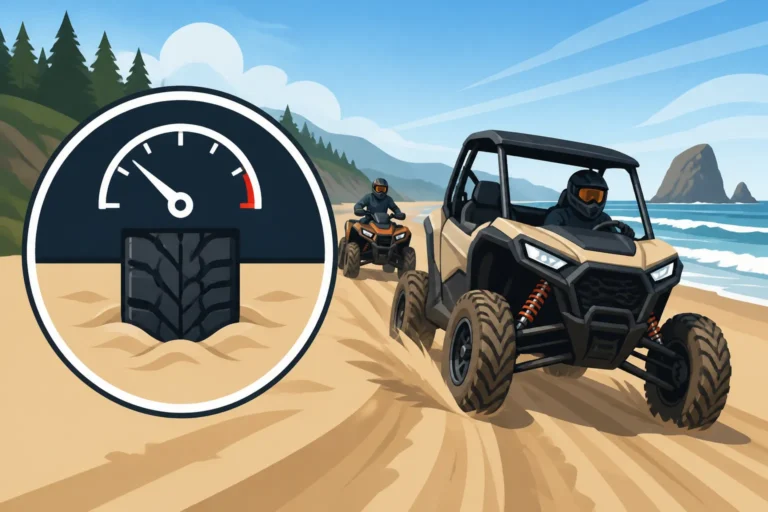
Beach sand can feel firm in one place and turn soft a short distance away. A machine that handles packed ground confidently may struggle when the sand loosens, particularly when it is heavily loaded or towing gear. Check your owner’s manual for suitable tire pressure and operating guidance rather than copying a number from someone else’s setup. Tire type, machine weight, passenger load, and conditions all matter.
Carry basic recovery equipment appropriate to your vehicle and know how to use it before you need it. A shovel and a suitable recovery strap may help in some situations, but recovery should be done carefully, with people kept clear of tensioned straps and moving vehicles. If you are new to soft sand, ride with a capable partner and avoid pushing far from the access area until you understand how the machine responds.
Visibility is another practical concern on open dunes and beach approaches. Use the required flag or whip where applicable, and make sure it remains visible when the machine is moving over rises. [Oregon Dune Flags and Whips] offers more detail on this equipment. Keep to a speed that gives you time to react to other riders, pedestrians, changing terrain, and any wildlife or closure markers ahead.
| Before you leave | What to confirm | Why it matters |
|---|---|---|
| Beach access | Seasonal status and open boundaries | Beach riding may be restricted to protect nesting habitat |
| Route | Current signs and land-manager notices | A mapped or visible route may be closed |
| Machine | Applicable Oregon OHV permit | Permits and site access fees are separate concerns |
| Riders | Safety-card and age requirements | Requirements can differ by rider and machine |
| Vehicle | Tires, recovery gear, and visibility equipment | Soft sand and limited sight lines can challenge riders |
| Return plan | Fuel, daylight, and a known route back | Prevents a minor delay from becoming a difficult recovery |
Ride With Coastal Conditions in Mind
Tide, surf, and changing sand
The beach is a moving environment, not a fixed trail. Tides change the amount of usable shoreline, while surf and wave run-up can make a route that looked comfortable earlier feel narrow later. Check tide information before riding, and do not assume that the wet, firm-looking sand near the water is always safe or available. Keep well clear of the surf and leave room for waves, pedestrians, and other beach users.
If you are unfamiliar with the area, avoid riding close to the waterline simply because the sand looks compact. Water can conceal soft spots, channels, debris, or unstable edges. A loaded UTV can lose traction or become difficult to recover in wet sand, and saltwater exposure can cause problems well beyond the ride itself. When conditions are uncertain, stay on the marked route and wider, clearly open riding surfaces.
Plan a turnaround point before the group spreads out. A simple boundary such as “we will turn back before the access route becomes narrow” is easier to follow than relying on one rider’s judgment in the moment. Keep enough distance between machines to avoid dust and allow room to stop, but stay close enough that the group can communicate if someone encounters a soft patch or needs assistance.
Traffic, pedestrians, and wildlife
Horsfall is not a private playground. Other people may be walking, fishing, camping, or accessing the coast, and they may not expect an ATV or UTV to appear around a dune or access point. Slow down near staging areas, intersections, beach approaches, and any place where visibility is limited. Give pedestrians generous space and avoid creating a dust cloud that makes it difficult for them or other drivers to see.
Wildlife protections deserve the same attention as posted speed or route rules. If you see fencing, habitat markers, or birds in a protected area, keep your distance and do not follow them for a closer look. Seasonal restrictions are designed to protect vulnerable nesting areas, and even an apparently empty patch of sand can be part of a protected zone. If you are unsure whether a boundary applies, do not cross it.
Group rides need a little extra structure. Choose a lead rider who knows the open route and a sweep rider who stays behind the group. Agree on hand signals or another clear way to communicate stops, and remind everyone not to pass the lead into an unfamiliar section. This keeps newer riders from being pressured to go faster than they are comfortable with and makes it easier to notice if someone has fallen behind.
Make the Trip Easier From Staging to Cleanup
Choose an access point that fits your day
Your experience at Horsfall starts in the staging area, where parking, unloading, and route choices can shape the whole outing. Before you tow in, confirm that your chosen access point is open and suitable for your trailer and group. Check for posted parking rules and any site-specific fees. Busy weekends can mean more traffic, less room to maneuver, and a longer wait to unload, so arriving with a clear plan helps.
Think about the riders in your group when choosing where to start. A family with young or beginner riders may prefer a straightforward route near the staging area rather than a long ride across unfamiliar terrain. Experienced riders may be comfortable covering more ground, but they still need to respect closures and leave enough time to return before dark. A shorter ride in an open area is better than an ambitious route that pushes the group toward a restricted beach section.
If beach access is closed or the conditions do not suit your group, compare other riding options instead of trying to make the day work by bending the rules. [Oregon Dune Riding Areas Compared] can help you consider alternatives, while [Horsfall Beach in Winter] is relevant if you are planning a colder-season visit. Each area has its own access conditions and rules, so confirm those independently rather than transferring Horsfall assumptions to another site.
Wash and inspect the machine after riding
Sand and salt deserve attention as soon as you get home. Salt carried in spray or damp sand can remain on exposed metal, fasteners, connectors, and underbody surfaces. Rinse the machine according to the manufacturer’s guidance, paying attention to places where sand collects, but avoid forcing high-pressure water into bearings, electrical connectors, seals, or other sensitive parts.
After rinsing, inspect the underbody, wheel wells, brake areas, air intake, and moving components for packed sand or debris. Check for loose fasteners, damaged guards, and anything that could have been affected by a hard impact or recovery. If the machine was exposed to saltwater or unusually wet conditions, follow the maintenance schedule and recommendations for your specific model rather than assuming a quick rinse is enough.
A simple post-ride routine can prevent the familiar “I’ll clean it tomorrow” problem from turning into extra work. Keep rinse supplies ready, remove wet gear from the vehicle, and let equipment dry before storing it. [Washing a Machine After a Beach Ride] has more beach-specific cleaning guidance. With a little attention after the ride, the next trip is less likely to begin with corrosion, clogged parts, or a surprise repair.
Disclaimer
This article is for general informational purposes only and does not constitute professional advice. Laws, prices and regulations vary by location and change over time. Consult a qualified professional for guidance on your specific situation.