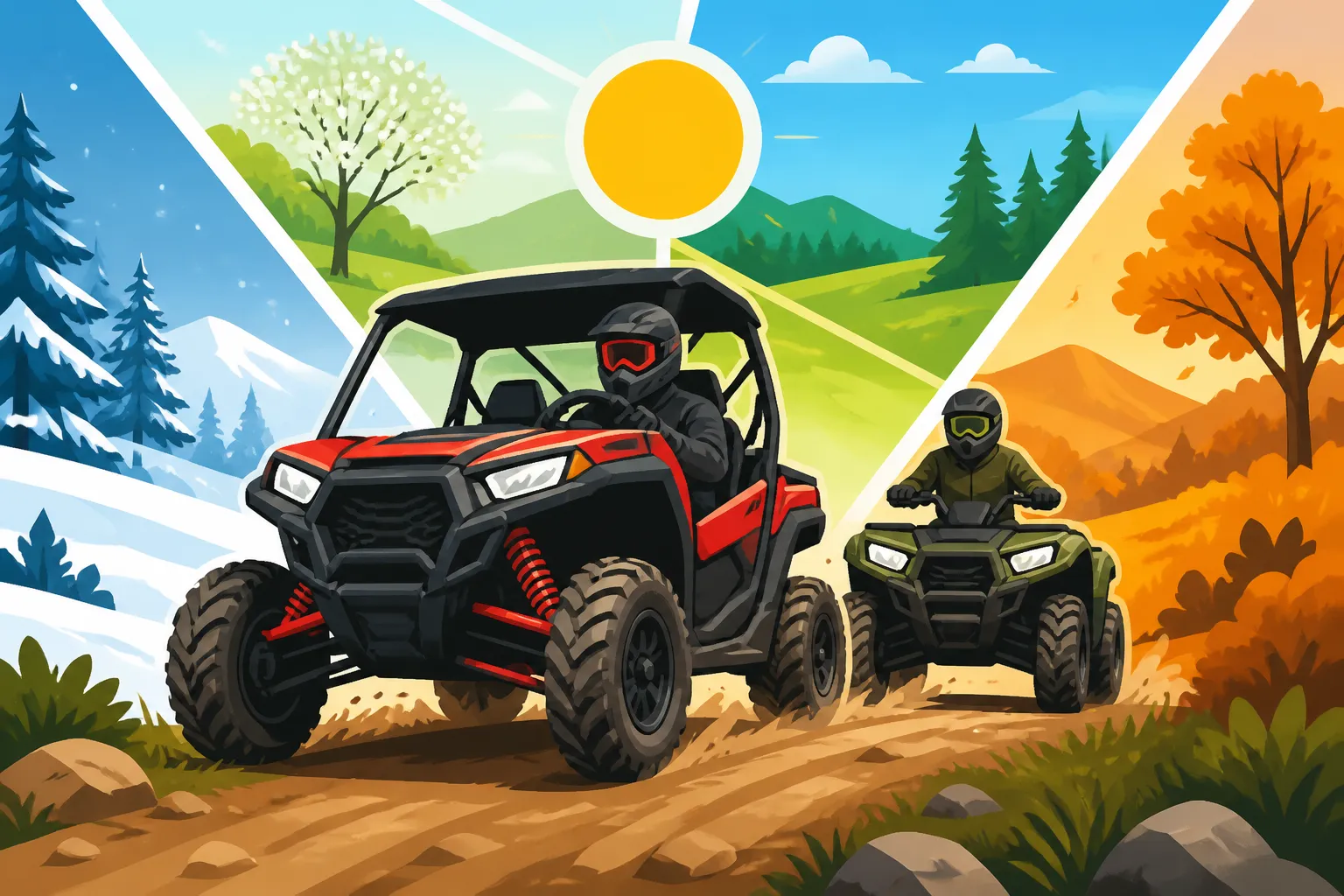
Millican Plateau Open Year Round
Millican Plateau gives Central Oregon riders a rare chance to plan a ride in every season, but “open year round” does not mean every trail is always passable or every route is suitable for every machine. Winter weather, high-desert conditions, changing closures, and limited services can complicate a trip. This guide explains how to prepare, choose a route, and ride Millican Plateau more confidently.
What Year-Round Riding Means at Millican Plateau
Open access is not a promise of perfect conditions
Millican Plateau is known as a year-round riding area east of Bend. That makes it appealing when snow or rain affects other plans, or when you simply want to ride outside the busy summer season. But year-round access describes the area’s general availability; it does not guarantee that every road, trail, or staging location will be open and rideable on a particular day.
Conditions can change quickly in Central Oregon. A route that looks straightforward on a dry summer map may be slippery, rutted, or snow-covered in winter. A spring ride may bring soft ground or lingering snow in shaded spots, while late summer can mean dust and heat. Before loading up, check recent land-manager notices, posted signs, and the conditions at your intended staging area. Treat a closure sign as more authoritative than an old saved route.
If you are used to a coastal riding area, the high desert can feel surprisingly exposed. There may be little shade, and wind can carry dust across open ground. On a winter outing, the same openness can make cold temperatures feel sharper. Planning for conditions rather than relying on the phrase “open year round” is the best way to avoid arriving with the wrong gear or an unrealistic route plan.
The area has distinct riding seasons
Summer is often the easiest season to understand: longer daylight gives you more flexibility, but heat and dust can make a long ride tiring. Carry more water than you expect to need, and consider starting earlier in the day. If you stop for lunch, choose a safe place away from active routes, and keep your group visible to other riders.
Winter can offer a quieter outing, but it asks more of both rider and machine. Check the forecast close to departure, not just when you first make the plan. Snow, ice, and cold can affect traction, braking, battery performance, and how quickly a minor delay becomes uncomfortable. Bring warm layers that you can adjust as you ride, and set a turnaround time before leaving the staging area.
Spring and fall are often less predictable than they look on a calendar. A clear morning does not rule out wet ground, cold wind, or a sudden change in visibility. Keep your plan flexible. If conditions are worse than expected, shortening the ride is a sensible decision, not a failed outing.
Planning Your Route and Choosing a Staging Area
Match the route to your group and machine
Before setting out, consider the least experienced rider in your group, not just the person who knows the area best. A challenging route can become stressful when a new rider is tired, unsure about loose surfaces, or struggling to keep up. Build in time for breaks and make sure everyone knows where the group will stop if riders become separated.
Your machine matters too. A narrow quad, a dirt bike, and a wider side-by-side may not feel equally comfortable on the same route. Check the route’s width, surface, and turning space before committing, especially if your group includes several kinds of machines. If you are comparing vehicle categories, [Oregon Trails for a Wide Side-by-Side] can help you think through the kind of access a wider vehicle may need.
For navigation, save your intended route before you leave cell coverage. onX Offroad can be useful for reviewing map layers and keeping a route available on your phone, but do not treat any app as the final word on whether a road is open. Pair digital navigation with current signs and land-manager information. A printed map or a second offline-capable device is a useful backup if a phone battery runs low or the screen becomes difficult to use in cold weather.
Pick a staging area with your day in mind
Your staging choice shapes the ride. Think about where you will park, how you will unload, and whether your planned loop can start and end at the same place. If you are meeting friends, share the location and a backup plan before the drive. A vague message such as “see you near Millican” can leave people searching different pullouts or arriving after the group has started.
Millican has multiple staging options, so it is worth reviewing them rather than automatically using the first spot you remember. [Staging Lots Around Millican] and [Millican Valley's Nine Staging Areas] are useful starting points for understanding how staging locations fit into a trip. Confirm that the location you intend to use is accessible and appropriate for your vehicle and trailer.
When you arrive, park so other riders can still maneuver safely. Keep trailers and tow vehicles out of travel lanes, and do not block access for emergency vehicles or other visitors. Before unloading, look for posted information, closures, and changes to access. It takes only a few minutes and can prevent a frustrating discovery several miles into the ride.
| Planning question | Why it matters | What to do |
|---|---|---|
| Is the route open today? | Conditions and closures can change | Check current notices and obey signs |
| Can everyone manage the route? | Skill and fatigue affect group safety | Choose a route for the least experienced rider |
| Is the route suitable for your machine? | Width and handling vary by vehicle | Check surface, width, and turning space |
| Can you navigate without cell service? | Coverage may be unreliable | Save maps offline and carry a backup |
| What is the turnaround plan? | Weather, daylight, or fatigue may change plans | Set a time or condition for heading back |
Riding Safely in High-Desert Conditions
Prepare for weather, dust, and changing visibility
Millican Plateau’s high-desert setting can make weather feel different from what riders expect closer to the Willamette Valley or Oregon coast. Sun and wind can dry you out, while a cold morning may warm quickly once you are moving. Bring layers, eye protection, and enough drinking water for the whole outing. Do not rely on finding a place to refill once you leave the staging area.
Dust is more than an inconvenience. It can reduce visibility between machines and make it difficult to judge distance or spot a turn. Leave enough space between riders, slow down when you cannot see clearly, and avoid following closely through a dusty section. If the group gets spread out, stop somewhere safe and regroup rather than continuing until the last rider is out of sight.
Weather also affects your ability to notice hazards. A low winter sun can make ruts or rocks harder to see, while wind can make communication difficult. Before you ride, agree on simple signals and a meeting point if someone takes a wrong turn. onX Offroad may help you keep track of a planned route, but the group should still understand where it is headed rather than depending on one person’s phone.
Carry the basics and ride within your limits
A good ride kit should reflect both the route and the season. Carry water, snacks, basic first-aid supplies, a tool kit suited to your machine, and a way to contact help if a problem arises. Bring extra warmth in colder months, even if the forecast looks mild. A breakdown can turn a short delay into a long wait, particularly if the group is far from its vehicles.
Check your machine before unloading. Look over tires, controls, lights, fuel or battery level, and any parts that have caused trouble on previous rides. If you are riding in a group, do not assume every machine has the same range or reliability. Agree on a pace that lets the group stay together, and make regular checks for riders who are getting tired or uncomfortable.
Newer riders often feel pressure to keep up, especially when experienced friends are eager to cover ground. Make it easy for anyone to speak up. A short break or a route adjustment is far better than pushing a rider past their comfort level. If the terrain feels beyond your experience, turn around while the group is still close to a known route or staging area.
Navigation, Closures, and Responsible Riding
Use maps as a planning tool, not permission to ride
A mapped line is not automatically an open route. Maps can differ, and a route that appears connected on a screen may lead to a closed road, a restricted area, or land with different access rules. Review the broader area before leaving, look for posted signs as you ride, and stop if you are unsure whether a route remains open.
This is where careful map use pays off. onX Offroad can help you study the area and save a route for offline reference, but use it alongside current local information. Zoom out far enough to understand how your route connects to staging and nearby roads. Save a conservative route rather than improvising at every junction, especially if your group includes riders who do not know the area.
Keep a backup plan for a route that is blocked or unsuitable. That might mean returning the way you came, choosing a shorter loop, or ending the ride early. Do not ride around a closure, through a gate, or onto an unmarked track simply because it appears to lead in the right direction. Respecting restrictions protects access for other riders and avoids putting your group in a difficult spot.
Leave the area in good shape for the next group
Responsible riding begins with staying on routes that are open for your machine and ends with leaving the staging area clean. Pack out food wrappers, broken parts, and anything else you brought in. If you see litter, picking it up is a small way to improve the experience for everyone who comes after you.
Give other trail users room, especially when visibility is limited by dust or terrain. Slow down near staging areas and junctions, where riders may be stopping, turning, or checking a map. Avoid sudden moves that could surprise someone coming from the opposite direction. If your group stops, pull fully clear of the route where it is safe to do so.
Be mindful of the surface as well. Wet or fragile ground can be damaged by repeated traffic, and riding off-route can widen tracks or disturb nearby land. If conditions are poor, choose a different route or postpone the outing. Being willing to change plans is part of riding responsibly in an area that remains accessible across different seasons.
A Practical Plan for a Millican Plateau Ride
Before you leave home
Start with the basics: confirm the intended staging location, check for current access notices, and look at the forecast for the riding area rather than relying on conditions in town. Decide how long you want to ride and set a clear turnaround time. If you are going with a group, share the meeting point, route plan, and a backup option with everyone before the drive.
Charge phones and navigation devices, save maps for offline use, and bring a backup power source if you have one. onX Offroad can be one part of that setup, but make sure more than one person can navigate if the lead rider’s device fails. Tell someone who is not joining the ride where you plan to go and when you expect to be back.
Then check your machine and load your gear. Make sure the trailer is ready for the drive, secure loose equipment, and avoid leaving essential items buried under everything else. Water, warm layers, a first-aid kit, and tools are more useful when you can reach them quickly.
At the staging area and on the ride
Once you arrive, pause before unloading. Read posted notices, check the condition of the access road, and confirm that your group is comfortable with the plan. Give newer riders time to ask questions and sort out gear without feeling rushed. A calm start tends to make the whole day easier.
During the ride, keep the group together at junctions and regroup before anyone becomes difficult to see. If the surface or weather changes, reassess rather than sticking to the original plan out of habit. Take breaks before people are exhausted, and keep an eye on fuel, battery, daylight, and water.
At the end of the ride, return to the staging area with enough time to load safely. Do a quick check for belongings and rubbish, and make sure everyone is accounted for before leaving. If you found a closure or a route condition that could affect other riders, consider sharing useful, factual information through the appropriate local channels. Avoid presenting a temporary condition as a permanent rule.
When to choose another riding area
Millican Plateau is not automatically the right choice for every group or every day. If the forecast suggests conditions your group is not prepared to handle, or if current notices indicate that your intended route is unavailable, postponing is reasonable. Riders looking for another type of experience can compare options in [Oregon's Coastal Riding Versus High Desert] or explore [Oregon OHV Areas Near Bend] when planning a Central Oregon outing.
A different location may be a better fit if your group needs more services, wants a ride with a particular terrain type, or has very new riders who would be more comfortable on a simpler route. For a broader look at seasonal access, [Oregon Riding Seasons by Area] can help you compare how conditions vary around the state. If winter is your main concern, [Millican Valley's Winter Closure] offers a related point of reference for distinguishing year-round access from season-specific restrictions elsewhere in the area.
The best plan is the one that fits the actual conditions, not the one that covers the most miles. A shorter ride with good visibility and a comfortable group is often more enjoyable than a long route that leaves everyone tired, cold, or unsure of the way back.
Disclaimer
This article is for general informational purposes only and does not constitute professional advice. Laws, prices and regulations vary by location and change over time. Consult a qualified professional for guidance on your specific situation.