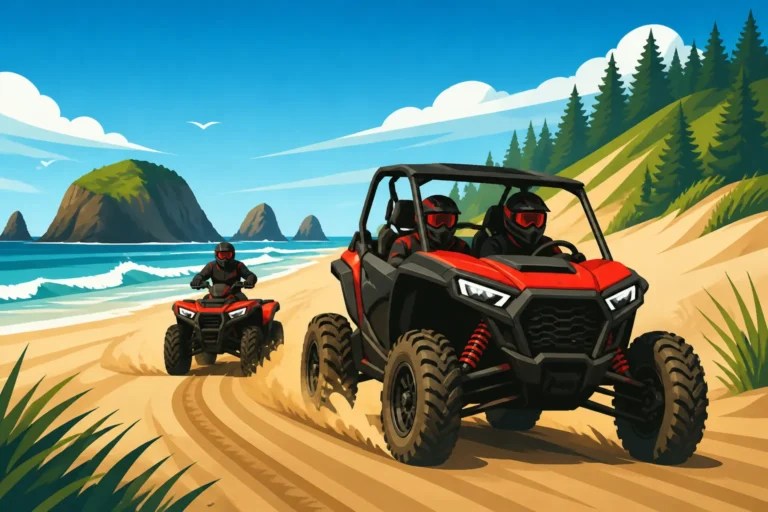
Sand Lake Over the Fourth of July
Sand Lake can feel like a different place over the Fourth of July: summer traffic builds, popular camping and staging spots fill, and soft sand gets chopped up by hours of riding. A little planning helps you spend less time circling for a place to park and more time enjoying the coast. This guide covers where to stage, what to prepare, and how to ride considerately on a busy holiday.
Plan your Sand Lake visit before the holiday
Expect a busy coastal riding area
Sand Lake Recreation Area sits near Pacific City on the northern Oregon coast. Its mix of dunes, beach access, camping, and staging areas makes it appealing for a holiday outing, but that combination also means several kinds of visitors are sharing a relatively compact area. Campers may be maneuvering trailers while riders unload machines, and day visitors may be looking for a place to park.
Treat the Fourth of July as a peak-demand visit rather than a spontaneous stop. Decide in advance whether you are camping or making a day trip, which staging area you intend to use, and what your backup plan is if your preferred spot is full. Check land-manager information shortly before leaving for closures, access notices, site rules, and any changes to fees or reservations. Conditions and operating details can change, so don’t assume a past visit tells you everything you need to know.
The area has several campgrounds and day-use locations, but each serves a different purpose. If you’re comparing places to stay, [Sand Lake's Four Oregon Campgrounds] and [Sandbeach, East Dunes and West Winds Compared] can help you think through the options. For an overview of how the broader coastal riding areas differ, see [Oregon Dune Riding Areas Compared].
Choose camping or day use with your group in mind
Camping can make an early start easier, especially if you’re bringing a trailer, riding with children, or planning more than one session on the sand. The trade-off is that a holiday campsite may take advance planning, and a campground that looks close on a map may not be the right fit for your trailer or group. Confirm reservation details, vehicle limits, amenities, and site access directly before you travel.
A day trip avoids the need to secure a campsite, but it makes parking and unloading more important. Arriving with a trailer during the busiest part of the day can be stressful if nearby spaces are already occupied or traffic is moving slowly. Make sure your tow vehicle and trailer can be parked legally and without blocking circulation. Don’t count on using a campground as overflow parking unless its rules specifically allow it.
It also helps to agree on a meeting point before anyone heads out. Phone service can be unreliable in some outdoor areas, and a busy staging lot is an easy place for a group to lose track of one another. Pick a clear landmark, decide who carries the maps and emergency supplies, and establish a plan for what to do if a rider needs to return early. For a broader trip-planning checklist, [Sand Lake for a Weekend] covers the kinds of details worth sorting out before you leave.
| Planning choice | What it helps with | What to check before leaving |
|---|---|---|
| Camp at Sand Lake | Makes an early ride and a longer visit easier | Reservations, site rules, trailer fit, and available facilities |
| Visit for the day | Avoids planning an overnight stay | Parking, staging access, day-use requirements, and arrival timing |
| Bring a trailer | Lets you transport your own machine and gear | Tow-vehicle access, legal parking, tie-downs, and trailer space |
| Rent locally | Can reduce the need to transport a machine | Booking terms, allowed riding areas, required documents, and pickup timing |
| Ride with a group | Makes coordination and assistance easier | Meeting point, communication plan, and a regroup procedure |
Prepare your machine, permit, and gear
Handle riding requirements before you get to the dunes
A holiday morning is a poor time to discover that a permit, safety document, or piece of required equipment is missing. Review the rules that apply to your machine and rider before departure, and keep any required documents easy to access. The relevant requirements can depend on the machine class, the rider, and where you intend to ride. Start with [Oregon ATV Permit for a Machine on Private Land] only if private land is part of your plans; for public riding, check the rules that apply to the actual recreation area and machine.
Don’t assume that a parking or day-use pass covers the machine’s operating permit, or that an operating permit includes parking. Those are separate questions. For a useful overview of the access-cost distinction, see [Oregon Day Use Fees Explained]. Check the land manager’s current instructions for any site-specific fees or passes before you set out.
Make a short document check the night before: machine permit or decal, safety card or other required proof, driver and vehicle documents where applicable, and any rental paperwork. Keep paper documents in a waterproof pouch or another secure spot rather than loose in a pocket. [Oregon ATV Safety Card Requirements] explains why riders should confirm education-card rules instead of relying on assumptions about age or experience.
Check the machine and pack for sand, salt, and delays
Sand is hard on moving parts, and coastal air adds another reason to inspect your machine before and after the ride. Check tires, brakes, steering, throttle, lights, fuel, and visible fasteners before unloading. Bring the basic tools and recovery items appropriate to your machine and riding ability. A small problem can become a long wait when the staging area is crowded and other visitors are trying to move through.
Pack water, food, sunscreen, eye protection, and clothing for shifting coastal weather. A sunny forecast doesn’t guarantee warm, clear conditions on the sand; wind and fog can make a ride feel much colder or reduce visibility. If fog moves in, slow down, keep a safe distance from other machines, and avoid riding beyond what you can see clearly. [Oregon Riding in Coastal Fog] and [Oregon Trail Maps Worth Carrying] offer useful reminders about visibility and navigation.
A map on your phone can help with orientation, but download or save what you need before you lose service, and bring a backup plan. Some riders use onX Offroad to review routes and map information before a trip. Treat any app as a planning aid rather than permission to ride: signs, barriers, land-manager notices, and posted closures still matter. If a route is marked closed or conditions differ from what your map suggests, follow the posted direction.
Ride safely and share the dunes
Start with a clear group plan
Before the first ride, make sure everyone understands where to meet, how the group will travel, and what to do if someone gets separated. A simple plan can prevent a minor mix-up from turning into a frustrating search across a busy riding area. Agree on a pace that works for the least experienced rider, and choose a regroup point that is easy to identify.
Keep your group together without riding so close that dust or sudden stops become a hazard. Give other riders room to pass when it is safe, and avoid stopping just over a rise or in a place where approaching traffic cannot see you. Dune terrain can hide the far side of a slope, so look before cresting and ride within your visibility and ability. A machine that feels manageable on a quiet weekday may feel very different when the sand is crowded and tracks are changing.
If children or newer riders are with you, keep their route and riding time conservative. Make sure they know how to stop safely, how to contact the group, and where to go if they lose sight of the others. Build in breaks for water and rest rather than waiting until everyone is tired or overheated. Holiday riding is more enjoyable when the plan leaves room to turn back early.
Respect closures, other visitors, and changing conditions
Sand Lake is shared by riders, campers, beach visitors, and people using the area for recreation in other ways. Stay within designated riding areas, obey signs and barriers, and give people on foot plenty of room. Never use a closed or sensitive area as a shortcut. Closures can protect habitat or address changing conditions, and a route that was open on a previous visit may not be open now.
Tides, wind, fog, and soft sand can all affect a coastal ride. If beach riding is part of your plan, check the applicable restrictions and conditions rather than assuming the beach is open to vehicles everywhere or at all times. Keep well clear of marked habitat and wildlife closures. For riding on sand, [Soft Sand and Tire Pressure on the Coast] and [Getting Stuck in Wet Sand] are useful topics to review before the group sets off.
Give other machines space around dunes, especially where visibility is limited. Avoid following closely through dust, and don’t make sudden turns that force someone behind you to react. If you encounter a bottleneck, wait for a safe opening instead of trying to squeeze past. A patient group is less likely to create a collision or turn a crowded staging area into a problem for everyone.
Make the holiday outing smoother from arrival to departure
Use a flexible schedule
On a busy holiday, a rigid schedule can make small delays feel like a failed trip. Allow extra time for coastal traffic, unloading, parking, gear checks, and regrouping. If the main lot is full or the approach is congested, follow posted directions and staff instructions rather than stopping in a travel lane to decide what to do.
A practical plan is to set a target arrival time, a latest acceptable time, and a backup activity if riding is delayed or conditions are unsuitable. If you arrive to find the area too crowded for your group’s comfort, taking a break, exploring another permitted activity, or adjusting your riding window may be safer than pushing ahead. Check the rules before moving to another location; a nearby road or open-looking patch of sand is not automatically an authorized riding area.
Before leaving, make sure everyone knows where the vehicles are parked and how the group will reconnect if plans change. Keep keys, phones, and documents secure, and don’t leave gear where it could block a walkway or another vehicle. A little patience at the end of the day matters too: when many visitors leave at once, slow, orderly loading helps keep the staging area moving.
Leave the site ready for the next visit
Before you pull out, check that your load is secure and that no straps, tools, trash, or personal items have been left behind. Sand can hide small objects, so take a careful look around the unloading area and under the trailer. Pack out what you bring in and use the proper facilities for waste. Don’t dump fuel, oil, or other fluids on the ground.
After a coastal ride, rinse and inspect your machine as appropriate for its manufacturer’s guidance. Pay attention to sand around moving parts and to areas exposed to salt air. A post-ride check can catch a loose fastener, damaged tire, or clogged component before the next outing. For detailed decal care and placement questions, [Oregon ATV Permit Decal Placement] is a helpful reference.
A good Fourth of July visit isn’t measured by how many hours you spend riding. It’s a visit where your group gets on and off the sand safely, respects closures and other visitors, and leaves the site in good shape. Plan for crowds, prepare for changing coastal conditions, and be willing to adapt when the day doesn’t match the plan.
Disclaimer
This article is for general informational purposes only and does not constitute professional advice. Laws, prices and regulations vary by location and change over time. Consult a qualified professional for guidance on your specific situation.