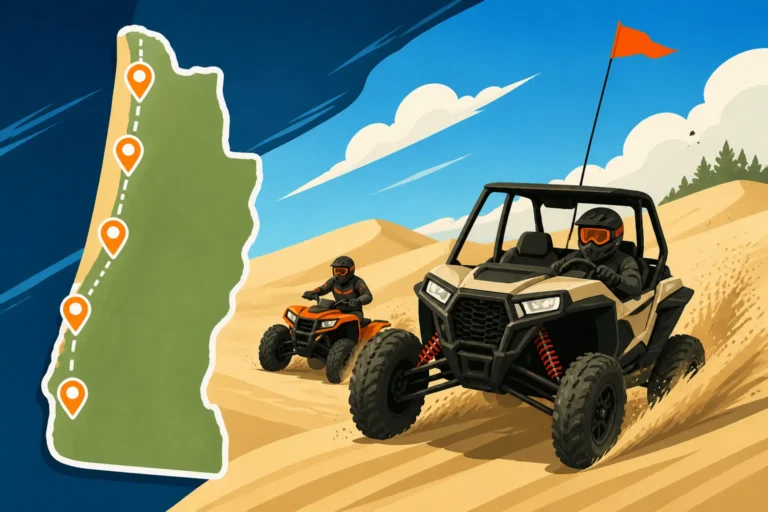
Riding Out of Spinreel Staging
Spinreel staging can feel like a maze on a first visit: you unload, see open sand in several directions, and still have to figure out where riding is allowed and how to avoid getting turned around. This guide explains how to prepare, read the area, and ride out responsibly, from your first check at the staging area to your return.
Before You Leave Spinreel Staging
Sort out permits, fees, and rider requirements
A machine that is ready to ride still needs the required Oregon OHV permit, and riders may have safety-card obligations depending on their age, machine class, and circumstances. Don’t assume that a friend’s permit, a rental decal, or your parking payment covers everything. Review [Oregon ATV Permits Explained] and [Oregon ATV Safety Card Requirements] before leaving home, especially if you are visiting from another state or riding a borrowed machine.
Parking or day-use charges are separate from an operating permit. If you are unsure what applies at your chosen site, check the posted information at the entrance and review [Paying the Day Use Fee at a Staging Area]. Keep your permit information accessible, and make sure the decal is attached where it can be seen and stays secure during a sandy ride. The right placement depends on the machine; [Oregon ATV Permit Decal Placement] explains why it is worth checking before the weekend begins.
Do a quick gear check before unloading, too. Bring helmets and eye protection that fit properly, water, a basic first-aid kit, and a way to contact your group if you become separated. A charged phone is useful, but reception can be limited or unreliable in coastal riding areas. Carry any essential information in a way that will survive sand and moisture rather than relying on a screen alone.
Check conditions and closures before you set out
The dunes and surrounding riding areas can change with weather, seasonal restrictions, habitat protections, and land-management decisions. A track that appeared open on an older screenshot may now have a closure sign or a changed boundary. Before riding, review current official maps and notices, then pay attention to signs at the staging area and out on the routes. [Oregon Trail Closures to Check First] is a useful reminder to make this part of the plan, not an afterthought.
Mapping apps can help you understand the general layout and keep your group oriented. For instance, onX Offroad may be useful for reviewing mapped roads and trails before your trip, but an app display should not overrule an official closure, posted boundary, or local direction. Check map dates and compare your planned route with the information provided for the riding area.
Agree on a simple plan with your group before anyone starts the engine. Pick a turnaround time, decide what to do if riders get separated, and identify a clear meeting point back at the staging area. If someone in the group is new to sand, make the first outing short and conservative. It is much easier to extend a ride after everyone has found their footing than to recover a tired rider far from the staging lot.
Prepare the machine for sand
Soft sand asks more of a machine than a paved road or hard-packed trail. Check your tires, brakes, throttle, steering, fuel, and any required safety equipment before riding. If you are trailering a machine, give it a quick inspection after unloading as well; it is easy to overlook a loose strap, shifted gear, or low tire while everyone is eager to head out.
Tire pressure is one of the details riders often ask about, but there is no single setting that suits every machine, tire, load, and riding condition. Follow the manufacturer’s guidance and avoid making a dramatic adjustment based on a number heard in the parking lot. [Soft Sand and Tire Pressure on the Coast] offers more context on why pressure matters and why cautious, informed adjustments are better than guesswork.
Secure loose items before you leave. A water bottle, tool, phone, or small bag can bounce free on uneven sand, and stopping to retrieve it may split up the group. Carry only what you can secure safely, and leave room for passengers to sit and hold on as intended. If you are riding a rental, listen closely to the operator’s briefing and ask what to do if the machine bogs down, overheats, or develops a problem.
Finding Your Way Out From the Staging Area
Start by orienting yourself on the ground
Before heading onto the sand, pause at the staging area and identify the posted map, route signs, access points, and any visible closure markers. Match what you see on the ground to your map rather than assuming that the most obvious open-looking path is the correct one. The area’s boundaries and routes can be less intuitive once you are surrounded by dunes.
A map is a planning aid, not permission to ride anywhere it shows a line. Use official area information to understand where OHV use is permitted, and follow signs when they indicate a restriction or change. If your phone is part of your navigation setup, download or save what you need before leaving a place with dependable service. onX Offroad can serve as one layer of trip planning, but keep the official map or posted guidance as your authority for access and closures.
Take a moment to notice landmarks you can recognize on the way back, such as the staging area, signed access corridors, or distinctive terrain features. Dune shapes can look different when viewed from the opposite direction, and familiar-looking ridges can be misleading. Agree that no one will leave the group or take an unsignaled detour. That small conversation can prevent a simple outing from turning into a search.
Choose a route that fits the least-experienced rider
At Spinreel, the best route is not necessarily the one that looks most exciting from the parking area. A beginner may be comfortable on gentler, more open terrain but struggle with steep faces, sharp turns, or soft sections where momentum changes quickly. Let the least-experienced person help set the pace and route. A relaxed first loop builds confidence and leaves room to explore more later.
Keep the group together without crowding. Leave enough room for each machine to maneuver, and avoid riding directly behind another vehicle where dust or sand blocks the view. At a rise or change in terrain, slow down and make sure the path ahead is clear before continuing. Don’t follow tracks blindly: another rider’s tire marks do not establish that a route is open or suitable for your vehicle.
If you use onX Offroad to keep track of your general position, treat it as a navigation aid rather than a substitute for observation. Stop somewhere safe to check your location instead of looking down while moving. If your displayed location and the signs on the ground seem to conflict, stop and reassess. It is better to turn around carefully than to push ahead into an uncertain area.
Use a practical route-planning comparison
A good plan balances confidence, conditions, and group experience. These approaches can help you choose how to navigate without pretending that one tool answers every question.
| Planning method | Most useful for | Important limitation |
|---|---|---|
| Posted area map and signs | Identifying local access rules, restrictions, and marked routes | Signs and closures must still be checked as you ride |
| Official agency information | Reviewing area guidance and notices before your trip | Conditions can change, so check for updates close to departure |
| onX Offroad or another mapping app | Understanding general position and planning a route in advance | A displayed line does not authorize riding through a closure |
| Group meeting plan | Reuniting if riders become separated | Everyone needs to understand the plan before leaving |
For a first visit, keep the route short enough that you can return with daylight, fuel, and energy to spare. Add distance only after the group understands the terrain and the navigation. This is especially helpful when children, new riders, or mixed machine types are involved. Different vehicles and comfort levels can make the same stretch of sand feel very different.
Riding Safely on the Dunes
Adjust your pace to visibility and terrain
Coastal conditions can shift during a ride. Fog, blowing sand, changing light, and dust from other machines can reduce visibility, while a crest may conceal a drop or another rider on the other side. Slow down when you cannot see a clear route ahead, and do not charge over a ridge just because the track looks smooth from below. [Fog and Visibility on the Dunes] covers why visibility deserves its own place in your safety plan.
Use extra care around busy routes and staging access points. Riders may be entering, exiting, stopping to regroup, or crossing one another’s paths. Keep a safe distance, avoid sudden turns into another vehicle’s line, and use clear signals when your group plans to stop. [Riding Etiquette on a Busy Staging Day] is worth reviewing if you expect to ride during a crowded weekend or holiday period.
Follow area rules for flags, whips, and other visibility equipment where required. Make sure equipment is secure and visible, and don’t assume that another machine’s setup tells you what your own vehicle needs. [Oregon Dune Flags and Whips] can help you understand what to consider before heading onto the sand. The basic principle is simple: make it easier for other riders to see you, especially near crests and in busy areas.
Avoid common sand problems
Getting stuck is more likely when a rider stops in a soft spot, tries to climb terrain beyond their ability, or continues after the machine has lost momentum. If you feel the vehicle bogging down, avoid aggressive, panicked throttle that can dig it in further. Keep the group at a safe distance, assess the situation, and use appropriate recovery methods for your machine. Never place hands or feet near moving tires or driveline parts.
If a machine becomes stuck, focus first on people and surroundings. Make sure other riders can see the stopped vehicle, move the group out of the way of traffic, and follow the machine’s recovery guidance. Carrying basic recovery gear can help, but only use equipment you know how to handle safely. [Getting Stuck in Wet Sand] explains why some coastal conditions can make recovery more difficult than riders expect.
Watch fuel use and fatigue as the ride goes on. Sand riding can consume more energy and fuel than a short distance suggests, particularly if you are making repeated climbs or riding in difficult conditions. Turn back with a sensible reserve rather than stretching the ride until the fuel light, fading daylight, or tired passengers force the decision. If anyone is uncomfortable, stop somewhere safe and adjust the plan.
Respect other riders and sensitive areas
Stay on permitted riding areas and heed barriers, signs, and marked closures. Dune landscapes include areas that are protected or restricted, and riding through a closed section can damage habitat as well as create enforcement problems. Don’t cross a fence, bypass a sign, or treat a closure as optional because another machine has left tracks nearby.
Give wildlife and other visitors room. Keep speeds controlled near people on foot, parked vehicles, and busy access points. Pack out litter, including small items that can be easy to lose in sand. Courtesy matters on a shared riding area: a little patience at a narrow access point is better than forcing a pass where visibility or space is poor.
If you are planning a wider trip along the coast, compare nearby staging areas and access arrangements before deciding to move your group. [Oregon Dunes Staging Areas From North to South] provides a broader orientation, while [The Oregon Dunes National Recreation Area] offers useful context for the larger riding region. Conditions and rules can differ across locations, so don’t assume that a plan that works at Spinreel applies everywhere.
Returning to Spinreel and Planning the Next Ride
Make the return trip part of the plan
Before leaving the staging area, choose a time to turn back that leaves a comfortable margin for the return. Give the group a clear instruction about regrouping and agree on what to do if someone is delayed. If a rider loses sight of the group, the safest response is usually to stop in a visible, safe place and follow the plan rather than continuing in an unknown direction.
On the way back, keep watching for changed visibility, traffic, and signs. The route that felt easy earlier may be busier later, and the light can make familiar terrain harder to read. Ease off near the staging area, where people may be loading machines, crossing access routes, or walking around trailers. Keep the return orderly instead of racing one another to the lot.
Once parked, account for everyone before loading. Check machines for loose parts, damage, packed sand, and anything that may need attention before the next ride. If a vehicle has a problem, note what happened while details are fresh. A small observation at the staging area can prevent a repeat issue on your next trip.
Leave the area ready for your next visit
After a coastal ride, remove sand and debris from the machine as appropriate for its design and the owner’s maintenance guidance. Pay attention to components where trapped sand or moisture can create problems. Rental machines should be returned according to the operator’s instructions; report damage or trouble promptly rather than hoping it goes unnoticed.
Review what worked and what you would change. Did the group choose a route that matched everyone’s experience? Did you have enough water and fuel? Was the map easy to use offline? If you relied on onX Offroad, note where it helped with orientation and where signs or official information provided the decisive answer. That kind of practical review makes the next outing smoother.
Spinreel is more enjoyable when riders arrive prepared, stay attentive, and leave themselves room to adapt. A short first loop, a clear group plan, and a habit of checking signs can prevent many common problems. Keep the official rules and current local conditions at the center of your decisions, and let the ride unfold at a pace that works for the whole group.
Disclaimer
This article is for general informational purposes only and does not constitute professional advice. Laws, prices and regulations vary by location and change over time. Consult a qualified professional for guidance on your specific situation.