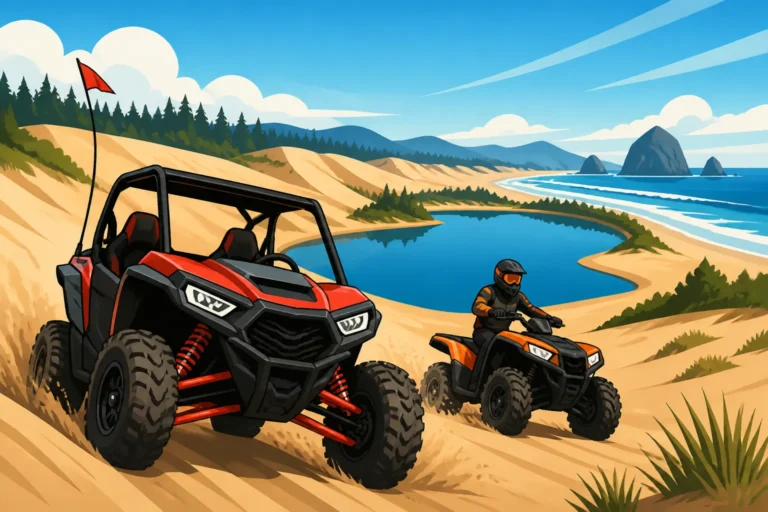
Hauser Staging on a Busy Weekend
A busy weekend at Hauser can turn a fun Oregon Dunes ride into a stressful start if you arrive without a parking plan, discover a closure, or unload in the wrong place. This guide walks through how to prepare, reach the staging area, manage trailer and machine logistics, and ride considerately when the lot and nearby routes are crowded.
Plan your Hauser visit before you leave
Check access, closures, and riding requirements
Hauser is a staging option for riding in the Oregon Dunes area near North Bend and the coast. Conditions and access can vary with season, land-management decisions, weather, and temporary restrictions. Before you tow out, check current information for the specific staging area and riding zone you plan to use. A route that was open on your last visit may not be open today, and a closure can affect how you get from the lot to the riding area.
Do not rely on a screenshot saved months ago, a friend’s memory, or a line on a general road map as proof that a route is open. Review [Oregon Trail Closures to Check First] and bring a map you can consult without cell service. An app such as onX Offroad can help you review mapped roads and trails in advance, but treat map information as a planning aid, not a substitute for posted signs or land-manager updates. If the map, sign, and verbal advice disagree, stop and verify before continuing.
Sort permits and day-use access separately
It is easy to assume that one permit covers every part of a riding day. In practice, riding permission and access or parking requirements may be separate, depending on the site and the land manager. Check what applies to your machine, your group, and the specific place where you will leave your tow vehicle. [Oregon ATV Permits Explained] is a useful starting point for understanding the state operating permit, while [Oregon Day Use Fees Explained] can help you think through site access charges.
Make these checks before the weekend rather than while a line of vehicles waits behind you. If you are bringing a machine you recently bought, borrowing a friend’s quad, or taking a side-by-side for the first time, confirm that its paperwork and decals are in order. Pack any required permit or safety-card information where you can reach it, and don’t assume that a vehicle parked at the staging area is exempt from the site’s posted rules.
| Before you go | What to confirm | Why it matters on a busy weekend |
|---|---|---|
| Riding access | Open areas, routes, and any seasonal restrictions | A closure may change your planned route or entry point |
| Machine requirements | Permit, safety requirements, and visible decal | Sorting paperwork at the lot can delay your group |
| Parking access | Day-use rules and payment method | Parking requirements may be separate from the ATV permit |
| Navigation | Current map, route notes, and offline access | Cell coverage can be unreliable in remote areas |
| Group plan | Meeting point, riding ability, and return time | People can get separated in a crowded staging area |
Arrive ready to park and unload
Choose an arrival plan that suits your group
On a popular weekend, arriving early usually gives you more room to park, unload, and brief your group before the staging area gets hectic. “Early” should mean early enough to allow for the drive, a restroom stop, trailer setup, and a careful check of your machines—not pulling in at the exact time your group expects to start riding. If you are traveling from farther away, build in a buffer for coastal traffic and the extra time it takes to maneuver a trailer.
If an early start is not realistic, decide in advance what your group will do if the lot is full or the available spaces do not suit your trailer. Avoid circling repeatedly, stopping in travel lanes, or unloading somewhere that blocks other visitors. Know where you can legally wait or regroup, and follow the signs and staff directions on arrival. The practical advice in [Where to Park a Trailer at a Staging Lot] is especially relevant when you are bringing a long tow vehicle or more than one trailer.
Make unloading orderly and considerate
Before backing into a space, look for pedestrians, children, bikes, and machines moving through the lot. A spot that seems open from the driver’s seat may be part of a turning area or a route other vehicles need to pass through. Take your time, use a spotter when backing, and agree on hand signals before the tow vehicle starts moving.
Unload only when you are safely parked and have room to do it without spreading gear into the traffic lane. Keep ramps, tie-downs, helmets, and tool bags close to your vehicle rather than scattering them around the lot. If your group needs extra time to gear up, let others pass instead of holding up the flow. The goal is not to rush; it is to make your setup predictable so other drivers can move around you safely.
Ride safely when the dunes are crowded
Set expectations before your machines leave the lot
A quick group conversation can prevent a tense ride later. Agree on who leads, who brings up the rear, where to regroup, and what everyone should do if a rider gets separated. Choose a pace that works for the least experienced rider, not the most confident one. If someone is new to sand, explain how the group will handle turns, stops, and changes in terrain before you head out.
Busy areas call for extra space and patience. Avoid following another machine so closely that the rider ahead has no room to turn or stop. Slow down near staging routes and places where people are gathering, and keep an eye out for machines coming from a different direction. A whip and flag can help make a machine easier to see over dune contours; review [Oregon Dune Flags and Whips] and check that the setup is secure before riding.
Adjust your route to the conditions
A crowded day is a poor time to push an unfamiliar line simply because another rider took it. Sand conditions can shift, sight lines can disappear behind a rise, and traffic may approach from an unexpected direction. Keep to permitted riding areas, obey posted boundaries, and do not cut across closed or sensitive sections to bypass a queue. If visibility worsens in coastal fog, slow down and increase following distance rather than trying to keep pace with a group you can barely see.
Use a map as a reference, not as a reason to continue into uncertain terrain. onX Offroad may help you review your planned area and keep location information handy, but posted closures and on-the-ground conditions take priority. If your group encounters a confusing junction, stop somewhere visible and out of the way before checking the route. [Oregon Trail Maps Worth Carrying] offers another useful reminder: have a navigation backup you can use when a phone battery dies or service drops.
Keep the day manageable from arrival to departure
Pack for delays and common dune problems
Even a short ride can take longer than expected when the lot is busy, a rider needs help, or your group has to pause for a route check. Bring water, food, basic first-aid supplies, and the tools or recovery items appropriate for your machine and experience. Check fuel before unloading, and make sure each rider knows what to do if a machine develops a problem. A phone is useful, but it should not be the only way your group can communicate or navigate.
Soft sand can catch out riders who are otherwise comfortable on trails. If a machine bogs down, avoid spinning the tires continuously; that can dig it in deeper and make recovery harder. Give other riders room while you assess the situation, and don’t attempt a recovery beyond your equipment or experience. For a practical look at the issue, see [Getting Stuck in Wet Sand]. Pack gear so you can reach essentials without unloading half the tow vehicle in the middle of the lot.
Leave the staging area as carefully as you arrived
Before loading, check that the space around your trailer is clear of people and moving machines. Secure ramps and equipment, inspect tie-downs, and do a quick walk-around before pulling out. Be patient if vehicles are waiting to maneuver; a few extra minutes is better than rushing a turn in a crowded lot.
Pack out trash and take a last look for small items such as gloves, straps, and permit paperwork. Follow posted instructions when leaving, and do not idle or park in a way that blocks other visitors. If the lot is busy, keep your group together until everyone is safely loaded and ready to depart rather than having some vehicles leave while others are still organizing gear. A calm exit helps protect the next group’s start as much as a tidy arrival helps yours.
Use a simple plan for the busiest days
A little preparation makes Hauser easier to enjoy, especially when several groups arrive at once. Confirm access and requirements, bring a reliable map, allow time for parking and unloading, and set clear expectations with your riders. Stay flexible if conditions or crowds call for a different route or a shorter day. For a wider look at how local riding options compare, see [Oregon Dune Riding Areas Compared]. If you are deciding between nearby staging choices, [Oregon Dunes Staging Areas From North to South] can help you think through the area as a whole.
onX Offroad can be part of your preparation for reviewing routes before you leave, but keep checking the signs and conditions once you arrive. The best busy-weekend plan is one that leaves room to adjust: if access is restricted, parking is full, or the group is tired, pause and reassess rather than forcing the original schedule. A flexible day is often a much better day than a rushed one.
Disclaimer
This article is for general informational purposes only and does not constitute professional advice. Laws, prices and regulations vary by location and change over time. Consult a qualified professional for guidance on your specific situation.