Oregon Rules for Riding a National Forest
Oregon national forest ATV riding depends on designated routes, a valid permit, required safety credentials, and current closures—not simply public access.
Your sticker stops at the state line.
Non-resident permits, what they cost and how long they last, and which states honor each other’s — or, increasingly, none at all.

Oregon national forest ATV riding depends on designated routes, a valid permit, required safety credentials, and current closures—not simply public access.
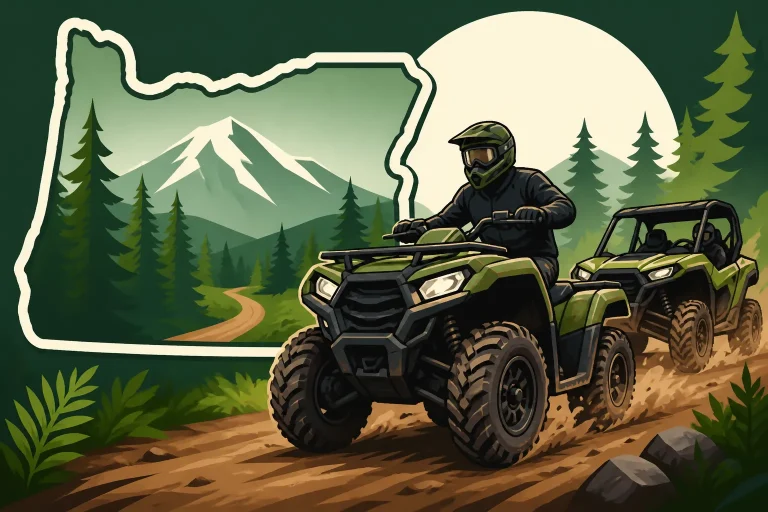
Oregon state forest ATV and UTV rules detail machine classes, operating permits, safety education requirements, and route access restrictions.
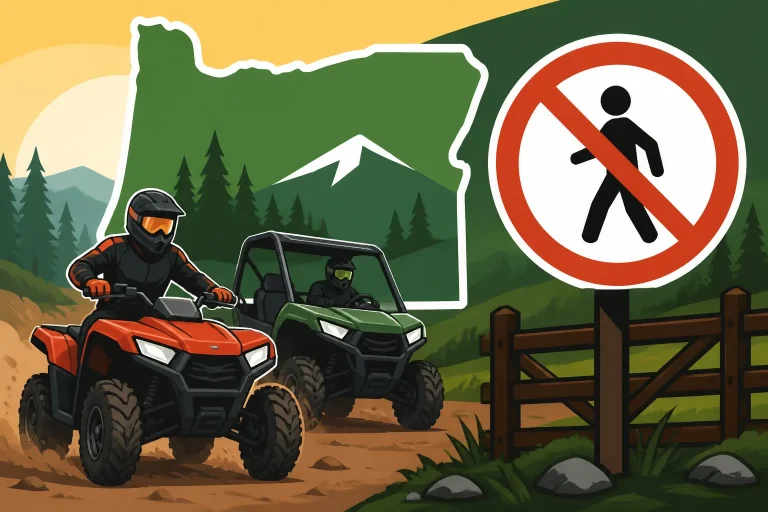
Oregon trespass rules for ATV and UTV riders: a permit does not grant land access, so confirm ownership, route status, and permission before riding.
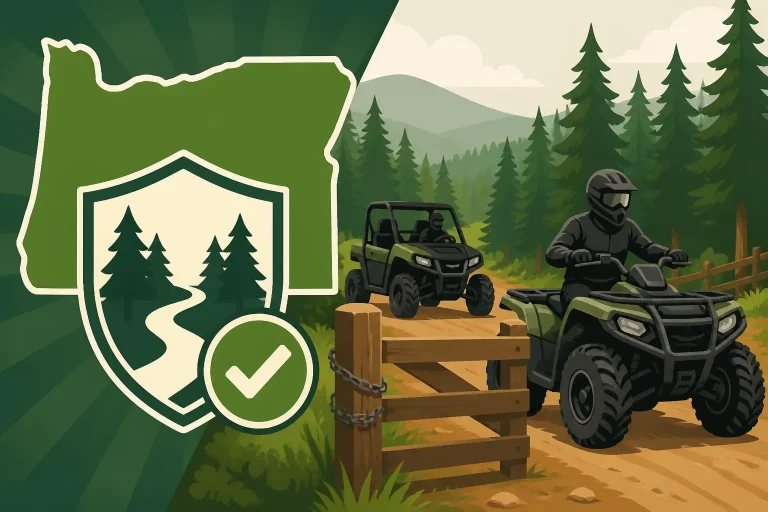
Oregon ATV riders should treat private timberland as closed without permission; permits and public-road maps do not grant access to timber roads or trails.

Oregon motorized vehicle restrictions and land manager rules explain when leaving a designated trail is prohibited.
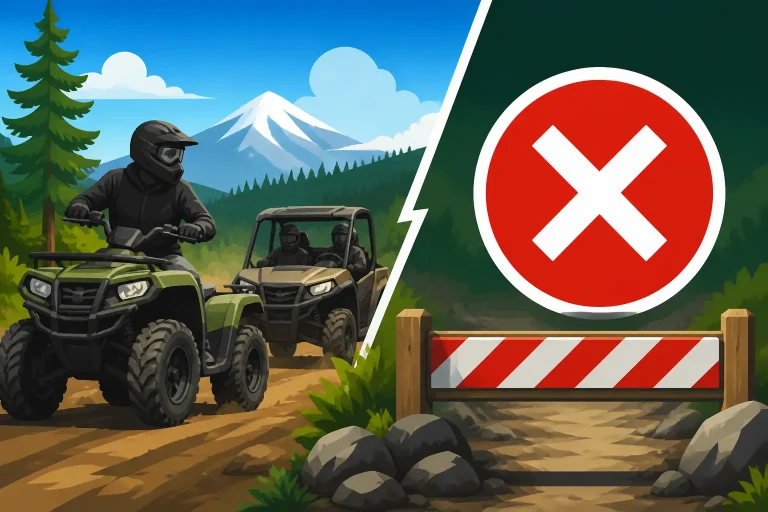
Oregon trail closures explain why motorized vehicles cannot enter certain paths despite current permits and visible maps.
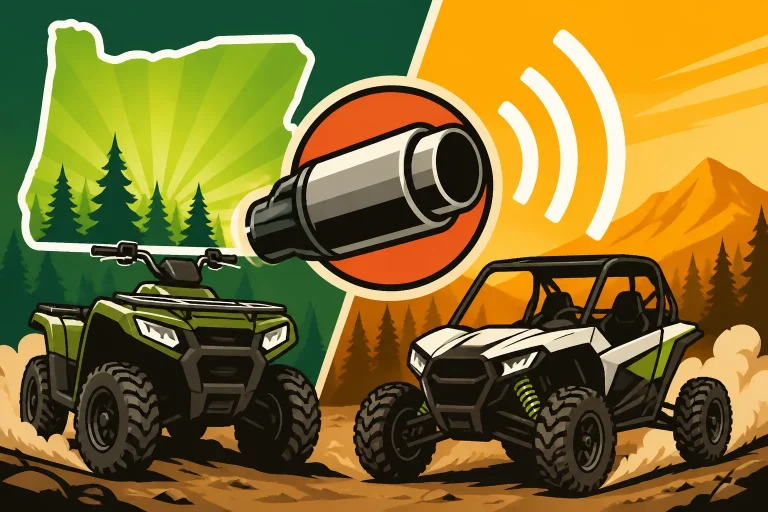
Oregon ATV and UTV exhaust rules depend on sound limits and land-manager requirements; keep a quiet, maintained muffler and check rules before riding.
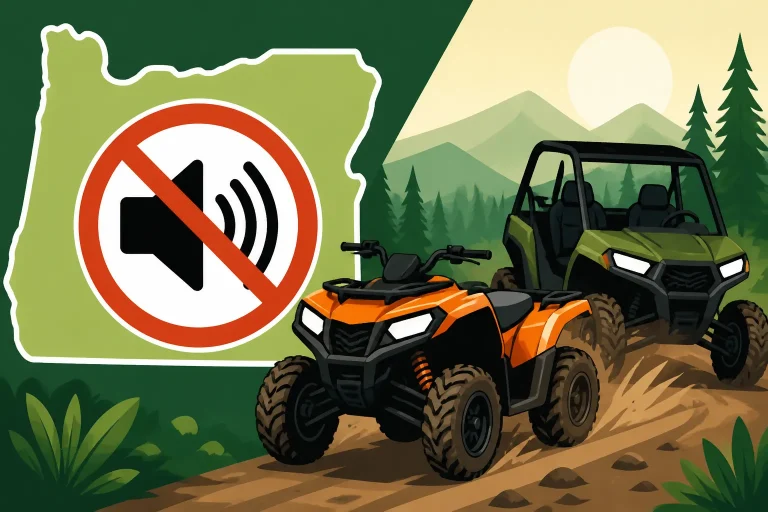
Oregon’s ATV sound limit is generally 99 dBA, but proper testing matters; check exhaust condition and riding-area rules before heading out.
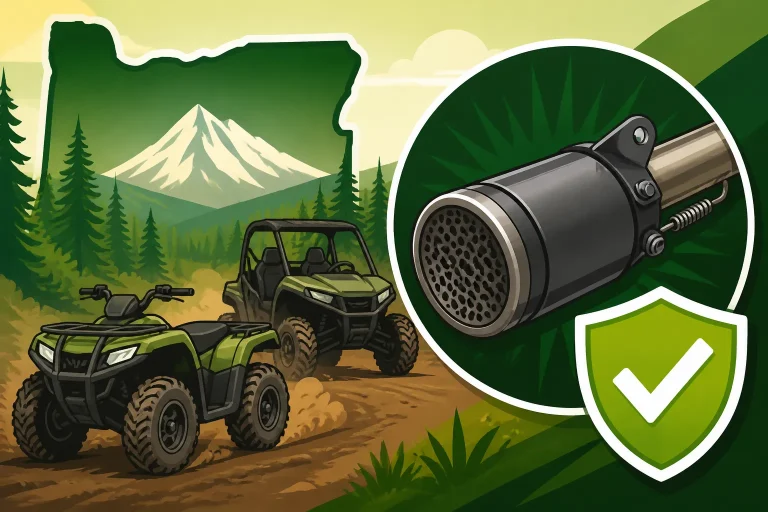
Oregon trail riders should use a working, properly documented spark arrester, inspect modified exhausts, and confirm current rules before setting out.
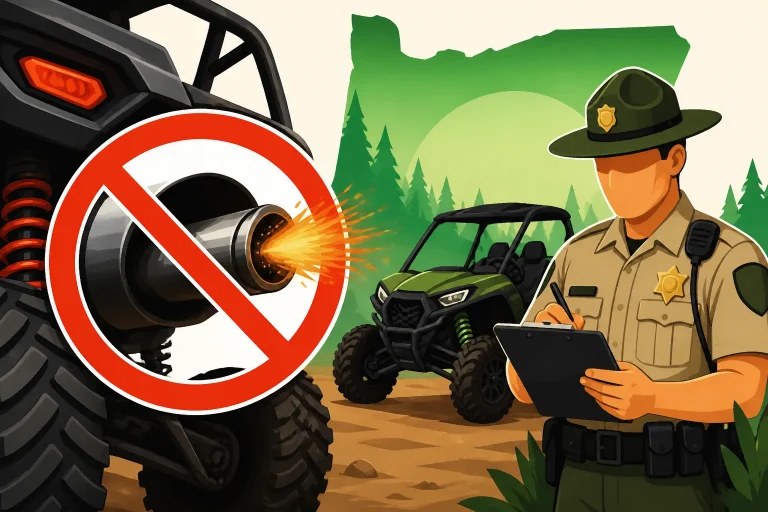
Oregon spark arrester rules can bring a citation for missing equipment; check land requirements and current penalties before riding safely.