Class II Machines That Can Be Plated in Oregon
Many off-road enthusiasts in Oregon dream of being able to legally drive their prized machines from their driveway straight to the trailhead or even to grab groceries. For most ATVs and UTVs, that dream remains just that – a dream, due to Oregon’s very specific and often confusing rules. But there's a unique category, the Class II machines, that offers a sliver of hope for street-legal registration. This guide will delve deep into the nuances of Oregon’s Class II classification and walk you through what it takes to get one of these special vehicles plated for road use.
Understanding Oregon's ATV Class System and Class II Definition
Oregon's approach to off-highway vehicles (OHVs) is quite detailed, breaking machines down into distinct classes based on their characteristics. This classification is absolutely foundational to understanding what can, and what cannot, be made street legal. While many riders simply know their machine as a "quad" or a "side-by-side," the state sees them through a very specific legal lens, and that lens determines everything from where you can ride to whether you can ever hope to get a license plate.
What Makes a Machine "Class II" in Oregon?
Oregon Revised Statute (ORS) 801.193 is where the definition of a Class II all-terrain vehicle lives, and it's a bit of a departure from what most people imagine when they hear "ATV." Unlike the nimble, straddle-seat quads of Class I or the dirt bikes of Class III, Class II machines are generally larger, heavier, and often resemble stripped-down cars more than traditional ATVs. To be specific, a Class II ATV is defined as any motor vehicle that has a dry weight of more than 800 pounds but not more than 8,000 pounds, is designed for or capable of travel over natural terrain, and is not a Class I, Class III, or Class IV all-terrain vehicle.
This means you're typically looking at vehicles like sand rails, certain types of dune buggies, or even some highly customized utility vehicles that fall outside the parameters of other classes. These are machines that, by their very nature, often blur the lines between off-road recreational vehicle and a light-duty automobile. The key here is the weight and the exclusion from other classes. If your machine is heavier than a typical quad but lighter than a standard pickup, and it wasn't designed as a traditional side-by-side (Class IV), it might just be a Class II.
Differentiating Class II from Other ATV Classes
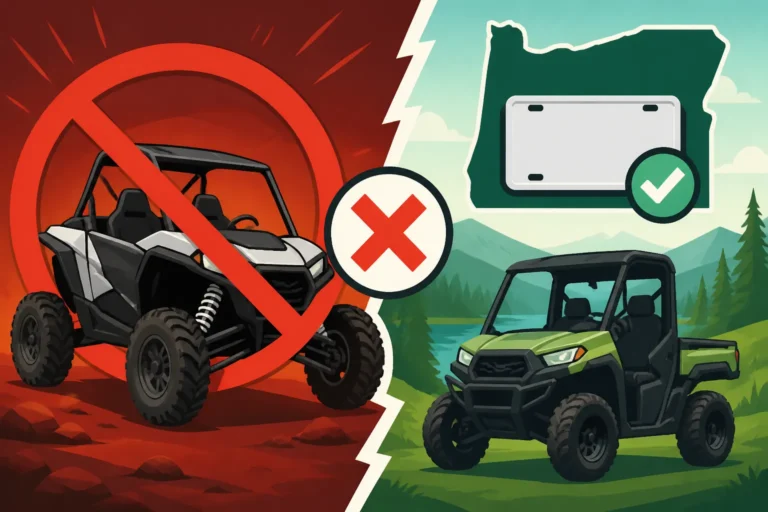
It's crucial to understand why Class II stands out when it comes to street legality. Let's briefly touch on the other classes to highlight this difference. Class I ATVs, as defined by [Oregon's Class I Under ORS 801.190], are the classic four-wheeled quads with straddle seats, usually under 50 inches wide and with a dry weight under 800 pounds. These are strictly off-highway vehicles and cannot be street-plated in Oregon. No matter how many lights or mirrors you bolt on, a Class I quad will not get a license plate.
Similarly, Class III off-road motorcycles, commonly known as dirt bikes, are also purely off-highway machines in Oregon, despite often being capable of road speeds. They are designed for one rider and for tearing up trails, not commuting down Highway 101. And then we have Class IV machines, which are primarily side-by-sides (UTVs) with non-straddle seating, steering wheels, and often roll cages. While many Class IV machines look like they should be street legal, Oregon law generally restricts them to off-highway use, with a few designated highway access routes being the exception, not the rule. You can learn more about these in [Oregon's Class IV Side-by-Sides Under 75 Inches].
The Class II category, however, is unique. Because it's a catch-all for heavier off-road vehicles that don't fit the other defined categories, it often includes vehicles that either come from the factory with some road-going features or are much easier to modify to meet basic road safety standards. This flexibility in its definition is what makes it the only ATV class in Oregon that can potentially achieve street-legal registration, though it's still a rigorous process. For a broader overview of how all these machines fit into the legal framework, check out [Oregon's Four ATV Classes Explained].
The Elusive "Street-Legal" Status for Class II Machines
The term "street-legal" gets thrown around a lot in the OHV community, and in Oregon, it's often a source of frustration and confusion. While many states have provisions for titling and registering various types of off-road vehicles for limited road use, Oregon's system is notoriously restrictive. This makes the Class II exception all the more noteworthy, even if it applies to a relatively small segment of the OHV population.
Beyond the Permit: Why Registration is Different for Class II
For the vast majority of ATVs and UTVs in Oregon – your Class I quads, Class III dirt bikes, and Class IV side-by-sides – the state offers an operating permit system. This permit, typically a decal you display on your machine, allows you to ride on designated OHV trails and certain open roads within OHV areas. It's an operating permit, not a registration in the traditional sense, and it absolutely does not grant you permission to drive on public paved roads or highways outside of very specific, designated access routes. The DMV is not involved in this permit system; that falls under the Oregon Parks and Recreation Department.
Class II machines are different. Because of their unique definition and often car-like construction, they are the only OHV class that can potentially be registered with the Oregon Department of Motor Vehicles (DMV) and issued a standard license plate, just like a car or truck. This means going through a more rigorous process that involves meeting specific equipment requirements, providing proof of ownership, and obtaining mandatory liability insurance. It's a significant leap from simply buying a decal, transforming the machine from a purely recreational off-roader to a legitimate, albeit specialized, road-worthy vehicle. This is why [Titling an ATV in Oregon Is Optional] for most classes, but crucial for a street-legal Class II.
What Kind of Class II Machines Qualify?
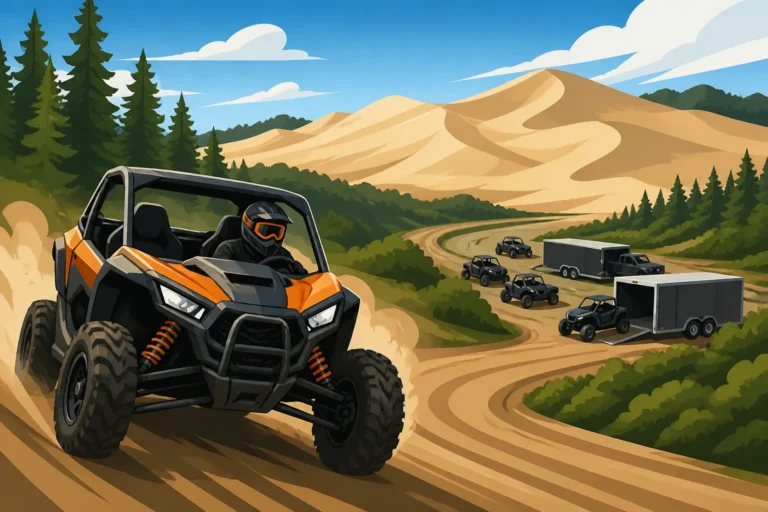
So, what types of Class II machines are actually making it onto Oregon roads with license plates? The most common examples are purpose-built sand rails and dune buggies. These vehicles, while designed for high-performance off-road fun in places like the Oregon Dunes, often have chassis and body structures that are adaptable to highway safety standards. They typically come equipped with steering wheels, bench seats, and roll cages, making the transition to road legality a more feasible endeavor than, say, trying to plate a Polaris RZR.
Think of vehicles that blend the ruggedness of off-road design with some of the basic elements of a conventional automobile. These aren't machines you'll typically find at your local ATV dealership; they're often custom builds or specialty vehicles. For instance, [Where a Sand Rail Fits in the Class System] shows they can be Class II, as can many dune buggies. While a standard side-by-side might be Class IV, a heavier, more car-like custom buggy designed for the sand, falling outside the typical Class IV weight/width limits, could find itself in Class II. The key is that these machines are more likely to have the bones – or at least the capacity for modification – to accept the necessary safety equipment for road use.
Mandatory Equipment for Street-Legal Class II Machines
Making a Class II machine street-legal in Oregon isn't just a matter of getting the right paperwork; it's about transforming the vehicle to meet a comprehensive list of safety standards. These standards are in place to ensure that any vehicle sharing public roads can do so safely, both for its occupants and for other drivers. It’s not just about what you want to add, but what Oregon requires.
Essential Safety and Lighting Requirements
Once you've determined your machine truly qualifies as Class II and you're aiming for that street-legal status, you'll need to equip it properly. This means meeting all the requirements for a standard motor vehicle in Oregon. Here’s a rundown of the typical equipment needed:
- Headlights: Must have at least two headlights, mounted at specific heights, capable of both high and low beams, and meeting brightness regulations.
- Taillights & Brake Lights: Rear-mounted taillights and brake lights are essential, signaling your presence and when you're slowing down or stopping.
- Turn Signals: Both front and rear turn signals are mandatory for indicating your intentions when changing lanes or turning. Many off-road vehicles lack these from the factory, so you'll likely need an aftermarket solution. Companies like SuperATV offer robust universal turn signal kits and lighting solutions designed for rough use, which can be invaluable here.
- Rear-view Mirrors: You'll need at least one, and often two, mirrors to provide a clear view of the road behind you. Side mirrors are crucial for safe lane changes and overall situational awareness.
- Horn: A working horn is necessary to alert other drivers or pedestrians to your presence in a hazardous situation.
- Windshield: While some off-road vehicles have small windscreens, a street-legal Class II typically requires a full, safety-glass windshield with working windshield wipers. This protects occupants from debris and ensures clear visibility in inclement weather. SuperATV also carries various windshield options that might fit the bill.
- DOT-Approved Tires: Your off-road tires, while great for the dunes, might not be suitable for highway speeds and wear. You'll need tires that are Department of Transportation (DOT) approved for street use. These tires have specific tread patterns and construction designed for paved roads, ensuring proper grip and durability.
- Seatbelts/Restraint Systems: All occupants must be properly secured with seatbelts or equivalent restraint systems, usually three-point harnesses.
- Fenders/Mud Flaps: To prevent rocks and debris from being thrown up by your tires, appropriate fenders or mud flaps are often required.
Failing to meet any of these requirements will prevent you from successfully registering your Class II machine as street-legal. It's a comprehensive list that effectively demands the vehicle be brought up to the same standard as a passenger car for road safety.
Emissions and Inspection Considerations
Oregon, unlike some other states, does not have a statewide periodic safety inspection program for motor vehicles. This means once your Class II machine is registered, you won't have to take it in annually for an inspection of its lights, brakes, etc. However, this doesn't mean there are no emissions or inspection considerations.
First, when you initially register your Class II machine, the DMV will require a Vehicle Identification Number (VIN) inspection. This is primarily to verify the VIN and ensure the vehicle isn't stolen, but the inspecting officer may also do a basic visual check to ensure it appears to meet general roadworthiness standards. You can't just slap a plate on something that clearly isn't safe.
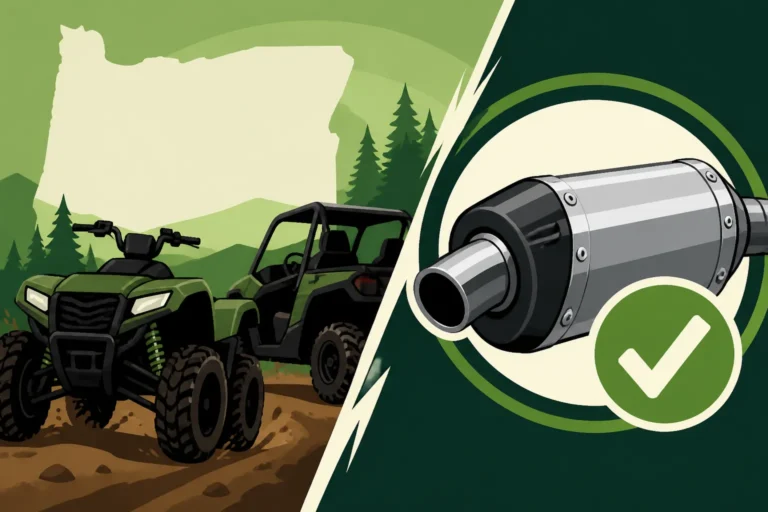
Second, while there isn't an emissions test for all vehicles statewide, certain areas, particularly the Portland metropolitan area and the Rogue Valley (Medford-Ashland), have vehicle emissions testing programs. If you reside in one of these areas, your street-legal Class II machine will be subject to these emissions tests, just like any other car. This means your engine and exhaust system must comply with clean air standards. All vehicles, regardless of location, must also have a functional exhaust system that meets sound limits and a spark arrester if it's going to be used off-road. Even if primarily for road use, [Oregon Spark Arrester Requirement] is good practice and often a requirement if it touches any OHV trails. It's always best to check with your local DMV office for specific requirements in your county, especially if you're undertaking a custom build or significant modifications.
Navigating the Oregon DMV Registration and Titling Process
So, you've equipped your Class II machine with all the necessary street-legal gear, from DOT tires to turn signals. Now comes the bureaucratic hurdle: getting it officially recognized and registered by the Oregon Department of Motor Vehicles (DMV). This isn't always a straightforward process, especially for unique vehicles like custom sand rails or dune buggies, but it's entirely doable with patience and thorough preparation.
Steps to Register Your Class II Machine
Getting a license plate for your Class II machine involves several key steps that are similar to registering any other vehicle in Oregon. Here's what you'll typically need to do:
- Proof of Ownership: This is paramount. You'll need a Certificate of Origin (MCO or MSO) if it's a new vehicle, or a title if it's been previously titled in Oregon or another state. If you bought it used from a private seller, you'll need a properly completed bill of sale in addition to the title. For custom-built machines, this can be trickier, often requiring receipts for major components and a process to obtain a state-assigned VIN.
- Application for Title and Registration: You'll fill out the standard Oregon DMV forms for titling and registering a vehicle. Be prepared to accurately describe your vehicle as a "Class II ATV" or similar designation, ensuring it fits the criteria for registration.
- VIN Inspection: As mentioned earlier, a VIN inspection is required. This can often be done by DMV staff, law enforcement, or sometimes by an authorized dealer. The purpose is to verify the VIN matches your paperwork and to ensure the vehicle is legitimate. This is where an officer might also do a quick check of basic road safety equipment, so make sure everything is installed and working before you go.
- Pay Fees: There will be various fees associated with titling, registration, and potentially plates. The exact amounts vary and should be checked directly with the Oregon DMV.
- Get Plates and Tags: Once approved, you'll receive your license plates and registration tags. These must be properly displayed on your Class II machine according to Oregon law.
The process for [Titling and Registering a Street-Legal Rail] or other Class II machines can sometimes involve extra scrutiny due to their unusual nature. Be prepared to provide additional documentation or answer detailed questions about your vehicle's specifications and how it meets road-legal requirements. Persistence and having all your ducks in a row are your best allies.
The Role of Insurance for Class II Machines
This is not an optional step; it is an absolute requirement. If your Class II machine is going to be registered for road use with the Oregon DMV, it must carry liability insurance. This is a critical distinction from the operating permit system for other ATV classes, where insurance is not universally mandated by the state (though it's always a good idea). For a street-legal Class II, proof of financial responsibility (i.e., insurance) is compulsory, just as it is for any car or truck on Oregon roads.
You will need to contact an insurance provider and obtain a policy that covers your specific Class II machine for road use. Be prepared to explain to your insurance agent that you are registering a "Class II ATV" or "Dune Buggy" for street use, as it's not a standard auto policy. They will need to know it meets the definition for a road-legal vehicle. Without current, valid liability insurance, the Oregon DMV will not issue you registration or plates. This means [Insurance Oregon Requires for Class II] is not just a suggestion, but a legal necessity before you can legally drive on public roads. This applies to every single street-legal Class II machine; there are no exceptions to [Mandatory Insurance on Every Oregon Class II].
Important Considerations and Limitations for Plated Class II Vehicles
Congratulations, your Class II sand rail or dune buggy is officially plated and street-legal in Oregon! This is a significant accomplishment, but it's crucial to understand that "street-legal" doesn't equate to "unrestricted access." Oregon has very specific rules about where OHVs, even plated ones, can actually be operated on public roads. Simply having a license plate doesn't magically open up every paved road or highway to your machine.
Where Can You Actually Ride a Street-Legal Class II?
This is perhaps the most critical point for any owner of a street-legal Class II machine: just because it has plates doesn't mean you can drive it everywhere a passenger car can go. Oregon's laws regarding OHV road access are quite conservative. Generally, even plated Class II machines are still considered OHVs, and their road use is subject to the following limitations:
- Designated Highway Access Routes: Oregon has very few designated [Oregon ATV Highway Access Route Map] sections where OHVs are specifically allowed to operate on public roads to connect trail systems or access communities. The most well-known are the routes in Lakeside and Sumpter. If you're near [Oregon's Only Two Designated ATV Routes: Lakeside and Sumpter], your plated Class II machine would be welcome on those specific segments. However, these are exceptions, not the rule, and they don't cover the entire state.
- County Roads: Many Oregon counties have ordinances that allow OHVs on certain unmaintained or gravel county roads. Some counties might also designate specific paved county roads for OHV use. However, this varies wildly by county, and you must check the local ordinances for the specific county you plan to ride in. A plated Class II might be allowed on these, but it's not a given, and signage is key. Always look for official county signage indicating OHV access.
- City Streets: Very few Oregon cities allow OHVs on their streets, even if plated. Unless a specific city ordinance explicitly permits it, assume you cannot drive your Class II machine on city streets. Some towns, for example, allow golf carts but not OHVs, regardless of plating.
- State Highways and Interstate Freeways: Generally, OHVs, including plated Class II machines, are prohibited from operating on state highways (like US 101 or Highway 97) and certainly on interstate freeways (I-5, I-84), unless it's within a specifically designated access route. These are high-speed environments designed for conventional vehicles, and an OHV, even a plated one, may not meet the speed or safety requirements for such roads.
The takeaway here is that you need to be extremely diligent in knowing the local rules of the road wherever you intend to ride your street-legal Class II machine. The license plate is permission to potentially drive on roads, but the local jurisdiction dictates which roads.
Helmet and Occupant Safety Rules
Even with a license plate, the safety rules for riding an OHV in Oregon still largely apply. Don't assume that because your Class II is street-legal, you can shed the safety gear. [Helmet Rules for Oregon Riders] are quite strict, especially for younger riders, and they extend to plated Class II machines in most scenarios.
- Helmets: If your Class II machine has handlebars (like some large custom quads or trikes) or is open-air with no fixed roof or windshield (like many sand rails), then helmet rules will generally follow those for motorcycles and OHVs. All riders under 18 must wear a DOT-approved helmet, regardless of the vehicle type or whether it's street-legal. For adults, if the vehicle is considered an "open-air vehicle" or similar to a motorcycle, a helmet is highly recommended and often legally required depending on the specific vehicle design and local interpretations. If your Class II has an enclosed cab, a full windshield, and conventional seatbelts, akin to a car, then helmet requirements might be relaxed for adults, but this is a gray area that should be clarified with the DMV.
- Passengers: [Oregon Passenger Rules in a Side-by-Side] generally dictate that passengers must have dedicated seating, footrests, and be able to reach them. For Class II machines that are often multi-seat dune buggies or sand rails, ensuring all passengers are properly seated and belted is crucial. No riding in laps, and no more passengers than the machine is designed for with proper restraint systems.
- Driver's License: A valid driver's license is absolutely required to operate a street-legal Class II machine on public roads, just as it would be for any other motor vehicle.
Operating a street-legal Class II machine is a privilege that comes with responsibility. Always prioritize safety, adhere to all traffic laws, and meticulously research the specific road access rules for your intended riding areas. The ability to plate these machines is a unique opportunity in Oregon, but it demands careful attention to detail and ongoing awareness of regulations.
| Feature | Class II (Plated & Street Legal) | Class II (Permitted Only, Not Plated) |
|---|---|---|
| Primary Authorization | Oregon DMV Registration & License Plates | Oregon OHV Operating Permit Decal |
| Governing Body | Oregon Department of Motor Vehicles (DMV) | Oregon Parks & Recreation Department |
| Road Use | General road use (with limitations) | Limited to designated OHV areas/routes |
| Mandatory Insurance | Yes (Liability required for road use) | No (But highly recommended) |
| Equipment Requirements | Full road safety equipment (lights, signals, mirrors, horn, windshield, DOT tires) | Basic OHV safety gear (headlight, taillight, spark arrester) |
| VIN Inspection | Yes (Required for initial registration) | No (Unless required for titling) |
| Driver's License | Yes (Required for road use) | No (Oregon Safety Card may be required) |
| Common Machine Types | Custom sand rails, dune buggies, some heavier utility vehicles | Custom sand rails, dune buggies, some heavier utility vehicles |
| Helmet Requirement | Varies by design, mandatory for under 18 | Mandatory for under 18, recommended for all |
Disclaimer
This article is for general informational purposes only and does not constitute professional advice. Laws, prices and regulations vary by location and change over time. Consult a qualified professional for guidance on your specific situation.