Stopping at the Edge of the Pavement
It’s a situation every off-road rider in Oregon has faced: you're out on the trails, enjoying the dust and the freedom, when suddenly, your route brings you face-to-face with a paved road. Maybe you need to cross it to get to the next section of trail, or perhaps you're just navigating a short stretch of pavement on a designated route like those in [Lakeside and Sumpter: Oregon's Only Two Designated ATV Routes]. That moment of transition from dirt to asphalt can be surprisingly stressful, filled with the fear of an unexpected citation or, worse, a dangerous encounter with fast-moving traffic. This guide is here to demystify those rules, validate your worries, and give you the confidence to navigate those paved crossings safely and legally, ensuring your adventure doesn't hit a speed bump.
The Legal Lowdown: Oregon's Rules for Crossing Paved Roads
Let's be real, nobody wants to cut their ride short with a run-in with law enforcement or, even worse, get into an accident. Understanding the specific legal requirements for interacting with paved roads is your first line of defense. Oregon isn't just making arbitrary rules; these regulations are designed to keep everyone, including off-road enthusiasts, as safe as possible on shared roadways. Ignoring them can lead to a costly [Oregon's Class C Traffic Violation for No Permit] or more severe consequences.
What Oregon Law Says About Crossing Highways
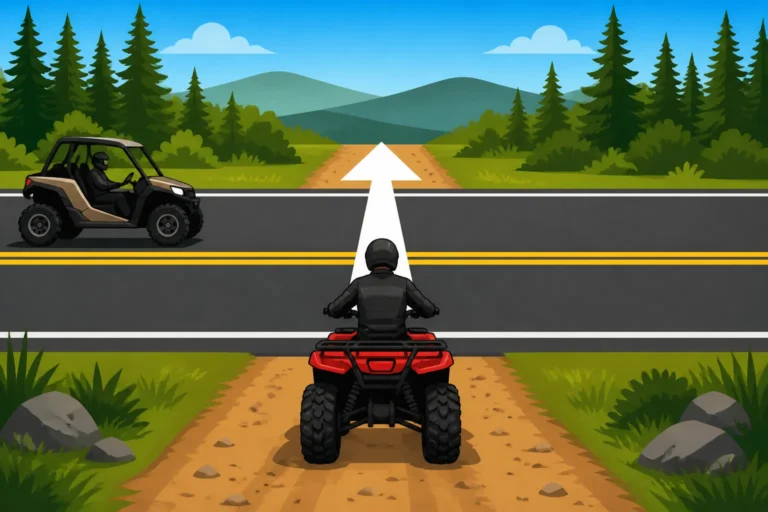
When you encounter a paved highway, whether it's a minor county road or a busier state highway, Oregon law is pretty clear on how you're expected to proceed. The core principle is straightforward: ATVs and UTVs are not generally street legal in Oregon for extended travel on public roads, with very few exceptions like Class II machines that have been properly titled and registered. However, controlled crossing of a highway is permitted under specific conditions. You must approach the highway at a nearly perpendicular, or 90-degree, angle. This isn't just a suggestion; it’s a mandated action to minimize the time your machine spends in the flow of traffic. The intent is to get you across the paved surface as quickly and directly as possible, reducing your exposure to vehicles moving at higher speeds. This is also why you're required to come to a complete stop, yield to all oncoming traffic, and only proceed when the way is absolutely clear. Think of it like crossing a busy railroad track—you wouldn't just roll onto it, would you? The same caution applies here. For more detail, refer to [Oregon Rules for Crossing a State Highway].
The "Stop at the Edge" Mandate
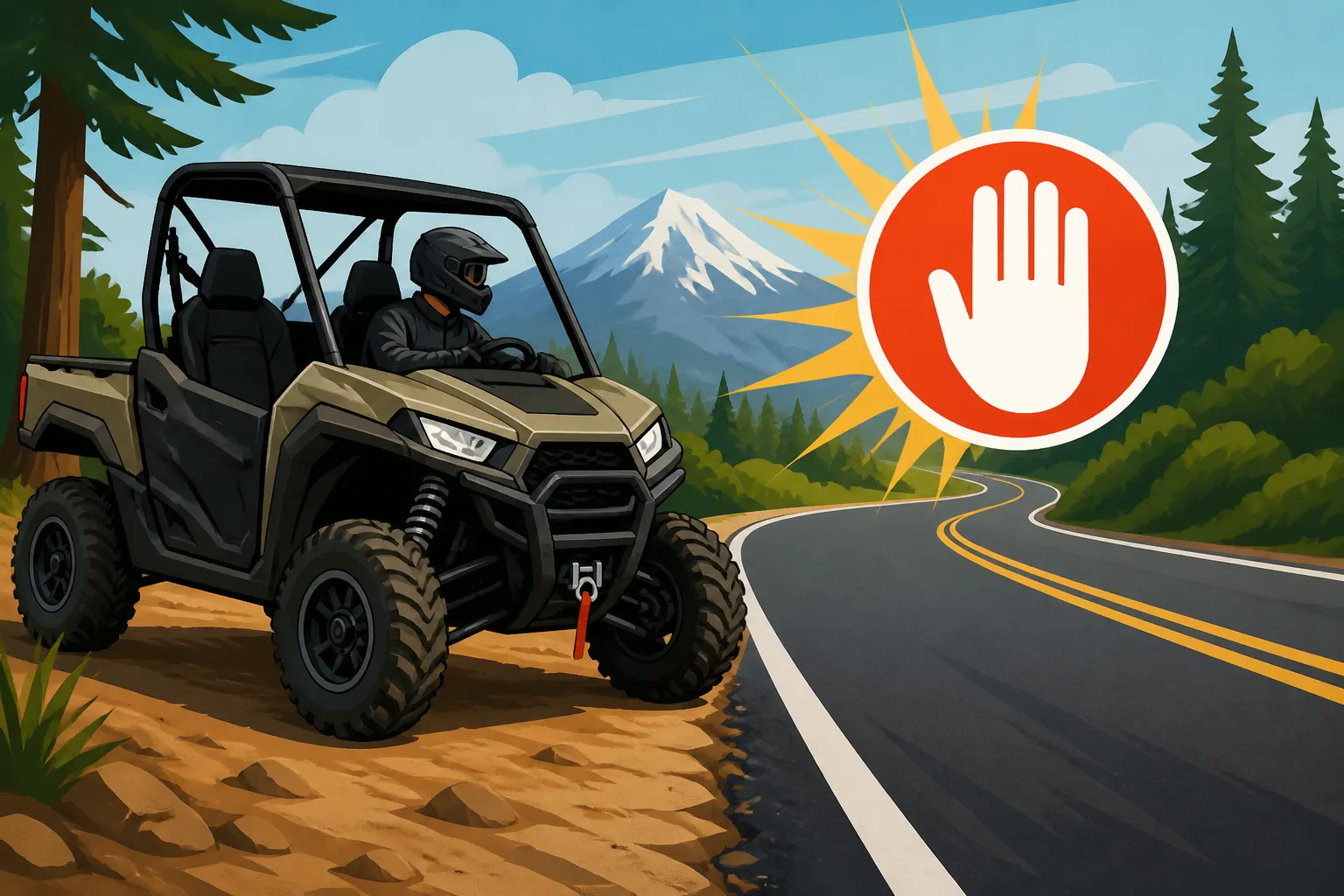
This isn't just good advice; it's a critical legal and safety requirement that every rider needs to take seriously. "Stopping at the edge of the pavement" means exactly that: bringing your machine to a complete, controlled halt before any part of your ATV or UTV enters the paved surface. This gives you a clear, unobstructed view of traffic in both directions without encroaching on the travel lane. It also provides a crucial moment for you to assess the situation fully, make eye contact with any drivers, and determine the safest window to cross. If you just slow down and roll through, you're not only breaking the law but dramatically increasing your risk. Imagine a car coming over a rise just as you're creeping onto the road—you've lost precious reaction time. This mandated stop ensures you have the maximum amount of information and time to make a safe decision.
Designated Routes vs. Crossing Points
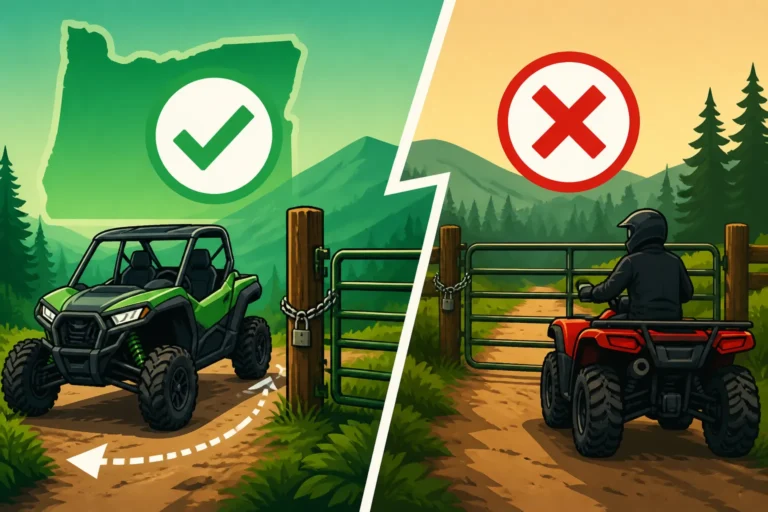
Oregon distinguishes between simply crossing a paved road and actually riding on a paved road as part of a designated off-highway vehicle (OHV) route. Most of the time, when you hit pavement, you're simply at a crossing point—a brief interlude before you get back to the dirt. However, there are exceptions. As mentioned, communities like Lakeside and Sumpter have carved out [Oregon's Only Two Designated ATV Routes: Lakeside and Sumpter] where ATVs and UTVs are allowed to operate on specific paved sections to connect trails or access services. Even on these designated routes, the principles of safe road interaction still apply, but the legality of prolonged travel changes. When you're on a designated route, you might be sharing the road with regular vehicle traffic for a quarter-mile, a mile, or even more. This means you need to be familiar with general road rules, like [Riding the Right Edge of a Roadway], and ensure your machine meets any specific requirements for these routes, such as proper lighting or mirrors, even if they aren't strictly mandated for trail riding. The key is knowing which scenario you're in: a quick, perpendicular crossing, or legitimate (but still cautious) travel on a designated paved section.
Safety First: Best Practices for Pavement Crossings
While knowing the law is essential, true safety goes beyond just compliance. It's about developing smart habits and having a proactive mindset every time your tires touch tarmac. The highway is a vastly different environment than the trail, and approaching it with the same casual attitude can lead to serious trouble.
Scouting Your Crossing
Before you even get close to the paved road, start thinking ahead. As you approach a known crossing, or when you unexpectedly come upon one, do some quick reconnaissance. What are the sight lines like in both directions? Are there blind corners, hills, or dense vegetation that could obscure your view of oncoming traffic? What's the volume of traffic like on this particular road? A quiet backroad will require a different level of caution than a busy state highway. Look for any warning signs for drivers indicating an upcoming OHV crossing, and be aware that they might not exist, or drivers might ignore them. If visibility is poor, consider having a spotter, if you're riding with a group, or even walking to the edge of the pavement yourself to get a better look before bringing your machine up. This foresight can literally save your life. Think of it as a pre-flight check for your crossing.
The Full Stop: More Than Just Slowing Down
This can't be stressed enough: a full and complete stop is non-negotiable. We’re not talking about a rolling stop or a hesitant creep. Your wheels should be completely still, your foot on the brake, giving you ample time to scan the road thoroughly. This means looking left, then right, then left again. Seriously, do it multiple times. Traffic often comes faster than you expect, and a car that looks far off can be on you in seconds. If possible, try to make eye contact with any approaching drivers to confirm they see you. Remember, your machine is likely much smaller and slower than most road vehicles, and even bright colors or accessories from brands like SuperATV might not catch the eye of a distracted driver. When you finally decide to cross, do so decisively, but without excessive speed that could compromise control. You want to be quick, but controlled.
Crossing with a Group
Riding with friends adds a layer of fun to any adventure, but it also adds complexity to paved road crossings. Group crossings require clear communication and a well-thought-out plan. It’s rarely a good idea for an entire group to cross all at once, unless the road is absolutely deserted. Instead, designate a lead rider to assess the situation and a tail rider to ensure everyone gets across safely. Communicate using hand signals, radios, or even just yelling clear instructions. A common strategy is to cross one or two machines at a time, creating smaller, more manageable crossing units. This allows the lead machine to clear the road, and then signal for the next one to go. Make sure there’s enough space between machines crossing so that if a vehicle does appear unexpectedly, it doesn’t create a chain reaction. Be patient with each other, and never pressure someone to cross if they don't feel it's safe. It's better to wait a few extra minutes than to risk a major incident.
Here's a quick checklist to help you remember the key steps for any pavement crossing:
| Action | Why It Matters |
|---|---|
| Full Stop at Edge | Legal requirement, maximum visibility & reaction time |
| Look Left-Right-Left | Thorough check for all approaching traffic |
| Signal Your Intent | Warns other drivers (if your machine is equipped) |
| Yield to All Traffic | Safety first; prevent collisions at all costs |
| Cross at 90 Degrees | Minimize time spent on the paved surface |
| Communicate in Group | Ensures coordinated and safer group crossings |
Gear Up for Visibility and Control
Your machine's setup plays a significant role in how safely you can navigate these road interactions. While many ATVs and UTVs are designed for the dirt, a few modifications or even just ensuring your existing gear is in top shape can make a huge difference when you briefly hit the pavement.
Essential Lighting and Signaling
For the most part, trail machines aren't required to have the same sophisticated lighting and signaling systems as street-legal vehicles. However, when you're crossing or briefly riding on a paved road, any extra visibility you can gain is invaluable. If your UTV has factory turn signals, use them! If not, consider aftermarket kits from companies like SuperATV that offer LED turn signals and brake lights. Even a bright, clean headlight and taillight can make a huge difference, especially if you're out near dusk or in foggy coastal conditions. Remember, you want to be seen. [Oregon Lighting Requirements for Road Use] outlines what’s required for any vehicle operating on a road, and while ATVs crossing aren't strictly held to all these for a brief moment, making your machine as visible as possible is always smart. A bright whip flag, usually associated with dune riding, can also help drivers spot you from a distance, particularly if there are dips or rises in the road ahead.
Tires for Mixed Terrain
Most off-road tires are fantastic in the dirt, mud, and sand, but they can be a compromise on pavement. Aggressive knobby tires have less contact patch on hard surfaces, reducing grip and increasing stopping distances. While you're not going to swap tires just for a road crossing, being aware of this limitation is key. On pavement, brake more smoothly, avoid sudden steering inputs, and be mindful that your traction isn't what it would be on the dirt. If you frequently find yourself on designated mixed-use routes or crossing paved sections, considering a slightly less aggressive all-terrain tire can offer a better balance of performance and safety across different surfaces, without completely sacrificing your off-road capability.
Helmets and Protective Gear
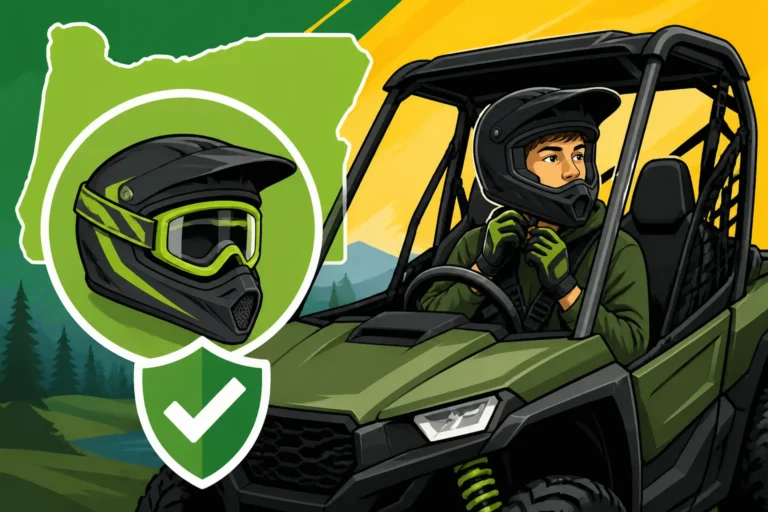
This should be a no-brainer, but it's worth reiterating. You should always be wearing your [Oregon Helmet Law for ATV Riders] compliant helmet and other protective gear whenever you're on your ATV or UTV, regardless of the terrain. Even a brief crossing on a paved road carries the risk of a serious accident, and your helmet is your most crucial piece of safety equipment. Don't be tempted to take it off for "just a minute" or for "only a quick crossing." An impact on pavement can be unforgiving, and a helmet significantly reduces the risk of head injuries. Ensure your helmet is DOT-approved, fits correctly, and is securely fastened. Goggles are also important to protect your eyes from dust, debris, and potential glare from passing vehicles.
Common Pitfalls and How to Avoid Them
Even with the best intentions and knowledge, it's easy to fall into certain traps that can compromise your safety and adherence to Oregon's ATV rules. Being aware of these common mistakes can help you steer clear of trouble.
The "Quick Dash" Temptation
We’ve all felt it: that impatient urge to just quickly zip across the pavement when there’s a small gap in traffic. It feels efficient, fast, and like you’re minimizing your time in harm’s way. However, this "quick dash" mentality is incredibly dangerous. It often leads to rushing your observation, misjudging speeds, and taking unnecessary risks. That split-second you save isn’t worth the potential consequences. Law enforcement is very aware of these common behaviors and often patrols areas with frequent OHV road crossings. A trooper or sheriff’s deputy checking [What an Oregon Trooper Checks Roadside] can easily spot a rolling stop or a hurried crossing, leading to a citation. Resist the urge to rush. Take your time, make your full stop, and cross only when you are absolutely certain it's safe.
Misjudging Traffic Speed
It's astonishing how quickly a vehicle can close the distance on an open road. What looks like a safe distance when you're perched on your quad on the shoulder can shrink dramatically in seconds. This misjudgment is a common cause of close calls. Drivers on paved roads are often traveling at highway speeds (55-65 mph), which is vastly different from the speeds you encounter on trails. Their braking distances are much longer, and they might not be expecting an OHV to suddenly appear from a side trail. When you’re at the edge of the pavement, focus on vehicles that are far away but approaching rapidly. If you have any doubt about whether you have enough time to safely cross before they reach your position, wait. Patience is your best friend here.
Impatient Drivers and How to Handle Them
Sometimes, you’ll encounter drivers who are less than thrilled about having to slow down for an ATV crossing. They might honk, wave impatiently, or even try to squeeze past you. While frustrating, it’s crucial not to let their impatience dictate your actions. Never, under any circumstances, allow another driver's aggressive or hurried behavior to pressure you into making an unsafe crossing. Their impatience isn’t worth your safety or the risk of a collision. Remain calm, stick to your safe crossing procedure, and only proceed when you are confident it's clear. If a situation feels too tense or unsafe due to another driver's actions, consider waiting for them to pass completely, or even finding an alternative, safer crossing point if available. Your ride should be about enjoyment, not about succumbing to road rage.
Navigating the occasional paved road crossing is a part of the Oregon off-road experience. By understanding the laws, practicing safe habits, ensuring your machine is visible, and avoiding common pitfalls, you can confidently and safely transition between the dirt and the pavement, keeping your focus on the adventure ahead.
Disclaimer
This article is for general informational purposes only and does not constitute professional advice. Laws, prices and regulations vary by location and change over time. Consult a qualified professional for guidance on your specific situation.