Class IV Cards Only for Riders Under 16
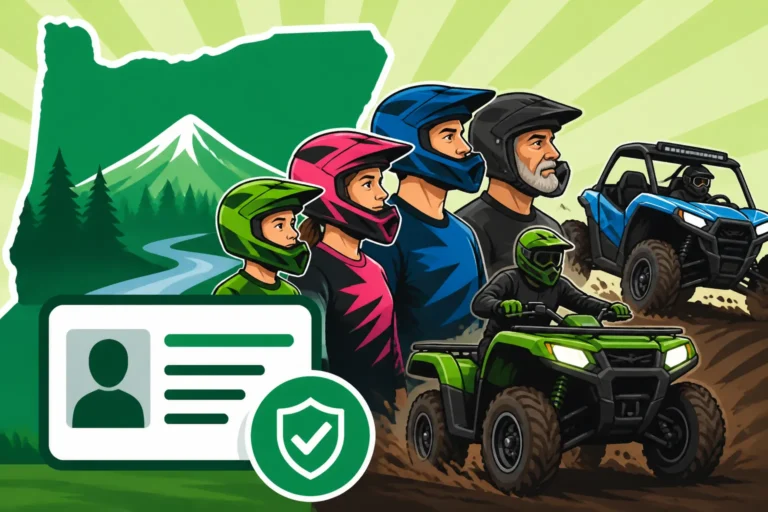
A side-by-side can make Oregon’s safety-card rules seem simpler than they are: an adult operator generally does not need an ATV safety education card for a Class IV machine, but an operator under 16 does. The card is only one part of the rules. Here’s how to tell who needs it, what it does—and does not—allow, and what families should check before riding.
When a Class IV Operator Needs an Oregon Safety Card
For a Class IV ATV, the safety-card requirement hinges on the operator’s age. A rider under 16 must have the required ATV safety education card. An adult operating a Class IV machine generally does not need that card just because the vehicle is a side-by-side or another Class IV ATV.
That distinction is easy to miss because “ATV safety card” can sound like a universal credential for every person who operates every off-highway vehicle. Oregon’s requirements vary by ATV class. Class I and Class III operators have different card rules, and Class II machines have their own considerations, including the role of a valid driver’s license. For the broader overview, see Oregon ATV Safety Card Requirements.
| Machine or operator | Safety-card rule to keep in mind |
|---|---|
| Class IV operator under 16 | Must meet the Class IV safety-card requirement |
| Adult Class IV operator | Generally does not need an ATV safety card for operating a Class IV machine |
| Class I or Class III operator | Separate card rules apply; do not assume the Class IV age exception carries over |
| Class II operator | Check the rules for Class II, including whether a driver’s license changes the requirement |
The table is a quick guide, not a substitute for checking the rule that applies to the specific machine and rider. If you are uncertain about the vehicle’s class, start with Which Oregon ATV Class Your Machine Falls Into. A machine’s appearance alone is not a reliable way to classify it. Width, weight, seating, and steering features can matter.
The age in question is the age of the person operating the machine, not the age of the person who owns it or the adult who is riding along. If a parent drives the side-by-side and a child is a passenger, the child is not operating it. If the child takes the controls, even briefly, the child is the operator and the under-16 card requirement matters.
That is also why it helps to be precise about what “riding” means in your family’s situation. The rules for a child who is a passenger are not automatically the same as the rules for a child driving. A parent should check the separate passenger and youth-operation requirements before planning a ride. The card does not determine whether a child may ride in a particular seat or whether a particular machine is appropriate for that child.
If you are comparing a side-by-side with another ATV, do not transfer the Class IV exception to a quad, dirt bike, or other machine without checking its class. Class I and Class III requirements are explained in Class I and Class III Card Rules in Oregon. Class II has a separate treatment as well; a driver’s license can affect the card requirement in situations covered by When an Oregon Driver’s License Replaces a Safety Card.
What the Card Does—and What It Does Not Do
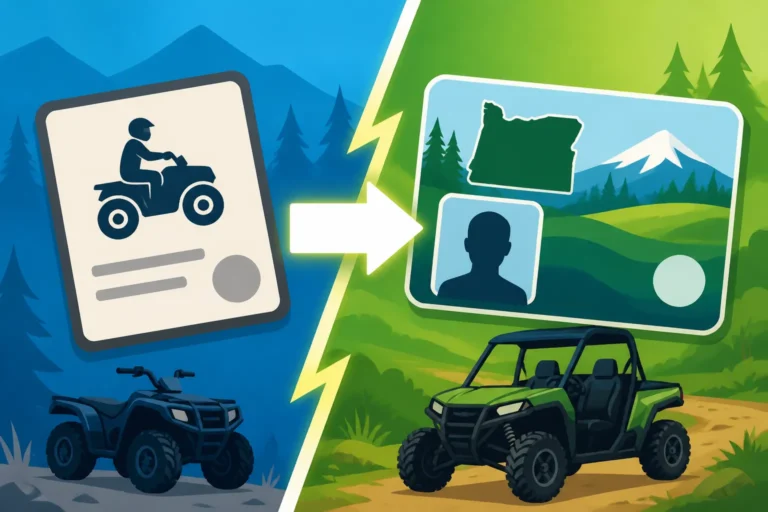
An Oregon ATV safety card shows that the operator has met the relevant safety-education requirement. It is not a vehicle permit, registration document, driver’s license, or blanket authorization to ride anywhere.
For a young Class IV operator, the card should be treated as one item in a larger checklist. It does not by itself establish that the rider meets every age, supervision, passenger, helmet, or operating requirement. A child may have a card and still be too young for a particular machine or situation, or may need to ride under conditions set by the applicable rules.
The safety card is also separate from the ATV operating permit. Oregon’s permit applies to the machine and is generally shown with a decal; the safety card applies to the person who operates it when required. One does not replace the other. Before heading to an OHV area, check both the machine’s permit status and the operator’s education requirements. If your vehicle is a side-by-side, Oregon ATV Permit for a Side-by-Side explains the permit side of the picture, while Oregon ATV Permit Decal Placement can help you check where the decal belongs.
A useful way to remember the difference is:
- Safety card: a rider-related education credential.
- Operating permit: a machine-related permit or decal.
- Other riding rules: requirements that may apply to age, supervision, equipment, passengers, location, and conduct.
A safety card is not permission to operate a Class IV ATV on a public road. Oregon’s off-highway vehicle rules and road-access rules are separate. Nor does a card make an unpermitted machine compliant, make a closed trail open, or establish that a rider can safely handle the machine. You still need to follow the rules for the riding area and the machine.
The same caution applies to out-of-state credentials. A visitor should not assume that a safety card, course completion record, or permit from home automatically meets Oregon’s rules. The state treats safety-card reciprocity and permit reciprocity as separate questions. If you are bringing a machine or credential from elsewhere, see Does Oregon Accept an Out-of-State Safety Card? and Oregon Permit Reciprocity List.
For families, this distinction prevents a common last-minute misunderstanding: a child’s card may cover the education requirement, but the adult still needs to confirm that the machine is properly permitted and that the planned riding area allows the use intended. Having the card in a pocket does not settle those other questions.
How an Under-16 Rider Can Meet the Requirement
If a young person will operate a Class IV machine, plan for the safety-card requirement before the trip rather than trying to sort it out at a staging area. Oregon provides a safety education process for riders, and the card can be obtained by completing the applicable course requirements. The practical steps are straightforward, but families should allow time for course completion and make sure they can show proof afterward.
Complete the correct course
Use Oregon’s ATV safety education process, not a general online video or a course from an unrelated activity. Course options and steps can depend on the rider’s situation. Start with How to Get an Oregon ATV Safety Card and confirm the current process before enrolling.
The course is intended to teach more than how to start and steer a vehicle. Young operators need to understand basic controls, protective equipment, terrain, visibility, safe following distance, and how to respond if the machine becomes stuck or develops a problem. A side-by-side can feel car-like, but off-road surfaces, steep slopes, soft ground, and sudden changes in traction create risks that are not the same as ordinary road driving.
Do not treat the card as a substitute for practice. An adult should help the young rider become familiar with the specific machine in a controlled setting, follow the manufacturer’s instructions, and avoid terrain that exceeds the rider’s ability. A safety course provides a foundation; it cannot judge whether a particular child is ready to drive a particular vehicle.
Keep proof accessible
Once the rider has met the requirement, make sure the card or acceptable proof is available on the ride. A credential that is at home will not be much help if an officer or land manager asks to see it. Check what form of proof is accepted and keep it somewhere protected from rain, mud, and accidental loss.
Some families keep a physical copy in a waterproof pouch with other ride documents. A small pouch or document sleeve sourced through a retailer such as Amazon may be useful, but it should be secured so it cannot fall out or interfere with the vehicle’s controls. A phone can also be helpful if the card is available electronically, but do not rely on a device with a low battery, weak signal, or a screen that cannot be accessed in wet conditions.
For riders who also carry a permit card or other paperwork, store each item so it is easy to identify. Do not confuse the rider’s safety card with the machine’s permit decal or any ownership document. A simple checklist on the tow vehicle or in a riding bag can help a family confirm that the right items are packed.
Confirm any hands-on or follow-up requirement
Some safety-education pathways may involve more than a single online step. Before assuming the process is complete, verify whether the rider has any remaining course, practical training, or documentation requirement. Requirements can depend on the rider’s age and the course route selected. The state’s current instructions are the place to confirm what remains.
A parent should also keep a record of completion and know how to replace or retrieve proof if it is misplaced. See Oregon Safety Card Replacement for the replacement question. Avoid waiting until the morning of a trip to discover that the card is missing or that an unfinished course step remains.
The Card Is Not the Whole Youth-Riding Rule
The card answers one question: whether a rider has met an education requirement that applies to them. It does not answer every question about whether a young person may operate the machine, where they may ride, or what supervision is required.
Oregon has separate rules for young riders, and details can depend on age and vehicle class. Before letting a child drive, check Oregon Rules for Riders Under 16 and Oregon Supervision Rules for Young Riders. Do this even if the child has a safety card. The purpose is to confirm the full set of conditions, not to make the card do more than it does.
A responsible adult should consider the following before handing over the controls:
- Is the machine actually Class IV? Confirm the classification from reliable vehicle information rather than guessing from its shape or brand.
- Is the young operator allowed to use this machine under the current age rules? A card does not override a minimum-age or supervision condition.
- Does the rider understand the controls? Make sure the child can use the steering, brakes, throttle, seat belt, and any other safety features correctly.
- Is the machine suitable for the rider? The operator should be able to reach and use the controls properly and remain secure in the seat.
- Are all occupants properly seated and restrained? Follow the vehicle’s seating capacity and safety instructions. Do not carry a passenger in a position without a proper seat and restraint.
- Is the route appropriate? A new operator should not start on steep, crowded, unfamiliar, or technically demanding ground.
- Are the permit and location rules in order? Check the machine’s permit and the riding area’s current access rules before leaving.
The difference between operating and being a passenger matters especially in a family side-by-side. An adult may drive while a child rides in a designated passenger seat, subject to applicable passenger and restraint rules. That is not the same as letting the child operate the ATV. If the child drives, the child’s age and card status become relevant.
Supervision should be active rather than symbolic. An adult standing far away or driving another machine out of sight may not be able to help quickly if a young operator gets into trouble. Keep the ride within the child’s demonstrated ability, agree on simple signals and stopping points, and make sure the child knows not to follow other riders onto an unfamiliar route.
It is also worth setting family rules before the engine starts. For example, decide who may drive, where a young operator may go, when the group will stop, and what the child should do if separated. A clear plan is easier to follow than instructions shouted over engine noise.
Parents sometimes focus on the card because it is easy to verify, while overlooking fit and comfort. Check that the rider can see clearly, reach the controls without stretching, and sit securely with the restraint properly used. A helmet and other appropriate protective equipment should fit the rider, not just be an adult size adjusted as far as it will go. A family may find replacement straps, goggles, or storage gear on Amazon, but check that any equipment is appropriate for the rider and the activity rather than choosing by appearance alone.
For an adult operator, the absence of a Class IV safety-card requirement does not mean training is unnecessary. A driver who is new to side-by-sides can benefit from learning the controls, understanding rollover risks, and practicing on manageable terrain. The legal exemption is not a safety recommendation.
Common Questions Before a Side-by-Side Ride
Does every person in a Class IV machine need a card?
No. The rule discussed here is about the person operating the Class IV ATV, not every passenger. A passenger does not become an operator simply by riding along. Passenger eligibility, seating, restraints, and age-related rules are separate, so check them before carrying children. If the child takes the controls, treat the child as the operator and apply the under-16 card requirement.
Does an adult need a card if the adult is new to riding?
Generally, the Class IV safety-card requirement is not imposed on an adult operator simply because they are new to the machine. But being exempt from the card requirement is not the same as being experienced or prepared. Read the owner’s manual, learn the controls, use required safety equipment, and practice in a low-risk area before tackling demanding terrain.
Does having the card mean the young rider can drive any side-by-side?
No. The card does not make every machine appropriate or legal for every young rider. Confirm the current age, supervision, and operating conditions for that rider and vehicle. Also check the manufacturer’s seating and occupant guidance. A card should never be used as a shortcut around a rule that limits the machine or situation.
Is a permit decal the same thing as the safety card?
No. The decal is connected to the machine’s operating permit, while the safety card is connected to the operator’s education requirement. If you are preparing for a ride, check both separately. A rider may have the required card while the machine lacks a current permit, or a machine may display its permit decal while a young operator still needs a safety card.
What if the machine’s class is uncertain?
Do not decide based only on the model name, a seller’s description, or a vehicle’s general appearance. Oregon’s classes depend on specific characteristics. Check the machine’s specifications and use Which Oregon ATV Class Your Machine Falls Into as a starting point. If the class is still unclear, confirm it with the appropriate Oregon program or authority before relying on an age-based exception.
What if a visitor’s child already has a card from another state?
Do not assume it will be accepted in Oregon. Oregon has distinct reciprocity rules for safety cards and operating permits, and a credential from one state may not qualify just because it looks similar. Check the current card-recognition rules before traveling. This is particularly important when the family is planning a short visit and expects to ride as soon as they arrive.
Should a family carry a printed copy?
A printed copy can be a useful backup if the rules and card format allow it. Keep it dry and separate from items likely to be left in the tow vehicle. If you use a phone-based copy, keep the phone charged and accessible. Some riders use a waterproof document pouch found through Amazon or another retailer; choose one that stays secure and does not distract the driver or obstruct the controls.
What should we check the day before a ride?
Confirm that the machine’s class is understood, the young operator’s card requirement is satisfied, and any age or supervision conditions have been checked. Then verify the permit decal, riding-area access, route conditions, and safety equipment. A quick final check is much easier than sorting out a missing card, unclear machine classification, or closed route at the trailhead.
For a young Class IV operator, the safest approach is to treat the card as a starting point, not the finish line. Verify the rider’s eligibility, practice on the actual machine, follow supervision and passenger rules, and make sure the vehicle and riding area are ready for the trip.
Disclaimer
This article is for general informational purposes only and does not constitute professional advice. Laws, prices and regulations vary by location and change over time. Consult a qualified professional for guidance on your specific situation.