Does a Roof and Roll Bar Replace a Helmet?
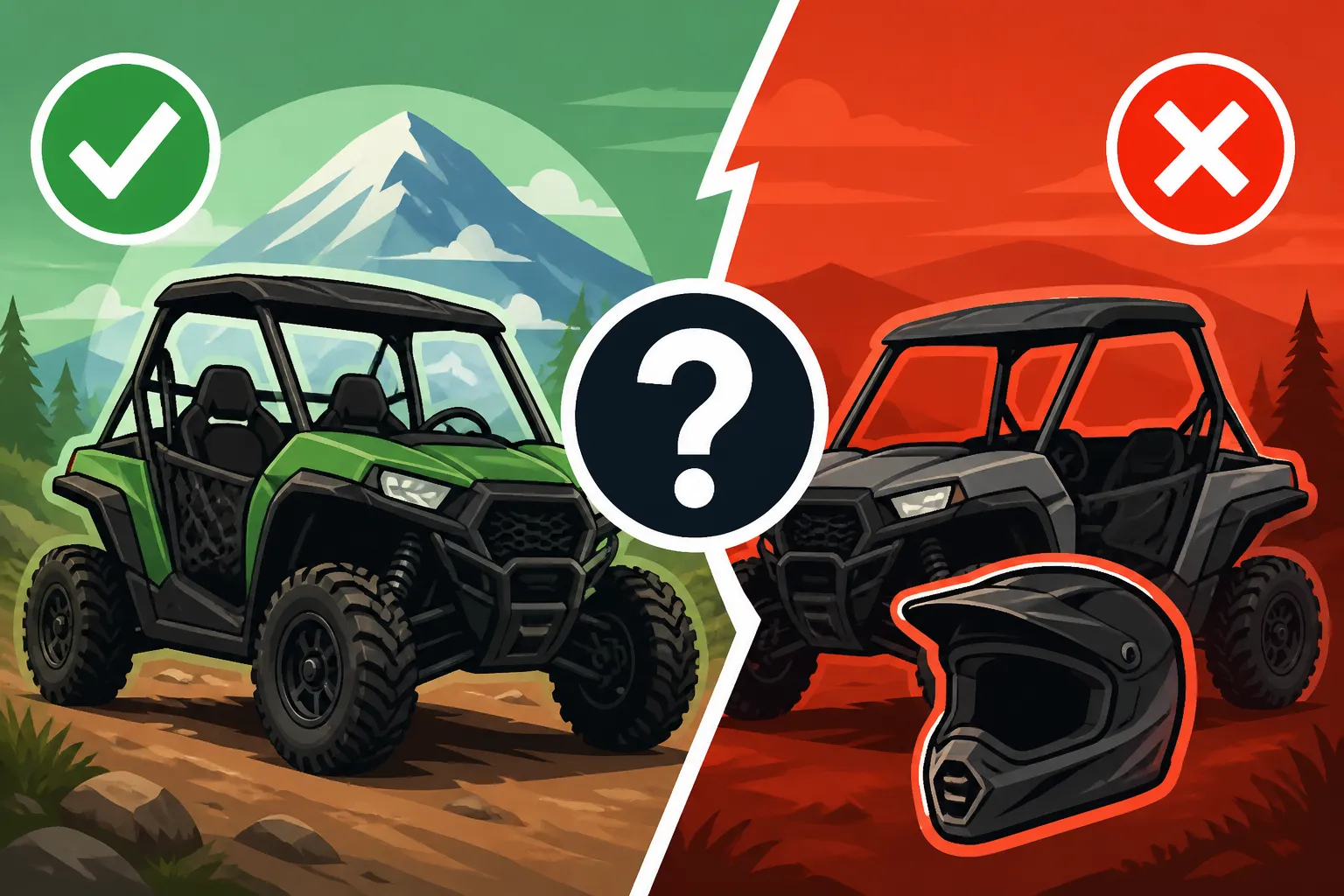
It’s a common sight out on the trails or at the dunes: a shiny new side-by-side, equipped with a sturdy roll cage, a sleek aftermarket roof, and perhaps even doors. You see riders strapped in with multi-point harnesses, feeling secure, and naturally, the question often pops up: do all these factory and aftermarket safety features mean you can finally ditch the helmet? Unfortunately, for many riders navigating Oregon’s diverse landscapes, the answer isn’t as simple as you might hope, and often, it’s a resounding “no.” This guide will cut through the confusion and explain exactly when and why an Oregon-approved helmet is still absolutely mandatory, even with all the bells and whistles of a modern OHV.
Oregon’s Clear Stance: The Helmet Is Non-Negotiable for Most
Let’s get straight to the point: for the vast majority of off-road vehicle (OHV) riding in Oregon, a helmet is legally required, regardless of whether your machine has a roll cage, a roof, or even fancy doors. This isn’t just a suggestion; it’s a core component of Oregon’s commitment to rider safety, particularly for those on public lands managed by entities like the Oregon Parks and Recreation Department (OPRD), the Forest Service, or the Bureau of Land Management (BLM). The state’s regulations are designed to minimize serious head injuries, which are tragically common in ATV and UTV accidents.
Think about it: even with a roll cage, a sudden rollover or impact can cause your head to strike internal components of the vehicle, or you could be ejected. A helmet provides that crucial layer of protection, absorbing impact forces that a cage simply can't. It’s about protecting the most vulnerable part of your body. Oregon's rules are quite specific about who needs to wear one and under what conditions, leaving little room for interpretation for most off-road scenarios.
The law applies broadly across all types of terrain, from the sprawling Oregon Dunes to the dense forest trails of the Tillamook State Forest or the high desert landscapes of Millican Valley. Whether you’re kicking up sand, navigating rocky terrain, or cruising on a gravel forest road, if you’re on an OHV, you need to understand and comply with these helmet laws. It's not just about avoiding a citation; it's about protecting yourself and your loved ones from severe injury in an unexpected incident.
Who Must Wear a Helmet in Oregon?
Oregon’s helmet law is pretty straightforward for off-road riding:
- Anyone under 18 years of age: This is the big one. If you’re a minor, you must wear a helmet when operating or riding as a passenger on any Class I, II, III, or IV ATV. There are no exceptions for enclosed vehicles or roll cages here. Period. This rule is absolute, reflecting the state's focus on protecting younger, often less experienced, riders.
- Adults on Class I and Class III ATVs: If you’re riding a traditional quad (Class I) or an off-road motorcycle (Class III), you, the operator, and any passengers, must wear an approved helmet, regardless of age. These machines are inherently more open and expose riders directly to potential impacts.
- Passengers of any age on Class I and Class III ATVs: It's not just the driver. If you're carrying a passenger on a quad, they also need to be wearing an approved helmet. Oregon is very clear on [Oregon Passenger Rules on a Quad].
The emphasis here is on "approved" helmets. This usually means a helmet certified by the Department of Transportation (DOT) or the Snell Memorial Foundation. These certifications ensure the helmet meets rigorous safety standards, designed to protect your head from various impacts. Always check for the DOT sticker on the back of any helmet you wear or purchase.
The Specifics of "Approved" Helmets
It's not enough to just wear "a" helmet; it needs to be the right kind. Oregon law specifies that helmets must meet certain safety standards to be considered legal. These aren't obscure rules; they're in place to guarantee a minimum level of protection. You might see specific requirements for [DOT and Snell Helmets in Oregon] mentioned in official guidelines, which means your helmet has been tested and certified to absorb significant impact energy.
Furthermore, the helmet must be properly fitted and secured. This means the chin strap must be fastened. A helmet that's flopping around or easily comes off in an accident offers little to no protection. Enforcement officers and rangers regularly check for these details during routine stops at staging areas like Spinreel or Browns Camp. They’re not just looking for a helmet; they're looking for one that's worn correctly and offers genuine safety. If your helmet is too loose or the chin strap isn’t buckled, you could still be in violation.
This level of detail underscores that Oregon isn't just checking a box; it's genuinely trying to ensure rider safety. So, before you head out, make sure your helmet fits snugly, covers your forehead, and the chin strap is securely fastened. It could make all the difference in a spill.
Unpacking Oregon’s ATV Class System and Helmet Rules
Oregon’s off-highway vehicle (OHV) laws categorize machines into different classes, and these classifications directly influence helmet requirements. Understanding [Oregon's Four ATV Classes Explained] is key to knowing whether you need a helmet, even if your machine has a roof or roll bar.
Class I and III Machines: Always Helmet-Required
When we talk about Class I and Class III ATVs, we're typically referring to traditional quads (Class I) and off-road motorcycles, or dirt bikes (Class III). These are the open-air machines that have been tearing up trails for decades.
For these classes, the rule is crystal clear: all riders and passengers, regardless of age, must wear a DOT-approved helmet with the chin strap securely fastened. There are absolutely no exceptions for modifications or added safety features on these types of machines. You simply cannot replace a helmet with a roof or a roll bar on a quad or a dirt bike. The very nature of these vehicles means riders are directly exposed to the elements and potential impacts. Even if you've added some robust aftermarket parts, perhaps a brush guard or upgraded suspension, the fundamental design remains one that demands head protection. This rule applies whether you're a seasoned adult rider or a child just learning the ropes on a youth machine. The moment you swing a leg over a Class I or III machine, that helmet needs to be on your head and buckled up.
Riders often assume that if they’re just on private land or a quiet forest road, the rules might be relaxed. Not so in Oregon, especially on public lands where enforcement is common. The state prioritizes safety above all else, and the helmet law for Class I and III machines is a testament to that.
Class IV Machines: Side-by-Sides and the Nuance of Cages
This is where the nuances come into play, and where the question of roofs and roll bars often arises. Class IV ATVs are typically your side-by-sides (UTVs) or recreational off-highway vehicles (ROVs). These machines are characterized by a steering wheel, non-straddle seating (like bench seats or bucket seats), and often come factory-equipped with a roll cage and seatbelts. Many riders further enhance these vehicles with aftermarket accessories like full windshields, doors, and sturdy roofs from brands like SuperATV.
For Class IV machines, Oregon's law states that all riders and passengers under the age of 18 must wear a DOT-approved helmet. This means that if you have a teenager or a younger child riding with you in your side-by-side, even if it has a full roll cage, a roof, and seatbelts, they still need a helmet. The law does not differentiate based on the enclosure of the vehicle for minors. This is an important distinction and one that can catch many families off guard. You might feel your child is perfectly safe belted into a high-quality SuperATV cage, but legally, their head still needs that extra layer of protection. This particular regulation is highlighted in rules like [Helmet Rules for a Teenager in a Caged Side-by-Side].
However, for adults operating or riding as passengers in a Class IV machine, a helmet is generally not required if the vehicle is equipped with a factory-installed or properly installed aftermarket roll cage and seatbelts, and those seatbelts are being worn. This is the primary exception to Oregon's otherwise comprehensive helmet law. The logic here is that the structural integrity of the roll cage, combined with the restraint system of the seatbelts, provides a significant degree of protection against ejection and internal impacts. However, it's critical to note that "generally not required" does not mean "never required." Some specific riding areas or events might have stricter rules, and a ranger or a specific ordinance might still require adult helmets. Always check local rules before you ride. But for general riding on public OHV trails, if you're an adult in a Class IV machine with a roll cage and seatbelts, you typically have an exemption.
The Unique Case of Class II Machines
Class II ATVs are a bit different as they are designed primarily for on-road use, but are capable of off-road travel. These vehicles, which can sometimes include customized jeeps, dune buggies, or larger off-road vehicles that meet specific criteria for street legality, have distinct rules.
For a Class II machine that is street-legal and being operated on a designated highway or road where ATVs are permitted, the helmet laws typically align with standard motor vehicle laws. This means if it has an enclosed cab, a windshield, and seatbelts, a helmet might not be required for adults. However, if that same Class II machine ventures off-road, into an OHV park, or onto a designated trail, then the off-road rules generally apply, which could mean a helmet is required for minors, and possibly adults depending on the specific circumstances and location. The critical point is that [Oregon's Class II Under ORS 801.193] machines often fall under different regulations when they are street-legal versus when they are used purely off-road. It’s always best to carry your [Oregon ATV Safety Card Requirements] and any other relevant permits, as authorities will often check for full compliance.
Roll Cages, Roofs, and Seatbelts: Essential, But Not Substitutes
There's no denying the significant safety enhancements that a robust roll cage, a sturdy roof, and reliable seatbelts provide in a side-by-side. These features are absolutely crucial for rider protection, and frankly, I wouldn't ride a UTV without them. They're designed to keep you contained within the vehicle during a rollover or collision and protect you from overhead hazards like low-hanging branches or falling debris. Many riders wisely upgrade their factory cages and roofs with stronger, more protective options from reputable brands like SuperATV, further bolstering their machine's safety profile. This is a smart investment in overall safety and peace of mind.
However, it's vital to understand that these components serve a different purpose than a helmet. A roll cage is primarily about preventing catastrophic structural collapse and keeping occupants from being crushed or ejected. Seatbelts (especially multi-point harnesses) are about holding you securely in your seat, preventing you from being thrown around inside the vehicle or out of it altogether. A roof offers protection from sun, rain, and minor overhead impacts. These are all incredibly important, but they don't directly protect your skull from the rapid deceleration and blunt force trauma that occurs during an impact, whether it's with the ground, a tree, or an internal part of the vehicle.
Imagine a sudden stop or a low-speed rollover. Even if the cage holds, your head can still whip around and strike the roll bar itself, the steering wheel, or another part of the interior. That's where a helmet, with its energy-absorbing liner, comes in. It's the last line of defense for your brain. So, while you might feel incredibly secure strapped into your UTV with a SuperATV cage and roof overhead, remember that the helmet offers a specific type of protection that these other components simply can't replicate for your head.
The Design Purpose of Roll Cages and Seatbelts
Roll cages, whether factory-installed or aftermarket, are designed to create a survival space around the occupants in the event of a rollover. They provide structural integrity and prevent the vehicle from flattening. Many riders invest in reinforced cages or even full custom roll cages from companies that specialize in OHV safety, which is a fantastic proactive step. These modifications often exceed factory standards, providing even greater protection.
Seatbelts, particularly the four- or five-point harnesses often favored by off-road enthusiasts, are critical for keeping you inside that survival space. They prevent ejection, which is one of the leading causes of serious injury and fatality in OHV accidents. Being thrown from a vehicle, especially one that is rolling or moving, significantly increases the risk of severe injury. The combination of a strong cage and effective restraints forms a protective shell.
These systems work in tandem to offer comprehensive protection, but they are not designed to absorb direct impacts to the head. That's a helmet's job. While a Class IV machine might offer an exemption for adult riders if the cage and seatbelts are present and used, this exemption doesn't negate the fundamental principle of head protection. It simply acknowledges that the combined protection of the cage and restraints significantly reduces certain types of head injury risks compared to an open-air quad.
Why a Roof Won't Save Your Head in an Impact
A roof on your UTV is fantastic for shade on a sunny day at the Oregon Dunes, or for keeping rain out on a muddy trail ride in the Tillamook Forest. Many riders opt for aluminum, plastic, or even fabric roofs, and SuperATV offers a wide range of durable options. However, a roof alone provides minimal impact protection to your head in a crash. It's primarily a weather barrier and minor debris shield.
In a rollover, a roof, especially a plastic or fabric one, can easily deform or even tear away. It's not built to withstand the force of your head hitting it with significant momentum. Even a robust aluminum roof isn't designed with the same energy-absorbing properties as a DOT-approved helmet. So, while it's a great comfort and convenience feature, relying on a roof to protect your head in a serious accident is a dangerous misconception. The primary protection comes from the roll cage itself and your body being secured by the seatbelts, with the helmet adding the critical layer of direct head trauma protection.
Beyond the Helmet: Other Crucial Oregon Safety Regulations
While helmets are a significant part of Oregon's OHV safety regulations, they are just one piece of a much larger puzzle. The state has a comprehensive approach to ensuring rider safety, covering everything from operator training to specific equipment requirements. Ignoring these other rules can not only lead to fines but also put you and others at serious risk on the trails or dunes.
One of the foundational aspects of Oregon's safety framework is the [Oregon ATV Safety Education Card]. This card is a mandatory requirement for most OHV operators on public lands, regardless of age or the type of machine. It demonstrates that you've received basic safety education and understand the rules of the trail. For riders under 16, there are specific requirements including hands-on training, further emphasizing the state's focus on youth safety. Even if you're an experienced adult rider, you'll likely still need to obtain this card, proving you're aware of current regulations and safe operating practices.
Age and Supervision Rules
Oregon has very specific rules regarding the age of operators and the supervision required for younger riders. For example, there's a [Oregon Minimum Age to Ride an ATV] on certain public lands, and strict supervision rules for riders under 16. A child operating a full-sized ATV without proper supervision, even if wearing a helmet, is in violation of the law and is at a significantly higher risk of injury. These rules exist because younger riders often lack the physical strength, judgment, and experience to handle powerful machines safely.
Similarly, [Oregon Passenger Rules on a Quad] are quite strict, often only allowing a passenger if the ATV is specifically designed by the manufacturer to carry more than one person, with dedicated seating and footrests. Attempting to carry a passenger on a single-seat quad is not only illegal but extremely dangerous. Even in a side-by-side, children must be properly buckled into seats designed for their size, and as we discussed, if they are under 18, they still need that helmet.
Required Equipment and Responsible Riding
Beyond personal protective gear like helmets, Oregon also mandates certain equipment on OHVs. A crucial one for many riding areas is a spark arrester. [Oregon Spark Arrester Requirement] is in place to prevent wildfires, especially during dry seasons. Operating a machine without a properly functioning spark arrester is a serious violation and can have devastating environmental consequences. Similarly, [Oregon Sound Limits for ATVs] are enforced to minimize noise pollution and ensure a more enjoyable experience for all users of public lands, as well as to protect wildlife. Aftermarket exhausts, while they might sound cool, must still comply with these decibel limits.
Additionally, responsible riding practices are paramount. This includes staying on designated trails, respecting closures (especially those related to environmental protection like the coastal marten or snowy plover nesting areas), and being mindful of other users, whether they are hikers, mountain bikers, or equestrians. [Oregon Rules for Riding a Closed Trail] are strictly enforced, and violations can result in significant fines and environmental damage. Knowing your machine's capabilities, riding within your skill level, and never operating under the influence of drugs or alcohol are also fundamental safety tenets that Oregon authorities take very seriously.
Summary of Oregon's Helmet Requirements by ATV Class
To help clarify when a helmet is required in Oregon, here’s a quick summary table:
| ATV Class | Machine Type | Rider Age | Roll Cage / Roof Present | Helmet Required? |
|---|---|---|---|---|
| Class I | Traditional Quad (under 50" wide) | All Ages | No / Yes | YES (Always) |
| Class III | Off-Road Motorcycle / Dirt Bike | All Ages | No / Yes | YES (Always) |
| Class IV | Side-by-Side / UTV (steering wheel, bench seat) | Under 18 | Yes / Yes | YES (Always for minors) |
| Class IV | Side-by-Side / UTV (steering wheel, bench seat) | 18+ | Yes (with seatbelts) | NO (If cage & seatbelts used) |
| Class II | Street-Legal OHV (e.g., dune buggy, jeep) | Varies | Varies | Generally No on road; Varies off-road by location & age for off-road use. |
Remember, this table provides a general overview. Always check the specific regulations for the riding area you plan to visit, as local ordinances or specific event rules can sometimes impose additional requirements. When in doubt, wear the helmet. It's the safest choice every single time.
Disclaimer
This article is for general informational purposes only and does not constitute professional advice. Laws, prices and regulations vary by location and change over time. Consult a qualified professional for guidance on your specific situation.