Oregon Low-Speed Vehicle Rules
It’s a common scenario, isn’t it? You’ve got a fantastic side-by-side or a trusty ATV, and you just want to take it a short distance down a paved road to connect to another trail, or maybe even zip into town for some ice. But then you hear whispers about "low-speed vehicles" and wonder if your machine could possibly qualify. This guide is here to untangle the often-confusing web of Oregon's low-speed vehicle rules and explain why, for the vast majority of off-road machines, it's not the street-legal golden ticket you might hope for.
Understanding What Oregon Considers a Low-Speed Vehicle
Before we even begin to think about whether your beloved quad or side-by-side fits the bill, we absolutely have to get clear on what Oregon actually defines as a Low-Speed Vehicle (LSV). The state's Department of Motor Vehicles has a very specific set of criteria for these types of machines, and they are quite different from what most of us picture when we think of an ATV or UTV.
The Core Definition of an LSV
In Oregon, a Low-Speed Vehicle is primarily defined by its design and capabilities, not just its name. We're talking about a four-wheeled motor vehicle that's built for low-speed operation. Think neighborhood electric vehicles or certain types of golf carts that have been outfitted for street use. The crucial legal definition is that an LSV must be capable of reaching speeds of at least 20 miles per hour, but no more than 25 miles per hour, on a paved level surface. If a vehicle can't reach 20 mph, or if it can exceed 25 mph, it generally doesn't fit the LSV classification. Often, these vehicles are electric, designed with lightweight materials, and are clearly intended for short-distance travel within communities, not high-performance off-road adventures.
Furthermore, an LSV must meet specific federal safety standards, similar to those that apply to passenger cars, but adapted for their lower speed capabilities. This means they need things like headlamps, stop lamps, turn signal lamps, tail lamps, reflex reflectors, a rearview mirror (or mirrors), a parking brake, a windshield, seat belts, and a vehicle identification number (VIN). It's a comprehensive list designed to ensure a basic level of safety when these vehicles are mixing with regular traffic, even at reduced speeds.
Distinguishing LSVs from ATVs and UTVs
This is where the rubber meets the road, or rather, where the mud tire meets the pavement. The vast majority of ATVs and UTVs are simply not manufactured to be Low-Speed Vehicles, nor do they meet the specific design and speed criteria. Your typical Class I quad or Class IV side-by-side, while capable of four-wheeled travel, is built for entirely different purposes – conquering rough terrain, navigating trails, and providing exhilarating off-road experiences. They are designed for power, durability, and articulation on uneven surfaces, not for driving on paved public roads with speed limits up to 35 mph.
The key differences boil down to several factors: speed capabilities, manufacturing standards, and intended use. Most ATVs and UTVs can easily exceed the 25 mph upper limit for an LSV. Many are also not manufactured with the required safety features like proper windshields (not just a half-windshield from a brand like SuperATV, which is fantastic for trail riding but doesn't meet LSV standards), seat belts that meet automotive standards, or a VIN that classifies it as an LSV. Trying to retrofit a trail machine to meet these specific LSV requirements is usually an exercise in futility and often, expense, because the core engineering simply isn't there.
Can My ATV or UTV Be an Oregon Low-Speed Vehicle?
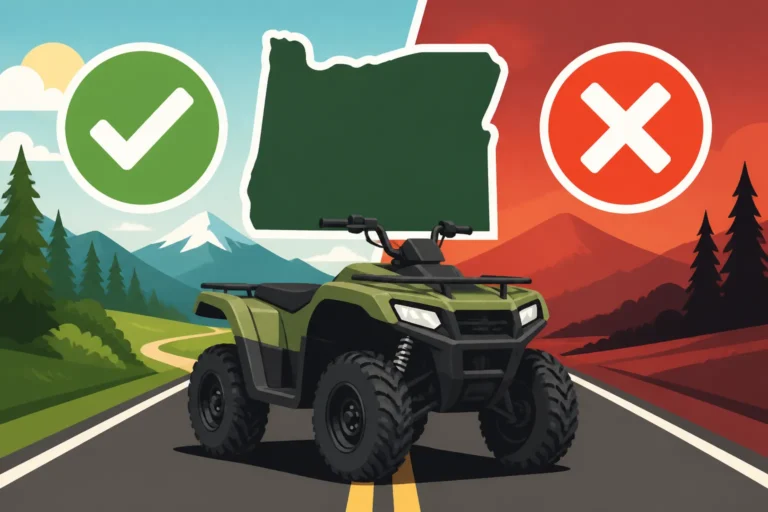
It's a question that plagues many off-road enthusiasts: "Can I just modify my UTV to be an LSV and drive it to the store?" The short and often disappointing answer for most machines is "no." Oregon's regulations draw a clear line in the sand, and very few, if any, true off-road vehicles can genuinely cross it to become a registered Low-Speed Vehicle.
The Reality for Most Off-Road Machines
When we talk about the bulk of ATVs (Class I) and side-by-sides (Class IV), they are fundamentally designed for off-highway use. Their engines are powerful, often capable of speeds far exceeding 25 mph, and their suspension systems are built for absorbing impacts on trails, not for smooth, stable operation on asphalt alongside cars. The manufacturing process for these vehicles does not include the DOT-compliant lighting, braking systems, and structural integrity checks required for street-legal LSVs. Even if you were to painstakingly add turn signals, a horn, and a rearview mirror to your quad, it still wouldn't change its fundamental classification as an off-highway vehicle (OHV) in the eyes of the Oregon DMV.
Oregon law is quite explicit about the types of vehicles that can be registered for street use, and the categories for ATVs and UTVs simply don't overlap with the LSV definition. While you might see people driving golf carts on some city streets, those carts are either true LSVs from the factory, or they are operating under specific local ordinances that permit them. It's crucial not to confuse those limited exceptions with a blanket allowance for all off-road vehicles. For more on general registration, you might want to read [Registering an ATV in Oregon].
The Class II Exception and Why It's Still Not an LSV
Now, there's a unique category in Oregon called Class II All-Terrain Vehicles. This includes vehicles like Jeeps, dune buggies, and sand rails, which were originally manufactured for highway use but have been modified for off-road operation. Here's the kicker: these machines can sometimes be made street-legal and registered with the DMV. This often involves ensuring they meet all the standard highway vehicle equipment requirements, such as proper lighting, brakes, tires, and emissions. You can find more specific requirements by looking into [Oregon's Class II Under ORS 801.193].
However, even a street-legal Class II machine is not an LSV. It’s a full-fledged motor vehicle registered for highway use, capable of normal road speeds, and subject to all the same rules as a car or truck, including mandatory insurance. The LSV category is distinct because of its speed limitations and specialized federal safety standards. So, while a street-legal sand rail might look like a low-speed vehicle when it's cruising through a small town, it's actually operating under a different set of rules entirely. The path to [Registering a Street-Legal Class II in Oregon] is separate from LSV rules.
The Frustration of Oregon's Rules and Real-World Implications
Let's be honest: these distinctions can be incredibly frustrating for riders. You invest in a versatile machine, and the idea of not being able to drive it a few blocks to a gas station or to link up with a different trail system just feels counterintuitive. Many of us wish there were more flexibility, but the rules exist for specific reasons, primarily safety and maintaining the integrity of public roadways.
Why the Rules Feel Restrictive
The desire to use an ATV or UTV for short hops on pavement is completely understandable. Imagine leaving your campsite, wanting to run into the nearest small town for supplies, and realizing you have to load your side-by-side onto a trailer just to go a mile down the road. It feels inefficient and overly restrictive. The primary reason Oregon (and many other states) has such stringent rules is safety. Off-road vehicles are built for very different conditions than passenger cars. Their handling characteristics, braking distances, visibility, and occupant protection features are not designed for high-speed interactions with heavier, faster-moving highway traffic.
Beyond the raw safety concerns, there are also issues of vehicle classification, emissions, and road wear. Oregon's Department of Transportation, along with local municipalities, has a vested interest in regulating what types of vehicles can operate on public roads to ensure infrastructure lasts and all vehicles meet certain environmental and operational standards. It's a complex balancing act between rider access and public safety, and sometimes, it feels like the scales tip heavily towards restriction. This is why you'll often hear about how [Why Oregon Will Not Plate a Quad] for general street use.
Navigating Road Access Without Full Street Legality
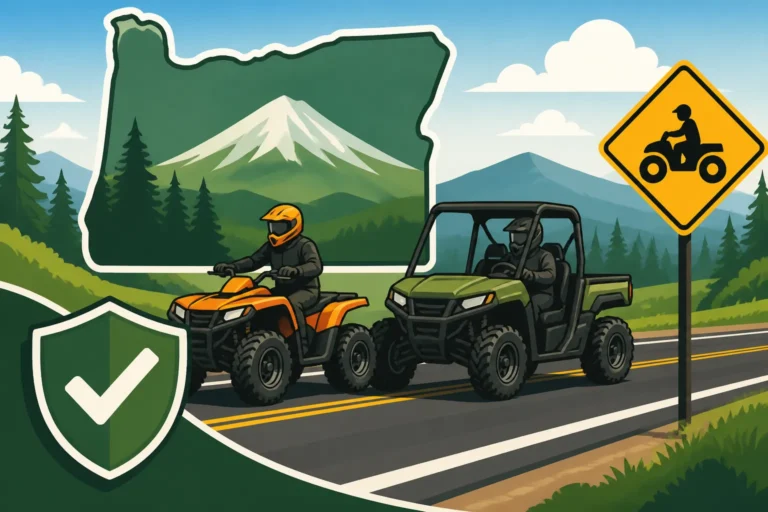
While making your ATV or UTV a registered Low-Speed Vehicle is generally not an option, that doesn't mean all public road use is completely off the table. Oregon has developed specific allowances and designated routes where off-highway vehicles can legally operate on certain public roads. The most prominent of these are [Oregon's ATV Highway Access Routes] in places like Lakeside and Sumpter. These are very specific, geographically limited stretches of road where ATVs and UTVs, with the proper [Oregon's ATV Operating Permit] and safety gear, are allowed to travel.
Beyond these designated routes, many counties in Oregon also permit OHVs on certain types of county roads, typically unpaved or gravel roads, often found in rural or forested areas. This allows riders to connect trails, access remote camping spots, or simply explore vast networks of backroads. However, these permissions vary significantly by county, and it's absolutely critical to research local ordinances and road signage before venturing out. Always remember that even on these permitted roads, you're still operating an off-highway vehicle, not a street-legal passenger vehicle, and adherence to all rules, including speed limits and helmet laws, is paramount. Check out [Riding Forest and County Roads in Oregon] for more on this.
Alternative Solutions for Road Use
Given the limitations for ATVs and UTVs becoming LSVs or fully street-legal, what are the alternatives if you genuinely need low-speed road access? The most common solution is a golf cart, which often does fall under LSV regulations if properly equipped and registered. Many small towns, particularly along the coast, have specific ordinances allowing golf carts on certain streets, especially where speed limits are low. These are purpose-built vehicles, usually electric, designed from the ground up for low-speed street use, making them far more suitable for the LSV category.
Another option for bridging gaps between trails or for quick trips is simply trailering your machine. While it's an extra step, it's the most reliable and legal way to transport your ATV or UTV across prohibited roads. Many riders also explore aftermarket solutions from companies like SuperATV that offer components designed to enhance safety and functionality for off-road machines, such as robust windshields, mirrors, and lighting kits. While these accessories improve your machine for trail riding and make it safer, they don't inherently change its legal classification for general street use. They are fantastic for what they are designed for, but they won't turn your UTV into an Oregon-registered Low-Speed Vehicle.
Here's a quick comparison of key differences:
| Feature | Low-Speed Vehicle (LSV) | Typical Off-Road UTV (e.g., Class IV) |
|---|---|---|
| Speed Range | 20-25 mph (designed for street) | Varies, often 40+ mph (designed for trail) |
| Power Source | Often electric | Gasoline (mostly), some electric |
| Primary Use | Short-distance paved road travel | Off-road trails, work, recreation |
| Street Legal? | Yes, with specific registration | Generally no, except Class II or specific routes |
| Federal Standards | NHTSA Part 571.500 Compliant | Not generally street-legal compliant |
| Common Examples | Neighborhood Electric Vehicles, certain golf carts | Polaris RZR, Can-Am Maverick, Honda Pioneer |
What Does a True Low-Speed Vehicle Need in Oregon?
Since we've established that most ATVs and UTVs don't fit the LSV mold, let's briefly look at what a vehicle does need to be a legitimate Low-Speed Vehicle in Oregon. Understanding these requirements helps clarify why your off-road machine usually won't make the cut.
Equipment Requirements for an LSV
For a vehicle to be registered as an LSV in Oregon, it must come from the factory (or be demonstrably modified by an authorized upfitter) with specific Department of Transportation (DOT) compliant safety features. This isn't just a matter of bolting on a few extras; these components are integral to the vehicle's design and certified for street use. Key equipment includes:
- Headlamps: DOT-approved headlights for visibility during night driving.
- Stop Lamps (Brake Lights): Clearly visible when brakes are applied.
- Turn Signal Lamps: Front and rear, amber or red, to indicate turns.
- Tail Lamps: Red lights visible from the rear, often integrated with brake lights.
- Reflex Reflectors: Strategically placed to enhance visibility from the sides and rear.
- Rearview Mirror(s): At least one rearview mirror, typically on the left side, or multiple mirrors for wider visibility.
- Parking Brake: A functional parking brake to secure the vehicle when stopped.
- Windshield: A safety-glass windshield, not just a plastic or polycarbonate one, designed to withstand impacts.
- Seat Belts: Safety belts for all occupants, meeting federal automotive standards.
- Vehicle Identification Number (VIN): A proper VIN that identifies the vehicle as an LSV.
- Vehicle Speedometer: A functioning speedometer to ensure the operator stays within legal speed limits.
Without these, an LSV simply won't pass inspection for registration. This is a big reason why typical UTVs, even with accessory lights from a company like SuperATV, don't qualify. The entire vehicle architecture must support these features from a safety and regulatory standpoint.
Registration and Operation of an Oregon LSV
Once a vehicle meets all the equipment requirements, it can be registered with the Oregon Department of Motor Vehicles as a Low-Speed Vehicle. This process involves presenting proof of ownership, demonstrating compliance with the equipment standards, and paying the necessary fees. The vehicle will then receive a standard license plate, much like a regular car, albeit often with a specific designation.
Operating an LSV in Oregon comes with its own set of rules. Drivers must possess a valid driver's license. LSVs are generally restricted to roads with a posted speed limit of 35 mph or less. They are explicitly prohibited from operating on any state highway or freeway, even if the speed limit is low, unless a specific local ordinance or state approval designates an exception. These regulations are designed to keep LSVs out of situations where they might pose a risk due to their lower speed capabilities and protect both their occupants and other road users. This is in stark contrast to the limited [Oregon Rules for Crossing a State Highway] that apply to off-road vehicles. Understanding the differences between these types of vehicles is key to legal and safe operation on Oregon's diverse road and trail network.
Disclaimer
This article is for general informational purposes only and does not constitute professional advice. Laws, prices and regulations vary by location and change over time. Consult a qualified professional for guidance on your specific situation.