Dust Season East of the Cascades
East of the Cascades, a sunny day can still turn into a dusty ride: tires churn dry soil, visibility drops, and the trail ahead disappears behind the group. This guide explains when dust is most likely, how to plan a safer Oregon ATV or UTV outing, and what to do when conditions worsen on the trail.
Why Dust Builds Up East of the Cascades
Dry ground, traffic, and wind all play a part
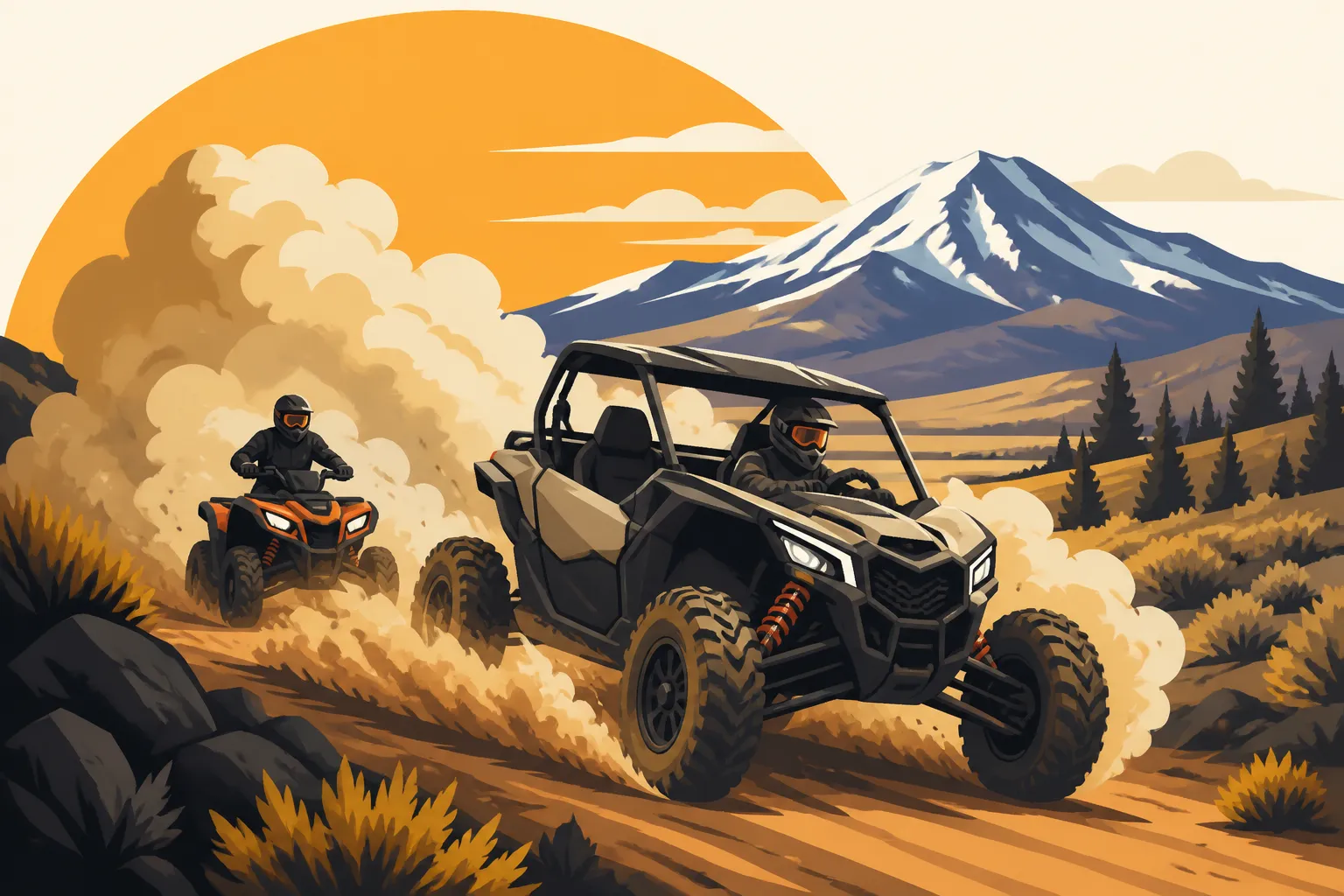
Dust forms when dry, loose soil gets kicked into the air. East of the Cascades, lower rainfall and stretches of open, exposed ground can leave trails particularly dusty during dry periods. Add a string of ATVs and UTVs traveling over the same route, and fine soil may hang in the air long after the first machine passes.
Traffic matters as much as the weather. A route that feels manageable when you’re riding alone may be difficult to see through on a busy weekend. Each vehicle can lift dust that drifts across the trail or settles into the path of riders behind it. On a breezy day, the cloud may move unpredictably, so the person in front does not always know what the riders farther back can see.
This is why dust is more than a nuisance on your goggles or windshield. It can hide rocks, ruts, branches, sharp turns, other riders, and changes in the trail surface. A UTV driver may lose sight of the vehicle ahead, while a quad rider can find that the trail edge or a small obstacle appears only at the last moment.
Dust conditions change over the course of a ride
A trail can be relatively clear early in the day, then become dusty after repeated passes. Wind may help disperse dust in one section while blowing it directly across another. The amount of traffic, recent rain, soil type, and exposure all make a difference, so there is no single calendar date when dust season begins or ends across the entire region.
Plan around conditions, not just the forecast. A prediction for clear weather tells you little about how much dust will be suspended on a popular trail. Before leaving, review the riding area’s current notices and ask about recent conditions if you can. Regional overviews such as Oregon Riding Seasons by Area can help you think through seasonal differences, but conditions can vary between two nearby routes.
The same caution applies when comparing riding areas. A sandy or exposed route may behave differently from a forested trail, and one staging area may be busy while another is quiet. For a broader look at places to ride near the high desert, see Oregon OHV Areas Near Bend. The most useful plan is one that leaves room to change your route—or turn back—if visibility gets uncomfortable.
Dust is not the only dry-season concern
Hot, dry weather can bring heat stress, dehydration, wildfire restrictions, and closures alongside dusty trails. A ride that feels easy in the morning can become tiring later, especially if you are repeatedly stopping to clear goggles or check your group. Carry enough water for the outing, take breaks in safe locations, and keep an eye on how everyone is feeling.
Do not assume that a trail or staging area is open simply because it was open on your last visit. Fire activity, land-management decisions, maintenance, and seasonal closures can change access. Check Oregon Trail Closures to Check First before traveling, and confirm important restrictions through the agency responsible for the area.
How to Plan a Dustier-Day Ride
Choose a route with options
A good dusty-day plan is not necessarily the longest loop or the most challenging trail. Choose a route that your group knows how to shorten, with clear places to turn around or return to the staging area. If visibility becomes poor, having an easy way to end the ride is more valuable than pressing on to reach a distant destination.
Think about the mix of riders, too. A newer rider may need more time to react to a sudden stop or a rough patch hidden by dust. A wide UTV may have different maneuvering needs from a dirt bike or quad. Match the trail to the least experienced person and the least capable machine in the group rather than letting the most confident rider set the pace.
If you use a digital navigation tool such as onX Offroad to review routes, treat it as a planning aid—not a guarantee that a route is open, passable, or appropriate for your machine. Check the land manager’s notices and any signs at the trailhead. Carry a backup map or saved route information in case your phone loses battery or service. The guide Oregon Trail Maps Worth Carrying offers another way to think about navigation preparation.
Give the group room and agree on signals
Following too closely is one of the easiest ways to end up riding inside another vehicle’s dust cloud. Leave enough space for the dust to thin and for you to stop safely if the rider ahead slows down. The appropriate gap changes with speed, terrain, wind, and visibility; if you cannot see far enough to react comfortably, slow down and increase the distance.
Before setting off, agree on how the group will communicate. Make sure everyone understands where to regroup, how to signal a problem, and what to do if the group gets separated. In a UTV, use radios or clear hand signals if your group has them. Riders should not assume that the person behind can see a signal through a thick dust cloud.
Avoid stopping in the active travel path to wait for someone or adjust equipment. If you need to stop, move to a safe, visible place off the trail where the ground and vegetation allow it. Do not pull into an area that appears to be a shortcut or an unmarked route; staying on designated routes helps protect the riding area and prevents confusion for other users.
Check practical details before loading up
A little preparation can prevent a dusty ride from becoming a miserable one. Check that goggles fit comfortably and that helmets, visors, or windshields are clean. Bring spare eye protection if someone in the group is likely to need it. Dust can make eyes water, and a scratched or fogged lens can make the problem worse.
Inspect the machine before the trip, paying particular attention to the air filter and any dust-sensitive intake components. Fine particles can build up quickly in dry conditions. Follow the manufacturer’s maintenance instructions, and check the filter again after a dusty ride rather than assuming it will be fine because the machine ran normally.
Pack water, a basic tool kit, a first-aid kit, and a way to contact help if needed. Save the riding area’s map or directions before leaving home. If you use onX Offroad, download or save the information you need while you have a connection, and still verify closures and access rules through the appropriate land manager. A phone app is useful, but it cannot replace good judgment at a signed closure or an unexpectedly hazardous trail.
| Before the ride | Why it matters | What to do |
|---|---|---|
| Check area notices | A familiar route may have a new closure or restriction | Review land-manager information and signs at the site |
| Review the route | Dust can make navigation harder once you are moving | Save a map and choose a shorter return option |
| Inspect eye protection | Dust and poor visibility strain your eyes | Clean lenses and bring a backup pair |
| Check the air filter | Fine dust can collect in the intake system | Inspect and maintain it according to the machine manual |
| Set group expectations | Riders may lose sight of each other | Agree on spacing, signals, and regrouping points |
| Pack water and essentials | Heat and delays can turn a short outing into a longer one | Carry supplies suited to the full planned trip |
Staying Safer When Dust Reduces Visibility
Slow down before you lose sight of the trail
If you can no longer see far enough ahead to identify hazards and stop safely, reduce speed. Do not wait until visibility is nearly gone. Dust can thin and thicken in seconds, especially when wind shifts or another machine accelerates nearby.
Keep your eyes on the trail surface and the space you can actually see. Avoid sudden lane changes or sharp maneuvers based on a vague outline in the dust. If the trail bends, narrows, or drops, approach cautiously enough that you can respond to what becomes visible.
A rider who feels pressured to keep up should say so. There is no benefit in maintaining the group’s pace if it means riding beyond your sight distance. The lead rider should check on the group periodically and choose a pace that allows everyone to travel safely—not just the fastest machine.
Stop only where other riders can see you
Sometimes the safest choice is to pause until the dust clears. First, find a place off the travel line where you are not hidden around a bend, behind a rise, or in a low spot. Make sure the group knows you are stopping, and leave enough room for other machines to pass without entering an unsafe area.
If visibility is poor throughout the route, consider turning back. That can be frustrating when you have driven a long way to reach the riding area, but continuing through a dust cloud may expose your group to hazards you cannot see. A shorter ride is better than pushing onward simply because the plan said you would complete a loop.
Flags and other visibility equipment can help make a machine easier to notice in some riding settings. Follow the requirements and guidance that apply to the area and your machine. For a closer look at this equipment, read Oregon Dune Flags and Whips. A flag does not make it safe to ride quickly through obscured terrain, and it cannot replace spacing or caution.
Keep to marked routes, even when a dusty trail is hard to follow
Dust can make signs, forks, and trail markers difficult to spot. Slow down at intersections and confirm your route before continuing. If you are unsure whether a faint track is an authorized trail, do not assume that tire marks mean it is open. Turn around to a clear, marked junction or consult your map from a safe stopping place.
This matters in open landscapes, where an unmarked track may cross sensitive ground or private property. Riding off-route can damage vegetation and soil, create new tracks, and lead to areas where access is not allowed. Conditions can also change after a fire or other disturbance. Before using an area affected by past fire, review Riding a Burn Scar After Reopening and confirm that the specific route is open.
At popular areas such as Millican Valley Outside Bend or Christmas Valley’s Inland Dunes, route choice and current access information are part of responsible trip planning. Use posted signs, stay on authorized routes, and turn around if dust or poor visibility makes it difficult to confirm where you are.
After the Ride and Before Your Next Trip
Clean and inspect the machine
Dust does not stop causing trouble when you park. Fine particles can collect on the air filter, controls, cooling areas, and other exposed components. Follow the owner’s manual for cleaning and maintenance; avoid blasting delicate parts with high-pressure water if the manufacturer advises against it.
Inspect tires and suspension for damage or packed debris, and check that lights and safety equipment remain secure. If the ride was particularly dusty, clean goggles, helmets, and UTV windshields before storing them. A thin layer left behind can scratch surfaces the next time it is wiped away.
Write down what you noticed while the trip is fresh in your mind. Maybe one trail was much dustier than expected, a particular junction was hard to read, or the route was too busy for your group. Those observations can help you choose a better start time, route, or riding area next time.
Use experience to improve the next outing
A dusty ride can teach you a lot about your group’s needs. If riders frequently disappeared from view, increase spacing and plan more deliberate regrouping points. If eye protection was uncomfortable, try a different fit before the next trip. If the trail became difficult to follow, carry a clearer map and spend more time reviewing the route before setting out.
You may also decide that a different riding area suits the day better. Open desert routes, inland dunes, and forested trails can offer very different experiences, but none should be chosen based only on a general impression of the weather. Compare access rules, trail conditions, machine suitability, and available route options. Oregon Riding Areas Open Year Round can help you consider the seasonal side of trip planning, but always confirm current access with the managing agency.
The main rule is simple: ride at a speed that matches what you can see, leave enough space to react, and be willing to change plans. Dust is part of riding in dry country, but it does not have to dictate the entire day. Good preparation gives you more choices—and a safer way to enjoy the trails when conditions are clear enough to ride.
Disclaimer
This article is for general informational purposes only and does not constitute professional advice. Laws, prices and regulations vary by location and change over time. Consult a qualified professional for guidance on your specific situation.