Oregon Fire Restrictions That Close Trails
Fire restrictions can change an Oregon ATV or UTV ride with little notice, and a valid permit does not give you permission to use a closed trail. The tricky part is that rules can differ by land manager and location. Here’s how to tell a fire restriction from a closure, where to check before you go, and what to do if conditions change mid-ride.
How fire restrictions affect Oregon ATV and UTV trails
Fire restrictions are temporary rules intended to reduce the chance of a wildfire or help firefighters respond to one. Depending on the land manager and conditions, restrictions may limit certain activities, close particular roads or trails, or shut an area to public entry. They can change during a riding season, so information from a previous visit may no longer be reliable.
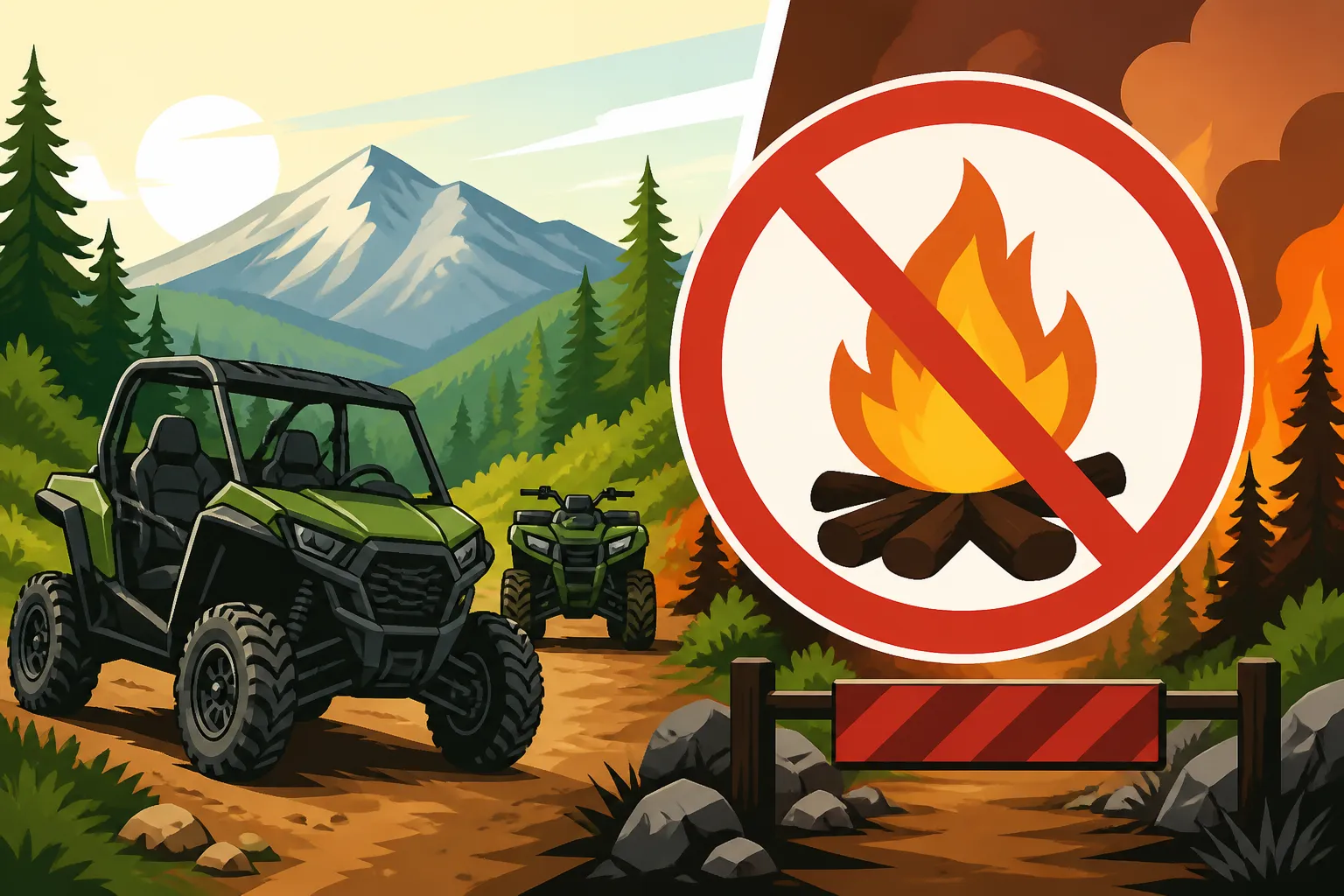
A fire restriction and a trail closure are related, but they are not the same thing. A restriction might prohibit a specific activity while leaving some routes open. A closure means you cannot enter or use the closed area or route, even if your machine is properly permitted and you are otherwise following riding rules. Read the notice itself rather than assuming that “fire restrictions” means either every trail is open or every trail is closed.
Rules also depend on who manages the land. Oregon riding areas can include federal, state, county, tribal, or private timberland. A restriction posted by one manager may not apply to a neighboring parcel, while another manager may have separate rules for the adjoining road or trail. Even within one recreation area, different routes can have different status.
Common changes during periods of elevated fire danger include:
- Closing specific trails, roads, or recreation areas.
- Restricting access to a burn area or a place where crews are working.
- Limiting activities that could create sparks or open flames.
- Restricting vehicle use in an area where fire response or evacuation access is needed.
- Closing an area temporarily while managers assess conditions.
Do not assume a restriction only applies to campfires. A notice may cover vehicle use or access more broadly. Conversely, a restriction on one activity does not necessarily mean you cannot ride every open route. The wording and location matter.
The Oregon ATV permit is separate from land access. It does not override a fire closure, a seasonal closure, a signed gate, or a land manager’s other access rules. For the difference between riding permission and other requirements, see [Oregon ATV Permits Explained]. If you are unsure whether a route is open, treat a closure sign or official closure notice as controlling until the responsible land manager confirms otherwise.
| What you find | What it usually means for your ride |
|---|---|
| A fire restriction notice with some routes still listed as open | Follow the listed limits and stay on routes confirmed open. |
| A signed trail or area closure | Do not enter or ride there, even if the route appears on an older map. |
| A general fire danger warning without a clear access rule | Check the land manager’s current notices for the exact area and restrictions. |
| Conflicting information between a map and a sign | Do not rely on the map alone; confirm the route’s status with the manager. |
| An emergency closure or evacuation notice | Leave or avoid the affected area as directed. |
Where to check before you ride
Start with the agency or organization that manages the specific riding area, not a general search result or an old social media post. A nearby town, campground, or trail system may be managed by a different entity from the route you intend to ride. Verify the land ownership and manager for the trailhead, route, and destination when your ride crosses more than one property.
For federal land, check the relevant local office or official recreation notices for the land unit. State forest areas have their own access information, and private timberland operators may post separate restrictions or closures. A county road within or beside public land can also have a different status from an adjoining trail. If a route crosses a boundary, check each manager’s rules rather than assuming one notice covers the whole trip.
Before loading the trailer, look for:
- Current fire restrictions and emergency closures for the exact riding area.
- The date and geographic boundaries in each notice.
- A list or map of routes that remain open, if the manager provides one.
- Access restrictions for roads, staging areas, and campgrounds.
- Any instructions about evacuation, fire response, or avoiding active operations.
Use the official map or notice to match route names and boundaries. A restriction may describe a road number, trail segment, recreation site, or district rather than the name riders commonly use for the area. If the terms are unclear, call or message the responsible office before you set out. Ask specifically whether your planned trailhead and route are open to recreational ATV or UTV use.
A navigation app, printed map, or saved track can help with orientation, but it may not reflect a new closure. Carry a current map as a backup and pay attention to signs at the trailhead and along the route. Oregon Trail Maps Worth Carrying can help with route planning, but no map should be treated as permission to enter a closed area.
The same principle applies to popular recreation areas. Conditions at the dunes, forest trail systems, or high-desert riding areas can differ from one another, and local fire restrictions can change access independently. See Oregon Trail Closures to Check First for another way to organize a pre-ride check. For broader fire-season preparation, Oregon Rules for Riding During Fire Season covers the importance of checking restrictions and following local requirements.
Do not use an online comment as your only confirmation. Posts can be helpful clues, especially when riders report a new sign, but they may be incomplete or describe a different trail, date, or land parcel. Confirm the information through the manager responsible for the area.
How to reduce fire risk and avoid a rules violation
Even when a trail is open, normal fire-prevention practices matter. A machine can encounter dry grass, brush, hot exhaust parts, or debris, and a small ignition can become difficult to control in windy or dry conditions. Follow all posted rules and the machine manufacturer’s safety guidance.
Before riding:
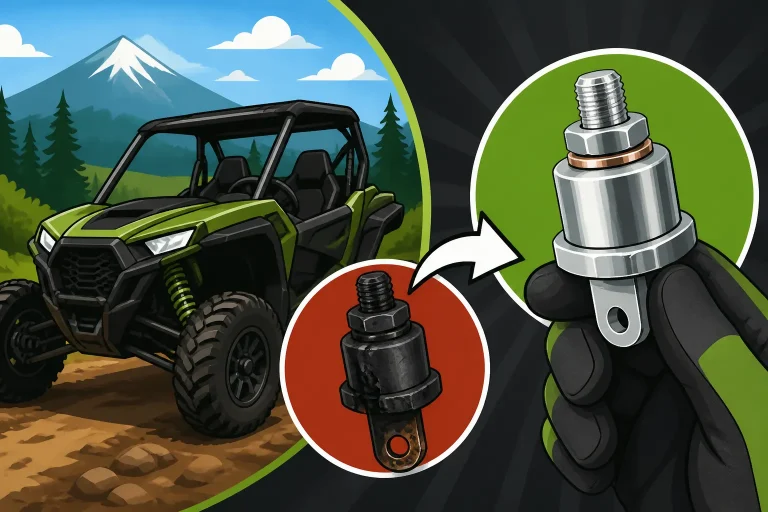
- Check that the exhaust system and spark arrester are in good condition. A damaged or missing component may violate riding-area rules. See Oregon Spark Arrester Requirements on Trails for more on that requirement.
- Remove dry vegetation and accumulated debris from the machine, especially around hot areas.
- Carry water and basic emergency supplies appropriate to the ride, but do not treat them as a substitute for avoiding restricted areas.
- Plan a route that stays on open, designated roads and trails.
- Tell someone where you plan to ride and when you expect to return.
At the trailhead and during the ride:
- Park only in designated areas. Avoid stopping a hot machine in dry vegetation.
- Do not ride around a barrier, closure sign, or locked gate.
- Do not create an open flame where restrictions prohibit it.
- Keep clear of fire crews, emergency vehicles, and active response areas.
- Turn around if smoke, a new sign, or changing conditions make the route unsafe or uncertain.
A spark arrester is not a blanket permission to ride during a closure. Nor does a quiet exhaust make a restricted route legal. Equipment requirements, fire rules, access rules, and trail closures are separate issues. Follow each one that applies to your machine and location.
If you encounter a fire, do not ride toward it to investigate or take a closer look. Move away from the affected area, follow instructions from officials, and contact emergency services when appropriate and safe to do so. Avoid blocking roads that responders may need. If you see a closure notice during your ride, turn around using a safe route and leave the restricted area. Oregon Rules for Riding a Closed Trail explains why a route being physically passable does not make it legally open.
What to do when restrictions change during a trip
Fire conditions can shift while you are already at a riding area. A manager may issue a new restriction, close a route, or ask visitors to leave. A ride plan should allow for that possibility: keep enough fuel to return by another open route if one is available, carry a charged phone or other communication method, and know the location of your staging area.
If you receive a closure or evacuation instruction, follow it promptly. Do not continue deeper into the area to finish a loop, reach a viewpoint, or recover a nonessential item. Use the route officials identify, and do not assume that the road you entered on is still safe or open for exit. If you are uncertain what an instruction means, move to a safe location and seek clarification from the responsible authority.
If the restriction is unclear but there is no immediate emergency, stop before entering the affected route. Check the official notice and contact the land manager. A short delay is better than riding into a closure and having to turn around in a hazardous spot.
If a closure is announced after you have made reservations or traveled to the area, check with the campground, permit seller, or other provider about its own cancellation or rescheduling terms. Those arrangements are separate from the land manager’s access decision. Do not rely on a reservation, permit, or prior approval as proof that the route remains open.
When restrictions are lifted, verify that the route you want to use has actually reopened. A fire restriction ending does not necessarily remove a separate closure, repair project, seasonal restriction, or damage-related access limit. Check current notices again, then follow any new signs on site.
For a safe and legal trip, use a simple rule: confirm the current status with the manager, obey signs in the field, and turn back when access is uncertain. That approach helps protect riders, responders, land, and the people who may need to use the same routes after you leave.
Disclaimer
This article is for general informational purposes only and does not constitute professional advice. Laws, prices and regulations vary by location and change over time. Consult a qualified professional for guidance on your specific situation.