Oregon Safety Card Reciprocity List
An out-of-state ATV safety card may be accepted in Oregon, but an out-of-state permit or registration does not automatically qualify. The state uses separate reciprocity rules for safety cards and operating permits, which makes it easy to check the wrong list. Here’s how to tell which rule applies, what to carry, and what to do if your card is not recognized.
What Oregon’s safety card reciprocity list covers
Oregon’s safety card reciprocity list determines whether certain out-of-state ATV safety credentials can satisfy Oregon’s safety education requirement. It is not a list of permits, registrations, or vehicle titles. Having paperwork that allows your machine to operate in another state does not, by itself, prove that you meet Oregon’s safety card requirement.
This distinction matters because Oregon maintains separate lists for permit reciprocity and safety card reciprocity. The permit list concerns whether an out-of-state operating permit can cover the machine in Oregon. The safety card list concerns the rider’s training credential. The two lists do not match, so a state appearing on one list may not appear on the other. Two Lists That Do Not Match in Oregon
| Document | What it relates to | What to check |
|---|---|---|
| ATV safety card | Whether the rider has met a safety education requirement | Oregon’s safety card reciprocity list and the rider’s vehicle class |
| Operating permit or decal | Whether the machine has the required operating permit | Oregon’s permit rules and permit reciprocity list |
| Registration or title | Vehicle ownership or authorization under another state’s system | Whether Oregon recognizes that document for the purpose you need |
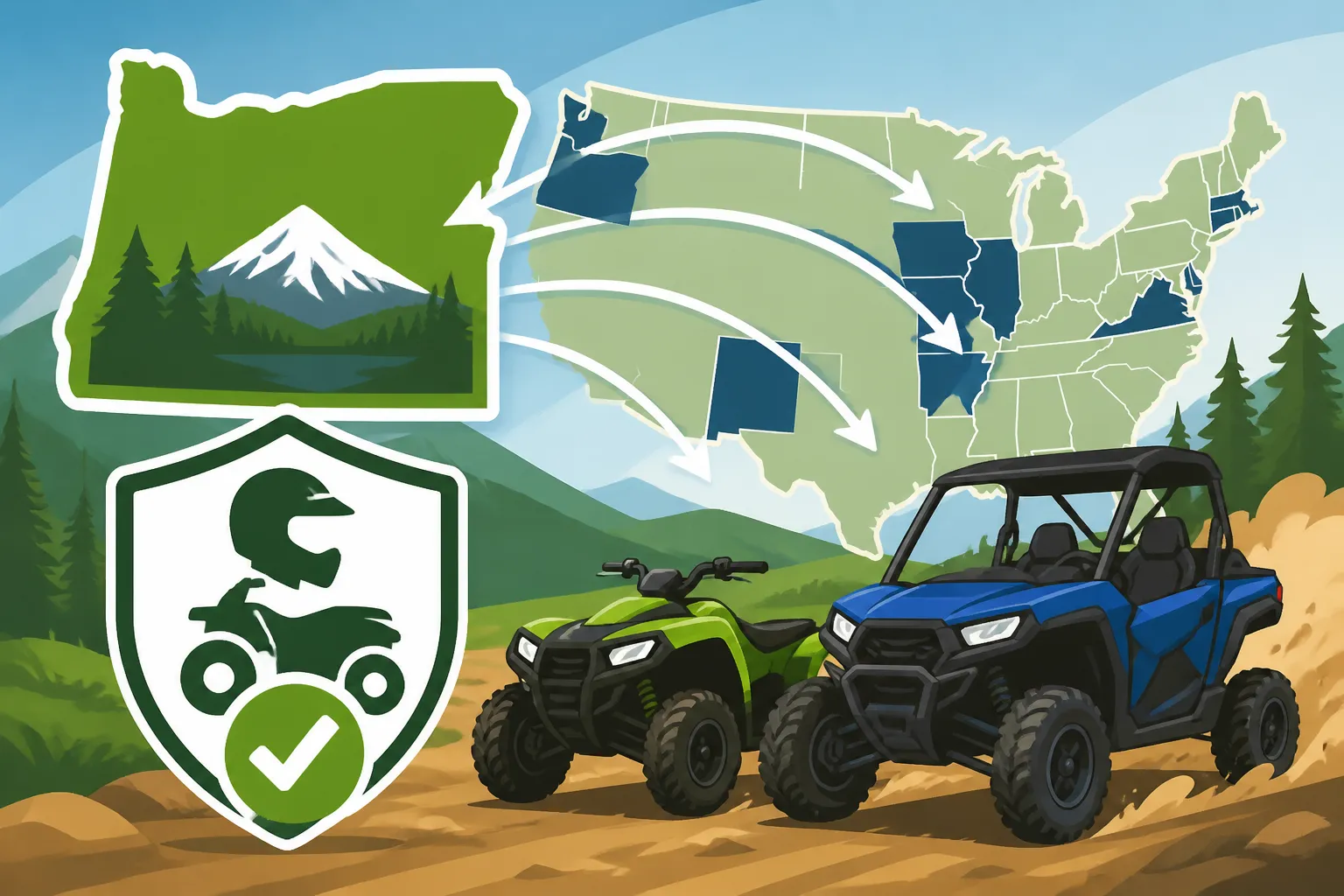
Oregon recognizes safety cards from some states, but not every state’s credential automatically qualifies. The state’s safety card reciprocity list is described separately from its permit reciprocity list; the two lists contain different numbers of states. That difference is a practical warning: do not assume that a state’s permit, registration, or safety card receives the same treatment in Oregon.
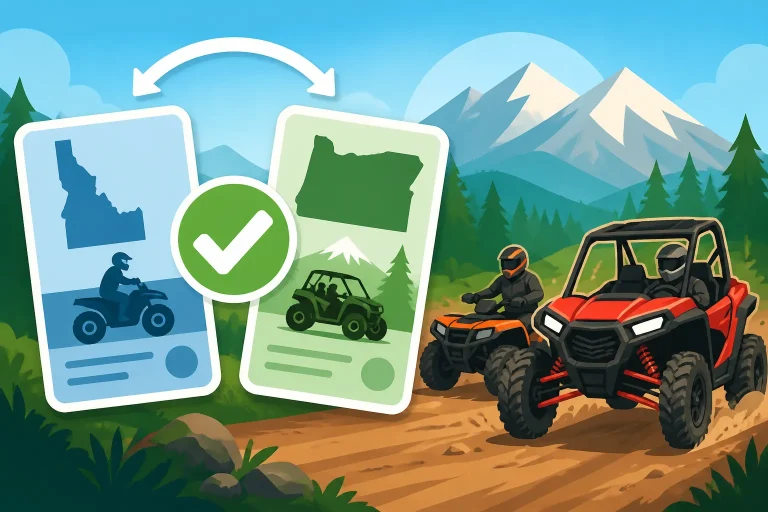
For example, Oregon’s safety card rules can recognize an Idaho safety card even though an Idaho permit is a separate question. A rider who checks only whether Oregon accepts an out-of-state permit could miss the safety card rule, and a rider who has a recognized card should not assume that it also permits the machine to operate. Why Oregon Accepts an Idaho Safety Card Why an Idaho Permit Does Not Work in Oregon
The card is about the person riding, while the permit is tied to the machine. One does not replace the other. A visitor can have a recognized safety card and still need to address the machine’s permit, decal, or site-specific access requirements. Conversely, a machine may carry the right permit while its rider still needs to meet Oregon’s education requirement.
If you are checking both documents, start with Oregon Permit Reciprocity List for the machine and Oregon ATV Safety Card Requirements for the rider. Treat those as two separate checks rather than two versions of the same rule.
Which out-of-state cards Oregon may accept
Oregon’s list includes some states’ safety cards and excludes others. The controlling question is not simply where you live, where you bought the ATV, or which state issued its registration. It is whether the specific credential you hold is recognized for Oregon’s safety education requirement.
A card may have a different name in another state, and the process for earning it may differ. Don’t judge recognition based on the words printed on the card alone. Check the current Oregon list and make sure the document you have is the credential that the list recognizes. If the card is digital, confirm that you can display it clearly; if it is a paper card, keep it protected and readable.
The difference between Washington and Idaho is a useful example of why checking the actual list matters. Oregon does not treat every neighboring state’s card the same way. An Idaho safety card may be accepted, while a Washington credential should not be assumed to qualify. Use Oregon’s official safety card reciprocity information to confirm the state and credential before riding. Why Washington Is Not on Oregon’s List
| Your situation | Practical next step |
|---|---|
| Your card is from a state Oregon lists | Carry the card or acceptable proof of it and confirm it applies to your vehicle class |
| Your card is from a state you cannot find on the list | Do not assume it qualifies; check with the Oregon program that issues safety cards |
| You have an out-of-state permit but no safety card | Check the safety card requirement separately; a permit is not a training credential |
| You have a safety card but no Oregon permit information | Check the permit rules for your machine and where you plan to ride |
| You have a rental machine | Ask the rental provider what safety documentation it supplies and what you must carry |
The reciprocity question also depends on what kind of machine you plan to operate. Oregon’s education requirements vary by ATV class and, for some classes, by rider age. A safety card that is relevant to a Class I or Class III machine is not automatically the right answer for every side-by-side situation. Review Oregon’s Four ATV Classes Explained and Class I and Class III Card Rules in Oregon if you are unsure how Oregon classifies the vehicle.
A driver’s license may affect whether a separate safety card is required in some circumstances, but don’t treat that as a blanket exemption for every machine or rider. Confirm the rule for your class and situation before relying on a license instead of a card. When an Oregon Driver’s License Replaces a Safety Card
For a Class IV machine, age is particularly important: Oregon’s card rule is different for riders under 16 than for older operators. A parent or trip organizer should check the age rule for each young rider rather than assume that an adult’s documents cover the whole group. Class IV Cards Only for Riders Under 16 Oregon Rules for Riders Under 16
How to check whether your card qualifies
Do this check before loading the machine or reaching the staging area. It takes less effort to resolve an unclear credential at home than to discover that a card is not accepted when you are ready to ride.
-
Identify the credential you actually have. Find the physical card, digital card, or official record from your home state. Note the issuing state and the card’s exact name. A permit, vehicle registration, course completion receipt, and safety card are different documents.
-
Confirm the machine’s Oregon class. Oregon’s safety card rules can depend on the class of ATV. If you are uncertain whether your vehicle is Class I, II, III, or IV, use its design and specifications to identify the class before deciding which card rule applies. A side-by-side, motorcycle, and quad may not fall under the same requirements.
-
Check Oregon’s safety card reciprocity list. Look for the state and credential, not just a general reference to the state’s ATV program. If the wording is unclear or your document has a different name, ask the Oregon safety card program whether that exact credential is accepted. Does Oregon Accept an Out-of-State Safety Card?
-
Check the age rule separately. A card requirement that applies to one age group may not apply to another. This is especially important when a family is riding multiple vehicle classes or when a young person will operate a Class IV machine.
-
Check permit reciprocity separately. Confirm that the machine has the required permit or other accepted authorization for Oregon. A recognized safety card does not replace an operating permit. Oregon Permit Reciprocity List
-
Carry usable proof. Bring the card or a clear, accessible form of proof that Oregon accepts. Keep it somewhere protected from water, sand, and damage, and make sure a phone displaying a digital credential is charged. If you rely on a digital record, consider whether you can still show it if cell service is unavailable.
If your card is not listed, or you cannot tell whether the state recognizes it, contact the Oregon program responsible for ATV safety cards before riding. Ask whether the exact card qualifies for the machine class and rider age involved. Avoid relying on a seller, a friend’s experience, or a general statement that Oregon “accepts out-of-state cards”; those may refer to permits rather than safety credentials.
If you need an Oregon card instead, use the state’s process rather than trying to substitute a permit or registration. The steps for completing the course and obtaining proof are covered in How to Get an Oregon ATV Safety Card. Allow time to finish the required steps before a planned ride, especially if hands-on training applies to your situation.
Common mistakes visitors can avoid
Treating the permit list as the safety card list. This is the most common source of confusion. Oregon has different reciprocity rules for the rider’s card and the machine’s permit. Checking one does not settle the other.
Assuming a neighboring state is automatically accepted. Geography is not the test. Oregon’s lists differ by document, and states are not all treated alike. Check the named state and credential on the current safety card list rather than relying on what worked for someone else.
Assuming a card covers every vehicle class. A rider’s card does not change the vehicle’s Oregon classification or erase class-specific requirements. Check the rules for the machine you will operate, particularly when the group includes both motorcycles or quads and side-by-sides.
Confusing course completion with an accepted card. A receipt, online course screen, or record from another state may not be the same as the final credential Oregon recognizes. If you recently completed training, confirm how to obtain official proof and whether that proof is accepted.
Waiting until a roadside check to sort it out. Keep your paperwork together before the ride. A useful packet can include the safety card or proof, permit information, and any documents relevant to the machine. Do not assume that an officer or staging-area employee can resolve a reciprocity question on the spot.
Assuming a rental resolves every requirement. A rental provider may give instructions or safety materials, but ask specifically what is supplied and what the rider must provide. Safety education, rental checklists, permits, and fees for a riding site are separate issues. For more on the visitor’s overall requirements, see Oregon Rules for a Visiting Rider and Oregon Day Use Fees Explained.
The simplest way to avoid a problem is to check two things before you ride: whether Oregon recognizes your safety card for your machine and age, and whether your machine has the required operating permit. Keep proof of both accessible. If either answer is uncertain, confirm it with the responsible Oregon program rather than guessing from another state’s rules.
Disclaimer
This article is for general informational purposes only and does not constitute professional advice. Laws, prices and regulations vary by location and change over time. Consult a qualified professional for guidance on your specific situation.