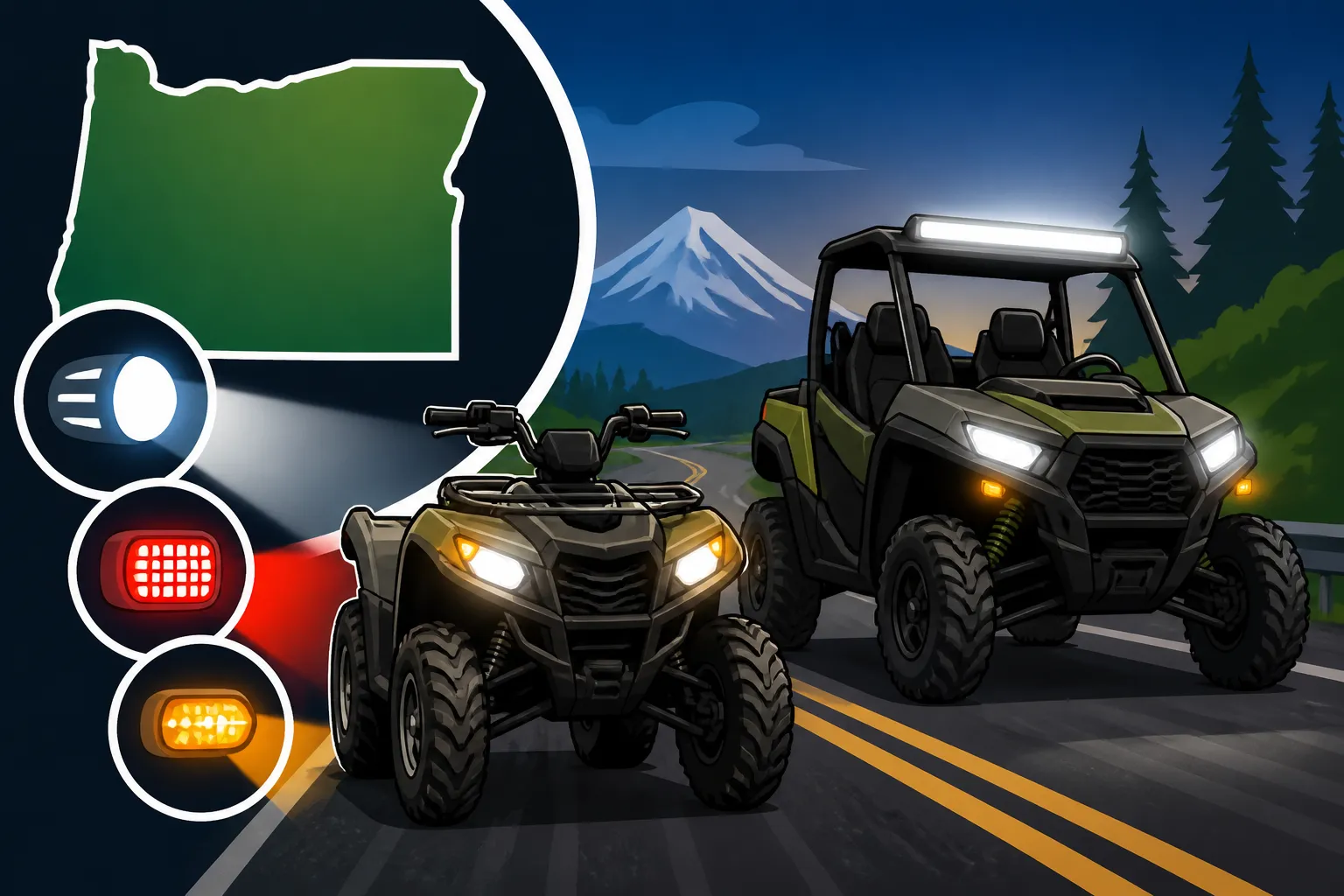
Oregon Lighting Requirements for Road Use
One of the trickiest parts about owning an ATV or UTV in Oregon, especially if you ever dream of taking it on pavement, is figuring out the labyrinthine rules around street legality. It’s easy to get tangled up in what’s allowed where, and a big piece of that puzzle, one that can quickly lead to a frustrating citation or, worse, an accident, is knowing exactly what kind of lighting your machine needs. This guide is here to shed some light on Oregon's specific requirements for ATV and UTV lighting when you find yourself needing to use public roads, helping you stay safe and legal.
Why Lighting Matters So Much on Oregon Roads
Let's be honest, trying to navigate the rules for ATVs and UTVs on Oregon's public roads can feel like trying to ride through a thick fog without your headlights on. It's confusing, and the consequences of getting it wrong, especially with something as critical as lighting, can range from a hefty fine to a serious safety hazard. The state of Oregon takes road safety very seriously, and that extends to any off-highway vehicle (OHV) that even briefly touches a paved surface.
The Safety Stakes Are High
When you're out on the trails, especially in the remote forests or wide-open dunes, your lighting needs are often focused on seeing where you're going and maybe being seen by fellow riders. But the moment you venture onto a public road, whether it's a paved highway, a county gravel road, or one of Oregon's designated OHV routes, you're entering a different world. You're sharing space with passenger cars, trucks, and even logging rigs, many of whom aren't expecting to see an OHV, especially after dark or in inclement weather. Proper, bright, and correctly aimed lighting isn't just a legal nicety; it's a critical safety feature that can mean the difference between a pleasant journey and a collision. Imagine a misty evening in the Coast Range, and a car approaches a curve – if your taillights aren't visible from a distance, you're practically invisible. [Oregon Rules for Night Riding on a Road] are there for a reason, and visibility is at the top of the list.
Avoiding a Costly Class C Violation
Oregon doesn't mess around when it comes to traffic laws. Riding on a public road with inadequate or improper lighting isn't just a minor oversight; it's a clear violation that can get you pulled over faster than you can say "permit decal." While we can't get into specific dollar amounts, suffice it to say that a Class C traffic violation can be a significant hit to your wallet, far more expensive than investing in the right lighting to begin with. Beyond the monetary penalty, it can also lead to your day being cut short, potential impoundment in extreme cases, and the hassle of dealing with law enforcement when all you wanted was a fun ride. It's a real bummer when you're out exploring, say, near Millican Valley or heading to the [Oregon Dunes National Recreation Area], and a simple lighting issue derails your entire trip.
Different Machines, Different Expectations
It’s easy to think that if one light works for a dirt bike, it’ll work for a massive side-by-side. But the reality is, the type of machine you’re riding plays a big role in what’s expected of your lighting. A smaller, lighter Class III off-road motorcycle, for example, might have simpler factory lighting setups compared to a beefy [Oregon's Class IV Side-by-Sides Under 75 Inches]. While Oregon aims for consistency in safety, the practical application of rules often means larger, wider machines need broader and more robust illumination to be adequately seen. This is especially true if you’re trying to make a statement about your vehicle on a road that usually sees sedans. The bigger your footprint, the more clearly you need to announce your presence to other drivers.
Essential Lighting for Street-Legal ATVs and UTVs in Oregon
When we talk about "street-legal" for ATVs and UTVs in Oregon, it's a bit of a nuanced conversation because most traditional quads and side-by-sides are not designed or legally allowed to be registered for general highway use. The primary exception to this is [Oregon's Class II Under ORS 801.193] machines, which include certain specialized vehicles like modified sand rails or dune buggies that can be registered and plated for the road. For these rare street-legal machines, and even for other OHVs making legal road crossings or using designated routes, specific lighting is non-negotiable.
Headlights: More Than Just "On"
For any machine venturing onto a public road, whether it's a fully street-legal Class II vehicle or a Class I quad crossing a highway, proper headlights are paramount. It's not enough for them just to turn on; they need to meet specific criteria.
First, intensity is key. Your headlights must be bright enough to illuminate the road ahead clearly and make you visible to oncoming traffic from a significant distance. Think about driving at night – you need to see deer on the shoulder, potholes, and the centerline. Second, beam pattern matters. Most factory off-road lights are designed for flood illumination, spreading light widely for trail riding. Road-legal headlights, however, have a more focused beam, often with a distinct cutoff to avoid blinding oncoming drivers. They also typically require both high and low beam functionality, allowing you to dim your lights for approaching vehicles, just like a car. Many aftermarket kits, including those from reputable brands like SuperATV, offer DOT-compliant headlights designed to meet these specific road-use standards, a vital upgrade if you're serious about street conversion.
Taillights and Brake Lights: Clearly Seen From Behind
While your headlights announce your presence to those in front, your taillights and brake lights are your voice to anyone following you. On a public road, this is absolutely crucial. You need at least one, but usually two, red taillights mounted at a specific height and visible from hundreds of feet away. These aren't just for looking cool; they're constant indicators of your presence.
Even more critical are your brake lights. They must illuminate brightly and immediately whenever you apply the brakes, signaling to drivers behind you that you're slowing down or stopping. This prevents rear-end collisions, which can be particularly dangerous for an OHV with less crash protection than a typical car. Making sure these lights are clean, functional, and free from obstructions is a pre-ride ritual you can’t skip.
Turn Signals: Signaling Your Intent Clearly
Think about trying to make a left turn on a busy two-lane highway without turn signals. It’s not just risky; it’s an invitation for trouble. For any OHV venturing onto a public road beyond a quick, direct crossing, functional turn signals are a must. This means you need both front and rear signals, typically amber or yellow for the front and amber or red for the rear, flashing clearly to indicate your intention to turn or change lanes.
They must be visible from both the front and rear of the vehicle, day or night. Many off-road machines don't come factory-equipped with turn signals, so this is a common aftermarket modification. When choosing a kit, ensure it includes all necessary components – a flasher relay, switches, and correctly colored lights – and that they are wired properly to function reliably.
License Plate Illumination: Keep It Visible
This requirement only applies to those rare Class II machines that are actually titled and registered for street use in Oregon. If your machine is one of these exceptions, its license plate must be illuminated by a white light whenever the headlights are on. This ensures that your registration information is visible to law enforcement and other drivers, especially at night. It's a small detail, but a legally essential one. Without it, even with perfect headlights and taillights, you're still not fully compliant for a street-legal journey. [Oregon Plates for a Dune Buggy] would definitely need this.
Reflectors and Side Markers: Small but Mighty
Beyond active lighting (lights that draw power), passive reflectors play a crucial role in making your OHV visible, especially when parked or in case of an electrical failure. Oregon law typically requires red reflectors on the rear and amber reflectors on the sides of any vehicle operating on public roads. These reflectors catch the light from other vehicles' headlights, providing an extra layer of visibility.
For wider machines like a side-by-side, side marker lights and reflectors help define the vehicle's full width, preventing other drivers from misjudging your size, particularly at night. While often overlooked, these small additions contribute significantly to overall road safety and legal compliance. Many universal aftermarket kits, including those from SuperATV, offer solutions for adding these necessary reflective elements.
| Lighting Component | Required for Class II Street-Legal Machines | Recommended for All OHVs on Public Roads/Crossings |
|---|---|---|
| Headlights | Yes (High/Low Beam, DOT Compliant) | Yes (Sufficient Brightness, Aimed Appropriately) |
| Taillights | Yes (Red, Visible from Rear) | Yes (Red, Visible from Rear) |
| Brake Lights | Yes (Red, Activated by Brakes) | Yes (Red, Activated by Brakes) |
| Turn Signals | Yes (Front & Rear, Amber/Red) | Yes (If navigating traffic, otherwise hand signals) |
| License Plate Light | Yes (White illumination) | Not applicable for non-plated machines |
| Reflectors | Yes (Red Rear, Amber Side) | Highly Recommended (Red Rear, Amber Side) |
| Side Marker Lights | Yes (If over a certain width) | Highly Recommended for Wider Machines |
Oregon's Unique Approach to Street Legality and Lighting
Oregon's stance on ATVs and UTVs on public roads is often a source of confusion because it's not a blanket "yes" or "no." The state has carved out very specific exceptions and designations, and understanding these nuances is key to knowing what lighting you truly need. You can't just slap a license plate on your quad and expect it to be street-legal everywhere.
The Class II Exception: The Only Platable Machines
Here's the critical distinction: most Class I ATVs (quads) and Class IV UTVs (side-by-sides) cannot be registered and licensed for general street use in Oregon. That means, for the vast majority of off-road enthusiasts, fully DOT-compliant headlight beam patterns, turn signals, and license plate lights aren't strictly necessary for everyday trail riding, simply because your machine won't be cruising down I-5.
However, Oregon does have a specific category, [Oregon's Class II Under ORS 801.193], which includes certain motor vehicles with an unladen weight of 8,000 pounds or less that are "not otherwise classified as an all-terrain vehicle." This typically refers to custom-built off-road vehicles like sand rails, dune buggies, or heavily modified Jeeps, which can meet highway safety standards and be titled and registered with the DMV. If you own one of these rare Class II machines and want to drive it on paved roads like a car, then every single lighting requirement for street-legal vehicles, including high/low beam headlights, turn signals, brake lights, and license plate illumination, applies to you.
Crossing Highways and Designated Routes
Now, for everyone else with a Class I, III, or IV OHV, there are still instances where you might be on a public road, and lighting rules apply. Oregon allows OHVs to cross paved highways at a right angle for the shortest distance possible to continue on a trail, provided it's done safely. For these brief crossings, while you might not need full street-legal turn signals, ensuring your headlights and taillights are fully functional and visible is paramount.
Even more relevant are Oregon's designated ATV highway access routes, like those found in [Oregon's Only Two Designated ATV Routes: Lakeside and Sumpter]. These are specific sections of public roads where OHVs are legally permitted to operate. When riding on these routes, you are essentially treated as regular road traffic. This means your machine needs to be equipped with proper headlights, taillights, brake lights, and sometimes even turn signals, depending on the specific ordinance and your machine’s classification. It’s always best to check the local ordinances for these routes, but generally, the expectation for lighting increases significantly compared to pure off-road use.
Aftermarket Upgrades and Compliance
For many OHV owners, making a machine suitable for occasional road use or to meet the standards for a Class II registration means dipping into the aftermarket. There are countless companies producing light kits, turn signal kits, and horn kits designed to convert off-road vehicles. When you're looking for these upgrades, especially for headlights and taillights, pay close attention to whether they are "DOT compliant." This means they meet the Department of Transportation's standards for use on public roads.
Installing non-DOT compliant lights for road use, even if they're incredibly bright, can still lead to a citation because they might not have the correct beam pattern or visibility characteristics required by law. Always check product descriptions carefully and, when in doubt, consult with a professional installer or a knowledgeable dealer. Brands like SuperATV often clearly mark their street-legal conversion components as DOT compliant, making the choice easier for consumers. [Oregon Lighting Requirements for Road Use] is a good thing to cross-reference with any kit you consider.
Common Lighting Pitfalls and How to Avoid Them
Even with the best intentions, it's easy to fall into some common traps when it comes to ATV and UTV lighting for road use in Oregon. Many riders either misinterpret the rules or assume their existing setup is sufficient, leading to unwelcome surprises.
The "Off-Road Only" Mindset on Public Roads
One of the biggest pitfalls is approaching road use with an "off-road only" lighting mindset. Those incredibly powerful LED light bars that turn night into day on the dunes or deep in the forest are fantastic for their intended purpose. However, they are almost universally not legal for use as primary headlights on public roads. Why? Because their broad, untamed light pattern will blind oncoming drivers, creating a severe hazard. Many riders mistakenly believe "brighter is better" for road visibility, but when it comes to public asphalt, "correct beam pattern and compliance" trumps sheer lumens every time. Your trail lights should have a separate switch and only be used when you are exclusively off-road, never on a public highway.
Inadequate Brightness or Coverage
Another common issue is having lights that are technically present but simply don't cut it. Maybe your taillights are dim with age, or your brake light only works on one side. Perhaps your side-by-side is wide, but your taillights are tucked so far in that they don't provide adequate coverage for vehicles approaching from oblique angles. This is where a quick visual inspection can save you a lot of grief. Stand back from your machine, turn on all your lights (headlights, taillights, turn signals), and have someone hit the brakes. Walk around the vehicle, check from various angles – is everything clearly visible? Are any bulbs out or dim? Are the lenses cracked or caked with mud? If not, it's time for some maintenance or an upgrade. This also applies to the small but mighty [Oregon Lighting Requirements for Road Use] for your license plate.
Wiring Woes and Reliability
Even the best lights are useless if they don't work reliably. Off-road environments are notoriously harsh on electrical systems – vibrations, mud, water, and debris can all wreak havoc on wiring, connectors, and switches. A common pitfall is using cheap, non-weatherproof components or making hasty wiring splices that are prone to corrosion and failure.
If you're upgrading your lighting for road use, invest in high-quality, marine-grade wiring, sealed connectors, and a proper fuse block. Ensure all connections are secure and protected from the elements. A momentary flicker in your brake light or a turn signal that stops working mid-turn can be incredibly dangerous and quickly draw the attention of law enforcement. Companies like SuperATV understand these challenges and often design their electrical accessories with robust, weather-resistant components that can stand up to the rigors of both trail and occasional road use. [Oregon Rules for Night Riding on a Road] depend on your electrical system holding up.
Pre-Ride Checks: Your Best Defense
The simplest and most effective way to avoid lighting pitfalls is to make a quick pre-ride check a non-negotiable part of your routine. Before you ever pull out of your driveway or staging area and onto a public road, take two minutes.
Turn the key, fire up your machine, and activate every light:
- Headlights (low beam, then high beam)
- Taillights
- Brake lights (have a friend help, or prop a stick on the pedal)
- Left turn signal (front and rear)
- Right turn signal (front and rear)
- License plate light (if applicable)
This quick visual scan ensures everything is functioning as it should. It’s particularly important when transitioning from, say, a dusty day in the desert to a paved road, or after a long period of storage. Catching a burnt-out bulb or a loose connection before you hit the pavement is a tiny effort that can save you a world of trouble.
Disclaimer
This article is for general informational purposes only and does not constitute professional advice. Laws, prices and regulations vary by location and change over time. Consult a qualified professional for guidance on your specific situation.