Oregon Rules for Night Riding on a Road
There’s nothing quite like the experience of taking your ATV or UTV out after the sun dips below the horizon, especially after a long day of riding. The air cools, the dust settles, and the world takes on a completely different, quieter feel. But the thought of navigating unfamiliar roads or forest service tracks in the dark can bring a heap of questions about what's actually legal and safe here in Oregon. This guide will walk you through Oregon's specific rules for night riding on public roads, helping you stay compliant and confident when your adventures stretch past sunset.
Oregon's Specific Lighting Requirements for Night Riding
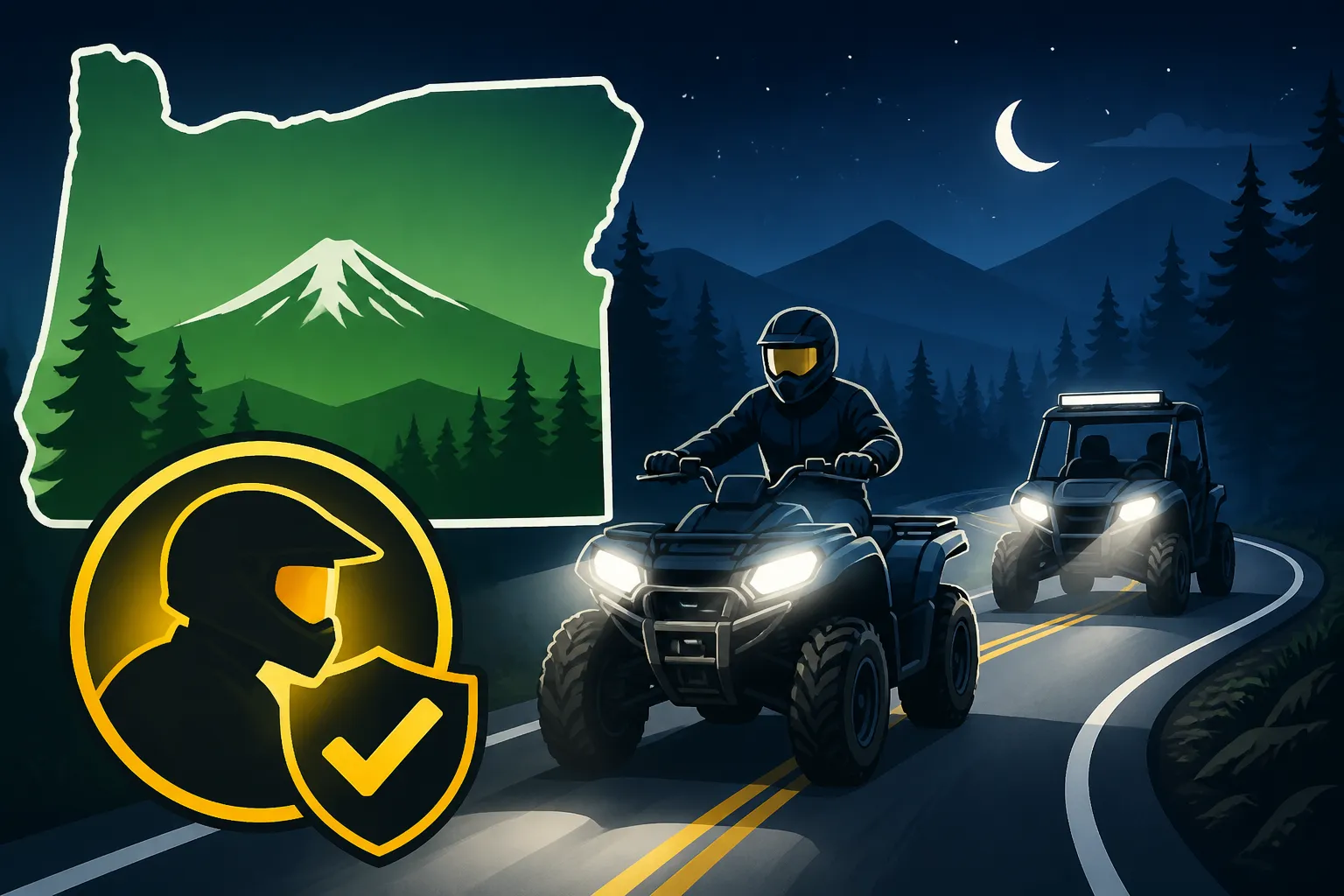
Night riding on any public road, even those gravel county roads or Forest Service routes that feel like trails, means your machine absolutely must be equipped with the right lighting. This isn't just a suggestion; it's a legal necessity that keeps you and other road users safe. The intent behind these rules is pretty straightforward: make sure you can see where you're going, and more importantly, make sure everyone else can see you.
Imagine you're out near Millican Valley or exploring the Tillamook State Forest as dusk turns to dark. You might be the only one for miles, but that doesn't excuse a lack of proper illumination. A ranger, or even a local resident pulling off a side road, needs to spot you from a distance, long before they're close enough to realize you’re on an off-highway vehicle.
Essential Forward-Facing Illumination
When it comes to seeing ahead, Oregon law is clear: you need a functional headlight. This isn't just any old lamp; it has to meet specific criteria for brightness and visibility. Your headlight needs to project a beam that illuminates the road ahead for a good distance, typically around 200 feet, to allow you ample time to react to obstacles, potholes, or sudden turns. Think about the winding, tree-lined roads deep in the Willamette National Forest; you need that light to cut through the shadows and show you what's coming.
For many stock ATVs and UTVs, the factory headlight might be sufficient for casual trail use, but when you venture onto a county road after dark, you might find yourself wanting more. This is where many riders look to upgrade. Aftermarket options, like those from SuperATV, often provide brighter, more focused beams that can drastically improve your visibility and comfort during night rides. Just be mindful of aiming your lights so you don't blind oncoming traffic, especially if you're installing a powerful LED light bar. Even on a remote gravel road, there might be another vehicle or even a person walking.
Rear and Brake Lighting for Visibility
Just as crucial as seeing where you're going is being seen by others, especially from behind. Oregon law mandates that your off-highway vehicle must have at least one taillight, which should be visible from a distance of at least 500 feet to the rear. This constant red glow alerts anyone approaching from behind to your presence. This is particularly vital on those long, straight stretches of gravel road in eastern Oregon where speeds can be higher and dust clouds can reduce visibility during the day, let alone at night.
Beyond just a taillight, you also need a functional brake light. This light, typically brighter than the taillight, signals to anyone following that you are slowing down or stopping. Imagine you're riding a Class I quad and unexpectedly encounter a deer jumping out onto a dark forest road. Hitting the brakes needs to send an immediate, unmistakable signal to any rider behind you. Ensuring your brake lights are working, clean, and not obscured by mud or cargo is a pre-ride essential. Don't assume that because you're "off-road" that you're exempt from these fundamental safety measures on public access routes.
Safety Considerations Beyond Legal Requirements
Meeting the minimum legal requirements for lighting is a good start, but night riding on roads, even unpaved ones, demands a higher level of caution and preparation. The darkness introduces a host of variables that just aren't present during daylight hours, from reduced depth perception to unexpected wildlife encounters. Thinking beyond what's just required by law can be the difference between a smooth, enjoyable ride and a stressful or dangerous situation.
Riding at night takes a different kind of focus. Your eyes have to work harder, and your reaction time can be subtly impaired. This is why many experienced riders will tell you that even if the law only requires one headlight, having a robust lighting setup—perhaps additional auxiliary lights or a light bar from SuperATV—makes a world of difference for your comfort and safety. It's about maximizing your visual field and minimizing the unknowns lurking in the shadows.
Personal Visibility and Protective Gear
While your machine's lights are essential, don't forget about your own personal visibility. Wearing reflective gear can be a lifesaver, especially if you ever have to dismount your machine on the side of a road after dark. A reflective vest or strips on your helmet and jacket can make you visible to other vehicles even if your ATV's lights momentarily fail or are obscured. Think of yourself as a walking reflector; every bit of additional visibility helps.
In addition to reflectivity, proper protective gear is always crucial, but perhaps even more so at night. The uneven terrain, reduced visibility, and potential for encountering unexpected obstacles mean that impacts can be more severe. This means a securely fastened DOT or Snell approved helmet, sturdy gloves, eye protection, and long sleeves and pants are non-negotiable. Even in a caged side-by-side, where [Helmet Rules for Oregon Riders] might seem less stringent, you're still susceptible to injury from debris or impacts, especially when visibility is low.
| Lighting Component | Legal Requirement | Visibility Range | Purpose at Night |
|---|---|---|---|
| Headlight(s) | At least one | 200 feet ahead | Illuminate path, be seen from front |
| Taillight(s) | At least one | 500 feet to rear | Be seen from rear |
| Brake Light(s) | At least one | Brighter than taillight | Signal braking to following vehicles |
| Reflectors | Rear and sides (often integrated) | 200-500 feet (static) | Static visibility if lights fail |
Wildlife and Environmental Hazards
Oregon is a state rich in wildlife, and many animals, such as deer, elk, and even smaller critters like raccoons and coyotes, are most active during dawn, dusk, and nighttime hours. Encountering a deer on a forest road in broad daylight is startling enough; imagine it jumping out of the shadows at night. Their eyes can reflect light, giving you a brief warning, but often it's too late for anything but a sudden swerve or hard braking.
Beyond wildlife, the darkness can conceal other environmental hazards. Potholes that were obvious in the afternoon might disappear into the blackness. Fallen branches, loose gravel, or unexpected washouts can become major surprises. Fog can roll in quickly, especially near the coast or in river valleys, further reducing visibility. Knowing the terrain during the day can help, but always assume the unexpected at night. If you're riding a Class IV side-by-side on a road where [Oregon Rules for Night Riding on a Road] permit it, remember that even with a full cage, a sudden impact with a large animal can cause significant damage and injury.
Navigating Designated Road Access and Curfews
Just because your machine is properly lit doesn't mean you can ride it on every road in Oregon after dark. The state has specific regulations about where OHVs can legally operate on roads, and these rules are vital to understand before you plan any nighttime road excursions. It's a common misconception that all gravel roads are fair game, but that's simply not true. You need to know which roads are open to OHVs, and if any of those have specific curfews or time restrictions.
Oregon operates under a system where counties can choose to open their roads to OHVs, or specific state lands designate certain roads as open. [Oregon's ATV Highway Access Routes] are a prime example of designated areas where OHV use on certain roads is specifically allowed, but even within these, the details matter. Never assume; always check the local ordinances and land manager regulations for the area you plan to ride.
Understanding Open Roads and Local Ordinances
Most of your night riding on roads will likely occur on designated Forest Service roads, BLM roads, or county roads that have been specifically opened to OHVs. These roads are typically unpaved and are often the access points to deeper trail systems or camping areas. The key word here is "designated." You can't just pick any gravel road and assume it's open. The Oregon Parks and Recreation Department (OPRD) provides resources and maps, and many land management agencies will have signage indicating which roads are open to specific vehicle types.
For instance, while you might find a vast network of forest roads in areas like Tillamook State Forest, not all of them permit ATV or UTV access, and even fewer may explicitly permit night riding without additional restrictions. Some counties, like Union County with its [Union County Ordinance 2019-01], have specific rules governing OHV use on their roads. Failing to check these local rules could lead to a citation for a [Class C Traffic Violation for No Permit], or worse, for riding on a closed road. Always do your homework before heading out, and consider carrying physical maps or having offline digital maps, as cell service is often nonexistent in these remote areas.
Specific Curfews and Restricted Access Areas
While many OHV-accessible roads might not have explicit night curfews, certain areas or specific types of roads definitely do. The most prominent example in Oregon for many riders is the Oregon Dunes National Recreation Area. While the dunes themselves often have specific night riding hours, the access roads leading to and from staging areas might also be subject to local rules. For example, some residential areas or small towns near popular riding spots might have noise ordinances or curfews that impact how late you can ride your machine on local roads.
It’s also important to remember that certain federal lands might have their own closures or restrictions. For instance, specific portions of the Oregon Dunes have night curfews in designated "middle riding areas" to protect wildlife like the coastal marten. Even if you're on a paved or gravel road leading to these areas, you could unintentionally violate a rule if you're not aware of the broader context. A good rule of thumb is that if an area has a designated "quiet time" or specific wildlife protections, riding on its access roads after dark could be problematic. Always consult the official websites of the land managers—be it the Forest Service, BLM, or Oregon State Parks—for the most current information before planning your night ride.
Disclaimer
This article is for general informational purposes only and does not constitute professional advice. Laws, prices and regulations vary by location and change over time. Consult a qualified professional for guidance on your specific situation.