Oregon’s Class C Traffic Violation for No Permit
Picture this: you've loaded up your rig, driven for hours, and you're just about to hit the glorious Oregon dunes or forest trails. The anticipation is palpable, the engine is purring, and then, a ranger or a state trooper flags you down. They ask for your permit, and a sinking feeling hits you—you either forgot to get one, it expired, or the decal fell off. What happens next? In Oregon, that missing permit isn't just a minor oversight; it's a Class C traffic violation, and it can throw a serious wrench into your adventure, costing you time, money, and a whole lot of frustration. This guide is here to walk you through exactly what that means, how to avoid it, and what to do if you find yourself in this situation.
Why Your Oregon ATV Needs a Permit to Hit the Trails
It's easy to think of an ATV permit as just another piece of bureaucratic paperwork, but in Oregon, it's a fundamental requirement for anyone operating an off-highway vehicle (OHV) on public lands. Whether you're tearing up the sand at the Oregon Dunes, exploring the Tillamook State Forest, or traversing the high desert trails near Millican Valley, that little decal proves you're playing by the rules and contributing to the trails you love.
The Purpose Behind the Permit Requirement
Oregon's ATV permit system isn't just about collecting fees; it's the lifeblood of our state's OHV program. The funds generated from these permits go directly back into maintaining, improving, and expanding the very trails and staging areas we all enjoy. Think of it as a user fee that ensures your favorite riding spots remain open, safe, and well-managed. Without these permits, crucial maintenance like clearing downed trees, repairing erosion, and upgrading facilities would simply not happen. You can learn more about [Where Oregon ATV Permit Money Goes] to understand the positive impact your permit purchase has on the riding community.
This funding is managed by the [Oregon Parks and Recreation Department's Role], which oversees the [Oregon ATV Grant Program Explained]. This program provides grants to federal, state, and local agencies, as well as non-profit organizations, for everything from trail construction and rehabilitation to safety education and law enforcement on OHV lands. So, while it might feel like a minor inconvenience to get a permit, it's truly an investment in the future of Oregon's off-road recreation. It's about collective responsibility to preserve these incredible natural spaces for everyone.
Who Needs an Oregon ATV Permit?
The short answer is almost everyone who rides an OHV on public land in Oregon. This includes virtually all classes of ATVs, side-by-sides (UTVs), dirt bikes (off-road motorcycles), and even some sand rails and dune buggies. Oregon classifies these machines into four distinct categories: Class I (quads), Class II (larger off-road vehicles like jeeps or sand rails that might also be street-legal), Class III (off-road motorcycles), and Class IV (side-by-sides). Each of these has specific definitions, which you can explore in detail with [Oregon's Four ATV Classes Explained]. Regardless of your machine's class, if it's hitting a public trail, it needs a permit.
Even visitors from out of state are generally required to get an Oregon permit. While some states have reciprocity agreements for safety education cards, very few have direct permit reciprocity. So, if you're coming from Washington, California, or Idaho for a weekend on the dunes, you'll need to grab an Oregon permit. It’s always best to check the specific rules for [Do Visitors Need an Oregon ATV Permit?] before you travel to ensure you're covered. This ensures fairness and that everyone contributing to the upkeep of the trails, regardless of their home state.
Decoding Oregon's Class C Traffic Violation
Hearing the phrase "Class C traffic violation" might sound intimidating, and while it's certainly something you want to avoid, understanding what it actually means in Oregon's legal landscape can help demystify the situation. It's not a criminal offense, but it's far from a mere slap on the wrist.
What Constitutes a Class C Violation in Oregon?
In Oregon, traffic violations are categorized by their severity, with Class A being the most serious and Class D being the least. A Class C traffic violation falls squarely in the middle, signifying a non-criminal offense that typically carries a significant monetary penalty. Unlike a misdemeanor or felony, a Class C violation won't result in jail time, nor will it typically appear on your criminal record. However, it's still a formal finding of guilt by the court, and it will remain on your driving record for a certain period, which can sometimes impact insurance rates, although this is less common for OHV-specific violations that don't involve street driving.
When it comes to ATV permits, Oregon state law (specifically parts of the Oregon Revised Statutes related to off-road vehicles) explicitly requires an operating permit for OHVs on public lands. Failing to have this permit, or having one that is expired or improperly displayed, puts you in direct violation of this statute. It’s not about malicious intent; it's about compliance with the legal requirements for operating an OHV. A ranger or state trooper performing a routine check at a staging area like Spinreel or Browns Camp can issue you a citation for this specific violation.
The Nuances of the Offense: Beyond Just "No Permit"
While the most obvious scenario is simply not having a permit, there are other situations that can lead to a Class C violation. An expired permit, for example, is just as problematic as having no permit at all. Those permits last for two years, and it's your responsibility to know the [Oregon ATV Permit Expiration Date] and ensure you renew it promptly. I’ve heard countless stories of riders who thought they were covered, only to realize their permit lapsed last month, leading to an unexpected citation. There's no [Oregon ATV Permit Grace Period] after the expiration date, so staying on top of your renewal is crucial.
Another common pitfall is improper decal placement. The permit decal isn't just a sticker; it has specific rules about where it must be affixed to your machine to be considered valid and visible. For instance, on a quad, it needs to be on the right side of the machine, clearly visible to a patrolling officer. If your decal is peeling off, obscured by mud, or placed in a non-standard location, it might as well not be there at all from a law enforcement perspective. Imagine showing up at Umpqua Beach Two with a decal tucked under a fender—you could still be cited, even if you technically bought the permit. [Oregon Permit Decals and Where They Go] provides detailed guidance on this, emphasizing that proper display is key to avoiding issues.
The Real Cost of Riding Without a Permit
So, what does a Class C traffic violation for "no permit" actually cost you? It’s more than just the fine; it's a combination of direct financial penalties, potential inconvenience, and the lost enjoyment of your ride. No one wants their day on the trails to end with a ticket, especially when the solution is so straightforward.
The Monetary Penalty: What to Expect
Let's not sugarcoat it: Oregon imposes a significant financial penalty for operating an OHV without a valid permit. While I can't give you an exact dollar amount, as these figures can change, it's safe to say it's a hefty fine, often in the hundreds of dollars. This isn't a minor parking ticket. It’s designed to be a deterrent, making it far more expensive to skip buying a permit than to simply purchase one. Many riders are shocked by the amount when they receive a citation, realizing too late that the cost of the ticket could have paid for several years' worth of permits.
This fine often comes with additional court fees and surcharges, which can further inflate the total amount you owe. Factor in the time you might need to take off work if you decide to contest the citation or appear in court, and the cost quickly escalates beyond the initial penalty. For a detailed look at the financial implications, you can research [Oregon Fines for Riding Without a Permit] to understand the typical range of these penalties and how they are applied. It's a bitter pill to swallow when you consider how inexpensive the actual permit is in comparison to the fine.
Beyond the Fine: Other Consequences
While the direct financial hit is significant, there can be other inconvenient consequences. In some cases, and depending on the specific circumstances and the discretion of the enforcing officer, your machine could potentially be impounded. While this is less common for a simple permit violation than for, say, riding under the influence or on closed trails, it's a possibility that adds a layer of stress and expense, involving towing and storage fees. Imagine having your prized side-by-side or dirt bike hauled away from a staging area near Bull Run or Goosepasture; it would completely ruin your day, if not your whole weekend trip.
Beyond impoundment, there's the administrative headache. Dealing with a traffic citation means navigating the court system, responding to deadlines, and potentially explaining your situation. This isn't how most people envision spending their free time. There's also the mental toll: the frustration, the feeling of being inconvenienced, and the regret that comes from realizing a simple, affordable permit could have prevented the entire ordeal. It's a stark reminder that staying informed and compliant with the regulations is not just about avoiding fines, but about enjoying your passion without unnecessary stress.
How to Avoid a Class C Violation: Getting and Displaying Your Permit
The good news is that avoiding a Class C traffic violation for a missing ATV permit is incredibly easy. Oregon has made the process of acquiring and displaying your permit relatively straightforward, with multiple options to fit your needs. A little preparation goes a long way in ensuring your day on the trails is focused purely on fun.
Where to Purchase Your Oregon ATV Permit
Oregon offers several convenient ways to purchase your ATV operating permit. You can buy them online, which is often the quickest method, allowing you to print a temporary permit immediately and hit the trails that same day. This temporary permit is valid for 30 days while you wait for your physical decal to arrive in the mail. For more details on this option, check out [Buying an Oregon Permit Online] and [Oregon's 30-Day Temporary Permit]. This is a fantastic option for those last-minute decisions to head out to the dunes or for riders who just moved to the state and need to get legal quickly.
If you prefer an in-person transaction, there are numerous authorized [Oregon Permit Agents You Can Walk Into] located across the state. These agents often include dealerships, sporting goods stores, and even some small businesses in rural areas near popular riding spots. You might even find an agent open on a weekend, which is a lifesaver if you realize on Friday night that your permit is expired. Some Oregon State Parks also sell permits, which can be convenient if you're already there. [Buying a Permit at an Oregon State Park] outlines how to do this. Remember, permits last for [How Long an Oregon ATV Permit Lasts], which is two years from the month of purchase, making it a good value. You'll only pay [One Oregon Permit Price for Every Class] regardless of your machine type.
Proper Decal Placement and Maintenance
Once you have your permit decal, proper placement is paramount. The decal needs to be affixed to the right side of your machine, clearly visible. For Class I quads, this usually means on the right front fender or the right side panel. For Class IV side-by-sides, it can be on the right side of the vehicle body or roll bar. Class III off-road motorcycles need it on the right fork tube or similar visible location. [Oregon Permit Decal Placement] covers these specifics, but the key is visibility. Don't hide it under mud, behind a bag, or in a location that requires a ranger to get on their hands and knees to see it.
It's also important to maintain your decal. Oregon's weather can be tough, with coastal rain and dusty high-desert trails. Regularly check that your decal is still firmly attached and readable. If it starts to peel or gets severely damaged, you might need to look into [Replacing a Lost Oregon ATV Permit]. A clean, intact, and properly placed decal is your proof of compliance and the easiest way to avoid unnecessary stops and citations. Think of it as your machine's visible passport to Oregon's amazing OHV trails.
Documentation Beyond the Permit: Protecting Your Ownership
While the operating permit is crucial for riding on public land, comprehensive documentation for your ATV goes beyond just that sticker. Proving ownership, especially when [Titling an ATV in Oregon Is Optional], can prevent a host of other headaches, from theft recovery to disputes during a sale. A well-documented machine ensures smooth sailing in many situations.
The Importance of a Bill of Sale
Since titling is optional for many ATVs in Oregon, a robust bill of sale becomes your primary document for proving ownership. This is especially vital when buying a used quad in Oregon or selling an ATV in Oregon. A detailed bill of sale should include the buyer's and seller's names and addresses, the sale date, the purchase price, and, most importantly, the vehicle identification number (VIN) of the ATV. It should also state that the vehicle is being sold "as is" and include signatures from both parties. This creates a clear legal record of the transaction.
Having a strong bill of sale can be incredibly useful. For instance, if you purchase a machine and need to prove your ownership to get a permit, especially if the previous owner didn't have a title, this document is invaluable. It can also be critical if your ATV is stolen and recovered; law enforcement will need clear proof of ownership to return it to you. For those looking for reliable templates to create such legal documents, online services like LawDepot can be a helpful resource, providing customizable forms for an [Oregon Bill of Sale for an ATV] that ensure all necessary details are included. This can save you a lot of grief down the line and solidify your rights as an owner.
Why an Optional Title Can Still Be Valuable
Even though [Titling an ATV in Oregon Is Optional] for machines primarily used off-road, many riders still choose to get one. Why? Because a title is the most definitive proof of ownership recognized by the state. While a bill of sale is good, a state-issued title is generally seen as superior for legal purposes. It simplifies things like selling the machine later, especially to buyers from states where titling is mandatory, or dealing with insurance claims.
A title also offers an extra layer of protection against fraud and theft. It provides a clear chain of ownership, making it harder for stolen machines to be resold. While it might seem like an extra step for a machine you only use for recreation, the peace of mind and simplified legal standing that a title offers can be well worth the effort. It’s an investment in the long-term security and clear ownership of your valuable off-road machine.
Navigating a Stop: What Happens If You're Caught Without a Permit
No one wants to be in this situation, but it's important to know how to handle it if you are stopped by a ranger or law enforcement officer for a permit issue. Remaining calm and knowing your options can make a difficult situation a bit more manageable.
How an Officer Checks for Compliance
When you're out riding at a popular spot like Millican Valley or Sand Lake, it's not uncommon for officers from the Oregon Parks and Recreation Department, Forest Service, or local law enforcement to be present, particularly at staging areas or popular trailheads. They perform routine checks to ensure riders are compliant with all regulations, including having a valid permit and safety education card. They are typically looking for the permit decal on the right side of your machine. If they don't see one, that's usually their first prompt to stop you.
During a stop, the officer will likely ask for your operating permit, your OHV safety education card, and potentially your driver's license, depending on the machine class and your age. They might also ask for proof of ownership if there are any questions about the machine itself. It’s their job to enforce state laws and ensure everyone is riding safely and legally. They're often checking for other things too, like spark arresters, sound limits, and helmet compliance, so a permit check can be part of a broader inspection. [What a Ranger Checks at an Oregon Staging Area] provides insight into the typical inspection points.
Your Options If Cited for No Permit
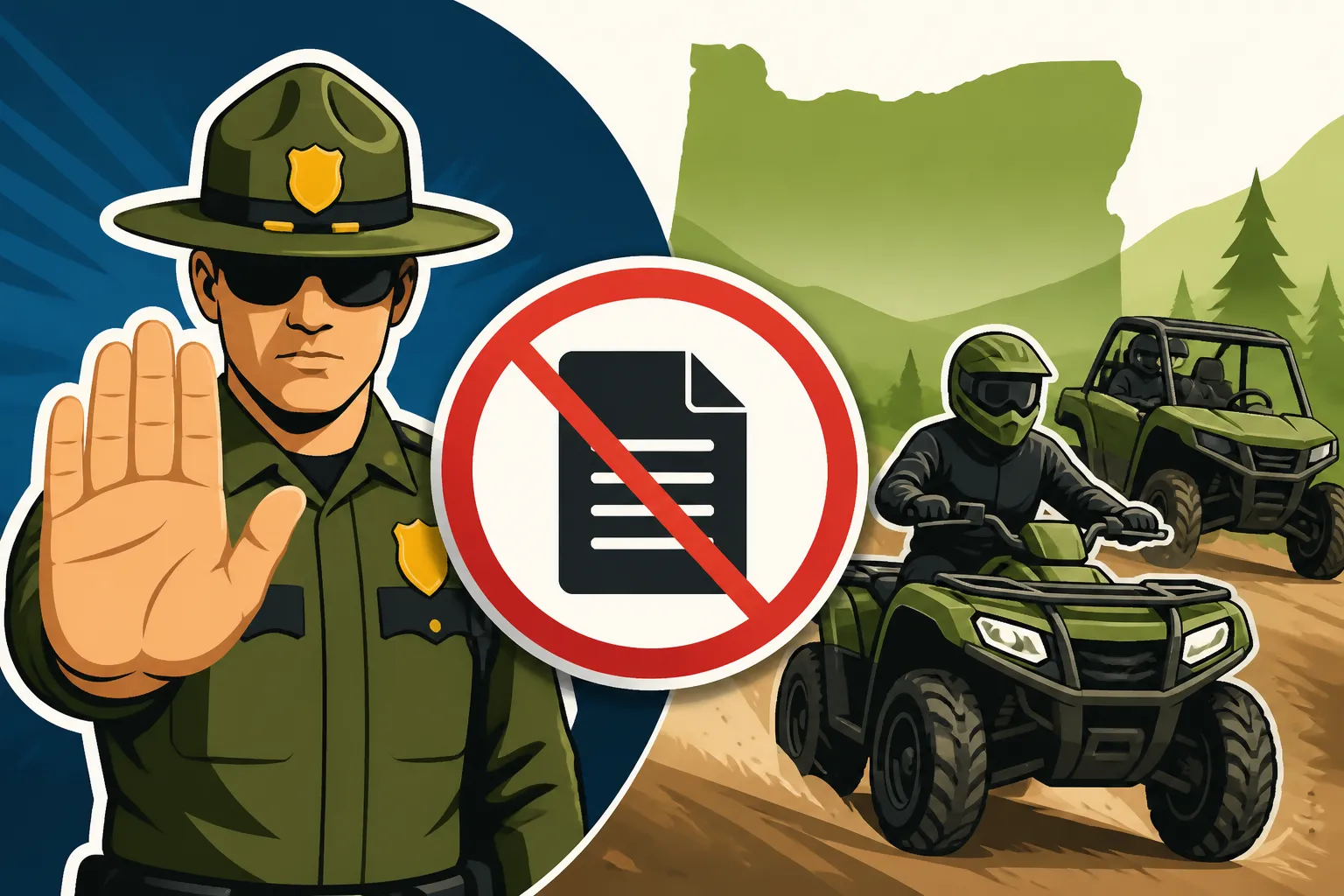
If you are stopped and the officer determines you do not have a valid, properly displayed permit, they will likely issue you a citation for a Class C traffic violation. The most important thing is to remain calm, cooperative, and polite throughout the interaction. Arguing or being confrontational will not help your case and could potentially lead to additional charges. Accept the citation gracefully.
Once you have the citation, you generally have a few options. The simplest is to pay the fine. This concludes the matter, and you can then immediately get your permit to ensure you don't receive another citation. Another option, if you genuinely believe there was a mistake (e.g., you had a valid permit but the decal fell off right before the stop, and you can prove you purchased it), is to contest the citation. This usually involves appearing in court or communicating with the court system. In some cases, if you can quickly acquire the permit after being cited and show proof to the court, they might reduce the fine, but this is entirely at the court's discretion. Remember, a citation for [Getting Stopped Without a Decal] is typically cut and dry: if it's not visible and valid, it's a violation.
| Item Required | Consequence of Absence | Common Reasons for Violation | Solution |
|---|---|---|---|
| ATV Permit | Class C Traffic Violation, Significant Fine | Forgot to purchase, expired, decal fell off, improper placement | Purchase online/agent, renew promptly, affix correctly, replace if damaged |
Disclaimer
This article is for general informational purposes only and does not constitute professional advice. Laws, prices and regulations vary by location and change over time. Consult a qualified professional for guidance on your specific situation.