Riding the Right Edge of a Roadway
Riding your ATV or UTV in Oregon often involves navigating a mix of terrain, and sometimes that includes public roads. It can feel like a maze trying to figure out where you're allowed to be, let alone how to position your machine safely and legally. Many riders get frustrated, unsure if they're hugging the shoulder too much, creeping too far into the lane, or just plain breaking some unspoken rule. This guide is here to untangle that confusion, offering practical, realistic advice on how to correctly and safely ride the right edge of a roadway in Oregon, helping you avoid trouble and enjoy your ride.
Understanding Oregon's Basic Road Rules for ATVs and UTVs
Before we dive into the nuances of riding the right edge, it’s absolutely critical to understand the foundational rules about ATVs and UTVs on Oregon roads. It’s not a free-for-all, and many riders get caught off guard, leading to fines or worse.
The Limited Scope of Street Legality in Oregon
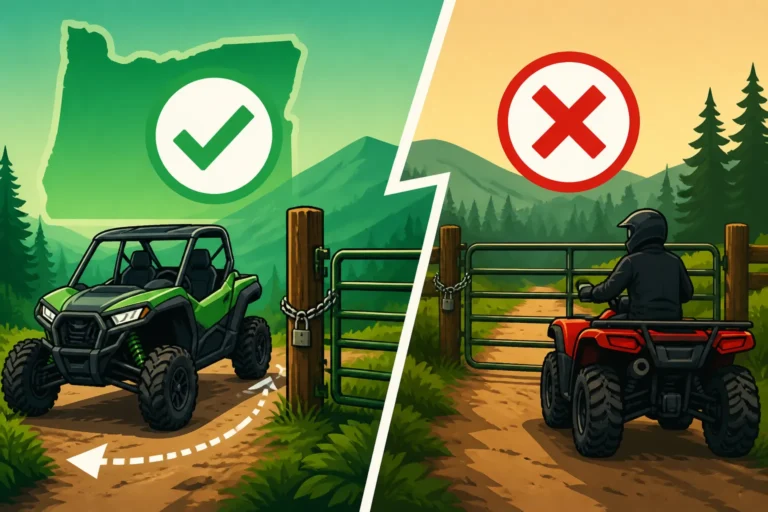
Let’s be brutally honest: most ATVs and UTVs, as they roll off the dealership floor, are not street legal in Oregon. This is a common misconception that can land you in serious hot water. You can’t just throw a license plate on your quad and expect to cruise down Main Street. Oregon law is quite specific and, frankly, a bit complex when it comes to what can be on a public road and under what circumstances.
Generally, your machine must fall into Oregon’s Class II category to even begin the process of making it street legal. These are typically larger, heavier machines, like many UTVs or specialized off-road motorcycles, that can be modified to meet specific safety and equipment requirements for road use. We’re talking about things like turn signals, headlights, tail lights, brake lights, mirrors, a horn, and proper DOT-approved tires. Even with all these modifications, there are still significant restrictions on where you can ride them. If you’re considering this, you absolutely need to dig into [Oregon's Class II Street-Legal Exception] to understand the full scope of what’s required.
Beyond that, Oregon has a handful of designated highway access routes, like those found in Lakeside and Sumpter. These are specific stretches of road where any permitted ATV or UTV (regardless of class, within reason) can legally operate to access trails or town services. It’s important to remember these are exceptions, not the rule. When you’re on these routes, you’re treated like any other vehicle, and that means following all traffic laws, not just the ones that feel convenient. The key takeaway here is that if you’re riding on a road, whether it’s a fully street-legal Class II or a regular quad on a designated route, you are subject to the same traffic rules as a car or truck, especially regarding lane positioning.
Why "Staying Right" Isn't Just a Suggestion
The rule of the road in the United States is to drive on the right side. This isn't just a quaint tradition; it's a fundamental principle of road safety designed to prevent head-on collisions and ensure predictable traffic flow. When you’re on an ATV or UTV, especially one that might be slower or less visible than a typical passenger vehicle, adhering to this rule becomes even more critical for your own safety and the safety of everyone else on the road.
Imagine a blind curve on a gravel county road. If you're drifting towards the center, you’re putting yourself directly in the path of an oncoming pickup truck that might be taking the curve a little wide. That’s a situation no one wants to be in. Staying as far to the right as safely possible provides a crucial buffer zone. It allows other drivers to see you, react, and pass you with adequate clearance. It makes your presence predictable. Whether you’re on a remote forest service road or a paved highway access route, the principle remains: keep to the right. This isn’t just about avoiding a ticket; it's about minimizing the risk of a serious accident, especially when your machine offers less protection than a car.
Specifics of Riding the Right Edge on Oregon Roads
So, you understand the basic concept of "staying right," but what does that really look like when you're actually out there, bumping along a gravel road or navigating a town route? It's not always as simple as it sounds, as the "right edge" can mean different things depending on the type of road you're on.
Defining "Right Edge" for Different Road Types
Oregon offers a diverse riding landscape, and with it comes a variety of road types, each requiring a slightly different interpretation of "riding the right edge."
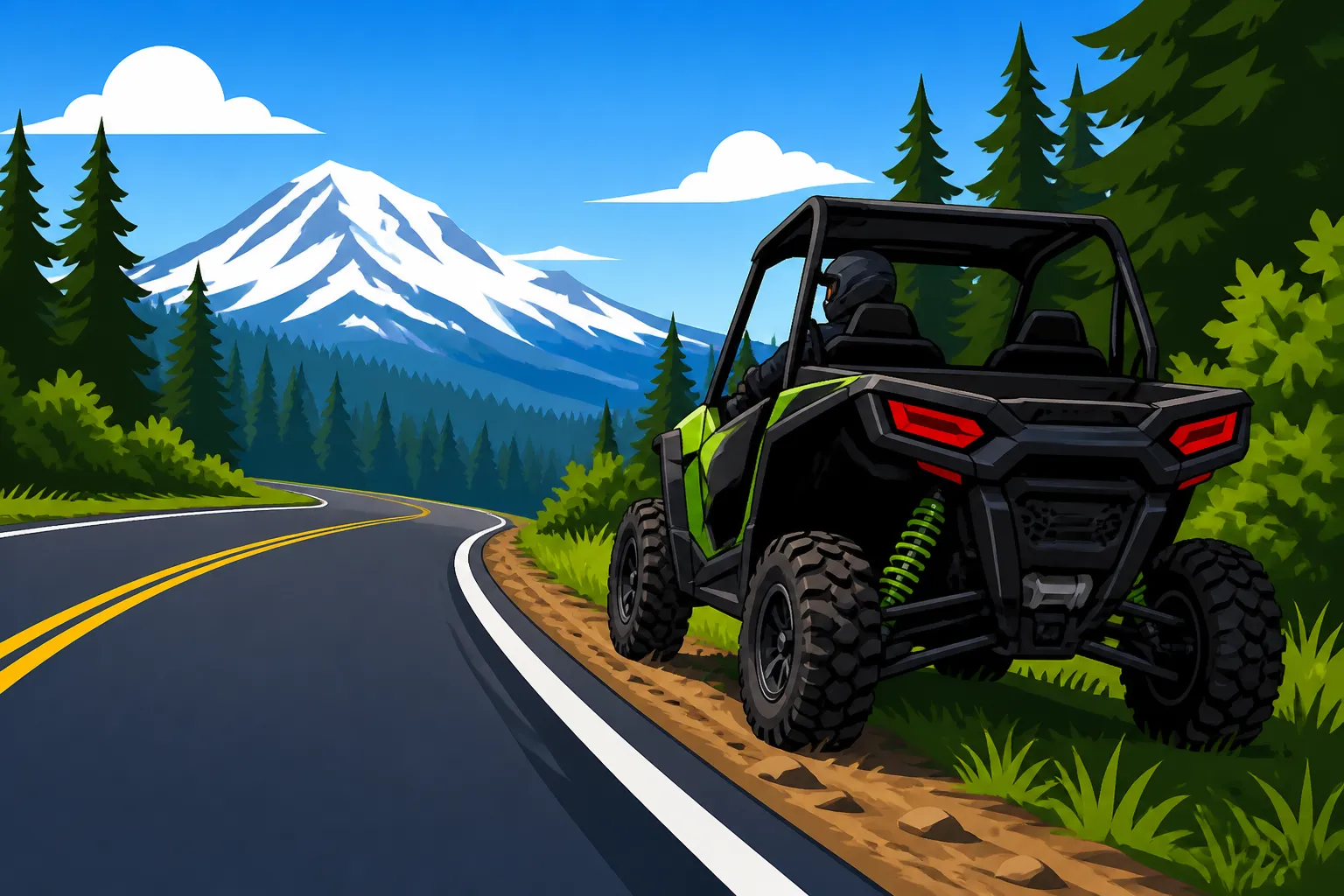
On Forest Roads and unpaved Gravel Roads, the "right edge" can be less clearly defined. There might not be painted lines, and the road surface could be rough or narrow. In these situations, the "right edge" means staying to the right half of the graded road surface. Don't hug the absolute shoulder if it looks soft, unstable, or drops off into a ditch. Instead, position your machine to the right side of the main travel path, leaving ample room for oncoming traffic, especially around blind corners or crests of hills. These roads are often shared with logging trucks, recreational vehicles, and passenger cars, so maintaining a disciplined right-hand position is paramount. Always assume there's something coming around that bend.
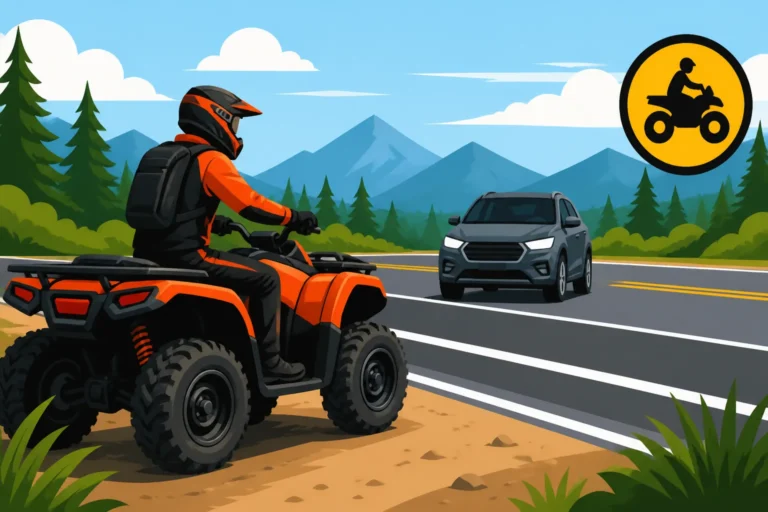
County Roads, particularly those that are paved or have clearly defined shoulders, present a slightly different scenario. Here, the "right edge" typically means staying within the rightmost lane, just as a car would. If there’s a wide, stable shoulder, you might consider riding on it if it’s legally permitted and safe to do so. However, shoulders can have potholes, debris, or suddenly disappear, so assess the conditions carefully. On many county roads, you're expected to maintain your lane like any other vehicle, even if you're traveling slower. The goal is to be visible and predictable.
Finally, on Designated Highway Access Routes like those found in [Riding an ATV Through Lakeside] or [Riding an ATV Through Sumpter], you are on actual public highways. Here, "right edge" means strictly adhering to typical vehicle lane positioning. You'll be sharing the road with regular passenger cars, semi-trucks, and motorcycles. Do not ride on the shoulder unless it's an emergency or specifically designated for such use. You are expected to operate within the travel lane, as far to the right as is safely practicable, just like any other vehicle. This often means maintaining a position that allows you to be seen in rearview mirrors and that doesn't invite dangerous passing maneuvers from other drivers.
The Importance of Visibility and Predictability
No matter the road type, two words should constantly be running through your mind: visibility and predictability. When you’re operating an ATV or UTV on a road, you are inherently at a disadvantage compared to a larger, more common passenger vehicle. You’re smaller, often slower, and sometimes less obvious to other drivers.
Being predictable means consistently staying to the right, signaling your turns well in advance, and avoiding sudden, erratic movements. Other drivers are making split-second decisions based on what they expect to happen. If you swerve unexpectedly or drift into another lane, you're creating a dangerous situation. Think of your machine as part of the flow of traffic, even if you’re at the slower end of that flow. Consistently riding the right edge, without deviation, helps other drivers anticipate your path and make safe decisions around you.
Visibility is your best friend on any road. This means more than just having your headlights on (though that's a good start, even in daylight). Consider wearing bright, high-contrast clothing. Many riders opt for flags or whips, especially if they’re transitioning between road and off-road areas, like at the dunes. Ensuring your machine has proper mirrors, like those available from companies like SuperATV, is not just a legal requirement for street-legal machines but a massive safety advantage, allowing you to monitor traffic behind you. The wider your UTV, the more it feels like a small car, but the principle of making yourself seen and understood by other road users remains paramount. Don't assume other drivers see you; actively ride as if you need to be constantly making yourself visible.
Safety Considerations and Common Mistakes
Riding on roads, even legally designated ones, comes with inherent risks that are different from trail riding. Understanding these hazards and the common mistakes riders make can help you stay safer and avoid potential accidents or citations. It's not just about knowing the rules, but intelligently applying them in real-world scenarios.
Hazards of Riding Too Far Left or Too Far Right
It might seem intuitive to think, "The further right I go, the safer I am!" but that's not always the case. There's a sweet spot, and riding too far in either direction can introduce its own set of dangers.
Riding too far left is a more obvious hazard. This directly increases your risk of a head-on collision, especially on two-lane roads. When you encroach on the center line or, worse, into the oncoming lane, you are gambling with traffic traveling at potentially much higher speeds. This is particularly dangerous on blind curves, at the crests of hills, or when visibility is poor due to weather or dust. Even if you're just "cutting a corner" on a forest road, you could be putting yourself in harm's way against a large vehicle like a logging truck or an RV. The consequences of such an encounter are dire for an ATV or UTV rider. Always err on the side of caution and give oncoming traffic as much space as possible.
Conversely, riding too far right, especially on paved or maintained gravel roads, can also be risky. The "shoulder" often isn't designed for sustained travel. It can be soft, unstable, riddled with potholes, or contain unexpected debris like glass, nails, or rocks. Swerving onto a soft shoulder at speed can cause you to lose control, potentially leading to a rollover or running into a ditch. Additionally, pedestrians, cyclists, or even parked vehicles might use the very edge of the road, and you risk startling or colliding with them. There's a temptation, especially on fast-moving roads, to hug the extreme edge to let cars pass easily. However, a slight misjudgment or an unexpected obstruction can quickly turn that "safe" edge into a dangerous trap. It’s better to maintain a predictable position in the lane, even if it means momentarily slowing traffic, rather than risking an uncontrolled maneuver on the shoulder.
Adapting to Road Conditions and Traffic
Road conditions in Oregon are as varied as its geography, and your riding style needs to adapt accordingly. The rules of the road remain constant, but how you execute them changes.
Weather conditions like rain, fog, or dust significantly impact visibility and tire grip. In a downpour, road lines vanish, and stopping distances increase. Dust on a gravel road can create blinding whiteouts for you and following vehicles. When these conditions arise, slow down drastically, increase your following distance, and enhance your visibility. Turn on all available lights, and consider reflective gear. Your "right edge" position might need to be more conservative, staying further from any potential hazards at the very edge.
Traffic volume is another major factor. Riding a quiet forest road is different from navigating a bustling designated highway access route. When sharing the road with many vehicles, ride defensively. Assume others might not see you. Use your turn signals early and deliberately. If a line of cars is building up behind you, and there's a safe pull-out, consider briefly moving over to let them pass. This isn't legally required everywhere, but it's a courteous and safe practice that can prevent impatient drivers from making dangerous passes. Companies like SuperATV offer excellent windshields and cab enclosures for UTVs, which can significantly enhance comfort and reduce fatigue on longer road sections, especially in adverse weather, allowing you to focus better on traffic.
Finally, corners and hills demand extra caution. Reduce your speed well before entering a blind curve or cresting a hill. Assume there’s oncoming traffic just out of sight. Maintain your right-hand position diligently. You might consider an internal link here to [Oregon Rules for Night Riding on a Road] as visibility issues are magnified in the dark, making these maneuvers even riskier. Always approach these sections with a "worst-case scenario" mindset, ensuring you have enough time and space to react to any surprise.
| Road Type | "Right Edge" Interpretation | Key Considerations |
|---|---|---|
| Paved Highway Access Routes (Lakeside, Sumpter) | Stay within your lane, as far right as safely possible without hitting shoulder. | Treat as a regular vehicle; use turn signals, maintain speed limits. Yield to larger vehicles. |
| Graveled County Roads | Maintain position on the right half of the graded surface. | Watch for potholes, loose gravel, dust. Yield to all other traffic. Anticipate blind curves. |
| Forest Service Roads | Stay to the right, even on blind curves; anticipate oncoming traffic. | Often unlined, narrow, shared with log trucks. Reduce speed significantly. Expect rough surfaces. |
| Private Timber Company Roads | Often stricter rules; stay right, yield to all industrial traffic. | May require special permits. Very large, fast-moving vehicles. Respect signage. |
What to Do When the Road Becomes a Trail (or Vice Versa)
Oregon riding is all about transitions. One moment you're on a dusty gravel road, and the next you're plunging into a dense forest trail. These transitions are where many riders get confused about rules and safe practices. It’s vital to understand the shift in environment and regulations to maintain safety and legality.
Smooth Transitions and Respecting the Change
When a county road suddenly gives way to a forest service trail, or you're pulling off a designated route onto a staging area, it's not just a physical change; it's a legal and operational one. The rules governing your machine can shift dramatically. On a road, even one where ATVs are permitted, you're expected to behave like a motor vehicle, following traffic laws. Once you hit the trail, you're often subject to specific OHV rules, which might include different speed limits, noise restrictions, or designated-use only areas.
A smooth transition means being aware of these changes. If you’re exiting a paved road onto a dirt track, slow down, check your mirrors, and signal your turn if appropriate. Visually scan for signage that might indicate trail rules, closures, or restrictions. [Oregon Trail Maps Worth Carrying] are invaluable here, helping you anticipate these shifts and understand the applicable regulations. The "stay right" principle still applies on most multi-use trails, but the interpretation of what is "right" often means yielding to uphill traffic or other users like hikers or mountain bikers. Always make a mental shift from "road mode" to "trail mode," adjusting your speed, awareness, and expectations accordingly.
Essential Gear and Checks for Road Use
Whether you're making your machine conditionally street-legal or just using a designated access route, certain gear and pre-ride checks are non-negotiable for road use. Don't leave anything to chance when sharing space with cars and trucks.
Firstly, lighting, a horn, and mirrors are absolutely crucial. If your machine is street-legal, these are mandatory. Even if you're just on a designated access route, having fully functional headlights, taillights, brake lights, and a horn significantly enhances your visibility and ability to communicate with other drivers. Mirrors, like those heavy-duty options available from SuperATV, allow you to keep track of traffic behind you without constantly turning your head, which is especially important for wider UTVs.
Tire pressure is another often-overlooked aspect. Off-road, you might run lower pressures for better grip and comfort. On paved or harder gravel roads, higher pressures are generally safer for stability and to prevent excessive tire wear. While you don't need to air up and down for every short road section, if you're embarking on a significant portion of road riding, consider adjusting your pressures.
Helmets are always a good idea, but on roads, they are often legally mandated. [Oregon Helmet Law for ATV Riders] outlines these requirements clearly, often extending to all riders regardless of age or experience when operating on certain public lands or roads. Always ensure your helmet is DOT-approved and fits correctly.
Finally, always carry your [Oregon's ATV Operating Permit] or relevant documentation. Should you be pulled over or encounter law enforcement on a public road, you’ll need to prove your machine is legally permitted for use in Oregon. Keeping this paperwork in a waterproof bag or container is a wise move, especially in Oregon's often damp climate. Being prepared with the right gear and paperwork makes the transition between trail and road seamless and stress-free, allowing you to focus on the ride itself.
Disclaimer
This article is for general informational purposes only and does not constitute professional advice. Laws, prices and regulations vary by location and change over time. Consult a qualified professional for guidance on your specific situation.