Making Sure a Quad Counts as Class I
Oh, the joys of navigating the Oregon ATV rules! It can feel like you need a law degree just to figure out what kind of machine you even own, let alone how to permit it. One of the biggest head-scratchers for many riders, especially those new to the state or new to the sport, is making sure their beloved quad actually qualifies as a "Class I" ATV in Oregon. It’s not always as straightforward as you might think, and getting it wrong can lead to headaches down the trail. This guide is here to untangle the confusion and walk you through exactly what makes a quad a Class I machine in the eyes of Oregon law, ensuring you’re ready to hit the dunes or the forest trails without a worry.
Understanding Oregon's ATV Classification System
Before we dive into the nitty-gritty of Class I, let's take a quick step back and understand why Oregon bothers with these classifications at all. It might seem like an unnecessary layer of bureaucracy, but these categories are actually in place to ensure safety, manage trail access, and clearly define what kind of off-highway vehicle (OHV) is being operated. Each class comes with specific operational guidelines, safety requirements, and, of course, defines how it's permitted. Knowing your machine's class is the foundation for legal and responsible riding in Oregon.
Oregon divides off-highway vehicles into four distinct classes: Class I, Class II, Class III, and Class IV. While all of them are designed for off-road fun, they differ significantly in their design, size, and intended use. Class I is where most traditional quads – the four-wheeled machines you straddle – typically fall. However, simply having four wheels and a straddle seat isn't enough; Oregon has some very specific dimensions and features that must be met. You can get a broader overview of these distinctions in [Oregon's Four ATV Classes Explained], but for now, let's zero in on our Class I quads.
The classification isn't just a label; it directly impacts where you can ride, what safety gear you might need, and how your machine interacts with other trail users. Misclassifying your vehicle, even unintentionally, could lead to issues if you ever encounter a ranger at a staging area or on a trail. It's truly worth the effort to understand these definitions upfront.
The Defining Characteristics of an Oregon Class I ATV
Alright, let's get down to brass tacks. What exactly does Oregon look for when it determines if your quad is a Class I ATV? There are four primary characteristics that absolutely must align with the state's definitions. If your machine deviates from even one of these, it might not be a Class I, and you'll need to look at the other classes.
The "Straddle Seat" Requirement
This is perhaps the most intuitive characteristic for a quad. A Class I all-terrain vehicle is defined, first and foremost, as a motorized, off-highway recreational vehicle that travels on three or more tires and uses handlebars for steering. Crucially, it must be "designed for or capable of travel over unimproved terrain and that has a seat or saddle upon which the rider sits astride."
Think about it: when you get on a traditional quad, you throw a leg over, right? Your legs straddle the machine, much like riding a motorcycle or a horse. This design dictates how you shift your weight, how you control the vehicle, and ultimately, its dynamics on varying terrain. This is a key differentiator from, say, a side-by-side (which typically has bench or bucket seats where you sit in the vehicle, not astride it). If your machine has a bench seat or a driver's seat where you sit like you would in a car, it's definitely not a Class I. It sounds obvious, but sometimes new designs blur the lines, so always come back to that "straddle" test.
Handlebars, Not a Steering Wheel
Following directly from the straddle seat, the control mechanism is another critical component. An Oregon Class I ATV must be steered using handlebars. This is fundamental to the riding experience of a quad, allowing for dynamic body English and direct control over the front wheels. The handlebars are intrinsically linked to the straddle-seat design, as they allow the rider to lean and maneuver the machine with their entire body, which is vital for stability and control on uneven ground.
Compare this to a steering wheel, which you'd find in a car, a golf cart, or, more relevantly, a Class IV side-by-side. While some Class II vehicles might have steering wheels (think of a traditional jeep or buggy), a Class I quad will always have handlebars. If your machine has a steering wheel, no matter how many wheels it has or if it's open-air, it's immediately disqualified from being a Class I. This distinction is about the fundamental design philosophy and how the operator interacts with the machine.
The 50-Inch Width Limit
Now we're getting into the specific dimensions, and this is where many quads either qualify or get bumped into another class. A Class I ATV in Oregon must be 50 inches wide or less. This measurement is taken from the widest point of the vehicle, which almost always means from the outermost edge of one tire to the outermost edge of the tire on the opposite side.
This 50-inch limit is a big deal in the OHV world, especially for trail access. Many trails are specifically designed for machines 50 inches or narrower, and exceeding this can mean you literally won't fit, or you'll damage the trail. It's a common modification to add wheel spacers or install wider tires on a quad for stability or a more aggressive look. However, if these modifications push your quad past the 50-inch mark, you've effectively changed its classification from Class I. Even if it still looks like a quad and has a straddle seat, its width will place it outside the Class I definition. For a deeper dive into this critical dimension, check out [The 50-Inch Limit That Defines a Class I]. Always measure your machine accurately, especially after any modifications!
The 1,200-Pound Dry Weight Limit
Finally, we come to the weight. An Oregon Class I ATV must have a dry weight of 1,200 pounds or less. "Dry weight" typically refers to the weight of the vehicle without fuel, oil, coolant, or any aftermarket accessories. This specification is another important one for trail management, as heavier vehicles can cause more wear and tear on trails and might have different handling characteristics.
Many modern utility ATVs, while clearly quads with straddle seats and handlebars, can push this weight limit, especially the larger displacement models or those equipped with things like winches, plows, heavy-duty bumpers, or extra storage racks. While the base machine might be under 1,200 pounds, adding several hundred pounds of accessories can quickly put it over the edge. It's crucial to check your manufacturer's specifications for the dry weight of your specific model. If you're close to the limit and have added significant aftermarket gear, you might need to weigh your machine or carefully calculate the added weight. You can learn more about how weight limits apply to different vehicles in [Dry Weight Limits by Oregon Class].
What Happens if Your Quad Doesn't Meet Class I Criteria?
So, you've run through the checklist, and it turns out your quad, while a fantastic machine, doesn't quite fit the Class I definition. Perhaps it's too wide, too heavy, or maybe you have an older, less common design. Don't panic! It doesn't mean you can't ride it in Oregon; it just means it falls into a different category, and you'll need to ensure you're permitting and operating it correctly for that specific class.
Potential Reclassification
If your quad doesn't meet the Class I criteria, it will likely fall into either Class II or, most commonly, Class IV. For instance, if your machine has a steering wheel and side-by-side seating, it's definitely a Class IV, regardless of its length or engine size. These are the modern UTVs or side-by-sides that have become incredibly popular. If your quad exceeds the 50-inch width or 1,200-pound dry weight limit, but still has a straddle seat and handlebars, it could still be considered a Class I machine if it meets the other criteria for Class I, but the specific width and weight limits are primary differentiators. The Oregon Parks and Recreation Department defines Class I strictly by those measures.
This reclassification isn't a judgment on your machine; it's simply a recognition of its physical attributes. Understanding [Which Oregon ATV Class Your Machine Falls Into] is crucial for proper permitting and adherence to all state OHV regulations. For example, if your "quad" is actually a side-by-side, it will be categorized as a Class IV, and while it still needs an Oregon ATV operating permit, the rules for its use on certain trails or roads might differ slightly from a Class I machine. Take a look at [Oregon's Class IV Side-by-Sides Under 75 Inches] for more details on those.
Impact on Permits and Riding
The good news is that no matter which of the four classes your OHV falls into, the actual cost of the [Oregon ATV Permit Cost] is the same. Oregon has a unified permit price, so you're not paying more or less based on the class. However, the correct classification is still vital. When you obtain your Oregon ATV operating permit, you'll be asked about your machine's class. Providing inaccurate information, even by mistake, can lead to issues.
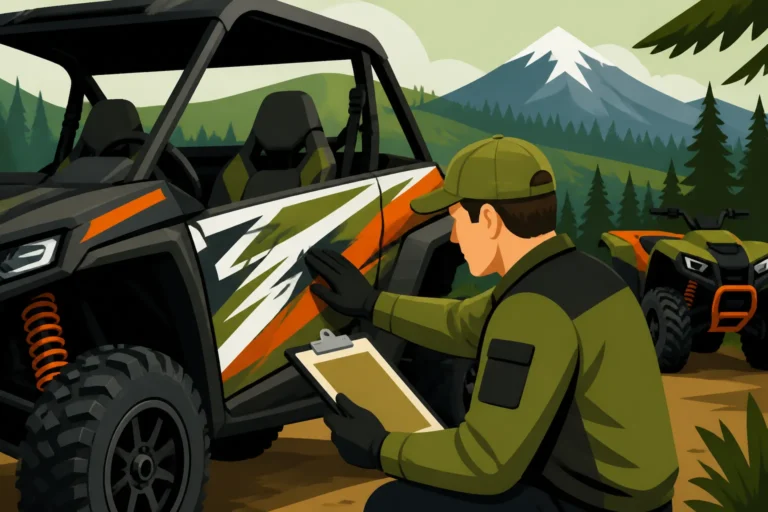
Imagine you're out at a popular riding area like the Oregon Dunes, and a ranger does a quick check. [What a Ranger Checks at an Oregon Staging Area] often includes verifying your permit decal, but they might also do a visual check of your machine. If you've got a quad that's clearly wider than 50 inches but you've permitted it as a Class I, you could be cited for operating an unpermitted vehicle or for misrepresenting its class. While the permit price is the same, operating it under the wrong classification means you're not technically riding legally. It's an easy fix by simply ensuring your machine is correctly identified during the permitting process.
Practical Steps to Verify Your Quad's Class I Status
Okay, so you're ready to definitively figure out if your quad is a Class I. Here are some actionable steps you can take to get a clear answer.
Check Your Owner's Manual and Manufacturer Specs
Your owner's manual is your first and best friend for this. It will typically list the factory specifications for your specific model, including its overall width and dry weight. Pay close attention to these numbers. Most manufacturers are pretty good about providing accurate data. If you don't have the physical manual, a quick search online for your make, model, and year will often yield digital versions or specification sheets from the manufacturer's website. These are the authoritative sources for how your machine came from the factory.
Remember, if you bought your quad used, previous owners might have made modifications without you knowing. Always verify the current state of your machine against these original specs.
Measure Your Machine Accurately
Even with the owner's manual in hand, it's smart to do a quick measurement yourself, especially for the width. Aftermarket parts are incredibly common on quads, and something as simple as different offset wheels or wider tires can push you over that crucial 50-inch threshold.
To measure the width, find the widest point of your quad. This is almost always going to be across the outside edges of your tires. Use a tape measure and run it from the furthest protruding point on one side (usually the tire sidewall or wheel lip) directly across to the furthest point on the other side. Make sure your tires are properly inflated, as low pressure can slightly alter the measurement. If your measurement exceeds 50 inches, then, by Oregon's definition, your quad is not a Class I ATV, regardless of what the manual says about its original factory width.
As for dry weight, if it's not readily available or you suspect modifications have added significant bulk, weighing your machine might be an option. Some recycling centers or truck stops have scales that might accommodate an ATV, though this is less common for individuals. For most riders, relying on manufacturer specs and being mindful of heavy accessories is sufficient.
Consider Modifications
This cannot be stressed enough: any aftermarket modifications you've made (or that a previous owner made) can change your quad's classification. Wheel spacers, wider A-arms, larger tires, heavy-duty bumpers, winches, toolboxes filled with gear, even a full skid plate setup can add width and weight.
Let's say you added some cool new rims and aggressive tires to your sport quad. You love the look, but did you measure the new width? What about that heavy-duty winch you mounted on the front of your utility quad? Did you factor that into the dry weight? These are the kinds of questions that can make the difference between your quad being a legal Class I and potentially falling into another category. Always re-evaluate your machine's dimensions and estimated weight after significant modifications.
What If You're Still Unsure?
If you've gone through all these steps and still have a lingering doubt about whether your quad truly counts as a Class I, don't hesitate to reach out to the Oregon Parks and Recreation Department (OPRD). They are the governing body for OHV recreation in the state and can provide definitive answers. It's always better to ask directly and be certain than to guess and risk a citation.
For documenting your machine's characteristics, especially if you're buying or selling a quad, having clear paperwork is invaluable. Using a service like LawDepot can help you create a robust [Oregon Bill of Sale for an ATV] that can include detailed descriptions of the machine, including its class, width, and weight, as verified by you and the seller. This kind of documentation provides clarity and can be incredibly helpful for [Proving Ownership Without a Title] or simply ensuring all parties are on the same page regarding the machine's specifications. Accurate records not only protect you but also contribute to a smoother process when it comes time to obtain or renew your permit.
| Feature / Criteria | Oregon Class I ATV | Other OHV Types (e.g., Class IV Side-by-Side) | Importance for Riders |
|---|---|---|---|
| Seating | Straddle seat (rider sits astride) | Bench or bucket seats (rider sits in) | Affects body positioning, control, and passenger capacity. |
| Steering Mechanism | Handlebars | Steering wheel | Determines control input and riding style. |
| Maximum Width | 50 inches or less (widest point) | Typically wider than 50 inches | Crucial for trail access; wider machines restricted on certain trails. |
| Maximum Dry Weight | 1,200 pounds or less | Typically heavier than 1,200 pounds | Affects trail wear, handling, and sometimes recovery methods. |
| Passenger Capacity | Often one, sometimes two (if factory-designed) | Often two, four, or more | Dictates how many people can legally ride the machine. |
| Typical Appearance | Traditional quad/four-wheeler | UTV, Side-by-Side (SxS), dune buggy, jeep-like | Visual identification helps distinguish between types. |
Conclusion
Understanding Oregon's specific definition of a Class I ATV is more than just a bureaucratic hurdle; it's a fundamental part of being a responsible and legal OHV rider in the state. By paying close attention to the straddle seat, handlebars, the 50-inch width limit, and the 1,200-pound dry weight limit, you can confidently classify your machine. This knowledge not only helps you correctly obtain your Oregon ATV operating permit but also ensures you're aware of any potential trail restrictions that apply to your vehicle. So, measure twice, check your specs, and if you're still in doubt, always reach out to the experts. Knowing your machine's class is the first step to countless safe and exhilarating adventures on Oregon's incredible trails and dunes!
Disclaimer
This article is for general informational purposes only and does not constitute professional advice. Laws, prices and regulations vary by location and change over time. Consult a qualified professional for guidance on your specific situation.