Why a Class I Cannot Get Oregon Plates
It's a common, frustrating question many ATV enthusiasts in Oregon ask: "Why can't I just get a license plate for my quad and ride it down the road?" You've got your helmet, your permit, and a perfectly good machine, but pulling onto a paved highway seems like an impossible dream. This guide is here to shed light on exactly why Oregon's laws prevent Class I ATVs from being street-legal, delving into the specific classifications, legal frameworks, and practical design limitations that dictate where you can and cannot ride your beloved machine.
Understanding Oregon's ATV Classification System
Before we can truly grasp why a Class I ATV can't get Oregon plates, it's vital to understand how Oregon categorizes these off-highway vehicles in the first place. The state doesn't just see a "quad" or a "side-by-side"; it has a specific, legally defined system that determines everything from where you can ride to what kind of safety gear you need. This system is the bedrock of all OHV regulations, including the one that keeps your standard quad off the pavement.
What Exactly is a Class I ATV in Oregon?
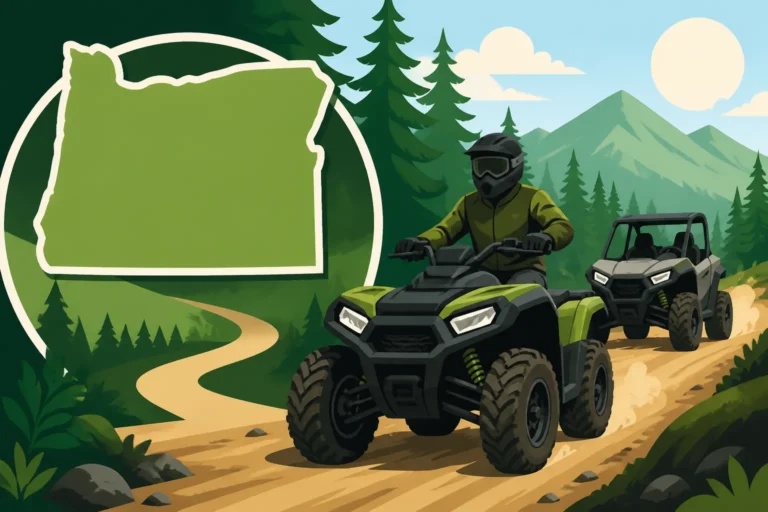
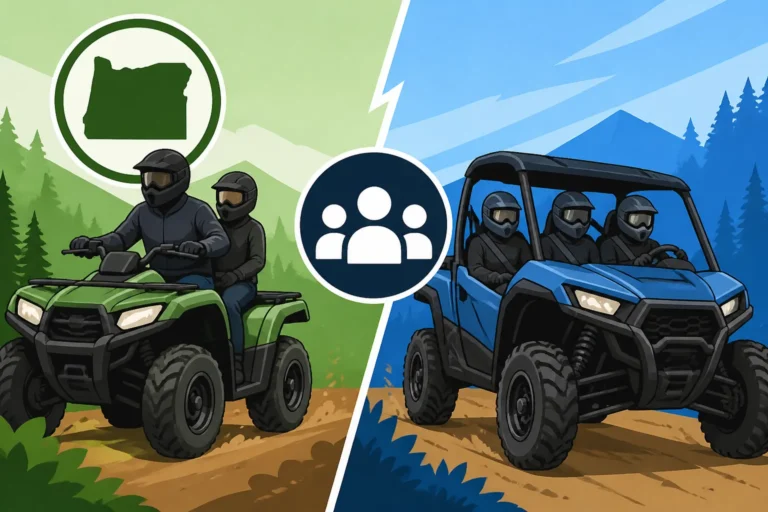
When we talk about a "Class I ATV" in Oregon, we're referring to a very specific type of off-highway vehicle. The Oregon Revised Statutes, specifically ORS 801.190, define it quite clearly. These are generally the traditional "quads" or four-wheelers that most people picture when they think of an ATV. They're designed to be ridden by a single operator, usually in a straddle seating position, and steered with handlebars, much like a motorcycle.
The defining characteristics aren't just about how you sit or steer, though. Oregon's definition also includes strict physical dimensions. A Class I ATV must be 50 inches wide or less. That 50-inch limit is a critical one, and it helps differentiate it from larger vehicles. You'll often find these machines with an unladen weight of 800 pounds or less, built for agility and navigating tight trails rather than cruising highways. Their suspension is typically optimized for absorbing bumps and jumps on rough terrain, not for stable, high-speed travel on smooth asphalt. Think about the common utility quads used for farm work or the sport quads designed for aggressive trail riding; these are almost universally Class I machines. They excel in dirt, mud, and sand, but they simply aren't engineered with road safety in mind. [Oregon's Class I Under ORS 801.190] also elaborates on these specifics.
The Core Distinctions: Class I Versus Other ATV Classes
Oregon's classification system isn't a "one size fits all" approach; it breaks down off-highway vehicles into four distinct categories: Class I, Class II, Class III, and Class IV. Each class has its own set of rules and, crucially, different implications for road use. Understanding these distinctions is key to understanding why your Class I is excluded from street-legal status.
- Class I (Our Focus): As discussed, these are your traditional straddle-seat quads, 50 inches wide or less. They are designed exclusively for off-highway use.
- Class II: This is where things get interesting for street legality. Class II machines are generally larger, heavier vehicles that can sometimes be modified and registered for limited street use. This class includes vehicles like sand rails, dune buggies, and certain specialized off-road vehicles that meet specific safety equipment requirements to operate on designated public roads. These vehicles often have full cages, seatbelts, and steering wheels, moving them closer to traditional automotive design. [Class II Machines That Can Be Plated in Oregon] are a rare exception.
- Class III: These are off-road motorcycles, commonly known as dirt bikes. Like Class I ATVs, they are primarily designed for off-highway terrain and are not generally street-legal in Oregon without extensive and often cost-prohibitive modifications to meet full street-legal motorcycle requirements.
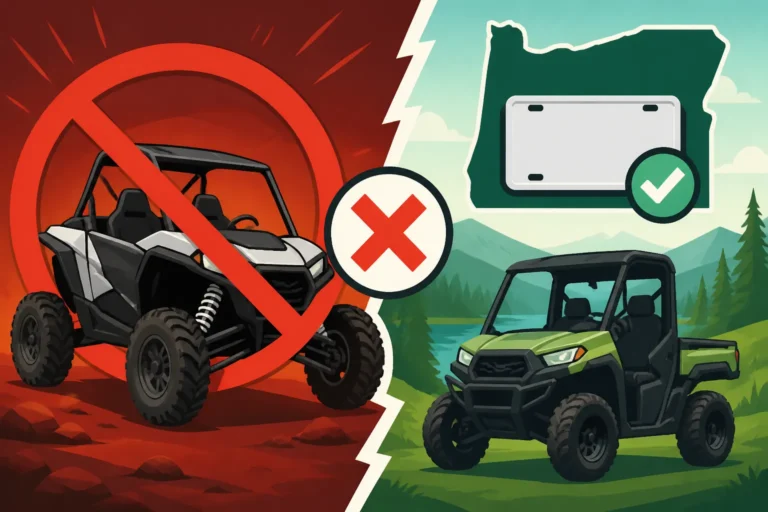
- Class IV: This class covers side-by-side UTVs (Utility Terrain Vehicles) that are up to 75 inches wide. These machines have a steering wheel, non-straddle seating (like bucket seats or bench seats), and can carry multiple passengers. While they share some characteristics with Class II vehicles (like a cage and seatbelts), they are also designed primarily for off-highway use. [Why a Class IV Cannot Get Oregon Plates] will show you similar hurdles to Class I in getting a plate.
The crucial takeaway here is that Class I and Class III machines are explicitly defined as off-highway only. Their design, purpose, and the state's legal framework simply do not allow for their conversion to street-legal status. It’s not about capability on the trail; it’s about meeting a different set of standards entirely. For a full rundown, check out [Oregon's Four ATV Classes Explained].
The Legal Framework: Why Class I is Excluded from Street-Legal Status
Oregon's laws are meticulously crafted, and the distinctions between off-highway vehicles and street-legal vehicles are not accidental. There's a fundamental difference in how the state's vehicle code views a Class I ATV compared to, say, a car or even a Class II sand rail that has been approved for limited road use. This legal framework forms the primary barrier to plating your quad.
Oregon's Vehicle Code and Off-Highway Status
At its core, Oregon's vehicle code makes a clear distinction: if a vehicle is designed primarily for off-highway use, it generally cannot be registered for on-highway use. Class I ATVs fall squarely into this "off-highway status." The state sees these machines as recreational vehicles meant for designated OHV areas, forest roads, or private land, not for navigating public streets, intersections, and traffic flow.
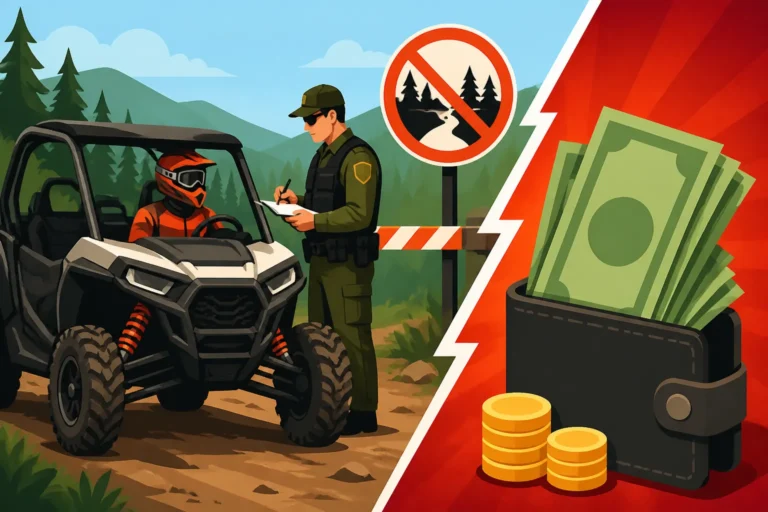
The problem isn't just about obtaining a license plate; it's about the entire set of safety and equipment standards that a street-legal vehicle must meet. These standards include specific requirements for headlights (high and low beam), taillights, brake lights, turn signals, rearview mirrors, windshields, horns, and even tire ratings designed for sustained pavement use. Most Class I ATVs, even those with aftermarket accessory kits from companies like SuperATV, simply do not come equipped with all these mandatory features, nor are their base designs structurally suited to integrate them in a way that satisfies Department of Motor Vehicles (DMV) inspection criteria. Because of these fundamental design and equipment differences, Oregon's DMV does not typically register these machines. This is why you must get an [Oregon's ATV Operating Permit] from the Parks and Recreation Department, not the DMV, to legally ride it on public land. It's a key reason [Why Oregon Will Not Plate a Quad].
Safety Concerns and Public Road Design
Beyond the specific equipment requirements, a major underlying factor in the legal exclusion of Class I ATVs from street-legal status is public safety. Roads, highways, and city streets are engineered for vehicles with specific handling characteristics, braking distances, and visibility profiles. Class I ATVs, by their very nature, are a poor match for this environment.
Consider the stability. Quads are designed for dynamic weight shifting and leaning into turns on loose surfaces. On pavement, this can lead to instability, especially at higher speeds or during emergency maneuvers. Their narrow track width and high center of gravity, while great for trail agility, can make them prone to rollovers on hard, grippy surfaces like asphalt. Furthermore, the tires on most Class I ATVs are aggressive, knobby treads optimized for traction in dirt, mud, and sand. These tires perform poorly on pavement, offering reduced grip, rapid wear, and compromised braking efficiency. They're loud, too, creating excessive road noise compared to street tires.
Visibility is another significant concern. A rider on a Class I ATV sits much lower than in a car or even a small truck, making them less visible to other drivers, particularly in traffic. Their small stature also makes it harder for other drivers to judge their speed and distance, increasing the risk of accidents. Oregon's legislators and safety officials have weighed these factors and determined that the inherent design of a Class I ATV poses too great a risk to both the rider and other road users to allow them on general public roads. It's not about making things difficult; it's about trying to keep everyone safe.
Design and Operational Limitations of Class I Machines
The legal framework is built upon the inherent design and operational characteristics of Class I ATVs. These machines are purpose-built for off-road environments, and their engineering choices, while excellent for the trails, create significant hurdles for street legality. It’s not just a matter of bolting on a few extra lights; it’s about fundamental vehicle dynamics.
Key Differences in Equipment and Structure
Think about the components that make a car or motorcycle safe and effective on the road. They have robust lighting systems, precise steering, and suspensions designed for predictable handling at speed. A Class I ATV is built with entirely different priorities.
Most Class I ATVs come from the factory with basic headlights and taillights, primarily for being seen in low-light trail conditions or by other riders in dusty environments. They typically lack turn signals, rearview mirrors, and a horn that meets road standards. While aftermarket kits from brands like SuperATV offer these components, simply adding them doesn't change the underlying structural and functional limitations. For instance, the small, often exposed lights on an ATV aren't designed to project light over long distances like a car's headlamps, nor are they typically integrated into the wiring harness to function as required by state vehicle codes.
Beyond the bolt-on accessories, consider the chassis and suspension. An ATV frame is designed for torsional flex and impact absorption in off-road terrain. The suspension often has significant travel to soak up large bumps and jumps. While fantastic for the dirt, this can make for a 'bouncy' and less stable ride on smooth pavement, where precise handling and minimal body roll are crucial. Moreover, the tires, as mentioned, are knobby and soft, designed for maximum grip in loose soil, not for the wear and traction demands of asphalt. Their low-pressure design is also less stable at higher speeds on hard surfaces. These fundamental differences are why your quad, despite its power and versatility, simply isn't built for highway use.
Speed, Stability, and Braking on Pavement
One of the most critical aspects of road safety is a vehicle's ability to maintain stability, travel at appropriate speeds, and stop reliably. On all three counts, Class I ATVs are at a severe disadvantage when compared to street-legal vehicles.
Speed and Stability: While many modern Class I ATVs can achieve impressive top speeds, these speeds are designed for open, off-road environments, not for merging with highway traffic. At higher speeds on pavement, the characteristics that make a quad agile on trails – like its short wheelbase, narrow stance, and high center of gravity – can make it dangerously unstable. Wind resistance, road imperfections, and even subtle steering inputs can lead to unpredictable handling. Trying to maintain a steady speed while maneuvering around other vehicles, especially large trucks, becomes a significant challenge and a safety hazard. Riders often experience 'wandering' or 'twitchiness' on paved roads, which can quickly lead to loss of control.
Braking: The braking systems on Class I ATVs are designed to bring the machine to a halt on loose or uneven surfaces. The aggressive tires, as discussed, have less contact patch and grip on pavement, significantly increasing stopping distances compared to a vehicle with street-rated tires and ABS. In an emergency braking situation, a Class I ATV on pavement is far more likely to lock up its wheels, skid, and potentially overturn, especially if the rider isn't accustomed to the drastically different braking dynamics. The lack of features like ABS, standard on most modern road vehicles, further exacerbates this issue. When you're riding your quad on a gravel logging road, these issues aren't as pronounced, but on a busy highway, they become life-threatening.
| Feature | Class I ATV (Off-Road Focus) | Street-Legal Vehicle (On-Road Focus) |
|---|---|---|
| Seating Position | Straddle | Non-straddle (Bucket, bench) or straddle (Motorcycle) |
| Steering | Handlebars | Steering wheel (most) or handlebars (motorcycle) |
| Width Limit | Up to 50 inches | Varies widely, generally wider for cars/trucks |
| Tires | Aggressive, knobby, low-pressure off-road | Smooth, high-pressure, street-rated |
| Lighting | Basic headlights/taillights | Full head/tail/brake/turn signals, reflectors |
| Mirrors | Often none standard | Mandatory rearview and side mirrors |
| Windshield | None | Mandatory (most) |
| Stability | Agile off-road, less stable on pavement | Stable on pavement at speed |
| Braking | Optimized for loose surfaces, no ABS | Optimized for pavement, often with ABS |
| Seatbelts/Cage | None (Class I) | Mandatory (most) |
| Registration Body | Oregon Parks and Recreation Department | Department of Motor Vehicles |
Exploring Alternatives and Exceptions (If Any)
Given these strict regulations and safety concerns, you might be wondering if there are any ways to legally get your Class I ATV on a public road in Oregon. The short answer is: for general street-legal status, no. However, there are very specific and limited circumstances where OHVs, including Class I machines, can interact with public roadways.
Designated Highway Access Routes and Their Purpose
Oregon has created a very narrow exception for OHV use on specific public roads: "designated highway access routes." Currently, there are only two such routes in the entire state: in Lakeside and Sumpter. These are not blanket permissions for ATVs to be street-legal. Instead, they are carefully established, limited pathways designed to connect riders from campgrounds or staging areas directly to off-road trail systems or dune access points.
These routes are typically short, clearly marked sections of lower-speed roads where local communities have agreed to allow OHV traffic. They are often gravel or lightly-trafficked paved roads. Even on these designated routes, riders must adhere to specific rules: they still need their [Oregon's ATV Operating Permit], a valid driver's license (if operating a Class IV, though Class I usually doesn't have this requirement), and proper safety equipment like helmets. The speed limits are typically low, and riders are expected to share the road responsibly with other vehicles.
It's crucial to understand that these routes are access points, not thoroughfares for general transportation. You can't just drive your quad from your house across town using these routes. They exist to solve a very specific problem: allowing riders to avoid trailering their machines for short distances between an OHV staging area and the beginning of a riding area. [Oregon's ATV Highway Access Routes] and [Lakeside and Sumpter: Oregon's Only Two Routes] provide more details on these unique provisions.
When an OHV Can Be Street-Legal in Oregon
While your Class I quad is out of luck for general street legality, it's not impossible for all OHVs in Oregon to hit the pavement. This possibility almost exclusively applies to Class II special-use vehicles. These are vehicles like custom-built sand rails, dune buggies, or certain types of kit cars that are designed from the ground up to meet both off-road ruggedness and on-road safety standards.
To be street-legal, a Class II machine must be equipped with a comprehensive list of items that Class I ATVs typically lack:
- DOT-approved headlights with high and low beams.
- Taillights and brake lights.
- Turn signals for front and rear.
- At least one rearview mirror, often two side mirrors.
- A horn that meets specific loudness requirements.
- DOT-approved tires suitable for highway speeds.
- A functional speedometer and odometer.
- Seatbelts and a roll cage (standard on many Class IIs).
- A license plate bracket with proper illumination.
- Mandatory insurance. [Insurance and Oregon Class II Machines] are compulsory.
Once these modifications are complete, the vehicle must undergo a thorough inspection by the Oregon DMV. If it passes, it can then be titled and registered for street use, just like a regular car. This process is often complex and expensive, requiring significant modifications to the base vehicle. This distinction highlights that Class I ATVs are simply too far removed from these requirements to ever reasonably achieve street-legal status. It's not about making a few tweaks; it's about a complete redesign to meet a different purpose. For more information on this exception, see [Oregon's Class II Street-Legal Exception].
The Impact on Riders and the Community
The inability to plate Class I ATVs has significant practical implications for riders and shapes how the OHV community operates within Oregon. It means more planning, reliance on trailers, and a deeper understanding of where legal riding opportunities truly exist.
Practical Challenges for Class I Owners
For owners of Class I ATVs, the primary challenge is transportation. Since your quad can't legally drive on most public roads, you're constantly relying on a truck and trailer to get your machine to and from the trails. This adds layers of cost, time, and logistics to every riding trip:
- Fuel Costs: Trailering a heavy ATV consumes more fuel than driving your truck alone.
- Equipment Costs: You need to invest in a reliable trailer, tie-downs, and possibly a hitch for your tow vehicle. This can be a significant upfront expense.
- Time and Effort: Loading, securing, and unloading your ATV takes time and effort, especially after a long day of riding. This can cut into your actual ride time.
- Limited Spontaneity: You can't just hop on your quad and ride from your home to a nearby trail if it involves public roads. Every outing requires a planned transportation strategy.
- Road Access vs. Trail Access: This distinction sometimes causes confusion. While you can't ride your Class I on a highway, many [Forest Service Roads Open to Oregon ATVs] and [Gravel County Roads and Oregon Riders] do allow OHV use, provided you have your permit and stay within specified speed limits. However, getting to those roads still requires trailering across paved public routes. [Oregon Rules for Riding to a Trailhead] offers helpful insights into these scenarios.
These challenges are a reality for Class I owners, and they often lead to group rides where everyone shares the burden of hauling, or choosing staging areas that offer direct access to extensive trail networks, minimizing the need for short road sections.
The Ongoing Debate and Potential Future Changes
The debate over street-legal ATVs is not unique to Oregon, and it's a conversation that often resurfaces within the riding community. Riders frequently express frustration, especially when they see neighboring states with more lenient street-legal policies or when they feel their responsibly operated machines could safely navigate quiet county roads.
Advocates for allowing street-legal quads often point to the economic benefits for rural towns, reduced trailering burdens, and increased access to recreational areas. They might argue that with proper safety equipment (like the accessories offered by SuperATV for other markets), Class I machines could operate safely on certain types of roads. However, against this, safety officials and state legislators continue to weigh the inherent design limitations, the risk to other motorists, and the complexities of enforcement.
While the current stance in Oregon is clear – [Why a Class I Cannot Get Oregon Plates] – the regulatory landscape for OHVs is not static. Advisory committees continually review rules, study impacts, and sometimes recommend changes. However, any significant shift to allow Class I ATVs on general public roads would likely require substantial legislative action, significant investment in infrastructure changes (like expanded designated routes), and a fundamental reevaluation of vehicle safety standards. For now, Class I ATV owners in Oregon must continue to navigate the trails and unpaved roads, reserving their public road travel for their tow vehicles.
This article is for general informational purposes only and does not constitute professional advice. Laws, prices and regulations vary by location and change over time. Consult a qualified professional for guidance on your specific situation.