Why Tillamook Forest Day Use Is Free in Oregon
A free day-use visit to Tillamook State Forest can still come with costs and rules that catch riders off guard. The key is separating the forest’s general access from ATV permits, campground charges, and site-specific restrictions. This guide explains why day use is often free, what you may still need to pay for, and how to plan a ride without confusing “no day-use fee” with “no requirements.”
Why Tillamook State Forest day use is often free
Public forest access is not the same as a paid recreation entrance
Tillamook State Forest is managed by the Oregon Department of Forestry, and many people visit without paying a general entrance or day-use fee. That can feel surprising if you are used to recreation areas where you pay at a gate, staging lot, or entrance kiosk. In the Tillamook forest, access to many recreation areas is not handled like a single ticketed attraction.
That does not mean every part of the forest is free to use in every way. A fee can apply to a campground, a reservation, or a specific service even when there is no general charge just to enter for the day. Access rules also depend on the land manager and the particular site, so a ride plan that crosses between areas may involve different requirements.
For riders, the practical takeaway is simple: do not assume a fee-free trailhead means you can ride without permits or other required documents. Start by checking the rules for the area you plan to use, then separate entry costs from operating requirements. The overview of [Oregon's Tillamook State Forest Trails] can help you understand the kinds of riding opportunities and access points in the forest.
The forest has costs even when visitors are not charged at the entrance
A free day-use visit does not mean maintaining roads, recreation sites, and public access costs nothing. Forest management involves many activities, including road upkeep, recreation planning, and coordination around working forest operations. The absence of a general day-use charge simply means that visitors are not paying a separate admission fee at many access points.
It is better not to assume that one particular source of money pays for every trail or facility. Forest management and recreation can involve multiple funding sources and responsibilities, and the details vary by activity and location. What matters to a visitor is that the fee structure is not necessarily a direct, per-person payment at the entrance.
This is one reason the phrase “free day use” can be misleading. It describes a charge you may not have to pay; it does not describe every cost of the trip, nor does it guarantee that every site or service is free. If you are driving from Portland for a short ride, you may avoid a day-use payment while still needing to budget for fuel, food, a permit, or an overnight stay.
What free day use does and does not cover
No day-use fee does not cancel the ATV permit requirement
If you bring an ATV or other off-highway vehicle, the applicable Oregon operating permit rules still matter. A day-use fee is a site-access charge; an ATV permit is a separate operating requirement. They serve different purposes, so paying one does not replace the other—and not paying a day-use fee does not create an exemption from the permit rules.
Before leaving home, check that the machine is in the correct class and that its permit decal is current and properly displayed. If you recently bought the machine, borrowed it, or are riding a rental, do not rely on someone else’s assumption that the paperwork is handled. Confirm what applies to that machine and who is responsible for the permit. [Oregon ATV Permit Decal Placement] explains why the decal’s location and visibility are worth checking before you reach a staging area.
Riders should also review the safety-card rules that apply to their age and vehicle class. Requirements can differ, and a rider may need to carry proof even when there is no entry booth to check it. The relevant guide, [Oregon ATV Safety Card Requirements], is a useful place to begin sorting out that separate obligation.
Camping and other services can still cost money
A free day ride is different from an overnight stay. Campground use, reservations, or other site services may have their own charges and conditions. If you are planning to sleep near the riding area, check the specific campground rather than treating the forest-wide day-use policy as a promise that overnight access is free.
That distinction is especially useful for families and groups. A day trip may involve no entrance payment, while a reserved campsite, extra vehicle, or other amenity changes the trip budget. Check the site’s posted information before you pack the trailer, and make sure the campground’s rules fit your rig, group, and arrival plans. For more background, see [Oregon OHV Camping With Hookups].
A quick comparison helps keep the categories straight:
| Trip item | What “free day use” generally means | What to check before you go |
|---|---|---|
| General day access | Many forest recreation visits do not require a separate entrance payment | Confirm the rules at your chosen site |
| ATV or UTV operation | No day-use charge does not replace an operating permit | Check permit, decal, and machine-class requirements |
| Rider safety requirements | A free access point does not waive applicable safety-card rules | Confirm what each rider needs to carry |
| Camping | Overnight stays may have separate charges or reservation rules | Check the specific campground and dates |
| Trail and road access | Public land access does not mean every route is open | Check closures, signs, and vehicle restrictions |
Planning a ride in Tillamook State Forest
Choose the access point before you set out
Tillamook State Forest covers a large area, and “I’m going to Tillamook” is not a complete riding plan. Different staging areas connect to different trail networks and roads. Browns Camp is a familiar starting point for many riders, but the best choice depends on your vehicle, experience, group, and the route you want to ride.
Before you tow out, identify the staging area and confirm how you will reach it. A map may show a road or trail that is not open to your vehicle, or a route may be affected by temporary work or a closure. Riders who arrive without a clear plan can lose time driving between access points, especially when they are unfamiliar with the forest roads. [Trail Loops Out of Browns Camp] can help you think through the route options around one of the area’s better-known bases.
Digital mapping can be useful for keeping a route organized. Some riders use onX Offroad to review terrain and save maps for offline use, particularly where cell coverage is unreliable. Treat any app as a planning aid rather than final permission to ride: posted signs and current land-manager information take priority if a digital map and conditions on the ground disagree.
Check closures and conditions, not just the fee question
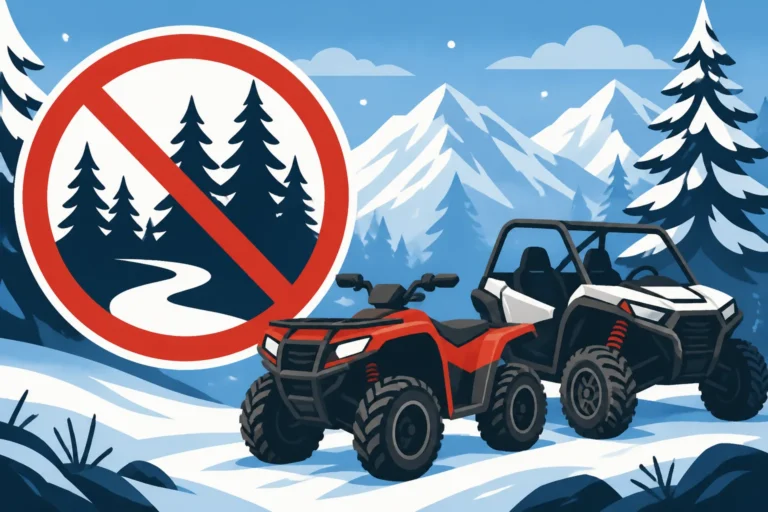
A route can be free to access and still be unavailable on the day you arrive. Weather, road work, timber activity, fire conditions, or other management needs can affect access. A trail shown in a saved map is not proof that it is open now, so check current notices and pay attention to signs at the site.
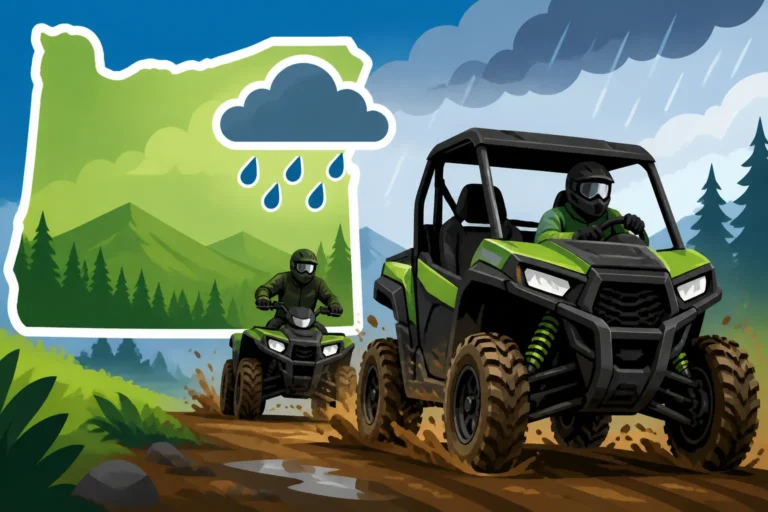
The Coast Range can also change the character of a ride quickly. Rain can leave forest roads slick, bring down branches, or make a familiar trail harder to manage. Even when the trail network is open, conditions may not suit every rider or machine. Review [Oregon Trail Closures to Check First] and [Oregon Riding in the Rain] as part of your planning, especially if your trip depends on a particular loop.
A practical habit is to check the route twice: once before loading the machines and again when you reach the staging area. If a sign closes a route, do not ride around it because your app still shows a line. Save an alternate loop ahead of time so a closure does not force you into an unfamiliar road or an unsafe scramble to improvise.
Budgeting for a free day-use ride
Look beyond the entrance fee
The lack of a day-use payment can make Tillamook an attractive option for a quick trip, but it is only one part of the total cost. Fuel for the tow vehicle, fuel for the machine, food, maintenance, permits, and possible lodging can add up. If you are making a long drive from the Portland area, compare the full trip cost rather than focusing only on whether a gate charge exists.
It also helps to plan for small practical expenses that can prevent a frustrating day. Bring drinking water, a basic tool kit, recovery gear suited to your machine, and a way to keep important documents dry. A low-cost day can still become an expensive one if a breakdown turns into a recovery problem or if you arrive without something essential.
If you ride regularly, keep a simple trip checklist with permit status, machine condition, fuel, route, and campground plans. It sounds fussy until the morning you are loading a trailer and discover that the permit decal is missing or the route you intended to ride is closed. A short checklist is easier than trying to fix those problems at the staging area.
Avoid confusing free access with free parking everywhere
There may not be a general day-use fee at many Tillamook State Forest recreation areas, but visitors should still read signs at parking and staging locations. Rules can vary by site, and parking arrangements are not interchangeable with trail access. If you are unsure whether a particular lot has conditions or restrictions, use the posted information and confirm the site details before leaving your vehicle for the day.
Do not assume that a pass required at another Oregon recreation area applies to Tillamook, or that a pass from one land manager covers every stop on a multi-area trip. The [Oregon OHV Areas Near Portland] guide can help with broader trip planning, but the specific access point and its current instructions should guide your decisions.
If your plan includes more than one riding location, list each stop separately. Note the managing agency, access conditions, permitted vehicle types, and any separate parking or camping costs. Riders who use onX Offroad or another mapping app can save candidate locations and routes, then verify each one with official information before setting off. That extra check is useful when a trip crosses from a state forest into a different public-land area.
Riding responsibly in a working forest
Share roads and trails with other forest users
Tillamook is a working forest as well as a recreation destination. You may encounter hikers, cyclists, other OHV riders, maintenance crews, or logging activity. A road that feels quiet one weekend may have work traffic another day, so ride with a clear view ahead and be prepared to slow down or stop.
Give other users room, stay on routes open to your vehicle, and do not create a new line around a muddy section or obstacle. Riding around a marked closure can damage the forest and make access harder for everyone. If you come across active work, follow signs and directions from authorized personnel rather than trying to squeeze past.
Good etiquette matters most when the area is busy. Keep noise and speed under control near staging areas, yield appropriately, and make sure your group knows where to regroup if someone gets separated. A free day-use area is still shared public space, and considerate riding helps protect the access that makes these trips possible.
Make a backup plan for weather, closures, and weak signal
Cell service can be unreliable in forested and hilly areas. Downloading a map or saving a route before you leave can make navigation easier if your phone loses signal, but carry a backup you can use without a connection. [Oregon Trail Maps Worth Carrying] offers additional ideas for preparing to navigate when the screen is not enough.
Tell someone where you plan to ride and when you expect to be back. Keep the route realistic for the least experienced rider in your group, and agree on what you will do if weather worsens or a trail is closed. If one rider has a mechanical issue, a simple meeting plan and basic recovery gear can make the difference between a manageable delay and a stressful day.
onX Offroad can help some riders organize offline route information, but it should not replace checking forest notices, reading signs, or carrying the essentials for a ride. Use it as one part of a broader plan: confirm access, share the route with your group, and know how to return to the staging area if you need to cut the ride short.
Frequently asked questions about Tillamook day use
Does free day use mean every Tillamook site is free?
No. The phrase generally refers to the lack of a separate day-use or entrance fee at many forest recreation access points. It does not promise that every campground, service, parking area, or special-use activity is free. Check the rules for the precise location you intend to visit, especially if you plan to stay overnight or use a reservation-based facility.
It also does not mean all public land around Tillamook has the same fee structure. Different land managers can set different requirements, and one trip may involve multiple areas. Confirm each stop independently rather than carrying one assumption from the forest to another recreation site.
Can I ride without an Oregon ATV permit because there is no day-use fee?
No. A day-use charge and an ATV operating permit are separate things. The fee-free status of a recreation visit does not, by itself, remove permit obligations for an off-highway vehicle. Check the rules for your machine class and make sure the decal and other required documentation are in order before riding.
If you are visiting from another state, do not assume that a registration or permit automatically satisfies Oregon requirements. Review the rules that apply to out-of-state machines and your length of stay. A few minutes spent checking paperwork before departure is much less painful than discovering a problem after you have hauled your machine to the forest.
What is the safest way to confirm access before a trip?
Start with current information from the land manager and the signs at the access point. Check the specific staging area, trail, or campground—not just a general description of Tillamook State Forest. Then use a map or navigation app to plan your route and save an alternate in case a closure or condition changes your day.
If you use onX Offroad, or another digital map, compare it with official notices and what you see on the ground. Be ready to change plans when signs, closures, or staff instructions say a route is unavailable. “Free to visit” is most helpful when paired with a clear, legal, and realistic riding plan.
Disclaimer
This article is for general informational purposes only and does not constitute professional advice. Laws, prices and regulations vary by location and change over time. Consult a qualified professional for guidance on your specific situation.