Browns Camp and Oregon’s 2026 Reservations
Browns Camp is a popular Tillamook State Forest base, and planning a trip can get confusing when campground reservations, riding access, trail conditions, and vehicle requirements all need checking separately. This guide explains how to prepare for a visit, what to verify before booking, and how to make your stay smoother once you arrive.
Understand what a Browns Camp reservation covers
Separate your campsite from your riding plans
A campsite reservation and permission to ride are not the same thing. Booking a place to stay does not automatically confirm that every nearby trail is open, suitable for your machine, or available during your visit. Before committing to dates, check the campground information and the current riding-area guidance separately.
That distinction matters if you are traveling with a side-by-side, a youth rider, or a group with different machines. A trail you rode last summer might have a seasonal closure, a temporary restriction, or conditions that make it a poor match for a particular vehicle. Keep your reservation confirmation, but also make a separate plan for where you expect to unload and ride.
If you are new to the area, start with [Trail Loops Out of Browns Camp](Trail Loops Out of Browns Camp) to understand how a riding day might take shape. Then verify the specific routes and staging options you plan to use. Treat a trail description as a planning aid, not as a guarantee that a route will be open on your travel dates.
Confirm the exact facility and its rules
“Browns Camp” can refer to more than one part of the riding area in casual conversation. Make sure the listing you are reserving is the campground or site you intend to use, rather than a nearby staging location or a different Tillamook State Forest facility. Check the address or map location against your route before you pay or finalize plans.
Read the reservation details all the way through. Look for check-in and check-out instructions, vehicle limits, cancellation terms, quiet-hour rules, and any restrictions on extra vehicles or trailers. Those details can affect a family weekend in very practical ways: a trailer may take up more space than expected, or a late arrival may require a plan for finding the campsite in the dark.
If a listing is unclear, confirm it with the land manager or the official reservation service before assuming that a particular feature is included. A reservation may secure a campsite without reserving a separate parking or riding area. For a broader overview of campground planning, [Oregon OHV Campground Reservations](Oregon OHV Campground Reservations) can help you think through the questions to ask before booking.
Plan dates around riding conditions and demand
Choose dates with the whole group in mind
For a Browns Camp trip, the most convenient weekend is not always the best one for your group. A holiday or peak-season weekend may be easier for people to attend, but it can also mean busier roads, more traffic at the staging area, and less flexibility if your schedule changes. A quieter weekend can feel more relaxed, though weather and trail conditions may be less predictable.
Think through what each rider needs. A first-time rider may do better with a less crowded day and a simple route plan. A family with children may want to build in more breaks and avoid a late arrival. A group hauling several machines may need extra time for parking, unloading, and getting everyone organized before heading out.
| Planning question | Why it matters | What to check before booking |
|---|---|---|
| Is your group traveling on a busy weekend? | Crowds can affect parking, unloading, and trail pace. | Reservation availability, arrival timing, and staging-area guidance |
| Are riders new to the area? | Familiarity with route markings and terrain affects how much you can safely cover. | Trail information, maps, and an easy backup route |
| Are you bringing a trailer or several vehicles? | Space and maneuvering can be tighter than expected. | Site dimensions, parking rules, and vehicle limits |
| Could weather change your plans? | Rain can alter riding conditions and travel time. | Cancellation terms, forecast, and current trail notices |
| Is every machine suited to your planned routes? | Different vehicle sizes and types may have different route options. | Area rules, trail classifications, and machine dimensions |
Before you select dates, compare the reservation terms with your group’s actual travel constraints. If someone is driving in after work, for example, a campsite that requires an early arrival could create stress before the trip even begins. It is often better to choose a date and setup that leave room for delays than to build a tight schedule around an ideal arrival time.
Keep a weather and closure backup plan
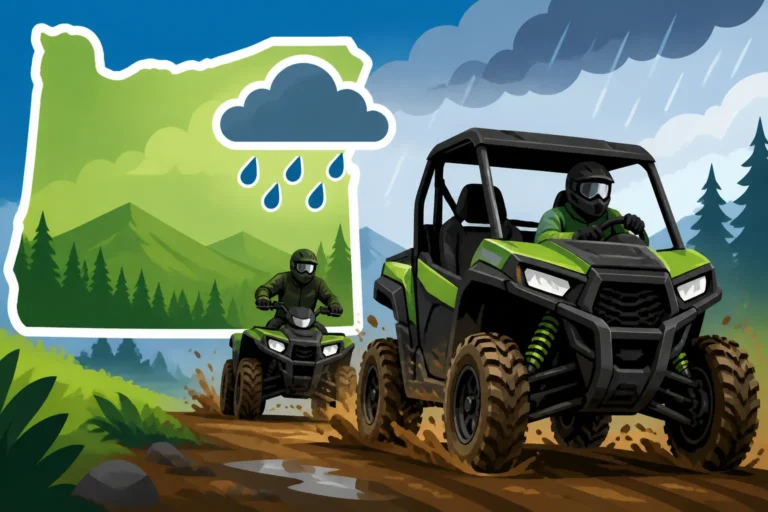
The Coast Range can be wet, and conditions can change the feel of a ride quickly. Rain may mean slick ground, muddy sections, reduced visibility, or longer travel times between the campground and the trails you want to ride. A weekend that looks straightforward on a calendar can require more patience once you are dealing with wet gear and slower-moving machines.
Check the area’s current notices close to departure, not only when you book. Closures can arise from weather, maintenance, fire conditions, resource protection, or other land-management needs. A reservation does not override a closure. If your preferred route is unavailable, it helps to have a backup ride plan and a non-riding option for the day.
Use a current map alongside official notices. onX Offroad can be useful for organizing route ideas and reviewing mapped roads before a trip, especially when several riders need to agree on a plan. Still, compare app information with the land manager’s current guidance and signs on the ground; a map app should not be treated as proof that a road or trail is open.
For more trip-planning context, [Oregon Trail Closures to Check First](Oregon Trail Closures to Check First) is a useful companion. If you are sorting out which route suits your group, [Oregon Trail Ratings and What They Mean](Oregon Trail Ratings and What They Mean) can help you think beyond distance and consider the kind of riding a route may involve.
Book carefully and keep your records together
Verify the reservation process before paying
Reservation systems and campground policies can change, so use the official listing for the specific Browns Camp facility you intend to book. Confirm when the site becomes available to reserve, what information you need, how payment is handled, and whether the system sends a confirmation by email or through an account. Do not rely on a screenshot or a third-party calendar if the official service is the final authority.
Before completing a booking, double-check the dates, number of nights, site selection, and party details. It is easy to click the wrong weekend when you are comparing a few options, especially if you are booking from a phone. Make sure the name on the reservation is correct and that everyone in the group knows who is responsible for communicating with the campground.
Read cancellation and change rules before you pay. A group may assume it can shift dates easily, only to find that a change is subject to availability or a specific policy. If your plans depend on another person’s schedule, settle that uncertainty first or choose dates that are realistic for everyone.
Save the information you will need at the campground
Keep the confirmation somewhere you can access without a strong signal. Download or print the booking details, note the campground’s directions, and save the official contact information. Cell reception can be unreliable in forested and remote areas, so it is sensible to prepare before leaving town rather than trying to reload everything from the road.
Make a compact trip folder for the group. Include the reservation confirmation, a route plan, emergency contacts, relevant permits or safety documents, and any instructions for the campground. If several adults are arriving separately, send the same basic information to each driver so nobody is left guessing about the entrance, check-in instructions, or meeting point.
A map app can help with preparation, but bring a fallback. onX Offroad may help you review mapped routes and keep a shared idea of where the group expects to ride. Download maps or save the areas you need before traveling, and carry a paper map or other offline reference if you have one. Cross-check route choices with posted signs and current official notices once you arrive.
Prepare your machines, gear, and campsite
Match the route plan to the machine
Browns Camp draws different kinds of off-highway vehicles, but a route that works for one machine may not be appropriate for another. Consider vehicle width, turning room, ground clearance, rider experience, and whether the route is comfortable for the least experienced person in the group. Avoid planning a day around the most capable machine if the rest of the group would struggle to keep up.
A side-by-side driver may need to think differently about tight turns and narrow sections than a rider on a quad or dirt bike. A machine that feels easy to handle in an open area can feel much less manageable when the trail narrows, becomes muddy, or has limited room to pass. Build in time for regrouping, and agree in advance on what the group will do if someone wants to turn back.
Before loading, check the basic condition of each machine. Look at tires, controls, lights where required, fuel, and any safety equipment. Confirm that the machine has the required permit decal and that the riders have any required safety documentation. If you need a refresher on the riding-area basics, [Oregon Permits Explained](Oregon Permits Explained) and [Oregon's ATV Safety Education Card](Oregon's ATV Safety Education Card) are useful starting points.
Pack for wet, muddy, and changing conditions
Even a short stay can become uncomfortable if you bring only the gear that suits a dry forecast. Pack waterproof layers, spare gloves, socks, and a way to keep dry clothes separate from muddy riding gear. Bring extra towels or a tarp if you expect wet machines and equipment to be coming back to camp.
Organize your campsite so that wet and clean items do not get mixed together. A bin for muddy gear, a dry bag for documents, and a separate place for helmets and goggles can make the end of the day much easier. After a damp ride, people tend to set things down wherever there is room; a simple system prevents someone from discovering that their dry jacket is soaked the next morning.
Check machine-specific requirements and riding-area rules before packing modifications or exhaust equipment. A loud machine or a missing required component can turn into a frustrating problem at the staging area. Review [Oregon Spark Arrester Requirements on Trails](Oregon Spark Arrester Requirements on Trails) before your trip, and inspect your equipment well before departure rather than at the trailhead.
Arrive safely and make the weekend work
Allow time for parking and staging
Plan to arrive with enough time to find the campground, settle in, and organize the machines without rushing. If you are towing, allow for slower travel and the extra time needed to park and unload. Arriving after dark can make it harder to spot signs, understand the site layout, and keep children or pets safely away from moving vehicles.
At the staging area, take a moment to look around before unloading. Identify where vehicles and trailers should park, where riders are entering the area, and whether any signs show temporary restrictions. Do not assume that the layout will be identical to your last visit. A brief check can save you from blocking another vehicle or having to rearrange a loaded trailer.
Agree on a simple group routine: who leads, who rides at the back, where you regroup, and what to do if someone gets separated. Keep the pace appropriate for the least experienced rider. A group that pauses at junctions and checks that everyone is together is less likely to turn a pleasant ride into a search through unfamiliar trails. [Riding Etiquette on a Busy Staging Day](Riding Etiquette on a Busy Staging Day) offers more ideas for sharing crowded spaces considerately.
Follow signs and adjust the day as needed
Use signs at the campground and on the trails as your immediate guide. If a gate is closed or a route is marked off-limits, do not treat an older map or a previous visit as permission to continue. Conditions and access can change, and a closure may exist for reasons that are not obvious from the trail entrance.
Keep your plans flexible. If the weather deteriorates, a route is busier than expected, or a rider is tired, shorten the loop or return to camp. There is no benefit in finishing a planned route at the cost of someone’s comfort or safety. For a rainy weekend, [Riding Tillamook in the Rain](Riding Tillamook in the Rain) can help set expectations for how wet conditions may affect a visit.
Before leaving, pack out rubbish, secure equipment, and make sure the campsite is left as required by its rules. Check that machines and trailers are ready for the drive home, especially after riding in mud or rain. A final walk around the campsite is a simple way to catch forgotten gear and avoid leaving anything behind.
A Browns Camp reservation is only one piece of a successful trip. Confirm the facility, read the booking conditions, check current riding access, and prepare for the weather and the needs of your group. With a realistic route plan and a little room for changes, you can spend less time troubleshooting and more time enjoying the Tillamook State Forest.
Disclaimer
This article is for general informational purposes only and does not constitute professional advice. Laws, prices and regulations vary by location and change over time. Consult a qualified professional for guidance on your specific situation.