Oregon’s Penalty for an Unpermitted ATV
It's easy to get caught up in the excitement of hitting Oregon's incredible trails or sprawling dunes, only to realize too late that you've overlooked a crucial piece of paperwork. The sinking feeling in your stomach when a ranger pulls you over, asking for your ATV permit, is one that no rider wants to experience. This guide will walk you through exactly what happens when you're caught riding an unpermitted ATV in Oregon, exploring the penalties, the financial costs, and how to avoid this frustrating situation altogether.
Understanding Oregon's ATV Operating Permit System
Before we dive into the consequences of riding without one, let's make sure we're all on the same page about what an Oregon ATV Operating Permit actually is. This isn't just some arbitrary sticker; it's a vital part of maintaining and accessing the state's amazing off-highway vehicle (OHV) areas. Oregon takes its OHV program seriously, and for good reason—it funds trail maintenance, safety programs, and facility improvements.
Who Needs One and Who Doesn't
Generally speaking, if you're riding an ATV, side-by-side, dirt bike, or any other off-highway vehicle on designated public lands in Oregon, you need an operating permit. This applies to Oregon residents and visitors alike. It doesn't matter if your machine is brand new or a vintage model, if you're just putting around a local park, or if you're tackling the massive dunes on the coast. Most machines, regardless of their class, require this permit.
There are, however, a few specific exceptions to this rule, though they're far less common than the need for a permit. For instance, if you're operating your ATV strictly on private land that you own or have permission to use, and you're not accessing any public roads or trails, a permit isn't typically required. However, even in these scenarios, local ordinances can sometimes come into play, and it’s always best to check. Furthermore, if your machine is temporarily being used in a controlled, supervised event like a closed-course race, the permit might also be temporarily waived by event organizers, but these are very specific circumstances. For most recreational riders, the permit is mandatory.
What the Permit Covers
The Oregon ATV Operating Permit is essentially your ticket to legally ride on the state's vast network of OHV trails and open riding areas. It demonstrates that you've contributed to the fund that supports these very places. The money generated by these permits directly feeds back into the OHV program, ensuring that the trails you love to ride are maintained, new ones can be developed, and educational programs are available. It covers designated areas like the Oregon Dunes National Recreation Area, the Tillamook State Forest trails, and inland spots like Millican Valley.
It's important to understand that this permit is distinct from other potential requirements. It's not a driver's license, it doesn't grant you street-legal status, and it doesn't replace an [Oregon ATV Safety Card]. Each of these is a separate consideration. The operating permit is purely for the privilege of riding off-highway on public lands. Think of it as a user fee for the privilege of enjoying Oregon's fantastic OHV resources.
How Long the Permit Lasts
An Oregon ATV Operating Permit is valid for two years from the month it is purchased. This means if you buy your permit in July 2024, it will be valid until July 2026. This two-year window offers a good balance, giving riders extended access without the hassle of annual renewals, while still providing a regular funding stream for the state's OHV program. Many riders appreciate this longer duration as it reduces administrative overhead compared to a yearly sticker.
It’s crucial to keep track of this expiration date. A permit that lapsed last month, even by a single day, is still considered expired, and you could face penalties just as if you never had one. Life gets busy, and it's easy to forget these things, but a quick check of your decal a few times a year can save you a lot of headache and money. Remember, riding on a permit that has expired is equivalent to riding with no permit at all in the eyes of the law. For specifics on how your machine is classified, you might want to look at [Oregon's Four ATV Classes Explained].
What Happens When You're Caught Without a Permit?
So, you're out enjoying a beautiful Oregon day, feeling the wind in your face, when suddenly, there's a uniformed officer signaling you to pull over. This is where the rubber meets the road, or rather, where the sand meets the tire without the proper decal. The immediate outcome can be quite jarring and significantly impact your day.
The Initial Stop: What a Ranger Checks
When an Oregon State Police trooper, a county sheriff's deputy, or a park ranger pulls you over in an OHV area, their first priority is usually safety and compliance. They'll likely ask for your operator's license, your ATV's permit, and possibly your [Oregon ATV Safety Card]. They're trained to spot machines without decals or with expired ones from a distance. Often, they'll check for proper safety gear, like helmets, and ensure your machine meets basic requirements like a spark arrester.
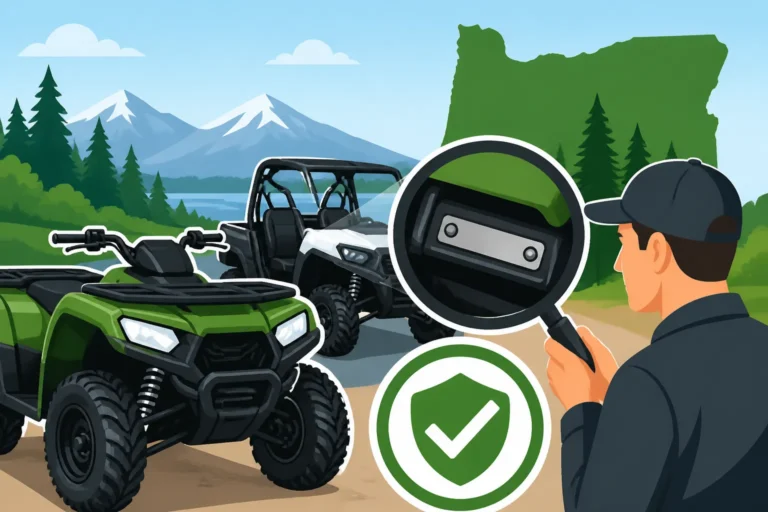
This initial interaction isn't just a friendly chat. The officer will verify your permit decal's validity, checking the year and month. If they don't see one, or if it's expired or improperly placed (e.g., in your wallet instead of on the machine), that's when the problem starts. They may also check the VIN to ensure the machine isn't stolen. It's a routine stop designed to enforce the rules that keep everyone safe and our trails funded. Having all your documents ready and correctly displayed can make this process much smoother, even if you still end up with a citation.
Receiving a Class C Traffic Violation
Riding an ATV on public land in Oregon without a valid operating permit is classified as a Class C traffic violation. This isn't just a slap on the wrist; it's a formal infraction that carries a set penalty, similar to a minor moving violation you might receive in your car. It will result in a citation, essentially a ticket, being issued to you by the enforcing officer.
This violation will include details like the date, time, location, the specific offense (operating an unpermitted ATV), and instructions on how to pay the fine or contest it. Unlike some minor infractions, this isn't usually something you can just talk your way out of on the spot. The officer has a duty to enforce the law, and if your machine doesn't have a current permit, they're obligated to issue a citation. This is directly related to [Oregon's Class C Traffic Violation for No Permit].
The Official Penalty: Fines and Fees
The financial penalty for riding an unpermitted ATV can be substantial. While I can't give you exact dollar amounts (as these can change), you should expect a base fine that is significant enough to make you wish you'd bought the permit. On top of this, there are often court costs and various state assessments that are added, which can sometimes double or even triple the initial fine amount.
Consider a situation where you might have to appear in court if you decide to contest the citation, or if the officer has to report additional violations. This could mean taking time off work, paying for fuel to drive to the courthouse, and potentially facing even higher fees if found responsible. It's not just the sticker price of the fine; it's the cumulative burden of dealing with the legal system. This is why understanding [Oregon Fines for Riding Without a Permit] is so important—it's not a minor cost.
The Financial Impact of a Citation
When you're handed that citation for an unpermitted ATV, it's more than just a piece of paper; it's a financial burden waiting to unfold. The costs can quickly add up, turning what should have been a fun day of riding into an expensive lesson.
Understanding the Base Fine
The base fine for operating an ATV without a permit in Oregon is established by statute and can vary, so always refer to the specific amount listed on your citation or check the Oregon Judicial Department's schedule of fees. This base amount is what many people initially focus on, thinking it's the total cost. However, it's rarely the final figure you'll end up paying.
This base fine is set to act as a deterrent, to encourage compliance with the permit system that funds our trails. Imagine you've spent a couple of hundred dollars on fuel, camping, and food for a weekend trip. Adding a substantial fine on top of that can definitely sour the experience. It makes the relatively small [Oregon ATV Permit Cost] seem incredibly cheap by comparison.
Court Costs and Additional Assessments
Here's where the costs really start to accumulate beyond the base fine. When you receive a Class C traffic violation, there are often mandatory court fees, surcharges, and other state assessments that are tacked on to the base fine. These can include a justice court fee, a victim's compensation surcharge, a state police assessment, and more. Each of these small additions, while seemingly insignificant on their own, can quickly combine to create a much larger bill.
For example, a violation that might have a base fine of a specific amount could easily escalate to twice that when all the additional fees are calculated. If you decide to contest the citation and go to court, you might incur even more costs, regardless of the outcome. Legal fees, if you choose to consult an attorney, would be another layer of expense. It's a stark reminder that neglecting a permit, which is a fairly straightforward and inexpensive purchase, can lead to a surprisingly steep financial penalty.
Potential Impact on Insurance (If Applicable)
While an unpermitted ATV violation in Oregon is primarily a traffic infraction, its impact on your insurance can be a nuanced point. For most recreational ATVs, specific insurance may not be mandatory, but many riders choose to carry it for liability and damage protection. If you have such a policy, a traffic violation, even an OHV-related one, could potentially be noted on your driving record.
While it might not directly affect your car insurance rates in the same way a speeding ticket in your car would, having a history of violations could, in some cases, impact your insurability or rates for specialty vehicle policies in the future. Insurers assess risk, and a pattern of non-compliance with regulations might be viewed as a higher risk. Always check with your insurance provider directly if you're concerned about how any citation might affect your specific policy.
Beyond the Fine: Other Consequences
The financial penalty is certainly a major headache, but getting caught without a permit can lead to other, equally frustrating, consequences that can disrupt your ride and create long-term issues.
Impoundment or Removal from the Trail
One of the most immediate and inconvenient consequences of an unpermitted ATV is the potential for your machine to be impounded or ordered off the trail. An officer isn't likely to let you continue riding illegally. They may instruct you to load your machine onto your trailer, if you have one present. If you don't have a trailer, or if the officer deems it necessary, they have the authority to have your ATV impounded.
Imagine being miles deep into a trail system, far from your truck and trailer, and suddenly being told you can't ride your machine back. You'd have to arrange for someone to pick it up, potentially pay towing and storage fees, and waste valuable riding time. This can turn a fun outing into an absolute logistical nightmare, not to mention a costly one. The officer's primary goal is to stop the illegal activity, and sometimes that means preventing you from operating the machine further.
Future Riding Privileges and Compliance
While a single permit violation typically doesn't lead to a permanent ban from Oregon's OHV areas, repeated offenses could certainly raise red flags. Authorities keep records of citations, and a history of non-compliance could lead to more severe penalties in the future, such as higher fines or stricter enforcement actions. It also makes you a known quantity to local rangers, who might pay closer attention to your machine and conduct on subsequent visits.
Furthermore, getting cited often puts you on the radar for other potential violations. If an officer stopped you for a missing permit, they might also scrutinize your machine for other infractions, such as a missing spark arrester, excessive noise, or improper safety equipment. Being compliant with all rules, not just the permit, is the best way to ensure you can continue enjoying Oregon's fantastic riding opportunities without unnecessary interruptions.
The Hassle Factor: Time and Stress
Beyond the tangible fines and potential impoundment, there's the intangible cost of time and stress. Dealing with a citation involves administrative work: figuring out how to pay the fine, potentially going to court, or trying to understand the legal jargon. This takes away from your personal time, which could be better spent riding or with family.
The stress of having a run-in with law enforcement, the embarrassment of being pulled over, and the lingering worry about the costs can overshadow the enjoyment of your entire trip. It's a reminder that planning ahead and ensuring compliance with regulations is not just about avoiding fines, but also about preserving your peace of mind and maximizing your enjoyment of the sport. Using a service like LawDepot for general vehicle forms (like a bill of sale, or power of attorney if someone else needs to handle your machine) can at least help with ensuring you have other paperwork in order, even if they don't handle permits directly.
How to Ensure Your ATV is Permitted
The good news is that avoiding penalties for an unpermitted ATV is incredibly simple. A little bit of proactive planning can save you a world of trouble and keep you on the trails enjoying yourself.
Where to Purchase an Oregon ATV Permit
Oregon has made it quite convenient to purchase an ATV operating permit. You have several options, ensuring that whether you're planning ahead or making a last-minute decision to ride, you can get what you need. One of the most popular ways is to purchase your permit [Buying an Oregon Permit Online]. This allows you to print a temporary permit immediately, which you can use to ride the same day while waiting for the official decal to arrive in the mail.
Additionally, you can purchase permits in person from a network of authorized vendors across the state. These often include ATV dealerships, sporting goods stores, and even some state park offices. These agents can issue the decal directly on the spot, so you walk away with it in hand. You can find a comprehensive list of these locations under [Where Oregon Sells ATV Permits]. It's always a good idea to check their operating hours before you make a special trip.
Proper Decal Placement and Display
Having the permit is one thing; displaying it correctly is another. An improperly placed or unreadable decal can still lead to questions from law enforcement. The permit decal must be affixed in a visible location on the right side of the machine. For a quad, this typically means on the right front fender or the right side of the frame. For a side-by-side, it's often on the right side of the vehicle body or roll bar. For dirt bikes, it's usually on the right fork leg or fender.
The key is visibility and permanence. The decal should be cleanly applied to a flat, clean surface where it won't be easily obscured by mud, equipment, or your riding gear. It needs to be securely attached so it doesn't fall off during a ride. Rangers are looking for that clear, current decal, and making their job easy helps ensure your day isn't interrupted. More specific guidance can be found in [Oregon Permit Decals and Where They Go].
Keeping Proof of Permit Handy
While the decal on your machine is the primary proof of permit, it's always a good idea to carry secondary proof, especially if you purchased online and are riding on a temporary printout. Keep a copy of your purchase receipt, or a screenshot of your online permit confirmation, in a waterproof bag or container on your person or securely stored on your machine.
This backup documentation can be invaluable if your decal somehow gets damaged, obscured, or falls off during a rigorous ride. While an officer will primarily look for the physical decal, having additional proof can help clarify the situation if there's any doubt. This practice applies to all your important documents, including your driver's license and [Oregon ATV Safety Card]. Think of it as an extra layer of protection against unexpected issues out on the trail. LawDepot also provides customizable bill of sale templates that can help you document your ATV purchases, ensuring you have clear proof of ownership should any questions arise about the machine itself, separate from its operating permit.
Addressing Common Misconceptions About Permits
There are quite a few myths and misunderstandings floating around about Oregon's ATV permit requirements. Clearing these up can prevent you from inadvertently running afoul of the law.
"I Only Ride on Private Land"
This is perhaps one of the most common misconceptions. Many riders believe that if they are only riding on private property, they don't need a permit. While it is true that you don't typically need an operating permit for an ATV used exclusively on private land you own or have permission to use, this situation is often more nuanced than people realize. The moment your wheels touch public land, a public trail, or even a public road that allows OHV crossing, the permit requirement kicks in.
Consider a scenario where your "private land" involves crossing a small section of BLM (Bureau of Land Management) land, a forest service road, or even a public easement to get from one part of your property to another. In such cases, you are technically operating on public land and would need the permit. It's not always easy to tell where private property ends and public land begins, especially in rural or heavily forested areas. Always verify your route. For more on this, you might check [Does a Woodlot-Only Machine Need an Oregon Permit?].
"My Machine is Registered Out-of-State"
Another frequent misunderstanding comes from out-of-state visitors. Riders from neighboring states like Washington, Idaho, or California often assume that their state's registration, decal, or sticker is sufficient for riding in Oregon. Unfortunately, that's generally not the case. Oregon has its own distinct permit system, and with very few specific exceptions for reciprocity (often limited in duration), out-of-state registrations do not usually exempt you from needing an Oregon ATV Operating Permit if you plan to ride on Oregon's public OHV lands.
Visitors typically need to purchase an Oregon permit just like residents do. While there may be some very limited reciprocity agreements with certain states for a short period, it's always safest and most compliant to simply purchase an Oregon permit for your machine when visiting. It’s a small price to pay for hassle-free riding and contributes to the upkeep of the trails you're enjoying. Don't assume your home state's sticker will be recognized; research [Oregon Rules for an Out-of-State Machine] before you travel.
"It's Just a Small Dirt Bike"
The size or type of your off-highway vehicle often leads to confusion. Some riders might think that smaller machines, like youth ATVs or certain dirt bikes (Class III off-road motorcycles), are somehow exempt from the permit requirement. This is incorrect. Oregon's permit system applies broadly to almost all off-highway vehicles intended for recreational use on public lands.
Whether it's a mighty side-by-side, a nimble quad, or a compact dirt bike, if it's designed for off-road use and you're taking it to a public riding area, it needs an Oregon ATV Operating Permit. The regulations don't differentiate based on engine size or horsepower for permit purposes. Even machines intended for youth riders, such as a [Oregon Permits for a Youth Machine], generally require a permit if they're used on designated public OHV trails. The permit cost is the same regardless of machine class or size, reinforcing that it's about access, not vehicle specifics.
| Scenario | Permit Status | Typical Consequence | Cost Implications |
|---|---|---|---|
| Riding on Public Land | Without Permit | Class C Traffic Violation, potential impoundment | Significant fine + court costs, possible towing/storage fees |
| Permit Lapsed Last Month | Without Permit | Class C Traffic Violation, same as no permit | Significant fine + court costs |
| Out-of-State Machine | Without Oregon Permit | Class C Traffic Violation if no reciprocity or over limit | Significant fine + court costs |
| Riding Exclusively Private Land | No Permit Needed | No official consequence from state | None, but ensure absolutely no public land access |
| Decal Improperly Placed | With Permit (But Problematic) | Officer interaction, potential request to re-affix, could still result in citation if unreadable or deemed non-compliant | Minor inconvenience, but risk of fine if interpreted as non-compliant |
| Best Practice | With Valid Permit | Enjoy the trails without interruption | Initial [Oregon ATV Permit Cost], peace of mind |
This article is for general informational purposes only and does not constitute professional advice. Laws, prices and regulations vary by location and change over time. Consult a qualified professional for guidance on your specific situation.