Oregon ATV Permit for a Side-by-Side
It can feel a little daunting to figure out all the ins and outs of getting your off-road machine ready for adventure in Oregon, especially when you own a side-by-side. These amazing vehicles bring so much fun to the trails, but navigating the state's permit system can sometimes feel like a puzzle. This guide is here to walk you through exactly what you need to know about getting an Oregon ATV Operating Permit for your side-by-side, cutting through the confusion so you can get out and ride.
Navigating Oregon's ATV Class System for Side-by-Sides
Oregon has a specific way of categorizing off-highway vehicles (OHVs), and understanding where your side-by-side fits is the very first step in getting it properly permitted. It's not just about calling it an "ATV"; the state sees different machines in different ways, and your side-by-side falls into a unique category.
What Makes a Side-by-Side a Class IV Machine?
When you look at Oregon's regulations, your side-by-side, often called a UTV (Utility Terrain Vehicle) or SxS, is almost certainly going to be classified as a Class IV all-terrain vehicle. This classification is super important because it defines the rules and requirements for your machine.
So, what are the key characteristics that push a vehicle into Oregon's Class IV category? Think about how you operate your side-by-side compared to a traditional quad. The biggest giveaways are usually:
- Steering Wheel Control: Unlike a quad that uses handlebars, your side-by-side has a steering wheel, just like a car or truck. This immediately sets it apart.
- Bench or Bucket Seats: Instead of straddling a seat, you're sitting in a bucket seat or on a bench seat, often side-by-side with a passenger (hence the name!). This seating arrangement is a dead giveaway for Class IV.
- Safety Cage/Roll Bar: Side-by-sides typically come equipped with a factory-installed roll bar or safety cage, offering enhanced protection for occupants.
- Dimensions: While there are various sizes of side-by-sides, Oregon's Class IV often refers to machines with a dry weight of 3,500 pounds or less and a width of 75 inches or less. It's important to check your specific machine's specs. If your machine is wider than 75 inches, it still needs an Oregon permit, but it moves into a different, less common category for permit purposes that some call "Class IV Wide." For most standard recreational side-by-sides, you're squarely in the Class IV camp as described in [Oregon's Class IV Side-by-Sides Under 75 Inches].
Understanding these defining characteristics helps you recognize why your side-by-side isn't considered a Class I quad, an off-road motorcycle (Class III), or a street-legal Class II machine. It has its own unique place in the OHV family.
Why the Distinction Matters: Class I Versus Class IV
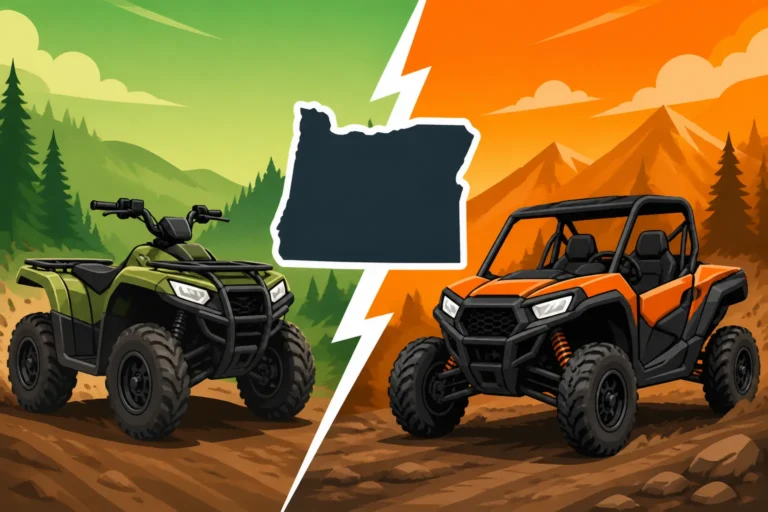
The distinction between a Class I ATV (the traditional quad with handlebars and a straddle seat) and a Class IV side-by-side isn't just bureaucratic nitpicking. These classifications influence everything from where you place your permit decal to potential age restrictions for riders or passengers, and even specific trail access rules in some areas. For example, some trails might have width restrictions that are more relevant for a side-by-side than a narrower quad.
Comparing Class I and Class IV machines highlights these differences:
| Feature | Class I All-Terrain Vehicle (Quad) | Class IV All-Terrain Vehicle (Side-by-Side/UTV) |
|---|---|---|
| Seating | Straddle seat (like a motorcycle) | Bench or bucket seats |
| Steering | Handlebars | Steering wheel |
| Occupants | Typically one rider, some designed for two | Two or more occupants, side-by-side |
| Roll Bar/Cage | Generally not factory-equipped | Factory-equipped roll bar or safety cage |
| Dry Weight | 1,200 pounds or less | 3,500 pounds or less |
| Width | 50 inches or less | 75 inches or less |
As you can see, the machines are fundamentally different in their design and operation. While both are considered "all-terrain vehicles" in the broader sense and require an Oregon ATV Operating Permit, their specific classification helps Oregon Parks and Recreation Department (OPRD) manage diverse recreational opportunities safely. It's crucial to know that your side-by-side, regardless of its specific width or features, will need a permit if you plan to ride it on public lands in Oregon. For a deeper dive into the distinctions, you might want to read [Oregon Class I Versus Class IV].
Why Your Side-by-Side Needs an Oregon ATV Operating Permit
It's a common misconception that if you're just riding on public lands, you don't need a permit if your machine is not street-legal. Or perhaps you think because it's a side-by-side, it's somehow exempt. Let's clear that up right now: if you're riding your side-by-side on any designated OHV area, forest roads, or other public lands managed for off-highway vehicle use in Oregon, you absolutely need an Oregon ATV Operating Permit.
The Mandate for Public Lands Use
Oregon's permit system is designed to ensure that all users of off-highway vehicles contribute to the maintenance, development, and enforcement of OHV recreation areas. Your side-by-side, whether it's brand new or a seasoned trail veteran, falls under this umbrella.
The permit is essentially your ticket to legally access and enjoy Oregon's fantastic network of trails and riding areas, from the vast Oregon Dunes to the dense forests of the Tillamook State Forest or the high desert trails of Millican Valley. Without this permit decal properly displayed on your machine, you could face fines and disruptions to your ride. It's a small fee that goes a long way to preserving the places we love to ride. This fundamental requirement is detailed in [Oregon's ATV Operating Permit].
Understanding Reciprocity and Non-Resident Rules
"What if I'm just visiting Oregon?" is a question we hear a lot. If you're coming from another state and bringing your side-by-side, you might be wondering if your home state's registration or permit is valid here. Oregon does have a reciprocity agreement with some states, but it's important to understand the specifics.
Generally, if your side-by-side is properly registered or permitted in your home state, Oregon will honor that for a period of up to 60 consecutive days of use within the state. This means you can bring your machine from, say, California with a valid Green Sticker, or from Nevada with its OHV registration, and ride legally in Oregon for that initial period. However, if you plan to stay and ride for longer than 60 days, or if your home state isn't on Oregon's reciprocity list, you will need to purchase an Oregon ATV Operating Permit.
It's always best to check the current reciprocity list from Oregon Parks and Recreation before you travel, as these agreements can sometimes change. For a deeper dive into what visitors need to know, check out [Do Visitors Need an Oregon ATV Permit?]. Don't get caught unaware – a quick check can save you a lot of hassle!
The Role of the Oregon Parks and Recreation Department
You might be used to dealing with the Department of Motor Vehicles (DMV) for your cars and trucks, but for your off-highway vehicle permit, you'll be interacting with the Oregon Parks and Recreation Department (OPRD). This is a common point of confusion for new riders. The DMV handles titles and registrations for street-legal vehicles, but since most ATVs and side-by-sides are primarily off-road machines, their permitting falls under the purview of the OPRD.
The OPRD is responsible for managing Oregon's extensive system of OHV trails and recreation areas. The fees collected from these ATV Operating Permits directly support these efforts. This means your permit fee helps fund trail maintenance, new trail development, enforcement of riding rules, and educational programs that keep our riding areas safe and accessible. It’s a dedicated fund that directly benefits the OHV community. You can learn more about their role in [The Oregon Parks and Recreation Department's Role].
Getting Your Oregon ATV Permit for a Side-by-Side
Once you understand why you need an Oregon ATV Permit for your side-by-side and where it fits in the state's classification system, the next step is actually getting one. The process is straightforward, but knowing your options and what to expect can make it even smoother.
Where to Purchase Your Permit
Oregon offers several convenient ways to purchase your ATV Operating Permit for your side-by-side, designed to accommodate most riders' preferences.
- Online: This is often the quickest and easiest method for many. You can purchase your permit directly from the Oregon Parks and Recreation Department's website. The beauty of buying online is that you can do it from the comfort of your home, and you'll typically receive a temporary permit via email that you can print out and use immediately. The physical decal will then be mailed to you. This is a fantastic option for planning ahead for a weekend trip. For more details on this, see [Buying an Oregon Permit Online].
- Authorized Vendors/Agents: All across Oregon, there are hundreds of authorized permit agents. These can include ATV dealerships, powersports shops, outdoor recreation stores, and even some small convenience stores, especially in areas popular with OHV riders. Many riders prefer this option if they want to get their physical decal on the spot or if they have questions they want to ask a person directly. It’s often a good idea to check the OPRD website for a list of agents near your home or your intended riding destination. You might find a shop on your way to the dunes! Check out [Where Oregon Sells ATV Permits] or [Oregon Permit Agents You Can Walk Into] for more specific information.
- Oregon State Parks Offices: Some Oregon State Parks offices also sell ATV permits. This can be a handy option if you're visiting a park that offers OHV access or if it's the most convenient location for you.
Regardless of where you purchase your permit, the price for an Oregon ATV Operating Permit is the same for all classes of ATVs, including your side-by-side. It's a flat fee that covers your machine for two years from the month of purchase.
What You'll Need for the Application
Whether you're buying online or in person, you'll generally need to provide some basic information about your side-by-side. This typically includes:
- Vehicle Identification Number (VIN): This unique 17-character code identifies your specific machine. It's usually found on the frame of your side-by-side. Make sure to have this handy.
- Make, Model, and Year: Basic descriptive information about your machine.
- Your Personal Information: Your name, address, and contact details.
The process is designed to be straightforward. You're not "registering" your side-by-side in the same way you would a car with the DMV; you're obtaining an operating permit that attests you've paid the necessary fee to ride on public OHV lands.
When purchasing a used side-by-side, it's always a good idea to ensure you have a solid bill of sale or other proof of ownership to transfer title later if you choose to, and to verify the VIN. While not always required for the permit itself, having clear ownership documents, perhaps created with a tool like LawDepot, can prevent headaches down the line when it comes to any future transactions or proving your machine isn't stolen.
Placing Your Permit Decal Correctly
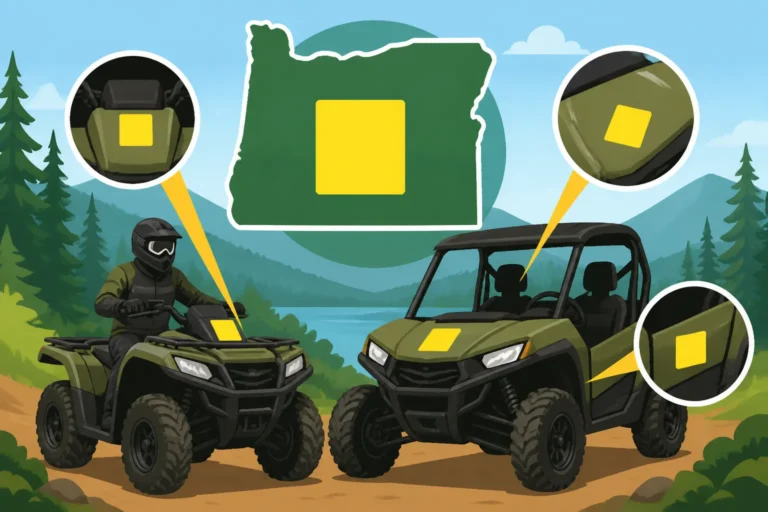
Once you've purchased your permit, you'll receive a physical decal. This isn't just a sticker; it's proof that your side-by-side is legal to ride, and it must be displayed correctly. For a Class IV side-by-side, the rules are pretty clear:
- Visibility is Key: The decal needs to be easily visible from the rear of the machine. It can't be hidden by accessories, mud, or obscured in any way.
- Durable Surface: Apply the decal to a clean, flat, and durable surface that is part of the vehicle itself. Common locations include:
- The roll bar or cage (often on a vertical bar on the driver's or passenger's side, or a rear cross-bar).
- The rear body panel or fender.
- The outside of the rear tailgate if your side-by-side has one.
The goal is for a law enforcement officer or park ranger to be able to quickly and easily see your permit decal. If it falls off or becomes unreadable, you'll need to obtain a replacement. Improper placement or a missing decal can lead to a citation, so take a moment to affix it securely and in the right spot. For more specific guidance on placement for your Class IV machine, consult [Decal Placement on a Class IV Machine].
Beyond the Permit: Important Considerations for Side-by-Side Owners
Getting your Oregon ATV Operating Permit is a critical step, but it's not the only thing to keep in mind as a side-by-side owner in Oregon. There are a few other important considerations that will ensure you have the safest and most enjoyable time on the trails.
The Importance of a Bill of Sale and Proving Ownership
While Oregon's ATV Operating Permit doesn't require you to prove ownership in the same way a vehicle registration does, having clear documentation for your side-by-side is always a smart move. Especially for off-road-only machines, titling in Oregon is optional, which can sometimes lead to confusion about who actually owns a machine. However, proof of ownership is crucial for a number of reasons:
- Selling Your Machine: When it comes time to sell your side-by-side, a clear bill of sale is essential to transfer ownership legally and smoothly to the new buyer. Without it, you might struggle to find a buyer or even prove you had the right to sell it.
- Buying a Used Machine: Conversely, if you're buying a used side-by-side, insist on a comprehensive bill of sale from the seller. This protects you from purchasing a stolen machine and provides a legal record of your purchase.
- Insurance Purposes: While not mandatory for Class IV off-road use, many riders choose to insure their side-by-sides against theft or damage. Insurance companies will require proof of ownership.
- Theft Recovery: In the unfortunate event that your side-by-side is stolen, having clear ownership documents, including a bill of sale or optional title, is paramount for law enforcement to help recover your machine and prove it's yours.
Because titling is optional for off-road machines, the bill of sale often serves as the primary document of ownership. Services like LawDepot can be invaluable here, offering templates and guidance to create legally sound documents like a bill of sale that clearly outlines the transaction and protects both buyer and seller. Even if you don't plan to title your machine, having a solid [Oregon Bill of Sale for an ATV] in your records is highly recommended.
Safety Education Card Requirements
Oregon takes rider safety seriously, and that includes operators of side-by-sides. While the specific requirements can vary slightly depending on age and machine class, a general rule of thumb is that anyone operating an ATV or side-by-side on public lands in Oregon needs to have an Oregon ATV Safety Education Card.
For operators of Class IV side-by-sides:
- Under 16 Years Old: All operators under the age of 16 must have an Oregon ATV Safety Education Card. They also generally require adult supervision.
- 16 Years Old and Older: Operators 16 years of age and older are also required to have an Oregon ATV Safety Education Card. However, if you possess a valid driver's license, that can sometimes exempt you from needing the separate safety card for operating a Class IV machine. It's critical to verify the current specific rules with OPRD, as these can be updated.
The safety education course covers important topics like safe riding practices, environmental awareness, and Oregon's OHV laws. It's a valuable resource for both new and experienced riders. The course itself is often available online and is typically free, though there might be a small fee for a physical card. Make sure you and any other operators of your side-by-side meet these requirements. You can find more comprehensive information about this in [Oregon ATV Safety Card Requirements].
Road Access and Street Legality for Side-by-Sides
It's a common dream for side-by-side owners to be able to ride their machine directly from their garage to the trails. Unfortunately, for most Class IV side-by-sides, Oregon's rules for street legality are quite restrictive.
The vast majority of side-by-sides, due to their design, weight, and lack of certain safety features required for highway use, cannot be registered or plated for street-legal operation in Oregon. You generally cannot legally ride your side-by-side on paved public roads or highways. This means you'll almost always need a truck and trailer to transport your side-by-side to and from designated OHV staging areas.
There are, however, very specific exceptions:
- Designated Highway Access Routes: Oregon has a couple of specific, limited communities (like Lakeside and Sumpter) that have designated routes where OHVs, including side-by-sides, are allowed to operate on public roads to access trail systems or local services. These are rare and highly regulated.
- Forest Service and County Roads: Some unmaintained gravel Forest Service roads or county roads that are specifically not maintained for passenger car traffic might be open to OHVs. Always check local signs and maps, as rules can vary greatly and change.
It's a nuanced topic, and the general rule is to assume your side-by-side is not street legal unless you are in a specifically designated area or on a clearly marked OHV-friendly road. Getting caught on a closed road can result in significant fines. To truly understand the limitations, it's worth exploring articles like [Are ATVs Street Legal in Oregon?].
By understanding these additional considerations, you're not just getting a permit; you're becoming a more informed and responsible side-by-side owner, ready to explore Oregon's incredible off-road landscape safely and legally.
Disclaimer
This article is for general informational purposes only and does not constitute professional advice. Laws, prices and regulations vary by location and change over time. Consult a qualified professional for guidance on your specific situation.