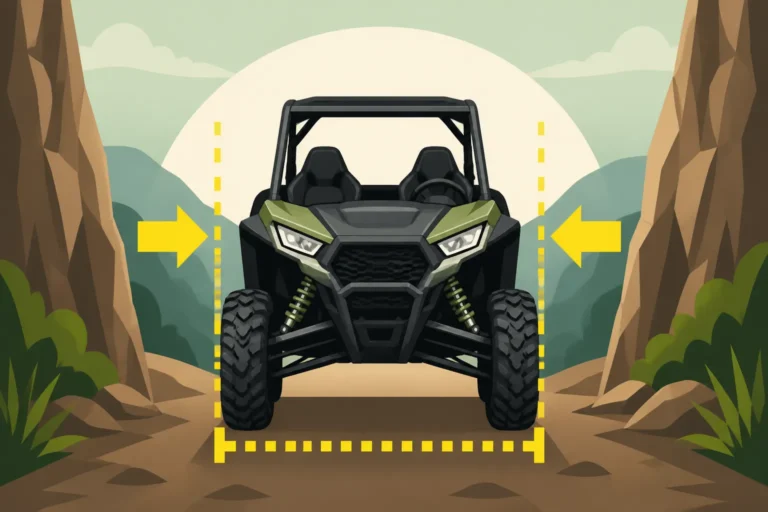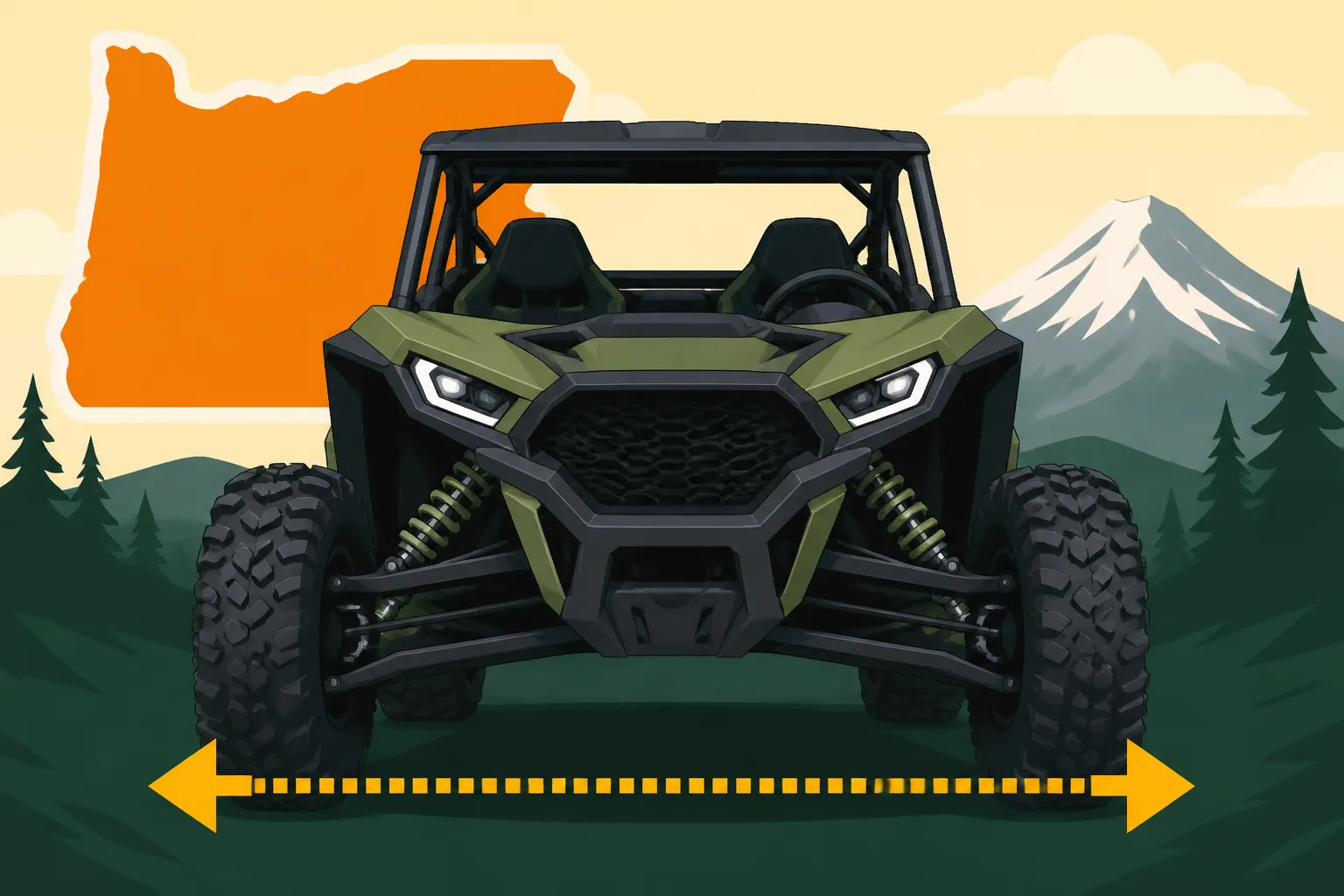
A Machine Over 75 Inches Wide
It’s a common scenario: you’re dreaming of tearing up the Oregon dunes or cruising a vast high-desert trail system, but you’ve got a beast of a machine. Maybe it’s a factory-built side-by-side with an aggressive stance, or perhaps a custom sand rail. Then you hear about Oregon’s ATV width rules, and suddenly, the dream hits a snag. If your off-road vehicle measures over 75 inches wide, you’re not alone in wondering exactly what that means for how and where you can ride in our beautiful state. This guide is here to untangle the complexities, explain Oregon’s specific rules, and help you understand the real-world implications of owning and operating an extra-wide machine.
Understanding Oregon's OHV Classification System
Oregon's system for classifying Off-Highway Vehicles (OHVs) can feel a bit like reading ancient hieroglyphs, especially when you start looking at the fine print on dimensions. But understanding these categories is crucial, as they dictate everything from the type of permit you need to where you can legally ride. The width of your machine is one of the most significant factors in this classification.
The Importance of Width in Oregon's Classes
Oregon doesn't just randomly assign numbers to different types of OHVs. Instead, it uses specific criteria like seating, steering, and crucially, width and dry weight, to place them into one of four classes: Class I, Class II, Class III, or Class IV. Each class comes with its own set of rules and requirements. For instance, a traditional ATV, often called a quad, typically falls into Class I, defined by its straddle seat, handlebar steering, and a width limit of [The 50-Inch Limit That Defines a Class I]. Anything exceeding this 50-inch mark is definitely not a Class I and will move into a different category, which can have immediate impacts on your riding plans.
The reason width is so important boils down to infrastructure and safety. Many trails, especially in forested areas, were originally designed for narrower machines like motorcycles or quads. They feature physical barriers, tight turns, and narrow bridges that simply can’t accommodate wider vehicles. So, before you even think about permits or legalities, the sheer physical dimensions of your machine will often dictate where it can practically go.
Where 75 Inches Fits In: Defining the Line
Now, let's talk about that specific 75-inch measurement. For many riders, this number is a key threshold, especially if you own a side-by-side. Most modern, factory-built side-by-sides (sometimes called UTVs or SxSs) are designed to fit within Oregon's Class IV specifications. According to Oregon law, a Class IV off-highway vehicle is defined as "an off-highway vehicle that travels on four or more wheels and has a nonstraddle seat and a steering wheel for steering control, and is 75 inches or less in width."
This means that if your side-by-side measures exactly 75 inches wide or less, it typically falls squarely into Class IV. This is the category for the vast majority of consumer-grade side-by-sides from manufacturers like Polaris, Can-Am, Yamaha, and Honda. However, the moment your machine measures over 75 inches wide, even by an inch, it immediately steps out of the Class IV definition. This might seem like a small detail, but it has significant ramifications for how your vehicle is classified and regulated in Oregon.
Implications of Owning a Machine Over 75 Inches Wide in Oregon
When your machine pushes past that 75-inch width, you're entering a different regulatory landscape. It's not just about fitting on trails anymore; it's about how Oregon legally defines and treats your vehicle. This can affect everything from the type of permit you need to mandatory insurance and where you're allowed to operate.
Beyond Class IV: What 75+ Inches Really Means
If your off-road machine is truly over 75 inches wide, it cannot be classified as an Oregon Class IV off-highway vehicle. So, what does it become? More often than not, a machine exceeding the 75-inch width limit, especially if it has a non-straddle seat and a steering wheel, will fall under [Oregon's Class II Under ORS 801.193]. This class is broader and covers "off-road motor vehicles." This can include a wide array of vehicles that don't fit into Class I, III, or IV, such as dune buggies, sand rails, and even some modified Jeeps or custom-built machines.
The key characteristics of a Class II vehicle in Oregon are that it's designed for off-highway use, has a non-straddle seat, and is controlled by a steering wheel (though there are some exceptions). The crucial difference here is that Class II vehicles do not have a specified width limit in the same way Class I or IV machines do. This means your extra-wide machine finally has a legal home within Oregon's classification system. You might find that your modified truck, full-size rock crawler, or even a custom-built side-by-side that's been widened beyond the 75-inch mark, will ultimately be classified as a Class II off-road motor vehicle. Knowing this distinction is vital for understanding your responsibilities as an operator. For instance, you might be wondering [Where a Sand Rail Fits in the Class System] – typically, it's a Class II. Similarly, if you have a street-legal Jeep that you also take off-road, [Where a Jeep Fits in the Class System] can be complex, but its off-road designation often defaults to Class II.
Mandatory Insurance and Other Class II Rules
This is a critical point that often surprises owners of extra-wide machines. Unlike Class I, Class III, and Class IV OHVs, which do not have mandatory liability insurance requirements for off-highway use, Class II vehicles do. That's right, if your machine is classified as a Class II, you are legally required to carry proof of insurance whenever you operate it. This is a significant difference and one that can lead to fines if you're caught riding without it. We're talking about [Mandatory Insurance on Every Oregon Class II], and it's not something to overlook.
Beyond insurance, while all OHVs in Oregon require an operating permit and safety education card (with some exceptions for adults driving Class IV or with a valid driver's license), the implications for a Class II can extend further. If your Class II machine meets specific requirements (such as being street-legal) and is operated on designated highway access routes, it can even be titled and registered for road use. This isn't the case for Class I, III, or IV machines. However, it's important to remember that very few roads are open to OHVs in Oregon, so don't expect to cruise down I-5 in your street-legal sand rail!
Permit and Decal Requirements for Wider Machines
Regardless of its width, every off-highway vehicle operated on public lands in Oregon requires an Oregon ATV Operating Permit. This is a non-negotiable rule. The good news is that there's [One Oregon Permit Price for Every Class], so whether you have a narrow quad or a behemoth side-by-side, the permit cost is the same. The permit lasts for two years and comes with a decal that must be prominently displayed on your machine.
For wider machines, especially those classified as Class II, the decal placement might require a bit more thought. [Decal Placement on a Class IV Machine] often specifies the right side of the machine, but for a custom-built Class II, you'll need to ensure it's visible. The Oregon Parks and Recreation Department (OPRD) guidelines typically state the decal should be on the right side of the vehicle, clearly visible from the rear or side. If your machine is so wide or custom-built that standard placement is difficult, aim for a highly visible, permanent location. The important thing is that a ranger or law enforcement officer can easily spot it.
| Oregon ATV Class | Max Width (approx.) | Typical Vehicles | Permit Required? | Insurance Required? | Notes |
|---|---|---|---|---|---|
| Class I | 50 inches | Quads, ATVs | Yes | No | Straddle seat, handlebars |
| Class II | No limit | Dune Buggies, Sand Rails, Modified Jeeps | Yes | Yes | Non-straddle seat, steering wheel |
| Class III | 50 inches (motorcycle only) | Off-road Motorcycles, Dirt Bikes | Yes | No | Straddle seat, handlebars |
| Class IV | 75 inches | Side-by-sides (UTVs) | Yes | No | Non-straddle seat, steering wheel |
Trail and Road Access for Wider-Than-Class-IV Machines
This is where the rubber meets the trail, quite literally. While your over-75-inch machine might have a legal classification (Class II) and a valid permit, physical access to certain riding areas will be your biggest hurdle. Many trails and forest roads simply aren't built for machines of this size.
Imagine pulling up to a designated trailhead in the Tillamook State Forest with your 85-inch wide side-by-side, only to find a gate or barrier that's clearly marked for vehicles under 70 inches. It's a common frustration, and a clear example of why knowing your machine's [Oregon ATV Width Limits by Class] is so important. Even if the regulations don't explicitly ban your width, natural obstacles like dense trees, large rocks, or narrow bridges can make a trail impassable.
The Oregon Dunes National Recreation Area, with its vast open sands, is generally more accommodating for wider vehicles than many forest trail systems. However, even on the dunes, there are designated staging areas and access points, and some sections might have width restrictions or physical barriers due to environmental protections, such as [Snowy Plover Season on the Oregon Coast] closures. Always check the specific rules and maps for any riding area you plan to visit. While some areas are open to [Oregon Trails for a Wide Side-by-Side], these are often larger, more open routes or specific play areas designed to handle diverse vehicle types.
Navigating Ownership and Riding with an Extra-Wide Machine
Owning a wider off-road machine in Oregon requires a bit more homework and foresight than simply buying a permit and hitting the trails. You need to be proactive about understanding its classification, where you can legally and practically ride, and what specific paperwork you might need.
Verifying Your Machine's Official Class
It might sound obvious, but the first step is always to confirm your machine's exact dimensions and features. Grab a tape measure and verify the actual width. Check your owner's manual for manufacturer specifications, including dry weight. This information is your baseline for determining [Which Oregon ATV Class Your Machine Falls Into]. If you've modified your machine, especially if you've added wider axles or aftermarket components, its classification might have changed.
If you're still unsure after checking the specs, don't guess. The Oregon Parks and Recreation Department (OPRD) is the authority on OHV classification in Oregon. You can reach out to them directly with your machine's details (make, model, year, actual width/length/weight) for clarification. They are there to help ensure riders are compliant with state law. It's much better to know for certain than to risk a citation down the trail.
Specific Riding Area Considerations
Since your extra-wide machine likely falls into Class II, or at least pushes the boundaries of typical OHV access, you need to be very selective about where you plan to ride.
- Oregon Dunes National Recreation Area: This is often the best bet for wider machines. The open sand environment is generally more forgiving. Staging areas like Spinreel, Hauser, and Umpqua Beach 2 & 3 offer ample space. However, always be mindful of specific closures, especially during plover nesting season, and adhere to designated riding areas. The sand can be unpredictable, so be prepared for getting stuck, and always carry recovery gear.
- Forest and Bureau of Land Management (BLM) Lands: This is where you'll face the most restrictions. Many forest roads and designated OHV trails have explicit width limits, often enforced by physical barriers, bollards, or gates. Always check current maps and regulations for the specific forest or BLM district you intend to visit. What might look like an open trail on a basic map could quickly become impassable due to its width. Don't assume that because a forest road is "open," your machine will fit. For instance, [Riding a County Road in Grant County, Oregon] might be possible, but only if that specific road is wide enough and designated for OHV use.
- Private Lands: If you have access to private property, width limits generally don't apply, as long as you have permission from the landowner. However, if you need to cross public land to get to private land, your machine still needs to be permitted and you must follow all public land rules on the route to your destination.
The key takeaway here is to plan ahead. Look at detailed trail maps, check online resources from the Forest Service or BLM, and even call ranger stations if you have questions about specific trail widths or access restrictions for Class II or extra-wide vehicles.
Titling, Insurance, and Legalities for Wider Machines
For any significant investment like an off-road vehicle, especially one that might be custom-built or heavily modified, understanding your ownership documentation is crucial. While [Titling an ATV in Oregon Is Optional] for off-road use, it's still highly recommended, even for a wide Class II machine. A title provides indisputable proof of ownership, which is invaluable if your machine is ever stolen, involved in an accident, or if you decide to sell it. If your machine is classified as Class II and capable of being made street-legal, a title would be required for that process.
If you choose not to title your machine (or if it's not eligible for a title), always keep a comprehensive bill of sale. This document outlines the transaction and proves you legally acquired the vehicle. For custom builds or unique wide machines, a detailed bill of sale is even more critical. Resources like LawDepot can provide reliable, legally sound templates for a [Oregon Bill of Sale for an ATV], helping ensure all necessary details are included. Having this paperwork, along with your [Oregon's ATV Operating Permit] and proof of mandatory Class II insurance, will make any interaction with law enforcement or OPRD much smoother. Remember to keep all your important documents in a waterproof bag or container when you're out riding, especially in Oregon's often damp climate.
Disclaimer
This article is for general informational purposes only and does not constitute professional advice. Laws, prices and regulations vary by location and change over time. Consult a qualified professional for guidance on your specific situation.