Keeping Paperwork in a Wet Climate
Riding an ATV or UTV in Oregon means embracing the elements, and often, those elements include a good amount of wet weather. From the persistent mist of the Coast Range to the sudden downpours in the Cascades or even the dew-soaked mornings in the high desert, keeping your important paperwork dry and legible is a constant battle. Nothing is more frustrating than reaching into your pack for your permit, only to find it a soggy, unreadable mess, or worse, completely disintegrated. This guide will walk you through practical, real-world strategies to protect your vital ATV and UTV documents from Oregon's wet climate, ensuring you're always prepared and compliant, no matter the weather.
The Unique Challenge of Oregon's Wet Climate for ATV Paperwork
Oregon is a state of incredible natural beauty, offering diverse riding opportunities from the lush forests to the iconic coastal dunes and vast high deserts. However, this varied landscape also brings a wide array of weather conditions, many of which involve moisture. Riders who spend time on the Oregon coast, in the dense Tillamook State Forest, or even just encounter an unexpected summer shower inland, quickly learn that "water resistant" often isn't enough when it comes to vital documents.
Why Oregon's Weather Demands Extra Care
Think about a typical riding day in the Coast Range. You might start in a thick fog that leaves everything damp, then transition to a light drizzle through the trees, eventually hitting a mud puddle that splashes up and coats your machine. Even if you don't get direct rain, the ambient humidity and moisture can seep into pockets and containers not specifically designed to be waterproof. Paper, by its very nature, is absorbent. Ink runs, paper fibers weaken, and before you know it, that crisp [Oregon's ATV Operating Permit] you printed last week is now a pulpy blob.
The concern isn't just about minor inconvenience. Illegible or damaged documents are, from a law enforcement perspective, as good as not having them at all. Imagine a ranger asking to see your permit at a staging area like Sand Lake or Browns Camp, and all you can produce is a paper that's impossible to read. It's a quick way to turn an otherwise perfect day into a stressful one, potentially leading to fines or other issues. The dynamic nature of Oregon's weather means you simply can't rely on fair skies, even for a short ride.
Essential Documents That Need Protection on Every Ride
When you head out on your Oregon ATV or UTV adventure, there are several key pieces of paperwork you absolutely need to have on hand, and all of them are susceptible to water damage. The first, and perhaps most obvious, is your [Oregon's ATV Operating Permit]. This little sticker, along with its corresponding paper card, is your proof that you're legally allowed to operate on designated OHV areas. Without it, or if it's unreadable, you could face [Oregon Fines for Riding Without a Permit].
Next up is your [Oregon's ATV Safety Education Card]. While some experienced adult riders might have exemptions, many — especially those under 16 or driving certain classes of machines – are required to carry this card. If you're stopped and asked for it, a waterlogged card is not going to cut it. For those operating a street-legal Class II machine, like certain UTVs or sand rails, you'll also need your driver's license, vehicle registration, and proof of insurance, as required for any road-going vehicle. Even if your machine is not street legal, an insurance card is a good idea, especially if you have a Class II machine where [Oregon Insurance Requirements for Class II] apply. Lastly, if you've recently purchased your machine, especially if it was a private sale or one where [Titling an ATV in Oregon Is Optional], carrying a temporary bill of sale can be crucial for proving ownership if questions arise, such as during [Buying a Used Quad in Oregon]. Each of these documents represents a critical piece of your legal right to ride, and protecting them from the inevitable dampness of Oregon's environment is non-negotiable.
Proven Strategies for Waterproofing Your ATV Documents
Given Oregon's propensity for moisture, relying on a simple plastic baggie inside your glove box is a gamble you probably don't want to take with your important ATV documents. Thankfully, there are several robust and reliable methods you can employ to create a fortress around your paperwork, ensuring it stays dry and intact, even on the wettest of rides.
Physical Barriers: Dry Bags, Cases, and Lamination
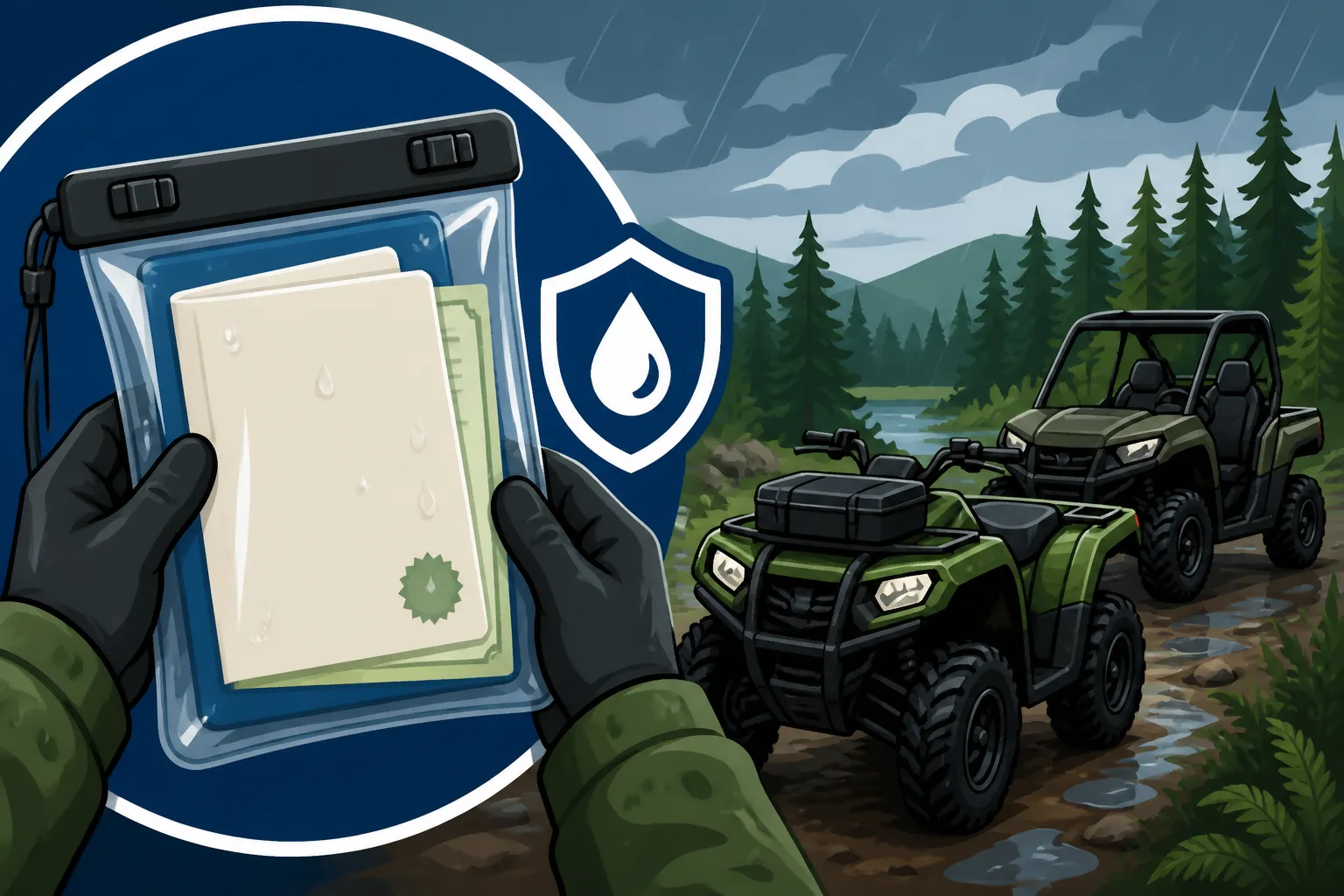
When it comes to physical protection, the market offers a fantastic range of products. For everyday riding, a high-quality dry bag is an absolute lifesaver. These aren't just for kayaking anymore; they come in various sizes perfect for documents. Look for roll-top designs with durable seams, often made from PVC or a heavy-duty coated nylon. The key is to roll the top down at least three times and buckle it securely. Brands designed for marine or outdoor use typically offer the best sealing, making them perfect for holding your [Oregon's ATV Operating Permit] card, [Oregon's ATV Safety Education Card], and even a temporary bill of sale. For a general guide, consider how [Documents in a Dry Bag on the Coast] are often handled by experienced riders.
For documents you might not need to access frequently, like a spare copy of your insurance policy or a more detailed service record, a small, waterproof hard case can be an excellent choice. Think about those rugged, impact-resistant cases often used for cameras or electronics. They're typically crush-proof and have an O-ring seal, offering superior protection against water and dust. The downside is they are bulkier than a dry bag, but for critical backups that stay on the machine but out of the way, they provide unparalleled peace of mind. Some riders prefer to keep their original [Oregon Bill of Sale for an ATV] or even their [Oregon ATV Title Requirements] in such a case when transporting the machine, moving it from a home safe only when absolutely necessary.
Another popular method, particularly for smaller, frequently handled cards like your safety education card, is lamination. Once laminated, the document is permanently sealed in plastic, making it completely waterproof and tear-resistant. The main drawback here is that you can't update or modify a laminated document, and some officials might prefer to see an original paper copy for certain items, especially if it needs to be signed. Always check if a laminated copy of a specific document is acceptable for official purposes before relying solely on it. However, for documents like the permit card, it can be a durable solution.
Finally, for documents like maps or larger permits that need to be seen and handled often, but still protected, rugged, transparent sleeves made for marine or outdoor use can be useful. These are thicker than standard sheet protectors, often have a Ziploc-style seal, and sometimes even have lanyards. They offer quick access and visibility, though they may not be as completely submersible as a roll-top dry bag or hard case. They're an excellent middle-ground for items you need to refer to during a ride, like a trail map for [Riding an Oregon Logging Road Midweek].
The Digital Advantage: Scans and Cloud Storage
While physical protection is paramount, a smart rider always has a digital backup. In today's world, it's easier than ever to create digital copies of all your important documents. Start by scanning everything: your ATV operating permit, your safety card, your bill of sale, and especially your title. High-resolution scans ensure that all details are legible.
Once scanned, upload these documents to a secure cloud storage service like Google Drive, Dropbox, or Apple's iCloud. This provides a remote backup that you can access from virtually anywhere, as long as you have internet access. Make sure these files are password-protected or stored in a secure folder within your cloud service. This layer of protection means that even if your physical documents are completely destroyed or lost, you still have a copy available. Imagine having your machine stolen; having a digital copy of your [Oregon Bill of Sale for an ATV] and title can make reporting it and dealing with insurance much smoother.
Beyond cloud storage, consider downloading copies of these essential documents directly to your smartphone or tablet. Many riding areas in Oregon, especially in remote forests or deep within the dunes, have limited or no cell service. Having the files saved directly to your device ensures you can access them offline if needed. While a digital copy is rarely accepted as a legal substitute for a required physical original by a ranger or law enforcement officer, it serves as an excellent reference, proof of your efforts to be compliant, and a vital backup for administrative purposes later. Always remember that a dead phone battery renders your digital copies useless, so don't make it your only strategy.
Smart Storage Solutions: On and Off the Machine
Once your documents are safely waterproofed, the next step is deciding where to keep them. This involves a two-pronged approach: securing them on your machine for accessibility during a ride, and having robust backup storage at home for peace of mind.
Securing Paperwork While Riding
For the documents you need to carry on your ATV or UTV, accessibility and security are equally important. Many riders utilize storage compartments like fender bags, toolboxes, or under-seat compartments. The trick here is to place your waterproofed documents (inside a dry bag or small hard case) within these compartments. This adds a layer of physical protection against bumps and scrapes, while the outer compartment protects against casual observation. For example, you might tuck a small dry bag containing your permit and safety card into your ATV's front fender bag, making sure it's snug and won't bounce out over rough terrain. Thinking about [Storing a Permit Card in a Toolbox] is a common strategy, but ensure that toolbox is truly watertight or that the documents within are separately protected.
If your machine has a glove box, it might seem like a natural spot, but be wary of how waterproof those truly are. Often, they're more dust-resistant than truly submersible. Always place your waterproof bag or case inside. For documents you might need very quickly, like a park entry pass or a printed map, carrying a rugged sleeve in a backpack or hydration pack you wear can be beneficial. Just ensure the backpack itself has a rain cover or that the sleeve is robust enough to handle any spray or precipitation it might encounter. When a ranger asks to see your permit at a spot like [What a Ranger Checks at an Oregon Staging Area], you want to be able to retrieve it efficiently, without fumbling for soggy paper.
Home Base: Secure and Accessible Backup Storage
While some documents need to be carried, your original title, a signed [Oregon Bill of Sale for an ATV], and detailed insurance policies are usually best kept off the machine and securely stored at home. A fireproof and waterproof home safe is an invaluable investment for these critical documents. This protects against natural disasters, theft, and accidental damage. These are the documents that prove ultimate ownership and are crucial for major events like selling your machine, making an insurance claim, or proving [Oregon ATV Title Requirements].
Beyond a safe, maintain a dedicated physical folder or binder for all your ATV/UTV-related paperwork. This keeps everything organized, from repair receipts to insurance statements and permit renewals. Having a physical "master file" makes it easy to quickly find what you need without sifting through unrelated household papers. Combine this with your digital backups: keep copies of all your scanned documents on an external hard drive, stored separately from your computer. This provides an additional layer of security beyond cloud storage, protecting you even if your online accounts are compromised or inaccessible. When preparing important legal documents, like a bill of sale for a future transaction, services like LawDepot offer templates that ensure you're using legally sound forms. Printing and then meticulously protecting these documents, both physically and digitally, is an extension of their value.
Beyond Waterproofing: The Importance of Redundancy and Ownership Proof
Protecting your paperwork from water is just one facet of being a responsible ATV/UTV owner in Oregon. The true goal is to ensure you can always prove your compliance and ownership, regardless of what Mother Nature or life throws your way. This means thinking about redundancy and understanding the legal weight of various documents.
Why Duplication is Key
Redundancy isn't about having a spare, it's about having multiple, independent backups of your critical information. Consider a hypothetical scenario: you're out riding the dunes, your machine takes an unexpected tumble, and your fender bag, along with your waterproofed permit, gets lost in the sand. If your only copy was on the machine, you're out of luck. But if you have a digital copy saved to your phone, and another copy in your home safe, you've got layers of protection.
Similarly, what if your phone battery dies while you're deep in the forest with no signal? Your digital copies become inaccessible. This is why having both physical (dry bag on machine, safe at home) and digital (cloud, device storage) copies of documents like your [Oregon's ATV Operating Permit] and [Oregon's ATV Safety Education Card] is so crucial. Each method has its own vulnerabilities, but by combining them, you create a robust system that can withstand most mishaps. It's about ensuring that no single point of failure can completely strip you of your ability to prove your compliance or ownership.
Protecting Proof of Ownership and Other Vital Records
While your operating permit and safety card are crucial for daily riding, documents like your bill of sale and title are fundamental for proving ownership and protecting your investment. Even though [Titling an ATV in Oregon Is Optional], having a title makes proving ownership incredibly straightforward. If you do have a title, keep the original in your secure home safe. If you don't title your machine, then a comprehensive [Oregon Bill of Sale for an ATV] becomes your primary proof of ownership. This document, detailing the buyer, seller, purchase price, date, and machine's VIN, is vital for reselling your ATV, reporting it stolen, or dealing with insurance.
When creating or receiving a bill of sale, especially during a private sale, consider using a reputable template, which you can often find through services like LawDepot. These templates help ensure all necessary legal information is included, making your proof of ownership more robust. Once completed, scan and store digital copies in multiple locations, and keep the original hard copy in your waterproof and fireproof home safe. This careful approach to documentation, especially when combined with a permit system like [Oregon ATV Permits Explained], ensures that your ownership is clear and verifiable, protecting you from potential disputes or legal complications. Investing a little time in robust document protection today can save you a mountain of headaches down the line.
| Method | Pros | Cons | Best Use Case |
|---|---|---|---|
| Dry Bag | Flexible, lightweight, reusable | Can be punctured, needs proper sealing | Daily ride permits, small documents |
| Hard Case | Crush-proof, highly durable | Bulky, less flexible, can be heavy | Long-term storage, less frequently accessed |
| Lamination | Permanent protection, rigid | Cannot be updated, some officials prefer original | Permit/safety cards if originals aren't required |
| Digital Copies | Easily accessible, multiple backups | Not always accepted as original, device battery | Primary backup, quick reference |
| Rugged Sleeves | Reusable, easy access, visible contents | Not fully waterproof, susceptible to tearing | Maps, temporary ride plans |
Disclaimer
This article is for general informational purposes only and does not constitute professional advice. Laws, prices and regulations vary by location and change over time. Consult a qualified professional for guidance on your specific situation.