Oregon’s ATV Highway Access Routes
It can be incredibly frustrating to load up your ATV, drive to a beautiful Oregon trail system, only to find that getting from your campsite to the trailhead, or even from one section of trails to another, requires navigating public roads your machine isn't legally allowed on. This common dilemma leaves many riders feeling stuck, wondering why their perfect off-road vehicle can't just connect the dots on a map. This comprehensive guide will explain Oregon's specific "highway access routes" – special designated areas where ATVs and UTVs can legally use certain public roads – and cover everything from what they are, where they exist, the rules you must follow, and even how new routes come to be.
The Uphill Battle for ATV Road Access in Oregon
For many off-road enthusiasts, the dream scenario involves loading up their machine, driving it directly out of their driveway, and hitting the trails. But in Oregon, as in most states, that dream quickly crashes into the reality of street legal regulations. It’s a constant source of confusion and often, outright frustration, for riders who just want to enjoy the vast outdoor spaces the state has to offer.
Why Most ATVs Aren't Street Legal
The core issue lies in how traditional ATVs and many UTVs are designed and classified. They are built for rugged off-road environments, not for the rigors of paved public highways. This means they typically lack essential features like turn signals, rearview mirrors, proper headlights and taillights for highway visibility, horns, and sometimes even the correct tires or suspension systems required for safe on-road travel. Oregon's vehicle code is pretty clear: if it doesn't meet the standards for a street-legal vehicle, it simply can't operate on most public roads. This isn't just about safety; it's about classification and the legal framework that defines what constitutes a "motor vehicle" suitable for state roads. This is why you can't simply slap a license plate on your quad and expect to cruise down U.S. 101. [Why Oregon Will Not Plate a Quad]
Many riders try to bridge this gap with aftermarket modifications, hoping to bring their machine up to par. While companies like SuperATV offer a wide array of accessories from street-legal kits with turn signals and mirrors to windshields, these modifications, while helpful for trail safety and visibility, usually don't automatically grant full street legality in Oregon. The state's Department of Motor Vehicles (DMV) has very specific criteria, and most ATVs simply don't fit the mold, regardless of the add-ons. [Oregon's Class II Street-Legal Exception]
The Nuance Between "Street Legal" and "Road Access"
This is where a critical distinction needs to be made. When we talk about "street legal," we're generally referring to a vehicle that can be registered, titled, and operated on any public road, much like a car or motorcycle. This is incredibly rare for an ATV in Oregon, and typically only applies to very specific Class II machines that meet stringent federal motor vehicle safety standards, often built from the ground up to be street-legal. Think specialized custom builds, not your everyday quad or side-by-side. [Oregon Registration for a Street-Legal Class II]
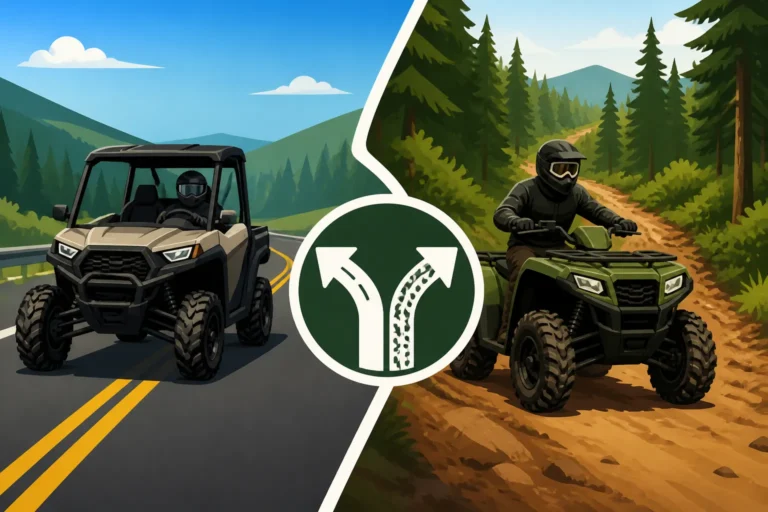
"Road access," on the other hand, is a more limited concept. It refers to specific, designated instances where off-highway vehicles (OHVs) are permitted to use certain public roads under very specific conditions, usually to connect trail systems or access services within a small community. These are not open invitations to drive your ATV across the county; they are carefully defined corridors with strict rules. The distinction is vital for understanding what's truly allowed. It means you might be able to ride through a town on a specific route, but not take the highway to the next town over.
The Frustration of Limited Connections
The lack of comprehensive road access often leads to significant logistical headaches for riders. Imagine you're camping at a fantastic OHV park, but the only way to get to the main staging area, or even to a gas station or diner in a nearby town, is a short stretch of paved county road. Without legal road access, you're forced to load your machine onto a trailer for what might be a five-minute drive – a massive inconvenience that dampens the entire experience. This disjointedness can make exploring larger riding areas cumbersome and expensive, requiring more fuel for tow vehicles and more time spent trailering. It limits the freedom that off-roading is supposed to embody and creates a barrier between riders and the services they need, or the additional trails they want to explore.
Deciphering Oregon's ATV Classification System for Road Use
Before we dive into specific road access opportunities, it's crucial to understand how Oregon categorizes off-highway vehicles. This classification system directly impacts what kind of machine might even potentially be considered for road use, even in a limited capacity. Without this groundwork, it's easy to misunderstand the nuances of the law.
The Four Classes and Their Road Implications
Oregon law divides OHVs into four distinct classes:
- Class I ATVs: These are typically what most people think of as a "quad." They are motorized, designed for off-highway use, have three or more wheels, weigh 800 pounds or less dry, and are 50 inches or less in width. Think of a standard recreational four-wheeler. These machines are almost universally not street legal and have extremely limited road access outside of designated routes or private land. [Oregon's Class I Under ORS 801.190]
- Class II ATVs: This class is a bit of a wildcard. It includes vehicles that are not Class I, III, or IV, but are still primarily designed for off-highway travel, are capable of traversing unimproved roads, and weigh more than 800 pounds dry. This is where you might find things like sand rails, dune buggies, or even modified Jeeps that are not designed for full highway speeds. Critically, Class II vehicles are the only ones that can potentially be registered and titled for street legal use in Oregon, provided they meet all federal highway safety standards – which is a very high bar. [Oregon's Class II Under ORS 801.193] They also have mandatory insurance requirements if they are street legal.
- Class III Off-Road Motorcycles: This class covers dirt bikes and similar two-wheeled machines designed for off-highway use. Like Class I ATVs, they are generally not street legal and have minimal road access. [Class III Off-Road Motorcycles in Oregon]
- Class IV ATVs: This is the category for "side-by-sides" or UTVs. They are motorized, designed for off-highway use, have four or more wheels, a steering wheel, non-straddle seating, a roll bar or similar enclosure, and are 75 inches or less in width. While incredibly popular for recreation, Class IV machines, like Class I, are generally not street legal for general road use and only have access on specific designated routes or private property. [Oregon's Class IV Side-by-Sides Under 75 Inches]
Understanding these classes is your first step. Most riders are operating Class I or Class IV machines, which means their default assumption should always be that general public roads are off-limits, unless a specific, designated exception applies.
The Role of Width and Weight in Classification
The physical dimensions of your machine are not just arbitrary numbers; they are critical for its classification and, by extension, its potential for road access.
- Width: The 50-inch limit for Class I is foundational. Anything wider than that, unless it falls into Class II or IV, is immediately outside the standard quad definition. For Class IV side-by-sides, the 75-inch width limit is equally important. Wider custom-built UTVs or some aftermarket modifications could push a machine beyond this, creating legal headaches. These width restrictions are often tied to the types of trails machines are permitted on, and certainly affect their ability to blend with standard vehicle traffic on roads. For instance, a very wide side-by-side equipped with SuperATV's heavy-duty portals might be fantastic for off-roading, but its increased width could pose challenges even on designated access routes meant for narrower vehicles. [Oregon ATV Width Limits by Class]
- Weight: The 800-pound dry weight limit for Class I and the "more than 800 pounds" for Class II are also defining characteristics. These weight limits are less about road safety and more about defining the characteristics of the vehicle type itself, which in turn dictates how it's treated under various regulations, including permitting and potential road use. A heavier machine might require different braking systems or suspension, but primarily the weight limits serve to differentiate what kind of vehicle it is within Oregon's system. [Oregon ATV Weight Limits by Class]
These physical specifications are not just for curiosity; they are legal thresholds that determine your machine's identity in the eyes of Oregon law. Incorrect classification, or a machine that falls between categories, can lead to confusion and potential citations if you're caught riding where you shouldn't be.
Mandatory Insurance for Street-Legal Class II Machines
One unique aspect of Oregon's classification system pertains specifically to Class II machines that do achieve street-legal status. For these rare beasts – often highly customized sand rails or purpose-built off-road vehicles that somehow meet all the necessary highway vehicle standards – insurance is not optional; it's mandatory. This makes sense when you consider that they would be sharing public roads with other insured vehicles.
This requirement typically involves carrying liability insurance, similar to what you'd need for a car or motorcycle. The goal is to ensure that in the event of an accident, there's financial coverage for any damages or injuries caused. It's a significant point of difference from Class I, III, and IV machines, which, even when used on designated access routes, usually don't have a state-mandated insurance requirement unless being operated as part of a commercial enterprise or rental fleet. This distinction highlights just how different a truly "street-legal" Class II machine is treated compared to other OHVs with limited road access. [Insurance and Oregon Class II Machines]
Introducing Oregon's Designated Highway Access Routes
Given the strict regulations against general ATV use on public roads, Oregon has carved out a very specific solution: designated highway access routes. These are not widespread, but they represent a vital concession for the OHV community, allowing for connections that would otherwise be impossible.
What Constitutes a "Designated Route" in Oregon
An "Oregon ATV Highway Access Route" is a specific section of public road, often a county road or a city street, that has been formally designated by the Oregon Transportation Commission for use by off-highway vehicles. This designation isn't given lightly; it's the result of a deliberate process involving local communities, state agencies, and often, significant public input.
Crucially, these are not blanket permissions. The designation specifies exactly which roads are included, often for a limited distance, and under what conditions. They are typically short connectors designed to allow OHV users to get from a staging area to a trail system, or to access services (like fuel, food, or lodging) in an adjacent town. Think of them as carefully placed bridges over otherwise impassable legal gaps. They are clearly marked with signage, informing both OHV operators and other motorists that these roads are shared spaces. This makes them distinct from the general network of roads and highways where OHVs are typically prohibited. [Oregon's Only Two Designated ATV Routes: Lakeside and Sumpter]
The Purpose Behind These Specialized Access Points
The primary purpose of these designated routes is to enhance the recreational experience for OHV riders by improving connectivity and accessibility. Without them, riders might face a number of challenges:
- Disjointed Trail Systems: Many OHV areas are separated by paved roads, forcing riders to trailer their machines short distances. Designated routes bridge these gaps, allowing seamless transitions between trails.
- Access to Services: Riding areas are often remote. Designated routes allow riders to reach nearby towns for essential services like gas, food, or emergency supplies, without the hassle and time of loading and unloading a machine onto a trailer. This can be a huge boost for local economies, as riders spend money in the communities they pass through.
- Reduced Traffic on Backroads: By clearly defining where OHVs can and cannot go, these routes can help concentrate OHV traffic to specific, safer corridors, potentially reducing unauthorized use on other roads.
- Community Integration: They provide a legal framework for OHV users to interact safely and responsibly with local communities, fostering a more positive relationship between recreationists and residents.
Ultimately, these routes are about pragmatism and compromise, recognizing the value of OHV recreation while ensuring public safety and order on shared infrastructure.
How the Oregon Parks and Recreation Department Contributes
While the Oregon Transportation Commission is the body that formally designates these routes, the Oregon Parks and Recreation Department (OPRD) plays a crucial supporting role. OPRD is deeply involved in managing the state's OHV program, which includes everything from issuing permits to managing grants for trail development and maintenance.
When a community proposes a new highway access route, OPRD often provides expertise on OHV usage patterns, safety considerations, and the overall impact on recreation. They are responsible for overseeing the [Oregon ATV Grant Program Explained], which allocates funds generated from ATV permits and fuel taxes to various projects, including signage and infrastructure improvements that might be needed to support new access routes. While OPRD doesn't make the final designation, their input is invaluable in assessing the feasibility and practicality of proposed routes, ensuring they align with broader OHV management goals and contribute positively to the recreational landscape. [The Oregon Parks and Recreation Department's Role]
Spotlight on Oregon's Pioneering Access Routes: Lakeside and Sumpter
As of now, Oregon has two officially designated highway access routes that stand as beacons for OHV connectivity: Lakeside and Sumpter. Each offers a unique experience and serves a different type of riding community.
Lakeside: Gateway to the Oregon Dunes
The town of Lakeside, situated along the beautiful Oregon Coast, is home to one of the most significant ATV access routes in the state. This route is a game-changer for riders heading to the Oregon Dunes National Recreation Area, particularly the Umpqua Dunes complex. Before its designation, getting from various staging areas or campgrounds around Lakeside to different sections of the dunes, or even into town for supplies, was a logistical headache involving trailers and pavement-bound vehicles.
The Lakeside access route allows OHV riders to legally use specific county roads and city streets within and around the town. This means you can ride directly from some campgrounds, like Osprey or Riley Ranch, through town to reach other staging areas like Bull Run or Goosepasture, or simply to grab groceries, fuel up, or enjoy a meal at a local restaurant. The route is clearly marked with signs, guiding riders along approved paths and ensuring they stay off restricted highways. It’s an incredibly popular option, especially during peak season, creating a vibrant atmosphere where OHVs are a common sight on certain town roads. This route significantly enhances the experience of riding the Umpqua Dunes, making it more convenient and allowing riders to fully immerse themselves in the area's recreational offerings. [Riding an ATV Through Lakeside]
Sumpter: A Historic High Desert Connection
Venturing inland, the historic mining town of Sumpter, nestled in Oregon's high desert mountains near Baker City, offers the state's other designated ATV access route. This route serves a different, but equally important, purpose for the eastern Oregon riding community. Sumpter is a popular base for exploring the vast network of forest roads and trails in the surrounding Wallowa-Whitman National Forest.
The Sumpter route allows OHV users to access the town's services, like gas, lodging, and dining, directly from the extensive trail system. It also connects various dispersed camping areas with the town, creating a seamless experience for riders who want to explore the region's rich history and diverse terrain. Imagine finishing a day of riding the backcountry trails, then being able to legally drive your side-by-side into Sumpter for a hot meal and to visit the Sumpter Valley Dredge State Heritage Area without having to load up your machine. This route helps integrate OHV recreation into the fabric of the community, supporting local businesses and offering a unique blend of adventure and convenience. [Riding an ATV Through Sumpter]
The Unique Riding Experiences Each Route Offers
While both Lakeside and Sumpter provide invaluable road access, the experiences they facilitate are quite distinct:
| Feature | Lakeside Route | Sumpter Route |
|---|---|---|
| Primary Area | Oregon Dunes National Recreation Area | Wallowa-Whitman National Forest |
| Terrain | Coastal sand dunes, forested trails near coast | Mountain trails, high desert, forest roads |
| Local Vibe | Beach town, fishing, lively recreation hub | Historic mining town, quiet, scenic, rustic |
| Key Access | Connects campgrounds, staging areas, and dunes | Connects forest trails, dispersed camping, and town |
| Machine Type | Predominantly Class I quads & Class IV side-by-sides | Mix of all classes, especially Class IV and dirt bikes |
| Popularity | Very high, especially in summer | Moderate to high, popular during hunting season and summer |
| Services | Fuel, food, lodging, rentals, grocery | Fuel, food, lodging, small general store |
Both routes demonstrate the positive impact that carefully planned road access can have on OHV recreation, making it more enjoyable, convenient, and supportive of local economies. They are prime examples of how communities and state agencies can work together to enhance outdoor opportunities. [Oregon's Only Two Designated ATV Routes: Lakeside and Sumpter]
Navigating the Rules and Requirements for Designated Routes
While designated routes open up new possibilities, they come with a strict set of rules that all riders must follow. These aren't suggestions; they are legal requirements designed to ensure safety, minimize conflicts with other road users, and preserve the privilege of access. Ignoring them can lead to citations and even the loss of these valuable routes.
Permit, Safety Card, and Driver's License Essentials
Just because you're on a designated route doesn't mean you can skip the standard Oregon OHV requirements:
- Oregon ATV Operating Permit: Every OHV operating in Oregon, whether on a designated route, forest trail, or sand dune, must display a valid [Oregon's ATV Operating Permit]. This permit is a sticker (decal) that must be affixed to the machine in a visible location. It funds the state's OHV program, so it's critical. [Oregon Permit Decals and Where They Go]
- Oregon ATV Safety Education Card: With very few exceptions, every OHV operator in Oregon must possess an [Oregon's ATV Safety Education Card]. This applies to all ages. If you're riding an ATV or UTV on a designated route, you absolutely need this card. The state offers a free online course to obtain it, which is fantastic for ensuring everyone has a baseline understanding of safety rules. [How to Get an Oregon ATV Safety Card]
- Driver's License: This is crucial for designated road access. If you are operating an OHV on a designated public road in Oregon, you must possess a valid driver's license. An instruction permit or an off-road safety card alone is not sufficient for operating on public roads, even those designated for OHVs. This ensures that riders have demonstrated a basic level of road awareness and responsibility required for sharing space with other vehicles. [Oregon Driver's License Rules for Class IV]
Machine Equipment and Safety Standards
Your machine also needs to meet certain specifications to be legal on these routes:
- Lights: Your ATV or UTV must have at least one headlight and one taillight that are operational at all times while on the designated route, even during daylight hours. This is about visibility for other drivers. Many off-road machines come with factory lights, but it's worth checking their brightness and ensuring they're properly aimed for road use. Aftermarket upgrades from companies like SuperATV can significantly improve visibility with brighter LED headlights or additional auxiliary lighting. [Oregon Lighting Requirements for Road Use]
- Mirrors: You must have at least one rearview mirror, properly mounted to provide the operator with a clear view to the rear. This is a common add-on for many OHVs that don't come with them from the factory.
- Spark Arrester: All OHVs operating on public or private land in Oregon (including designated routes) must be equipped with a U.S. Forest Service approved spark arrester in good working condition. This is a fire prevention measure, especially vital in Oregon's dry summers. [Oregon Spark Arrester Requirement]
- Sound Limits: Oregon has sound limits for OHVs. While specifics can vary, generally your machine should not exceed 99 dB(A) when measured under specific conditions. Loud aftermarket exhausts that aren't compliant can lead to citations. [Oregon Sound Limits for ATVs]
- Brakes: Your machine must have fully functional brakes. This sounds obvious, but off-road use can be hard on brakes, so ensure they are in top condition before hitting any public road.
Passenger and Helmet Regulations on Shared Roads
Specific rules apply to how many people can ride and what protective gear they need:
- Passengers: An ATV or UTV can only carry the number of passengers for which it was specifically designed by the manufacturer. If your quad is a single-rider machine, you cannot carry a passenger. If it's designed for two (a "two-up" quad) or a side-by-side with multiple seats, passengers are allowed in those designated seating positions. Importantly, passengers must have proper footrests if on a quad. [Oregon Passenger Rules on a Quad]
- Helmets: This is non-negotiable for anyone under 18 years old: all riders and passengers under the age of 18 must wear a DOT or Snell approved helmet with the chin strap fastened at all times while operating or riding as a passenger on an OHV, regardless of whether they are on a trail or a designated road route. For adults 18 and over, helmets are not strictly mandated when operating an OHV on designated public roads if the machine has a roll bar or cage and seatbelts (e.g., most side-by-sides). However, it is always highly recommended to wear a helmet for maximum safety, regardless of age or machine type. [Oregon Helmet Law for ATV Riders] [Oregon Helmet Law for Adults]
By adhering to these rules, riders not only ensure their own safety and legality but also help maintain the positive image of the OHV community, which is essential for preserving and expanding these valuable access opportunities.
The Process of Designating New ATV Routes in Oregon
The existing highway access routes in Lakeside and Sumpter weren't established overnight. They are the result of a deliberate, multi-step process that requires initiative, collaboration, and a thorough understanding of local and state regulations. For other communities considering similar projects, understanding this process is key.
Who Can Initiate a Route Designation
The power to initiate a new ATV highway access route typically rests with local governmental entities:
- Counties: County commissions or boards of commissioners are often the primary drivers. They can propose routes that connect unincorporated areas, access points to federal lands (like National Forests or BLM areas), or link small communities within their jurisdiction.
- Cities: Municipal governments can also propose routes, particularly if they want to allow OHV access on specific city streets to connect to nearby trail systems or to provide direct access to local businesses.
Individual citizens, OHV clubs, or even businesses can certainly advocate for a route, but the formal application must generally come from a recognized governmental body. This ensures that proposals have official backing, consider broader community impacts, and have the administrative capacity to navigate the process. Often, a strong local OHV club or a business association will work closely with their city or county officials to build a compelling case for a route.
The Role of the Oregon Transportation Commission and Local Input
Once a local government initiates a proposal, the process moves to the state level, with the Oregon Transportation Commission (OTC) playing the pivotal role in final approval.
- Local Review and Support: Before approaching the OTC, the local government will typically conduct its own review. This includes assessing the proposed route's feasibility, potential impacts on other road users, safety concerns, and gaining community support. Public meetings, input from local law enforcement, and traffic studies are often part of this initial phase. Strong local backing is crucial.
- Application to OTC: A formal application is then submitted to the OTC. This application must detail the proposed route, explain its purpose and benefits, outline how safety concerns will be addressed, and demonstrate community support. It will often include maps, traffic data, and letters of support.
- OTC Review and Advisory Committee: The OTC, with support from the Oregon Department of Transportation (ODOT), will review the application. They often rely on input from various sources, including the Oregon Parks and Recreation Department (OPRD) and the [Inside Oregon's ATV Highway Access Routes Advisory Committee], which is composed of stakeholders including OHV riders, land managers, and local government representatives. This advisory committee helps evaluate the merits of the proposal from different perspectives.
- Public Hearings and Final Decision: The OTC may hold public hearings to gather further input from affected communities and the public at large. After careful consideration of all factors, including safety, environmental impact, economic benefits, and community sentiment, the OTC makes a final decision to either approve, deny, or modify the proposed route. [Applying to Designate a New Oregon Route]
This structured process ensures that all angles are considered, from recreational benefits to public safety, before a new route is established.
Overcoming Challenges and Building Community Support
Establishing a new ATV highway access route is rarely a straightforward task. Several challenges commonly arise:
- Public Safety Concerns: Local residents and other road users often express concerns about increased traffic, noise, and potential accidents involving OHVs on public roads. Proponents must clearly articulate how these concerns will be mitigated through signage, speed limits, enforcement, and rider education.
- Environmental Impacts: While routes are on existing roads, some may worry about environmental impacts. These concerns are typically less significant than for new trail construction but still need to be addressed.
- Funding and Maintenance: Who will pay for new signage, route mapping, and any necessary road improvements? The [Where Oregon ATV Permit Money Goes] can provide some funding, but local governments often need to commit resources.
- Community Buy-in: Without broad community support, a proposal is unlikely to succeed. Engaging with local businesses, residents, and even critics early in the process is vital. Highlighting economic benefits, like increased tourism and patronage of local businesses, can be a powerful argument. For example, a partnership with a local business offering SuperATV accessories might show how a route could directly support the local economy.
Building a strong coalition of support, presenting a well-researched proposal that addresses potential drawbacks, and demonstrating a commitment to responsible riding are all crucial for successfully navigating the designation process and bringing a new ATV access route to fruition.
Advantages and Obstacles of Oregon's Access Route System
Oregon's approach to ATV highway access through designated routes is a unique solution to a complex problem. Like any system, it comes with its own set of advantages that benefit the riding community and local economies, as well as distinct obstacles that limit its widespread implementation.
Boosting Local Economies and Connecting Communities
The benefits of designated ATV highway access routes extend far beyond just the convenience for riders:
- Economic Stimulus: When riders can legally access towns from trails, they spend money. They fuel up, grab a meal, buy groceries, stay in motels, and even purchase supplies or parts. This influx of tourist dollars can be a lifeline for small, rural communities that might otherwise struggle. Towns like Lakeside and Sumpter have certainly seen an economic boost from embracing OHV tourism. Businesses, from gas stations to restaurants, benefit from the direct access provided by these routes.
- Enhanced Recreation Experience: For the riders themselves, these routes dramatically improve the overall experience. The ability to seamlessly connect different trail systems, explore more diverse terrain, or simply grab a cold drink without having to load a machine onto a trailer makes for a much more enjoyable and less stressful outing. It turns a fragmented riding trip into a cohesive adventure.
- Community Integration: Designated routes help integrate OHV recreation into the broader community. Instead of being seen as an isolated activity, OHVs become a visible, albeit regulated, part of the local traffic flow. This can foster a greater understanding and acceptance of the sport, especially when riders behave responsibly. It creates a sense of shared space and opportunity.
- Safety and Order: By providing clear, legal pathways, these routes reduce the likelihood of riders illegally using unapproved roads, which can be dangerous and lead to citations. They bring order to what might otherwise be a chaotic or unauthorized use of public infrastructure.
The Hurdles of Limited Reach and Ongoing Maintenance
Despite the clear advantages, the system of designated routes faces significant challenges that limit its scope and create ongoing management issues:
- Limited Geographical Reach: The most obvious drawback is that there are only two such routes in the entire state. This means the vast majority of Oregon's riding areas and communities still lack this vital connectivity. For riders exploring much of the Tillamook State Forest or Millican Valley, for instance, designated highway access remains a distant dream. This limited reach often leaves riders feeling frustrated that a solution exists but isn't available where they ride.
- Complex Implementation: Designating a new route is a lengthy, bureaucratic, and often politically charged process. It requires significant commitment from local governments, extensive studies, public hearings, and overcoming potential resistance from residents who may oppose OHV traffic. This complexity means that many deserving communities simply don't have the resources or political will to pursue a designation.
- Ongoing Management and Enforcement: Once a route is established, it requires continuous management. Signage must be maintained, rules must be clearly communicated, and local law enforcement needs to be equipped and willing to enforce regulations. This can strain local budgets and resources, especially in small towns. The roads themselves also need to be maintained, and while some funding comes from the [Where Oregon ATV Permit Money Goes], it may not cover all costs.
- Balancing Other Road Users: Integrating OHVs onto public roads, even designated ones, always involves balancing the needs of OHV users with those of other motorists, pedestrians, and residents. Concerns about noise, dust, safety, and traffic flow are legitimate and must be continuously managed to prevent conflicts and maintain the privilege of access. For example, a driver with SuperATV's loud aftermarket exhaust may face complaints from local residents, even if technically within sound limits, highlighting the need for responsible riding.
While Oregon's designated highway access routes are a positive step, they remain a small piece of a much larger puzzle, with significant barriers to broader implementation across the state.
Beyond Designated Routes: Other Legal Road Access in Oregon
While designated highway access routes are explicitly approved for OHVs, they aren't the only instances where your ATV or UTV might legally touch a public road in Oregon. It's vital to understand the nuances of other road types to avoid unintentional violations.
Forest Service, BLM, and County Gravel Roads
Away from state highways and busy city streets, you'll find a vast network of other roads in Oregon that may be accessible to OHVs under certain conditions:
- Forest Service Roads (FSRs): Within National Forests, many FSRs are open to licensed and permitted OHVs. These are typically gravel or dirt roads, primarily used for forest management, recreation access, and connecting trailheads. The key here is that they are generally not maintained for passenger cars and are managed by the U.S. Forest Service, which has its own set of rules. Always check with the local Ranger District for specific closures or restrictions, as conditions can change seasonally due to weather, logging operations, or fire danger. [Forest Service Roads Open to Oregon ATVs]
- Bureau of Land Management (BLM) Roads: Similar to FSRs, many roads on BLM-managed lands are also open to OHV use. These are common in eastern and southern Oregon's high desert regions. Again, these are typically unpaved and designated for specific uses. Like with the Forest Service, always consult local BLM field offices for current maps and regulations.
- County Gravel Roads: Some counties in Oregon may allow OHV use on specific unpaved, gravel county roads, particularly in rural or agricultural areas. However, this is not a blanket rule. Each county has the authority to make its own ordinances regarding OHV use on its roads. It's absolutely crucial to check with the specific county's sheriff's office or public works department to confirm legality before riding. Do not assume that because a road is gravel, it's automatically open to OHVs. [Gravel County Roads and Oregon Riders]
On these types of roads, all standard OHV requirements (permit, safety card, spark arrester, sound limits) still apply. While a driver's license is generally required for public road use, some remote unmaintained roads might fall into gray areas depending on specific local ordinances. It's always best to be licensed.
Crossing Paved Highways and Major Thoroughfares
Even if you can't ride on a paved state highway, Oregon law often allows for quick, direct crossings:
- Crossing at Right Angles: Generally, OHVs are permitted to cross a paved public road or highway at approximately a right angle (90 degrees) to get from one section of an off-highway area to another, provided the crossing is done safely, yields to all traffic, and doesn't obstruct flow. This is usually allowed only if the operator can proceed to an authorized off-road area without operating on the highway for an extended distance. [Oregon Rules for Crossing a State Highway]
- Limited Distance on Highway: In very rare and specific cases, typically associated with designated access routes or extremely remote areas with no other option, there might be provisions for OHVs to travel a very short, specified distance on the shoulder of a highway to connect segments of an OHV trail. However, this is highly restricted and should never be assumed without explicit signage or written authorization. Without such a designation, an ATV or UTV should not be operated on a state highway, even on the shoulder.
Navigating Private Timberland and Restricted Access Areas
Oregon has vast tracts of private timberland, and their roads present another set of rules:
- Permission Required: Most private industrial timberland roads are not public roads. To ride on them, you absolutely must have permission from the landowner, which is typically a timber company. Some companies may offer permits or open their gates for recreational access during non-logging seasons, while others keep their roads strictly closed to the public. Riding without permission is trespassing and can lead to serious fines or even impoundment of your machine. [Oregon Rules for Riding Private Timberland]
- Active Logging: Even if a timber company generally allows access, roads within active logging units are almost always off-limits for safety reasons. Log trucks have the right of way, and the hazards are significant.
- Utility Corridors and Railroad Grades: Riding on utility corridors (power lines, pipelines) or active/abandoned railroad grades is generally prohibited unless explicitly designated for OHV use. These are often private property or have specific safety regulations. [Oregon Rules for Riding a Railroad Grade]
When considering riding on any road that isn't a clearly marked designated route, the golden rule is: when in doubt, assume it's prohibited and seek clarification. It's far better to ask and be sure than to risk a fine, an accident, or losing access to riding areas for everyone. For those pushing the limits of where they can go, aftermarket equipment like winches and heavy-duty tires from SuperATV can be invaluable for accessing remote trails, but these do not grant legal road access where it doesn't exist.
Disclaimer
This article is for general informational purposes only and does not constitute professional advice. Laws, prices and regulations vary by location and change over time. Consult a qualified professional for guidance on your specific situation.