Oregon Rules for Riding a Road That Becomes a Trail
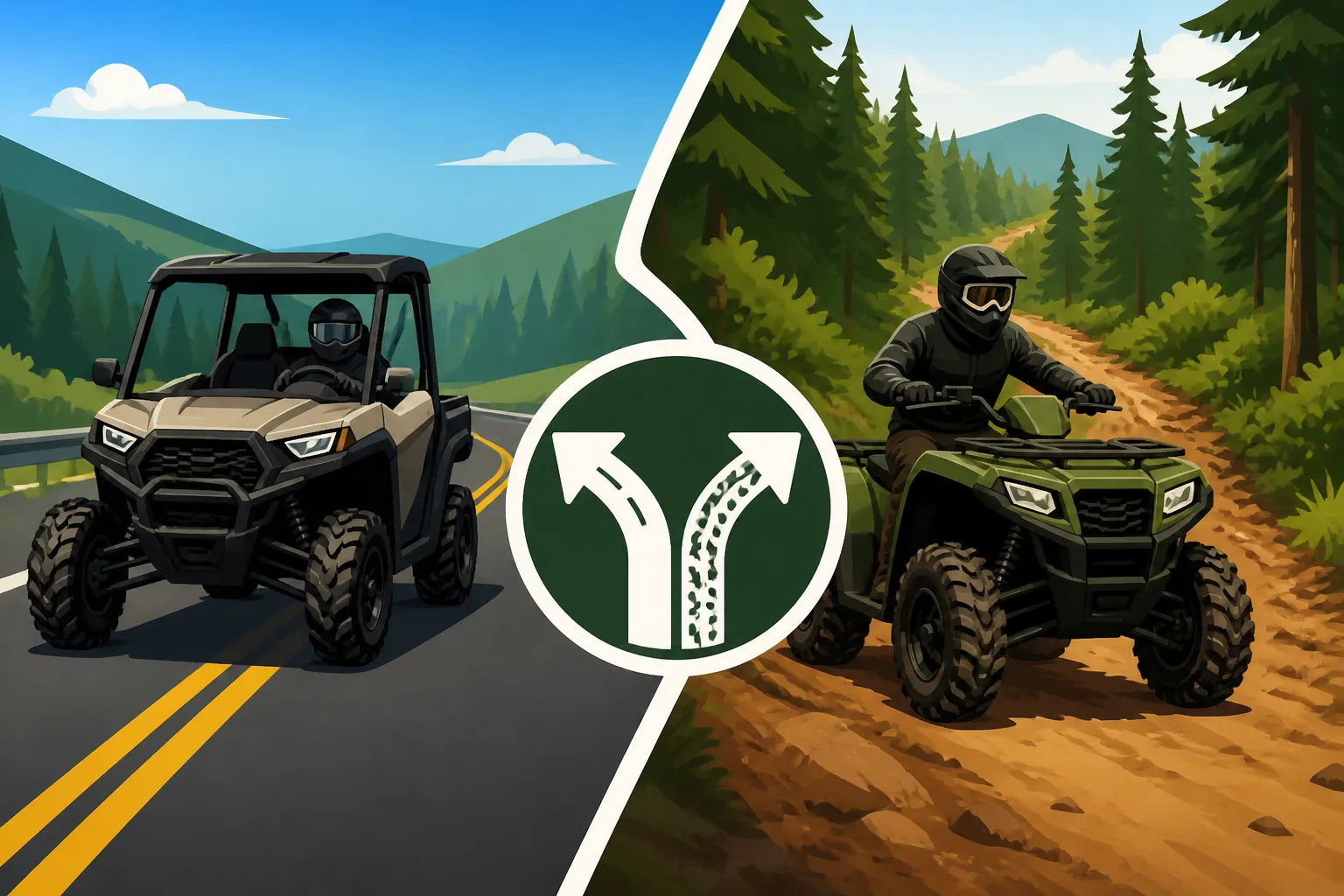
One of the most common and often frustrating scenarios for Oregon ATV and UTV riders is encountering a road that slowly, or sometimes abruptly, transforms into a trail. You're cruising along a familiar forest service road, perhaps enjoying the ease of travel, only to find the pavement ending, the gravel turning to dirt, and suddenly, you're on a rougher, narrower path. This transition isn't just about changing terrain; it's a critical shift in rules, expectations, and often, legal requirements. This guide will walk you through how to understand, navigate, and prepare for these evolving pathways, helping you avoid fines and ensure a safer, more enjoyable ride.
Unraveling Oregon's Road-to-Trail Evolution for OHVs
It’s easy to assume that if you're on a public road, the rules are consistent. But in Oregon's vast and varied landscape, that's rarely the case for off-highway vehicles (OHVs). The legal and physical characteristics of a path can change dramatically without much fanfare, especially when you venture from well-maintained thoroughfares into the backcountry.
The Shifting Definitions: When a Road Isn't Just a Road
Oregon's public lands are a mosaic of jurisdictions. You might start on a county road, transition to a Forest Service road, and then find yourself on a dedicated OHV trail, all within a few miles. Each of these entities, whether it's the Oregon Department of Forestry, the Bureau of Land Management (BLM), or the U.S. Forest Service, has its own set of guidelines for what constitutes a "road" versus a "trail."
A common misconception is that if it's wide enough for a truck, it's a road. While that often holds true initially, many designated "roads" in the backcountry eventually degrade or narrow significantly, becoming what are functionally trails but may not be officially marked as such. The distinction matters because your machine's legality, your speed limits, and even whether you need an [Oregon ATV Safety Card Requirements] can hinge on this classification. For example, [Forest Service Roads Open to Oregon ATVs] might allow licensed vehicles, but once that road becomes a single-track trail, your UTV might be too wide, or the trail might be designated for dirt bikes only. It’s a constant dance between what physically appears to be a road and what the managing agency officially considers it.
Reading the Signs: Official Designations and Physical Cues
The ideal scenario is clear, unambiguous signage that tells you exactly when a road becomes a trail. You'd see a sign saying "Road Ends, OHV Trail Ahead," perhaps indicating a change in vehicle class or speed. However, real-world conditions often fall short of this ideal. Signs can be faded, missing, or even misleading. Sometimes, you’ll encounter a simple, unadorned gate that implicitly signals a change from general public access to something more restricted.
Beyond official signs, the land itself offers crucial cues. A paved road turning to well-graded gravel is one thing; that gravel road then narrowing, becoming deeply rutted, and strewn with larger rocks, fallen branches, or even small streams, is another. When the average speed you can comfortably maintain drops significantly, when you find yourself needing to pick lines around obstacles, or when two-way traffic becomes impossible without one party pulling off into the brush, these are all strong indicators that you've likely transitioned from a "road" into what is functionally a "trail." Paying attention to these subtle shifts can save you from accidentally trespassing or violating use restrictions. Always consult updated maps and look for signs. Sometimes, even a change in the type of surface, like moving from hardpack to sandy loam, can signal a shift in usage designation, especially in areas like the Oregon Dunes.
Navigating the Legal and Practical Shift at the Transition Point
Once you recognize that a road is becoming a trail, it’s not just about gearing down; it’s about adjusting your entire approach to the ride. The rules, your machine’s suitability, and even your riding style all need to adapt instantly. Ignoring these changes can lead to fines, damage to your machine, or worse, an accident.
Permit, Safety Card, and Machine Requirements for Both Worlds
This is where many riders get caught out. When you're on a road, even a gravel [Gravel County Roads and Oregon Riders], your Oregon ATV Operating Permit ensures your machine is legally allowed on designated routes. However, once that road officially transitions to a trail, especially a single-track or more technical OHV trail, additional requirements might come into play.
For instance, while a permit is universal for most OHV classes in Oregon, the type of machine you're riding might suddenly be inappropriate. A wide [Oregon ATV Permit for a Side-by-Side] might fit comfortably on a two-track forest road, but a narrow, winding single-track trail may be designated only for dirt bikes ([Oregon ATV Permit for a Dirt Bike]) or quads under 50 inches. You also need to ensure your machine meets specific trail standards, like having a properly functioning [Oregon Spark Arrester Requirement] and adhering to [Oregon Sound Limits for ATVs]. These are critical for environmental protection and maintaining access to riding areas. Always carry your [Oregon ATV Safety Card Requirements] with you, as it's required for all OHV operators in Oregon, regardless of whether you're on a road or a trail.
Adjusting Your Ride: Speed, Passengers, and Right-of-Way
The transition from road to trail demands immediate adjustments to your riding habits. On a road, you might be traveling at higher speeds, with a clear line of sight, and potentially with passengers riding alongside you in a side-by-side or behind you on a quad. When the path becomes a trail, everything changes.
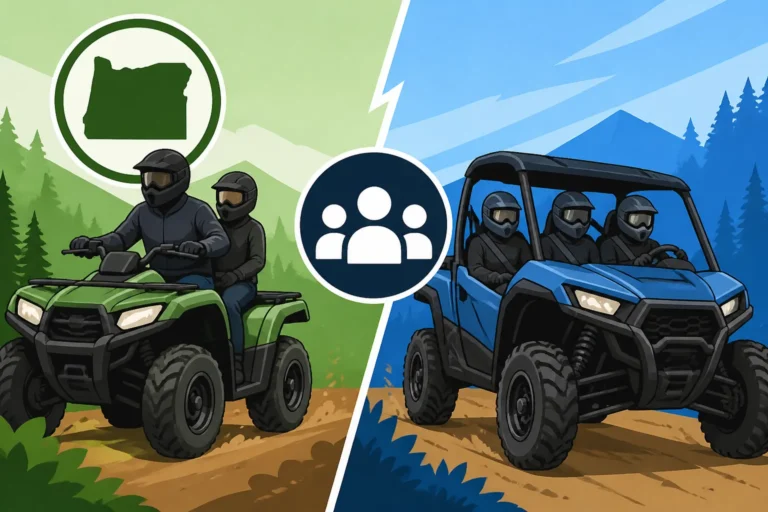
Speed must drop dramatically to safely navigate tighter turns, obstacles, and changing surfaces. [Oregon Passenger Rules on a Quad] are often more stringent on trails, requiring proper seating and footrests, and some trails may prohibit passengers altogether depending on the machine and specific area rules. Right-of-way also shifts; while you might encounter other vehicles on a road, trails often have a mix of hikers, mountain bikers, and other OHV users. Courtesy and caution become paramount. For example, a caged side-by-side might offer robust protection, but its size can make maneuvering on tight trails difficult. Even something as basic as helmet use is constant, [Oregon Helmet Law for ATV Riders] applies no matter the terrain, ensuring you're always protected.
Equipping Your Rig for Oregon's Dynamic Terrain Changes
Riding where roads transition to trails means you need a machine and gear setup that's versatile enough to handle both. You can't just be ready for gravel roads or exclusively for technical trails; you have to be prepared for everything in between, and potentially, rapid changes.
Essential Gear for Unpredictable Transitions
Having the right gear isn't just about comfort; it's about safety and capability. When you're heading into an area where a road could become a challenging trail, your packing list needs to reflect that. Beyond the usual toolkit and first-aid kit, think about the specific demands of varied terrain.
A good GPS with updated trail maps is non-negotiable; paper [Oregon Trail Maps Worth Carrying] are also invaluable backups, especially if cell signal drops. Recovery gear is another must-have. You might find yourself needing a sturdy winch, a shovel, or traction boards if you get stuck in mud or deep ruts, which are far more common on unmaintained trails than on graded roads. Protecting your machine becomes crucial too; underbody protection, like skid plates, can prevent serious damage from rocks and stumps that suddenly appear when the road gives way to a trail. Companies like SuperATV specialize in robust aftermarket protection and recovery gear, offering everything from heavy-duty bumpers to full skid plate systems designed to withstand the rigors of unexpected trail conditions. Their commitment to durability can provide peace of mind when the path ahead becomes uncertain.
Machine Setup: Tires, Suspension, and Protection
Your machine’s setup plays a huge role in how well it handles the road-to-trail transition. Tires, for example, are a primary point of contact. Tires optimized for smooth road use might lack the aggressive tread needed for traction on muddy or rocky trails. Conversely, overly aggressive trail tires can make road sections feel bouncy or wear out quickly. A good all-terrain tire with robust sidewalls is often the best compromise.
Suspension settings are another consideration. A stiff suspension for higher-speed road riding might be jarring and uncomfortable on slow, technical trails, while a soft, plush setup for trails could feel unstable on faster road sections. Adjustability, if your machine has it, becomes a key advantage. Moreover, protecting your UTV or ATV's vital components is paramount. Engine cases, differentials, and A-arms are vulnerable to impacts from obstacles on rough trails. Investing in a-arm guards, rock sliders, and full underbody skid plates provides a critical layer of defense. Aftermarket parts from brands like SuperATV can provide that extra layer of defense, ensuring your oil pan doesn't meet an unexpected rock and potentially ruining your day. For those with wider machines, like some side-by-sides, selecting routes carefully or checking for [Oregon Trails for a Wide Side-by-Side] ahead of time becomes essential, as a trail designed for narrower vehicles could leave you stranded.
| Feature | Road Characteristics (Generally) | Trail Characteristics (Generally) |
|---|---|---|
| Surface | Paved, well-graded gravel, maintained dirt | Unpaved, dirt, rock, mud, sand, uneven |
| Width | Allows for two-way vehicle traffic, wider | Narrows, single track or minimal width |
| Obstacles | Few, easily avoidable | Frequent (rocks, roots, ruts, inclines) |
| Speed Limit | Posted, often higher | Unposted, lower for safety, technical riding |
| Permit Req. | Oregon OHV Operating Permit (if OHV use allowed) | Oregon OHV Operating Permit (universal) |
| Safety Card | Required | Required |
| Machine Class | Varies, some roads allow Class II (street-legal) | Varies by trail designation (e.g., width limits) |
| Passengers | More relaxed rules, depends on machine | Stricter rules, proper seating/footrests required |
| Right-of-Way | Vehicles, often formal rules | Other OHVs, hikers, bikers; courtesy crucial |
Avoiding the Traps: Common Mistakes When Roads Become Trails
Even experienced riders can get caught off guard when a seemingly benign road turns into a challenging trail. The key to a smooth and safe transition is vigilance and preparedness, avoiding common pitfalls that can lead to anything from a minor inconvenience to a serious incident.
Misinterpreting Maps and Signage
One of the most frequent mistakes is relying solely on outdated maps or ignoring subtle changes in signage. A map might show a continuous "road" line, but that doesn't mean it's still passable for your machine, or even open, especially if it's a [Roads Closed Seasonally by the Forest Service] due to weather or wildlife. What appears as a simple line on a map can be a deeply rutted, washed-out track in reality.
It's easy to get complacent when a road gradually degrades, but the rules can change abruptly. Imagine seeing a "Public Access" sign that then transitions, without much warning, to a "No Motorized Vehicles Beyond This Point" sign around a bend. If [Maps That Disagree With Signs], always defer to the physical signage on the ground, as it represents the most current rules. Local agencies update closures frequently, especially during fire season or after heavy rains. Before heading out, always cross-reference paper maps with digital GPS apps and check the websites of the managing agencies (Forest Service, BLM, Oregon Parks and Recreation) for the most current information. A quick check of a USFS road number can confirm its current status.
Underestimating the Change in Terrain and Rules
Another major pitfall is underestimating how quickly the terrain and associated rules can change. You might be accustomed to the cruising speed and handling characteristics of your UTV on a gravel road, but suddenly, you're faced with steep ascents, rocky descents, or deep mud. Riding too fast into such conditions can lead to loss of control, particularly if your tires aren't suited for the new surface or your suspension isn't absorbing the impacts effectively.
Beyond the physical challenges, there are often unseen legal shifts. Riding past an unmarked boundary onto private timberland or entering a wilderness area where OHVs are strictly prohibited can lead to significant [Oregon Fines for Riding an Unopened Road] or worse, charges of trespass. It’s not uncommon for a forest service road to lead directly into a designated wilderness boundary, where all motorized use ceases. Always be aware of your surroundings, listen to your machine, and if in doubt, slow down, consult your maps, and look for definitive signage. Staying informed about the rules and respecting the land will ensure you have enjoyable and penalty-free adventures on Oregon's dynamic road and trail network.
Disclaimer
This article is for general informational purposes only and does not constitute professional advice. Laws, prices and regulations vary by location and change over time. Consult a qualified professional for guidance on your specific situation.