Oregon Spark Arrester Requirement
There's nothing quite like the thrill of hitting the trails or carving up the dunes in Oregon, but a single, uncontrolled spark from your ATV or UTV can turn that joy into a devastating catastrophe for our beautiful state. Nobody wants to be the cause of a wildfire, and thankfully, there's a simple, mandatory piece of equipment designed to prevent just that: the spark arrester. This guide is all about understanding Oregon's spark arrester requirement, why it's so important, and how to make sure your machine is always compliant, keeping both you and our precious natural spaces safe.
Why Oregon Cares So Much About Spark Arresters (It's All About Fire Prevention)
If you've spent any time at all in Oregon, especially in recent years, you'll know that wildfires are a serious, heartbreaking reality. We've seen entire communities threatened, vast swaths of forest turned to ash, and the air filled with smoke for weeks on end. It's not just a far-off problem; it impacts our air quality, our recreation areas, and the livelihoods of so many. That's why every single one of us who enjoys the outdoors on an ATV or UTV carries a responsibility to prevent these fires, and a spark arrester is a fundamental part of that commitment.
The Devastating Impact of Wildfires in Oregon
Oregon's landscape, particularly east of the Cascades, can be incredibly dry for large portions of the year. Even our coastal forests, while often damp, can dry out significantly during prolonged sunny spells, becoming tinderboxes. A tiny spark, easily generated by an internal combustion engine, can quickly ignite dry grass, leaves, or forest litter, and from there, it can explode into an inferno. We've all seen the news reports and felt the smoke in our lungs; the impact on wildlife, timber resources, and simply the peace of mind of our communities is immense. It can close down entire riding areas, sometimes for years, as the land recovers. Knowing this, it's easy to understand why the state takes spark arrester compliance so seriously – it’s literally about protecting everything we cherish. Understanding [Oregon Rules for Riding During Fire Season] is a must for any rider.
How a Spark Arrester Actually Prevents Fires
So, how does this magical device work? Well, it's pretty ingenious, really. When your ATV or UTV engine is running, especially under load or at high RPMs, it can expel tiny, superheated carbon particles – basically, miniature embers – through the exhaust. These aren't always visible in broad daylight, but they can be hot enough to ignite flammable materials. A spark arrester is designed to catch these particles before they leave the exhaust system. Most commonly, it's a metal screen or a series of baffles and chambers that force the exhaust gases to change direction multiple times. This process causes the heavier, incandescent carbon particles to lose their energy and cool down, either by impacting the screen/baffles or by being held long enough to extinguish, before the gases exit the muffler. Think of it as a microscopic sieve that lets the exhaust gas through but traps the dangerous sparks.
What Exactly Is an "Approved" Spark Arrester in Oregon?
When Oregon law talks about a "spark arrester," it's not just any old screen you might jury-rig onto your muffler. It has to be an "approved" spark arrester, meaning it meets specific, rigorously tested standards. This isn't just bureaucratic red tape; it's about ensuring the device actually works as intended to prevent fires effectively.
The USDA Forest Service Stamp of Approval
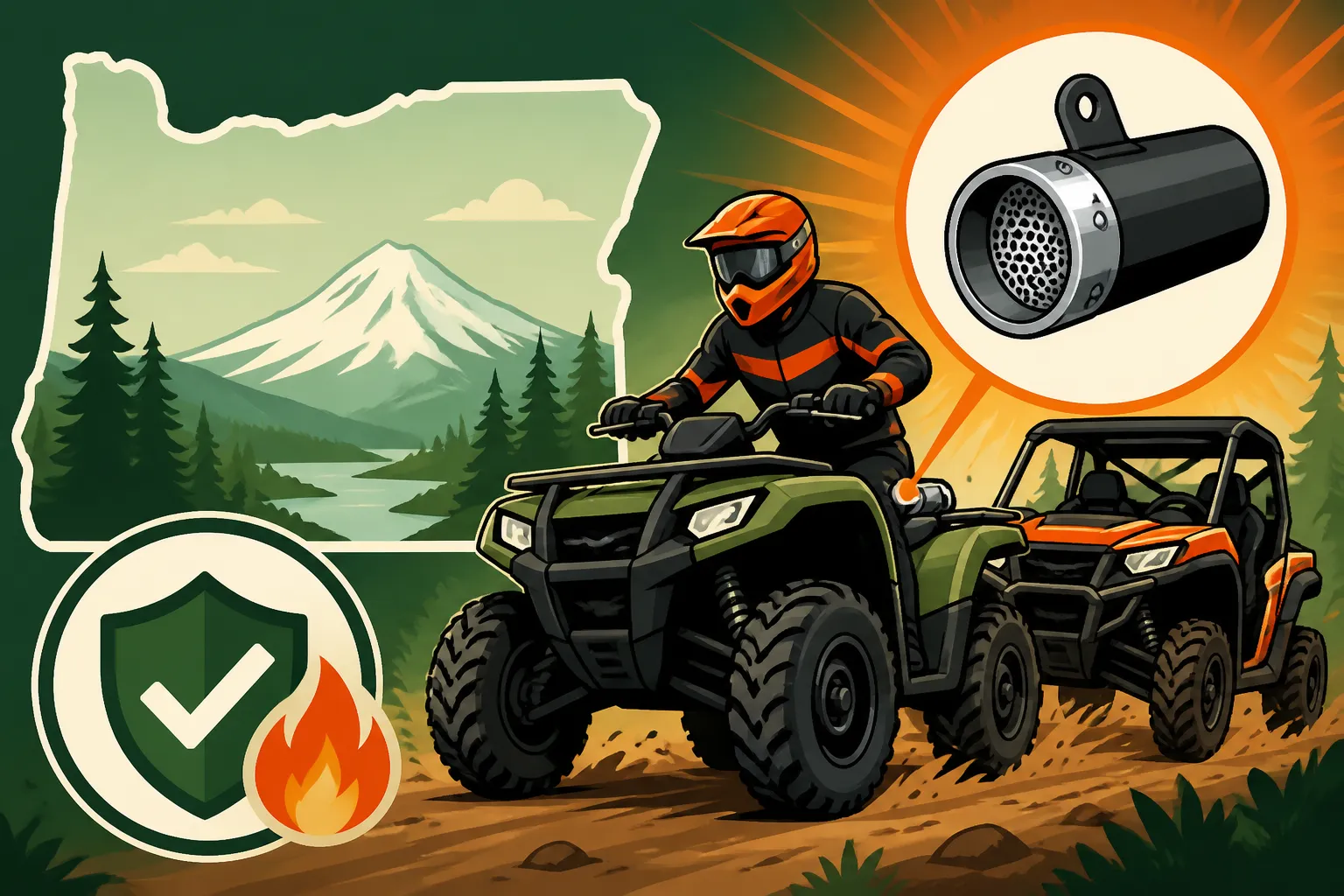
The key to an approved spark arrester in Oregon is its certification by the U.S. Forest Service. This means the device has undergone testing to ensure it effectively captures those dangerous carbon particles without significantly restricting engine performance or creating excessive back pressure. When you look at an approved spark arrester, you'll typically find a small, stamped metal tag or etching directly on the device itself (often on the muffler or the arrester screen assembly) that says "USDA Forest Service Approved" or similar, usually with an identifying number. If you're buying a new, reputable ATV or UTV, it almost certainly comes equipped with an approved spark arrester from the factory. However, if you've swapped out your exhaust system for an aftermarket pipe, or if you're riding an older machine, you absolutely need to verify this stamp. Brands like SuperATV offer a range of aftermarket parts, and you should always ensure any exhaust components you purchase are clearly marked as Forest Service approved.
Checking Your Machine and Aftermarket Exhaust
It's your responsibility to know if your machine is compliant. Here’s how you can check:
- Locate Your Exhaust: Follow your exhaust pipe from the engine back to the muffler. The spark arrester is usually integrated into the muffler or at its very end.
- Look for the Stamp: Carefully inspect the muffler body or an accessible part of the spark arrester for the "USDA Forest Service Approved" stamp. Sometimes it's small, so you might need a flashlight and a rag to clean off any mud or grime.
- Inspect Its Condition: Even if it's approved, a damaged or clogged spark arrester is ineffective. Look for:
- Holes or Tears in the Screen: If the screen (the actual arrester element) is visible, check for any tears, holes, or significant damage. A damaged screen allows sparks to escape.
- Excessive Carbon Buildup: Over time, carbon deposits can clog the arrester screen, which can restrict exhaust flow and potentially cause overheating. This usually means it's time for a cleaning.
- Rust or Corrosion: Severe rust can compromise the integrity of the arrester.
If you've just picked up a used quad in a private sale, checking the spark arrester is just as crucial as looking over the tires or engine. What if the previous owner installed a loud, performance-oriented exhaust system that isn't approved? Many aftermarket exhausts are not Forest Service approved, even if they look cool. You might also want to consult resources like [Checking a VIN Before Buying Used] to ensure the machine is legitimate, and while you're at it, inspect the exhaust for that all-important stamp. Remember, your machine might need new parts, and it’s important to research things like [Oregon Rules for an Aftermarket Exhaust] when making these changes.
The Legal Side of Things: Where and When It's Required
The requirement for an approved spark arrester isn't a suggestion; it's a legal mandate across vast swaths of Oregon's riding landscape. Many riders mistakenly believe it only applies to federal lands, but the reality is much broader, and the consequences of non-compliance can be significant.
It's Not Just National Forests and BLM Land
While it's absolutely true that an approved spark arrester is required on all federal lands, including National Forests (like the Tillamook State Forest where [Riding Tillamook in the Rain] is a common activity) and Bureau of Land Management (BLM) areas (which include many popular high desert spots and portions of the Oregon Dunes National Recreation Area), the requirement extends much further. Oregon state law (ORS 477.340) mandates spark arresters on all internal combustion engines being operated on forest land, range land, or cultivated land. This is a very broad definition that covers nearly every public and even many private off-road riding areas in the state. So, whether you're ripping through the sand at [Riding the Oregon Dunes National Recreation Area], exploring the trails at [Millican Valley's Nine Staging Areas] outside Bend, or even riding on private timber company land (with permission, of course), your spark arrester must be approved and in good working order. Don't assume that just because it's not a federal park, the rules are lax.
The Consequences of Riding Without One
Riding without an approved and functioning spark arrester isn't just a minor infraction; it carries significant penalties. Rangers, sheriff deputies, and Oregon State Police officers often conduct checks at staging areas, trailheads, and on patrols. If you're stopped and your machine isn't compliant, you could face:
- Fines: These can be substantial and definitely put a damper on your weekend ride.
- Impoundment: In some cases, your machine could be impounded, meaning you're left stranded and have to pay additional fees to retrieve it.
- Citation: You'll receive a citation, and repeated offenses could lead to more severe penalties.
- The Biggest Consequence: The devastating potential of starting a wildfire. Imagine being responsible for hundreds or thousands of acres burning, homes being lost, or lives being endangered. The legal and emotional toll would be immense.
When you pull into a popular staging area like Spinreel or Browns Camp, you might notice rangers casually chatting with riders. They're often performing quick visual checks, and a spark arrester is high on their list. It’s part of a broader compliance check that includes ensuring you have your [Oregon ATV Permits Explained] and that your vehicle meets [Oregon Sound Limits for ATVs]. For a full overview of potential penalties, see [Oregon Fines for No Spark Arrester]. You definitely don't want to learn about this requirement the hard way, especially not if [What an Oregon Trooper Checks Roadside] becomes a reality for you.
Maintaining Your Spark Arrester and Staying Compliant
Like any part of your ATV or UTV, a spark arrester requires a little love and attention to ensure it continues to do its job effectively. Neglecting it can lead to reduced performance for your machine, and more importantly, can turn a safety device into a fire hazard.
Regular Cleaning and Inspection is Key
Over time, especially if your machine burns a bit of oil or if you ride extensively, carbon deposits from the exhaust gases can build up on the spark arrester screen or baffles. This buildup can reduce the arrester's effectiveness, making it harder for sparks to be extinguished, and it can also restrict exhaust flow, potentially robbing your engine of power and causing it to run hotter.
Here’s how to usually clean it (always consult your machine’s manual first!):
- Locate and Remove: On many machines, the spark arrester is accessible by removing a few bolts from the end cap of the muffler. You might then be able to slide out a screen-like insert.
- Inspect for Damage: Before cleaning, check the screen for any holes, tears, or significant warping. If it’s damaged, cleaning won’t fix it; you’ll need a replacement.
- Clean it Thoroughly: Use a wire brush or scraper to gently remove carbon deposits from the screen. Some people soak heavily fouled screens in a solvent or carburetor cleaner, but be careful not to damage any seals or coatings. Make sure to clear all the openings.
- Reinstall Carefully: Once clean and dry, reinstall the spark arrester exactly as it was removed, ensuring all bolts are tightened properly. Double-check that it’s seated correctly to prevent exhaust leaks.
A good habit is to check and clean your spark arrester every few rides, especially after extended use or if you notice any unusual engine performance. This simple act is vital for both your machine's health and fire prevention.
When to Replace Your Spark Arrester
Even with diligent cleaning, spark arresters don't last forever. The intense heat, vibrations, and constant bombardment of exhaust particles can eventually degrade the material.
Signs it's time for a replacement include:
- Irreparable Damage: If the screen is torn, warped, or has holes that cleaning won't fix.
- Excessive Rust/Corrosion: If the metal is severely rusted to the point of being brittle or flaking apart.
- Persistent Clogging: If carbon buildup is so severe that it quickly re-clogs even after cleaning, it might be more efficient to replace it.
- Lost Certification Stamp: While rare, if the certification stamp becomes unreadable due to wear or damage, it might be difficult to prove compliance if stopped.
When replacing, always seek out a direct replacement part from your machine's manufacturer, or a high-quality aftermarket option that is explicitly "USDA Forest Service Approved." Brands like SuperATV and others often clearly label their compliant exhaust systems and spark arrester inserts. Remember that any modification to your exhaust system, including replacing the spark arrester, needs to comply with [Oregon Spark Arrester Rules for Trails] and [Oregon Rules for an Aftermarket Exhaust]. Staying on top of this maintenance ensures you're always ready for your next adventure without worry.
Disclaimer
This article is for general informational purposes only and does not constitute professional advice. Laws, prices and regulations vary by location and change over time. Consult a qualified professional for guidance on your specific situation.