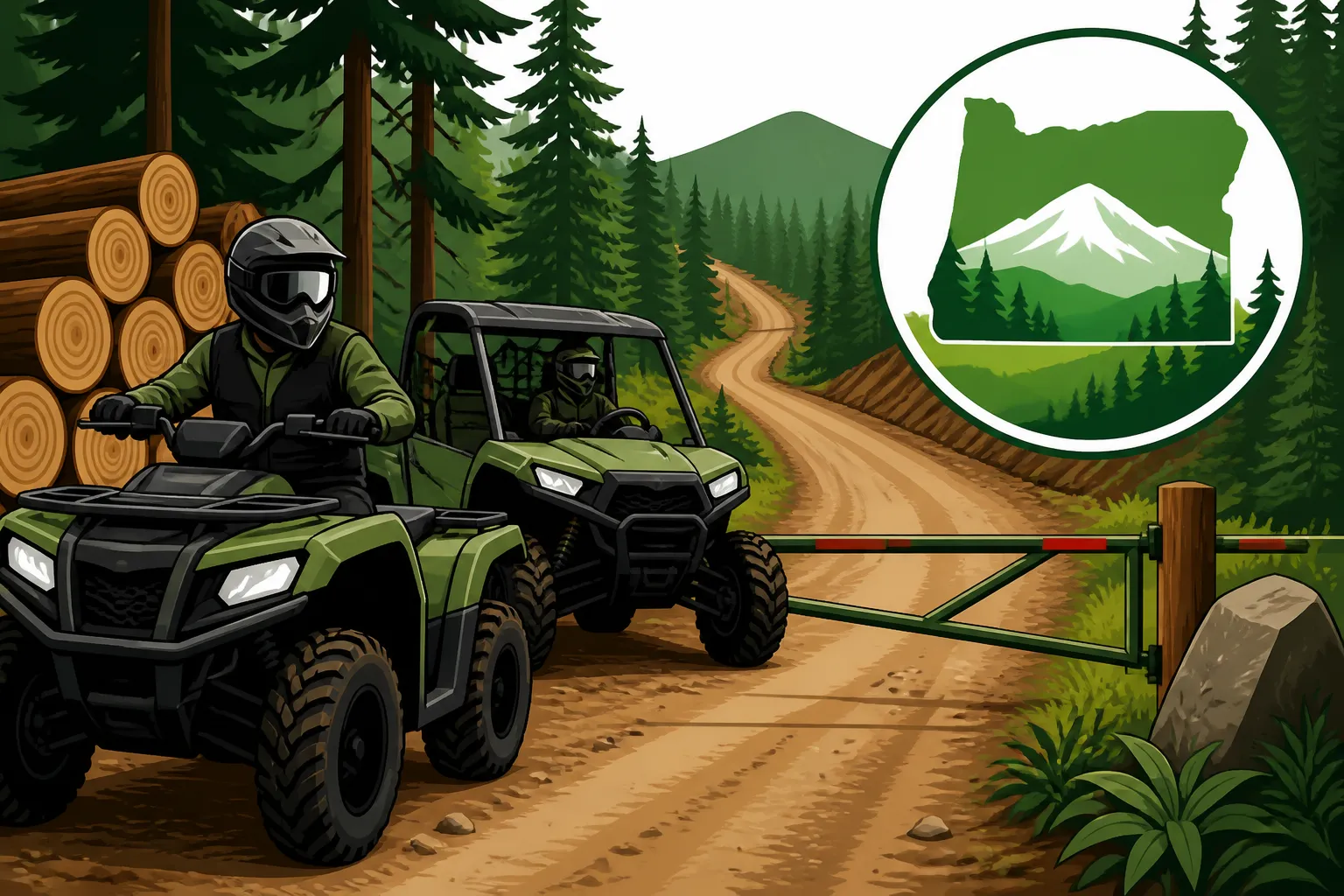
Oregon Rules for Riding a Timber Company Road
It's an experience many of us have had: you're out exploring Oregon's beautiful backcountry, perhaps driving toward a known public riding area, when you spot an inviting gravel road veering off into the trees. It looks well-maintained, maybe even less traveled, and offers the promise of a quiet ride. But then the questions flood your mind: Whose road is this? Can I legally ride my ATV or UTV on it? What if it's a timber company road? The rules around riding on these private lands can be incredibly confusing, and the last thing anyone wants is a citation or, worse, to inadvertently trespass or cause an accident. This guide is here to untangle the complexities of riding on Oregon's timber company roads, helping you understand when and how you can legally enjoy these routes.
Understanding Timber Company Roads in Oregon
First things first, it's crucial to understand what a "timber company road" truly is. Unlike the public roads managed by the U.S. Forest Service or the Bureau of Land Management (BLM), these roads are privately owned and maintained. They are the working arteries of Oregon's vast forestry industry, built and managed to facilitate logging, fire suppression, and reforestation efforts.
Private Versus Public Access
Oregon is a patchwork of land ownership, and it can be incredibly difficult to tell whose land you're on just by looking at a road. You might encounter roads owned by large industrial timber companies like Weyerhaeuser, small family-owned tree farms, or even private individuals who manage timber on their property. The key distinction is that these are private lands, not public. This is a huge difference from [Forest Service Roads Open to Oregon ATVs], which are generally open unless specifically closed.
Think of it like this: your driveway might look like a road, and people might even accidentally drive down it, but it's still your private property. Timber company roads operate under a similar principle. Just because they are open, or even if they connect to public lands, does not automatically grant the public permission to ride on them. The companies invest significantly in maintaining these roads, often to standards suitable for heavy logging equipment, which is vastly different from what passenger vehicles or recreational ATVs are designed for.
Why Timber Companies Have Roads
These roads are purpose-built for the logging industry. They allow heavy equipment like log trucks, feller bunchers, and excavators to access harvest units, transport logs, and conduct silvicultural activities like planting and thinning. They're also vital for quick access during fire season, allowing firefighters to reach remote areas. The design, construction, and maintenance of these roads are all geared towards these industrial operations, not recreational riding. Understanding this core purpose helps explain why access is often restricted and why caution is paramount. The priorities on a timber road are always safety for workers and the efficient movement of forest products.
The "Open to Public" Conundrum on Private Timber Lands
One of the biggest sources of confusion for ATV and UTV riders in Oregon is the presence of seemingly open gates or the complete absence of gates on many timber company roads. It's easy to assume that if there's no "No Trespassing" sign or a locked gate, you're free to explore. This assumption can lead to serious legal trouble and dangerous situations.
Gates and Signage
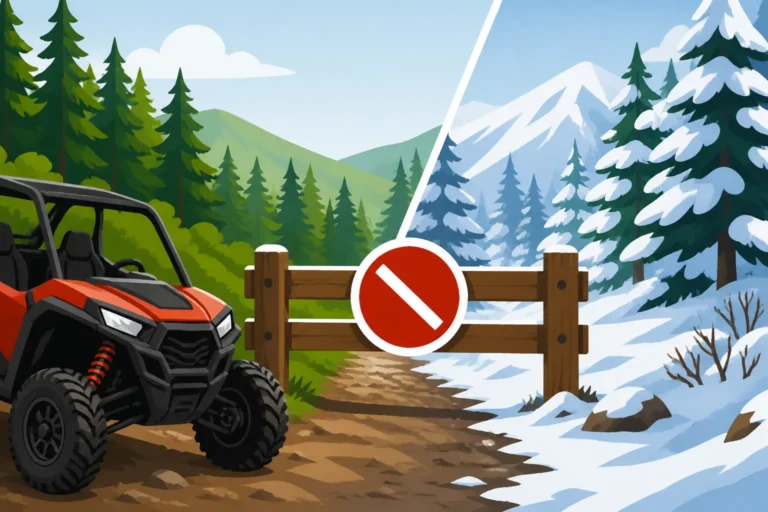
While some timber company roads are clearly marked with "No Trespassing," "Private Road," or "Active Logging" signs, many are not. Or, a gate that is typically locked might be open for active operations, creating a window of opportunity that looks like an invitation. It's really frustrating when you're trying to be a responsible rider, but the information isn't clear, isn't it? However, the absence of a sign or a closed gate does not imply permission to enter. Many private timberlands are managed under a policy where entry is considered trespass unless express permission is granted.
If you encounter a gate, whether it's open or closed, always be cautious. A gate might be open temporarily for a worker, only to be locked again later, potentially trapping you inside. Always look for signage, no matter how small or faded. Even a sign indicating active hauling or potential road closures due to fire season or heavy rains should be taken seriously. Ignoring these signs can put you in harm's way or lead to a [Oregon Class C Traffic Violation for No Permit] if caught on an unpermitted road.
Implied Versus Express Permission
In the eyes of the law, there's a significant difference between implied permission and express permission. Implied permission might be assumed if a road has been historically used by the public without issue, or if there are no signs indicating otherwise. However, with private timberlands, this implication often doesn't hold up. Unless you have explicit, written permission from the timber company or landowner, your presence on their roads is generally considered trespassing.
Express permission means you have direct authorization, whether it's a specific permit, a signed agreement, or a clear public access policy from the landowner. Some timber companies occasionally open certain roads for public recreation during specific seasons, but this is usually well-publicized and comes with clear rules. Without that express permission, you could be cited for [Oregon Trespass Rules for Riders]. It's a tough pill to swallow when you just want to enjoy the outdoors, but respecting private property boundaries is paramount.
Navigating Permits and Permissions for Timber Roads
So, if most timber company roads are private, how does one gain legal access for riding an ATV or UTV? The answer isn't always straightforward, and it heavily depends on the specific landowner and their policies.
Getting a Riding Permit From a Timber Company
Unlike public lands where a general [Oregon ATV Operating Permit] covers your machine, gaining access to private timber company roads usually requires direct permission from the company itself. Some larger timber companies may have formal recreation programs or permit systems in place for certain areas. These permits are typically distinct from state ATV permits and are specifically for entry onto their private property. They might involve a fee, specific access dates, liability waivers, and adherence to additional rules.
For example, a company might offer permits for hunting, fishing, or even mushroom picking on their lands, and sometimes these permits can extend to include vehicle access. However, dedicated ATV/UTV riding permits for timber roads are less common than general recreational access permits. It's always worth checking the websites of major timber companies operating in the area you wish to ride or calling their local offices. You'd be surprised how often a simple inquiry can clarify things. Remember, these permits are separate from your Oregon ATV permit, which applies to public lands. Make sure your machine is set up for the challenging terrain you might encounter, perhaps with some robust SuperATV skid plates or A-arm guards.
Road Use Agreements and Waivers
If a timber company does grant access, it will almost certainly involve a road use agreement and a liability waiver. These documents are designed to protect the company from liability in case of an accident or injury on their property. They typically outline the specific roads you are permitted to use, the duration of your access, and any rules you must follow (e.g., speed limits, no off-road travel, no campfires). Signing a waiver is a serious commitment, acknowledging that you understand the risks involved in riding on active timberlands.
You might also find that some companies have agreements with local governments or recreational groups to allow limited access. For instance, a county might have a right-of-way through private timberland, making that specific segment technically public even though the surrounding land is private. These arrangements are usually well-documented and require careful research to identify. Always assume the land is private until you have definitive proof otherwise.
Safety and Respect on Timber Roads
Even if you manage to secure permission to ride on a timber company road, your responsibilities don't end there. These are active industrial sites, not recreational parks, and they demand a high level of caution and respect. Ignoring these can lead to accidents, damage to property, or loss of your riding privileges, not to mention fines for [Oregon Rules for Riding a Closed Road].
Log Trucks and Weekday Riding
This is perhaps the single most critical safety concern on timber company roads: sharing the route with massive, fast-moving log trucks. These trucks are often heavily loaded, travel at surprising speeds, and have limited visibility, especially around corners. They are designed to operate on these roads and will not be expecting recreational riders.
- Yield to Log Trucks: Always, always yield to logging trucks. They are the working vehicles, and their schedules are tight. Pull over as far as safely possible, giving them plenty of room to pass.
- Dust and Blind Corners: Timber roads are often gravel and can generate huge dust clouds. This significantly reduces visibility. Slow down, use your headlights, and assume there's oncoming traffic, especially around blind corners. Upgrading to a powerful SuperATV LED light bar can make a huge difference in spotting hazards.
- Weekday Caution: Weekday riding, especially during working hours, dramatically increases your chances of encountering logging activity. Weekends or holidays might be safer for recreational use if permitted, but never assume. [Oregon Rules for Riding a Logging Road Midweek] are particularly strict.
- Radio Channels: Some active logging areas use specific CB radio channels for communication between truck drivers. If you have a CB radio, tuning into these channels might give you advance warning of approaching trucks.
Environmental Stewardship and Fire Risk
Riding on timber company roads, or any off-road area in Oregon, comes with a responsibility to protect the environment and prevent wildfires. Timber companies are heavily invested in forest health, and careless actions by riders can have devastating consequences.
- Spark Arresters: Oregon law requires that all ATVs and UTVs operated on forestland, brushland, or grass-covered land be equipped with a U.S. Forest Service-approved spark arrester that is in good working condition. This applies universally, whether on public or private land. Make sure yours is in compliance to meet the [Oregon Spark Arrester Requirement].
- Sound Limits: Excessive noise can disturb wildlife, residents, and logging operations. Oregon has [Oregon Sound Limits for ATVs], and adhering to them is a sign of respect for the environment and others.
- Fire Season Closures: Oregon's fire season can be intense, and timber companies are often among the first to implement fire restrictions or full closures on their lands. These closures are not just about protecting timber; they're about protecting lives and entire ecosystems. Always check for fire restrictions before heading out, especially during the dry summer and fall months. [Oregon Rules for Riding During Fire Season] are strictly enforced.
- Stay on Designated Routes: Do not create new trails, ride through sensitive areas, or damage vegetation. Timber companies are managing these lands for long-term health and productivity, and off-trail riding can disrupt those efforts.
- Pack It In, Pack It Out: Leave no trace. Take all your trash with you.
ATV Permitting and Safety Cards
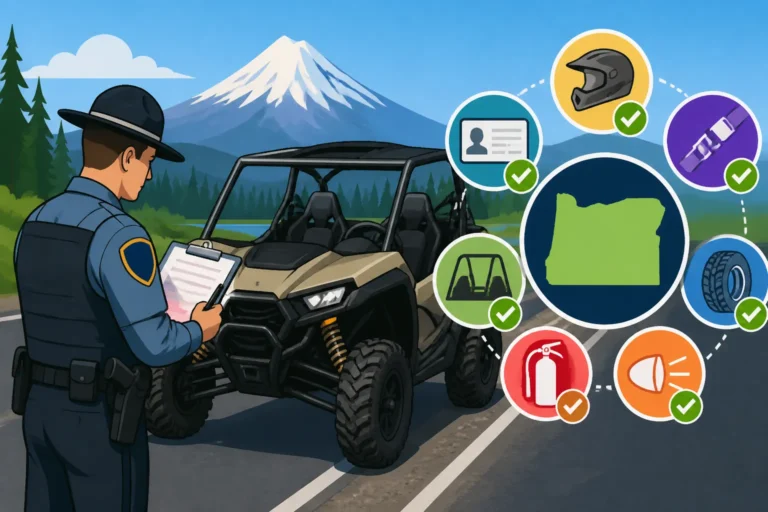
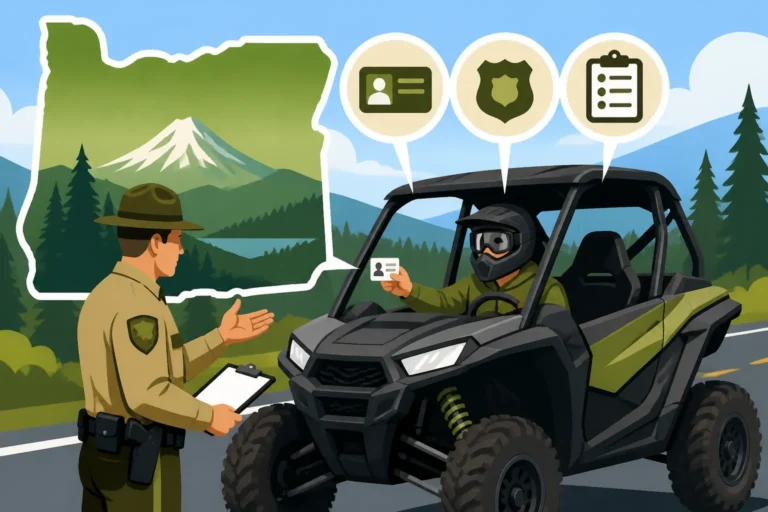
Even if you have permission from a timber company to ride on their private roads, you still need to comply with all general Oregon ATV regulations. This means your machine must have a valid [Oregon ATV Operating Permit] decal displayed correctly. Riders also need to carry an [Oregon ATV Safety Education Card], or meet the requirements for exemption. These state-level requirements apply regardless of land ownership when operating an ATV or UTV.
While a landowner might grant you access to their private roads, they aren't exempting you from state laws. Local law enforcement or Oregon State Police can still issue citations for violations of the state's ATV regulations, even on private property if you are operating your machine. Always have your permit and safety card information readily available, perhaps in a waterproof pouch that you can easily access.
| Road Type | Ownership | Public Access Policy | Common Requirements | Primary Concerns |
|---|---|---|---|---|
| Forest Service/BLM | Federal (Public) | Generally open, subject to specific closures | Oregon ATV Permit, Safety Card, Spark Arrester | Environmental impact, trail closures, user conflict |
| County Gravel Roads | County (Public) | Generally open, subject to county ordinances | Oregon ATV Permit, Safety Card, potentially street-legal registration | Road conditions, shared use with vehicles |
| Timber Company Roads | Private (Industrial) | Restricted, requires express permission | Oregon ATV Permit, Safety Card, PLUS Landowner Permit/Waiver | Log truck traffic, active operations, trespass risk |
| Private Farm/Ranch Roads | Private (Agricultural) | Restricted, requires express permission | Oregon ATV Permit, Safety Card, Landowner Permission | Trespass, livestock, equipment, liability |
Remember, the responsibility to know and follow the rules falls squarely on the rider. While the allure of an unexplored timber road is strong, a little research and a lot of caution can ensure your ride is safe, legal, and enjoyable for everyone.
Disclaimer
This article is for general informational purposes only and does not constitute professional advice. Laws, prices and regulations vary by location and change over time. Consult a qualified professional for guidance on your specific situation.