What an Oregon Trooper Checks Roadside
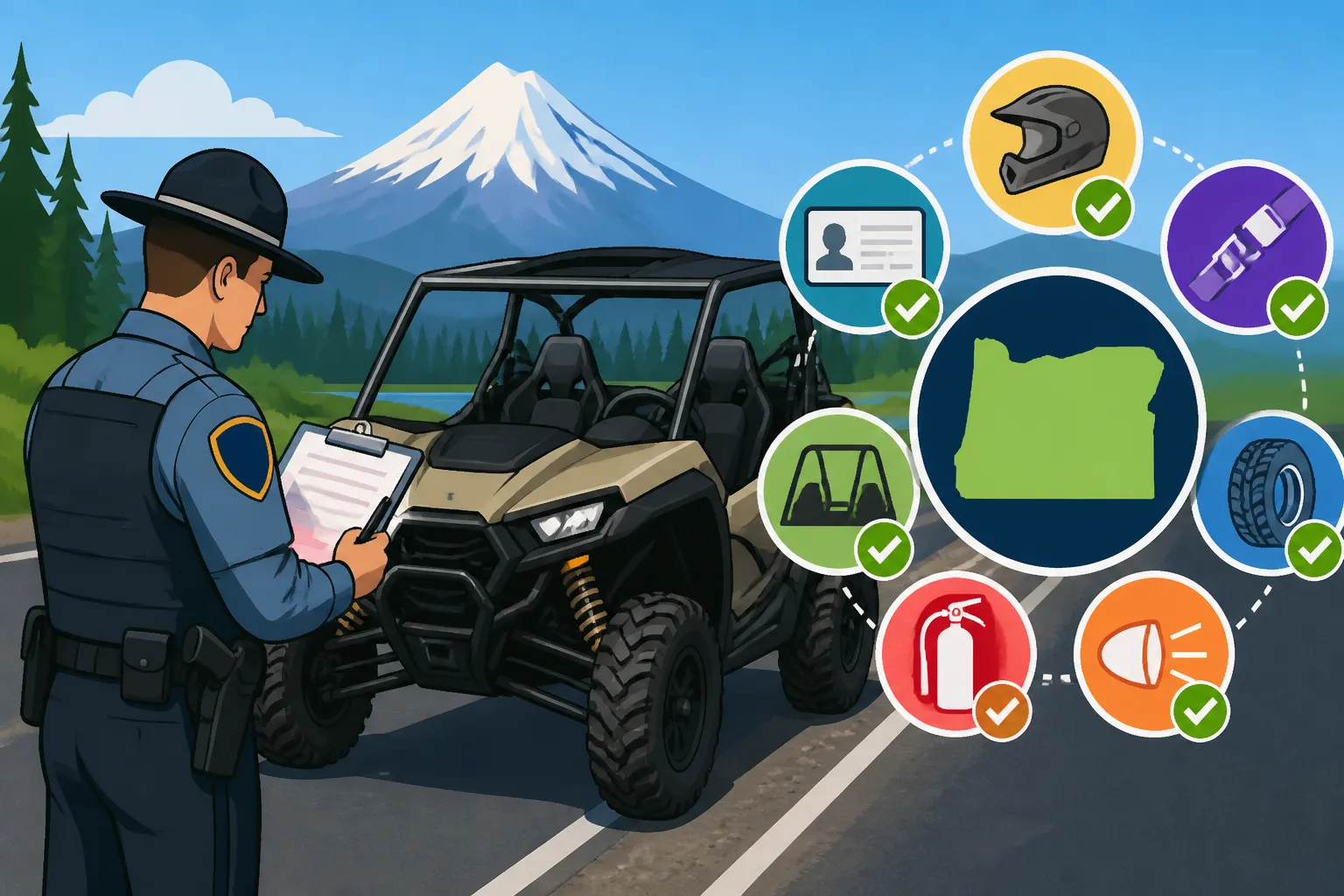
Picture this: you're out enjoying a fantastic ride on Oregon's beautiful trails or dunes, lost in the moment, when suddenly you see flashing lights in your rearview. Your heart probably jumps a little, right? It's a common worry for many of us who love the off-road life. This guide is here to walk you through exactly what an Oregon State Trooper or Park Ranger might be looking for during a roadside stop, helping you feel confident and prepared every time you hit the trails.
The Initial Stop: What Prompts a Trooper to Pull You Over
It’s often the little things that catch an officer’s eye, especially when you’re out on roads or in designated OHV areas where rules are strictly enforced. Sometimes, it’s a visible lack of a permit decal, or perhaps your machine appears to be making more noise than the regulations allow. Maybe you're riding in an area not designated for OHVs, or your machine looks modified in a way that suggests it might not meet safety standards.
Visible Indicators and Common Violations
Troopers and rangers are trained to spot violations quickly, even from a distance. A missing [Oregon Permit Decals and Where They Go] is one of the most common reasons. If you're on a public road, even a gravel one, and your machine isn't obviously street-legal, that's another red flag. They might also notice if you have more passengers than your ATV is designed for, or if a young rider isn't wearing a helmet. It's not about being targeted; it's about ensuring everyone's safety and compliance with the rules designed to protect our riding areas and ourselves.
Ensuring Your Machine is Trail-Ready and Legal
Before you even load up your rig, do a quick walk-around. Is your permit decal clearly displayed and current? Are your lights working, especially if there's any chance you'll be riding in low light? Do you have a proper spark arrester on your exhaust? These aren't just minor details; they're often the first things an officer will look for. Thinking ahead can save you a lot of hassle and potential fines, allowing you to focus on the joy of the ride rather than looking over your shoulder.
Permit and Registration Checks
One of the very first things any officer will want to verify is that your machine is legally permitted to operate in Oregon. This isn't just a formality; the funds generated by these permits directly support trail maintenance and safety programs across the state.
The Oregon ATV Operating Permit Decal
Every ATV, UTV, off-road motorcycle, or sand rail operating on public lands in Oregon needs an [Oregon's ATV Operating Permit]. This permit comes as a physical decal that must be prominently displayed on your machine. For most quads and side-by-sides, it goes on the right side of the machine, as you sit on it. For dirt bikes, it's typically on the front fork. If you've just purchased your permit online, you'll receive a temporary email permit that allows you to ride immediately while waiting for the physical decal to arrive. [Oregon's Thirty-Day Temporary Permit] is a lifesaver for those last-minute trip plans.
Officers will check the decal's validity, making sure it hasn't expired. Remember, [How Long an Oregon ATV Permit Lasts] is typically two years from the month of purchase. Keep your permit card, which lists the permit number and expiration date, somewhere accessible, even if it's just a clear photo on your phone. This helps in case there's any doubt about the decal's readability or placement.
Oregon's Unique Approach to Titles and Registration
Oregon has a somewhat unique system compared to many other states. For most off-road machines, titling through the DMV is actually optional, and street registration is generally not an option for Class I (quads) or Class IV (side-by-sides). This often confuses riders from out-of-state. [Titling an ATV in Oregon Is Optional] for machines used exclusively off-road, but it can be beneficial for proving ownership.
However, if you have a Class II machine (like a sand rail or a converted dune buggy) that you can make street legal, then registration and plates become mandatory for road use. An officer checking a Class II machine on a public road will absolutely be looking for current registration and license plates, in addition to the OHV permit decal. [Registering a Street-Legal Class II in Oregon] involves more than just the OHV permit; it's a full DMV process.
| Document/Item | What it is | Where it's checked | Why it's important |
|---|---|---|---|
| ATV Operating Permit Decal | Physical sticker with expiry date | Mounted on machine (right side, fork, etc.) | Required for public land access; funds trails |
| Permit Card/Proof of Purchase | Paper or digital receipt for the decal | With rider, in dry bag, or on phone | Backup proof if decal is damaged or new |
| ATV Safety Education Card | Proof of completed safety course | With rider, physical card or on phone | Required for all riders, especially youth |
| Driver's License (if applicable) | For operating a street-legal Class II | With rider | Required for road operation of plated OHVs |
| Proof of Insurance | For Class II street-legal machines | With rider | Mandatory liability for road-legal OHVs |
| Spark Arrester | Device on exhaust to prevent fires | Visually checked on exhaust system | Fire prevention, especially in dry areas |
| Sound Level | Noise emitted by exhaust | Heard by officer; may use meter | Compliance with local noise ordinances |
| Headlights/Taillights | Functioning lights for visibility | Checked during dusk/night riding or poor visibility | Safety for rider and others |
| Whip Flag | At least 8 feet high | Mounted on machine (dunes, open areas) | Visibility in high-traffic dune areas |
| Helmet | DOT or Snell approved | Worn by rider (mandatory for under 18, and Class I, III) | Head protection for all riders |
| Passenger Compliance | Number and position of passengers | Visually checked on machine | Safety and machine design limits |
Safety Education Card Requirements
Beyond the machine's permit, Oregon takes rider safety very seriously. A critical component of this is the ATV Safety Education Card. This isn't just for kids; most adult riders need one too.
Who Needs an Oregon Safety Card?
In Oregon, nearly everyone who operates an ATV or UTV on public lands needs an [Oregon's ATV Safety Education Card]. The rules are a bit nuanced, but generally:
- Class I (quads) and Class III (off-road motorcycles): All riders, regardless of age, must carry a safety education card.
- Class IV (side-by-sides): Riders under 16 years old must have a safety education card. For riders 16 and older, a valid driver's license can substitute for the safety card when operating a Class IV machine.
- Class II (certain street-legal machines): If you're operating a street-legal Class II on an open road, a valid driver's license usually suffices. However, if you're taking that Class II into an OHV park or off-road area, the safety card rules apply just like for Class IV.
An officer will ask to see your physical card or a clear photo of it on your phone. If you're a visitor, [Does Oregon Accept an Out-of-State Safety Card?] is a common question, and the answer is yes, Oregon does have reciprocity with certain states. However, you'll want to check the specific list, as it's not universal.
The Importance of Hands-On Training for Youth
While the online course covers much of the theory, Oregon also emphasizes [Oregon Hands-On Training Requirements] for younger riders. If a youth rider (under 16) gets their initial safety education card, they usually have a grace period to complete a hands-on training course. This practical component ensures they not only know the rules but also have developed some crucial riding skills in a controlled environment. An officer might inquire about this if they see a young rider who appears new to the sport. It's all about building confidence and competence on the trail.
Equipment and Machine Compliance
Oregon has specific requirements for the equipment on your OHV, especially when it comes to preventing wildfires and minimizing environmental impact. These are often high on a trooper's checklist, particularly during dry seasons.
Spark Arresters and Sound Limits
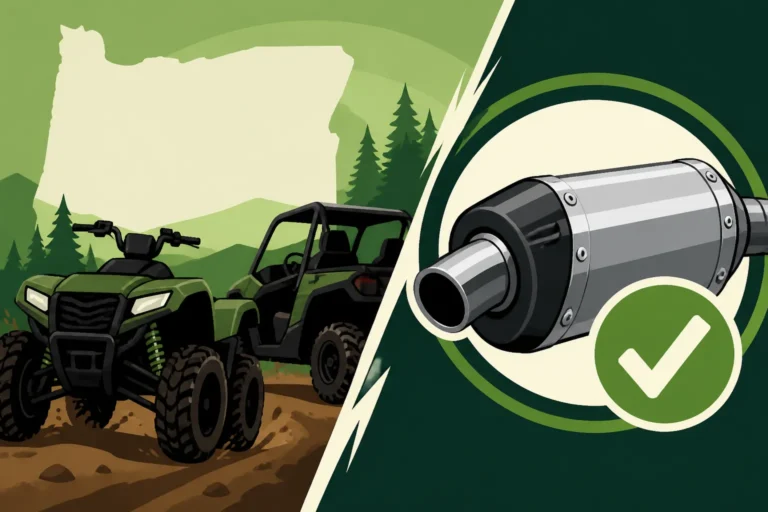
Every ATV, UTV, and off-road motorcycle operating on public land in Oregon must be equipped with a U.S. Forest Service approved [Oregon Spark Arrester Requirement]. This is non-negotiable and crucial for preventing stray sparks from igniting dry vegetation, which is a significant concern in Oregon's forests and high deserts. Officers will often visually inspect your exhaust pipe for the presence of a spark arrester. If yours is missing, damaged, or modified, you could face a citation.
Alongside spark arresters, [Oregon Sound Limits for ATVs] are also enforced. While an officer might not always have a sound meter on hand, they can often tell if a machine is excessively loud. Aftermarket exhausts, while they might sound cool, often push machines over the legal decibel limits. Some aftermarket companies like SuperATV offer exhaust systems designed to meet legal sound requirements, helping riders stay compliant while still enjoying performance upgrades. It’s always best to check the manufacturer’s specifications to ensure your setup is within Oregon’s sound regulations.
Lights, Flags, and Other Visible Gear
Visibility is key, especially in high-traffic areas like the Oregon Dunes. If you're riding in an area that requires a whip flag (most commonly the dunes), an officer will check its height and ensure it's properly affixed. This flag, usually at least eight feet tall from the ground to its tip, helps other riders see you over crests and in bowls.
For riding during dawn, dusk, or at night, or simply in areas with low visibility, functional headlights and taillights are mandatory. An officer can pull you over if your lights aren't working, or if you're riding without them when conditions warrant their use. It's not just about avoiding a ticket; it's about making sure others can see you, preventing potential collisions.
Rider Behavior and Safety Gear
Your personal safety gear and how you operate your machine are just as important as the machine's compliance. Troopers are focused on preventing accidents and injuries, which means they'll be watching how you ride and what you're wearing.
Helmet Rules and Passenger Regulations
Oregon has strict [Oregon Helmet Law for ATV Riders]. For all riders under 18 years old, wearing a DOT or Snell approved helmet is mandatory on all OHVs when operating on public lands. This rule applies even if you're riding a side-by-side with a roll cage and seatbelts. For adult riders (18 and over) on Class I (quads) or Class III (dirt bikes), helmets are also generally required. However, for adults operating Class IV (side-by-sides) with a roll cage and seatbelts, the helmet requirement is often waived, though it's always recommended for maximum safety.
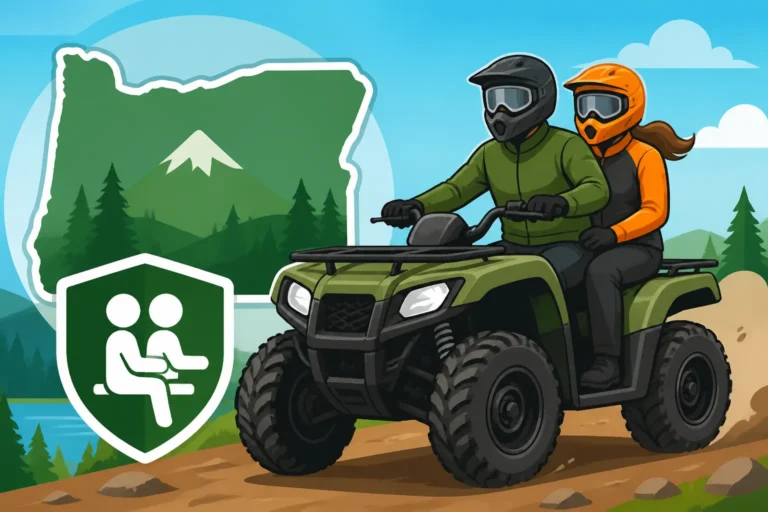
Officers will also check for [Oregon Passenger Rules on a Quad] and other OHVs. Most ATVs are designed for a single rider. Carrying a passenger on a single-rider ATV is illegal and extremely dangerous, affecting the machine's balance and handling. Side-by-sides are designed for multiple passengers, but everyone must have their own designated seat with a seatbelt. No riding in the operator's lap, and all passengers must have proper footrests. Ensuring everyone is safely seated and secured is paramount.
Driving Under the Influence and Reckless Operation
Just like operating a car, operating an OHV under the influence of intoxicants is illegal and extremely dangerous. [Oregon DUI Rules for ATV Riders] apply to OHVs on public lands, roads, and trails. A trooper will be looking for any signs of impairment, such as erratic driving, slurred speech, or the smell of alcohol. Similarly, reckless operation – speeding through crowded areas, performing unsafe stunts, or driving in a manner that endangers others – can quickly lead to a stop and a citation. These rules are in place not to spoil your fun, but to keep everyone safe and preserve access to our beautiful riding areas for future generations.
Road Use and Street-Legal Considerations
One of the biggest areas of confusion for many riders, especially visitors, is where they can legally ride their OHVs on public roads. Oregon has very specific rules, and officers are well-versed in them.
Oregon's Limited Highway Access Routes
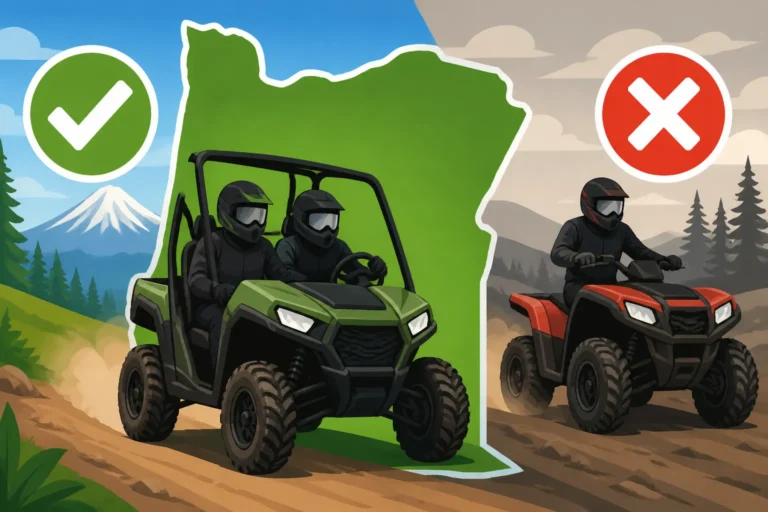
Unlike some states, Oregon does not generally allow ATVs or UTVs to be street legal for use on most public roads. There are very limited exceptions. Currently, [Oregon's Only Two Designated ATV Routes: Lakeside and Sumpter] are the primary places where OHVs (of certain classes) are allowed to operate on town streets as part of a designated route to access trails or services. An officer checking a machine in one of these towns will verify you are on the designated route and that your machine meets any specific requirements for that route. Riding your OHV on a paved road outside of these specific routes, or on a state highway, is almost certainly going to result in a stop.
If you have a legitimate Class II machine (like a sand rail) that has been fully converted to be street legal, with proper registration, plates, lights, horn, and turn signals, you might be able to operate it on a wider range of roads, but even then, restrictions on highways often apply. [Oregon's Class II Street-Legal Exception] is a complex topic, and it's essential to know the specific regulations for your machine and the roads you intend to use.
Crossing Highways and Forest/County Roads
Even outside of designated routes, Oregon does allow OHVs to cross a state highway at a right angle, provided it’s done safely and the crossing is necessary to access another approved riding area. However, lingering on the highway or driving down it will draw immediate attention.
Many riders also confuse Forest Service roads and gravel county roads with open access for all OHVs. While many of these roads are open to OHV use, some are not, or they may have seasonal closures. An officer might check if you’re riding on a [Forest Service Roads Open to Oregon ATVs] or [Gravel County Roads and Oregon Riders] that is currently open to your vehicle class, or if you've entered a road that is explicitly closed, perhaps due to logging operations, fire danger, or environmental protections. Always check local maps and signage for the most current information. Using heavy-duty accessories from brands like SuperATV, such as durable half windshields or rock sliders, can prepare your machine for the varied conditions of Oregon's backroads, but they won't make a closed road open.
Disclaimer
This article is for general informational purposes only and does not constitute professional advice. Laws, prices and regulations vary by location and change over time. Consult a qualified professional for guidance on your specific situation.