Dust and Blind Corners on a Logging Road
Riding Oregon's incredible backcountry, especially on the winding logging roads that crisscross our beautiful forests, is an experience unlike any other. But let's be honest, nothing throws a wrench into that enjoyment faster than suddenly finding yourself enveloped in a choking cloud of dust, or worse, rounding a blind corner only to come face-to-face with an unexpected hazard. This guide is here to walk you through the very real dangers of dust and blind corners on these often-shared roads and equip you with practical, realistic strategies to navigate them safely, keeping your adventures fun and your rides secure.
Understanding the Unique Hazards of Oregon Logging Roads
Oregon's logging roads are a vital part of our state's infrastructure, providing access for timber operations, recreation, and rural communities. While they offer fantastic opportunities for ATV and UTV enthusiasts to explore, they also come with a unique set of challenges that differ significantly from paved roads or even dedicated OHV trails. Ignoring these differences can turn a scenic ride into a high-stakes gamble.
The Menace of Dust: Reduced Visibility and Hidden Dangers
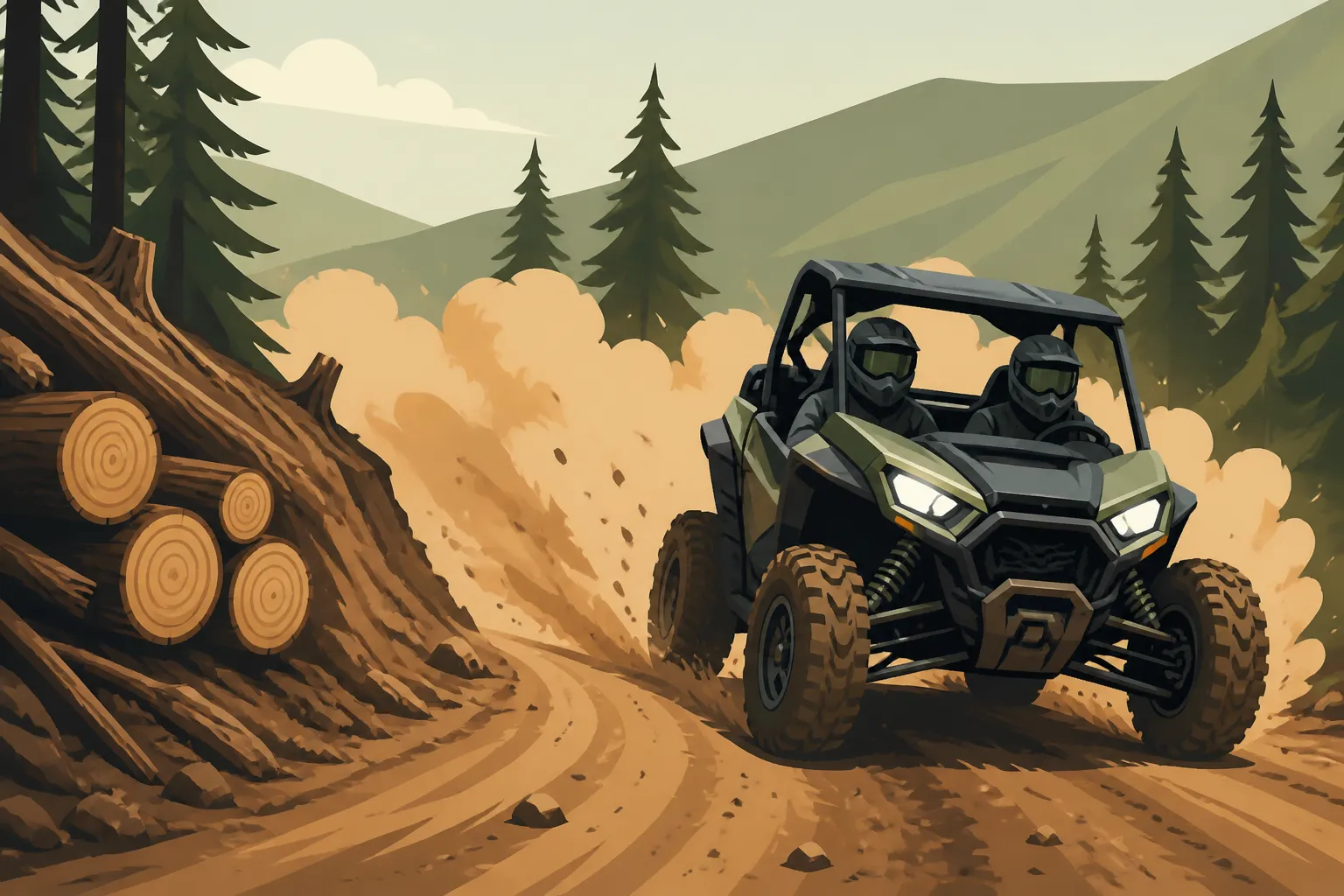
Ah, dust. It's the ever-present companion on almost any unpaved road, but on a busy Oregon logging road, it can quickly escalate from a nuisance to a serious threat. When conditions are dry, even a single vehicle can kick up a thick, persistent cloud that hangs in the air, drastically reducing visibility. Imagine riding along, enjoying the scenery, only for the world ahead to suddenly disappear into a brown-orange haze.
This isn't just uncomfortable for your eyes and lungs; it's genuinely dangerous. In a dust cloud, you lose sight of the road's surface, making it impossible to spot potholes, rocks, ruts, or sudden changes in terrain. If you're following another machine, that dust cloud can feel like an impenetrable wall, leaving you blind to their braking, turning, or any obstacles they encounter. And if you're lucky enough to have an oncoming vehicle, you might not see them until they're right on top of you, leaving precious little time to react. The psychological impact is also real; that feeling of being disoriented and unable to see can lead to panic or poor decision-making, which is the last thing you want on a winding, shared road.
The Deceptive Nature of Blind Corners
Logging roads, by their very nature, are often carved through undulating terrain, following natural contours and minimizing excavation. This means they are often a series of twists, turns, and elevation changes that create an abundance of "blind corners"—sections of the road where you cannot see what's coming around the bend until you're already in it.
These corners are particularly dangerous because they hide everything: oncoming traffic, stationary vehicles, fallen trees, wildlife, or even active logging equipment. The lack of line-of-sight means you have no advanced warning, and the speeds at which some vehicles (especially commercial logging trucks) travel can lead to devastating head-on collisions. It's not just about other vehicles, either. A sudden washout, a rockslide, or even a branch across the road can appear out of nowhere, demanding an immediate, unpracticed reaction that can be difficult to execute safely when you're caught by surprise. You might feel like you know the road, but these corners can always hold a new surprise.
The Presence of Logging Operations and Heavy Equipment
Here's the stark reality of riding on logging roads: they are active industrial sites. This isn't just a scenic route; it's a workplace for loggers, truckers, and heavy equipment operators. This means you could encounter enormous logging trucks, often traveling at surprising speeds, hauling massive loads of timber. These trucks are heavy, long, and have very limited maneuverability, especially on tight corners or dusty stretches. They can't stop on a dime, and they certainly can't swerve to avoid you.
Beyond the trucks, you might encounter excavators, graders, feller bunchers, and other heavy machinery. These machines are slow-moving but take up a huge amount of space, and their operators are focused on their work, often with limited peripheral vision or loud engines that can drown out your approach. [Sharing a Gravel Road With Log Trucks] is a completely different experience than sharing a highway, and the rules of engagement are critical for your safety. Dust and blind corners amplify these risks exponentially, creating scenarios where a massive vehicle could emerge from a cloud or around a bend with little to no warning, demanding your absolute vigilance and caution.
Strategies for Navigating Dust Clouds Safely
Since dust is an unavoidable part of riding many of Oregon's backcountry roads, having a clear strategy for dealing with it is paramount. It’s not about avoiding dust entirely—that’s often impossible—but about managing the risk it presents.
Maintaining Safe Following Distances and Staggered Formations
The golden rule when riding in dusty conditions is to significantly increase your following distance. Forget what you'd consider safe on pavement; on a logging road, you need much more space. The goal is to be far enough behind the machine in front of you that their dust cloud has time to dissipate, at least partially, before you enter it. This might mean leaving a quarter-mile or more between vehicles, depending on wind conditions and how thick the dust is. It can feel slow, but it's infinitely safer than riding blind.
If you're riding in a group, consider a staggered formation. Instead of riding directly behind the person in front, aim to be slightly to one side. This not only gives you a clearer line of sight around their machine but also allows their dust to flow past you somewhat, reducing your direct exposure. This technique is especially useful on wider roads where space allows, minimizing the "dust tunnel" effect for everyone in the group. Communication with your group about maintaining these distances is key to keeping everyone safe and visible.
Utilizing Lighting and Visibility Enhancements
Your ability to see and be seen dramatically decreases in dusty conditions. This is where your lights become your best friend. Always ride with your headlights and taillights on, even in broad daylight, as they can cut through some of the haze and make you more visible to oncoming traffic or vehicles behind you. Some riders also invest in aftermarket amber "dust lights" or chase lights. These lights, often mounted high on the rear of a UTV or ATV, are specifically designed to penetrate dust and mist, making your presence known when a standard taillight might be obscured.
Consider upgrading your factory lighting, especially if you plan on doing a lot of riding on these types of roads. Companies like SuperATV offer a range of LED light bars and pod lights that can drastically improve your forward visibility, which is a huge advantage when the dust starts to swirl. Beyond vehicle lighting, wear high-visibility clothing. Bright colors like neon green, orange, or yellow can make a huge difference in how quickly others spot you in a dusty environment. This simple addition can be a lifesaver. If you're planning on riding into the evening, remember [Oregon Lighting Requirements for Road Use] become even more critical.
When to Pull Over and Wait It Out
Sometimes, the dust is simply too thick, or the traffic too heavy, to safely continue. In these situations, the smartest and safest option is to pull over and wait. Find a wide, flat, and safe spot off to the side of the road, well clear of any curves or crests where you might not be seen. Turn off your engine to let the dust settle and give your lungs a break. This is also a good time to check your maps, hydrate, or just enjoy the quiet of the forest for a moment.
This is particularly important if you see a large logging truck approaching from behind or ahead. Give them ample room. These trucks are professionals, often on a tight schedule, but they are also navigating the same reduced visibility as you are. By pulling over, you minimize the risk for everyone involved. Don't be afraid to exercise caution; there's no prize for being the bravest rider through a dust storm, only the safest.
Conquering Blind Corners with Precaution and Awareness
Blind corners are where vigilance really pays off. They demand a proactive approach to riding, constantly anticipating what might be just out of sight.
The "See and Be Seen" Philosophy
The core principle for blind corners is simple: slow down, and maximize your chances of seeing and being seen. As you approach any corner where your line of sight is restricted, drastically reduce your speed. This gives you more time to react if you encounter something unexpected. Think of it like this: you should be able to stop your machine within the distance you can see clearly ahead. If you can only see 10 feet into a corner, you need to be going slow enough to stop in 10 feet.
Actively scan the road ahead. Look for any tell-tale signs of oncoming traffic: a dust plume rising above the trees, a reflection of light, or even the subtle sound of an engine or tires on gravel, especially on quieter days. While mirrors from a company like SuperATV can help with rearward visibility, remember they won't show you what's around a blind corner. You need to use your eyes, ears, and intuition.
Sounding Off: Honking and Other Auditory Warnings
Since you can't always see what's coming, sometimes you need to make yourself heard. It's a common practice on logging roads to "sound off" before entering a blind corner. This means giving a short, sharp blast of your horn as you approach the bend. This isn't just polite; it's a vital safety measure that warns any unseen traffic or machinery of your presence.
A quick "toot-toot" can be enough to alert an oncoming truck driver or another rider that someone is approaching. Don't rely solely on it, but use it as an additional layer of safety. Some riders even install aftermarket air horns on their UTVs for a more authoritative warning, especially useful if you often ride roads with heavy vehicle traffic. It’s a bit like driving a car in Europe, where a quick honk around a tight mountain pass is standard etiquette. Make sure your horn is in good working order as part of your pre-ride check.
Staying Right and Expecting the Unexpected
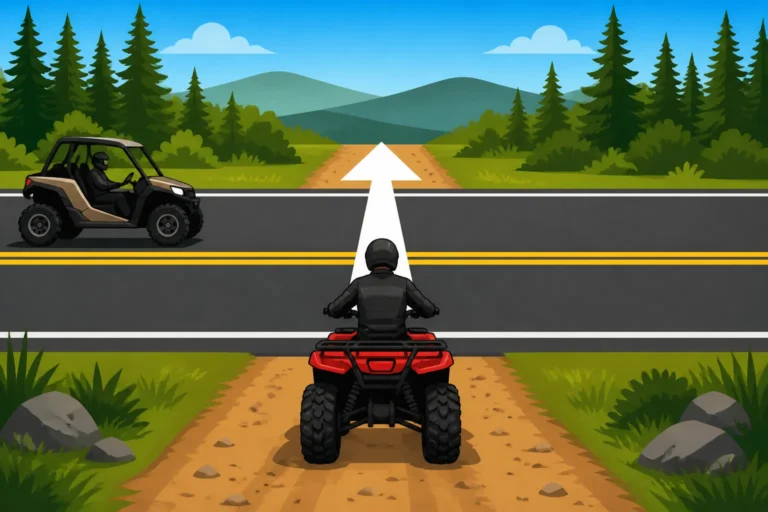
On many logging roads, especially those that aren't regularly graded, the middle of the road can often feel like the smoothest or most comfortable path. Resist this temptation, particularly when approaching or navigating blind corners. Always hug the right side of the road, even if it feels counterintuitive or if the surface isn't as pristine. This gives you the maximum possible clearance if an unseen vehicle comes around the corner on its own side of the road.
Assume there's something around every blind corner. It might be a stopped vehicle, a fallen rock, a deer, or a massive logging truck. This mindset of expecting the unexpected forces you to maintain a lower speed and higher level of alertness. By staying consistently to the right, you build a safety margin that can be the difference between a close call and a serious incident. Remember, [Oregon Rules for Riding a County Gravel Road] often imply adherence to standard traffic laws, which includes staying on your side of the road.
Essential Gear and Preparedness for Logging Road Riding
Beyond your riding technique, having the right gear and being properly prepared can significantly enhance your safety on Oregon's logging roads, especially when dealing with dust and blind corners.
Communication Devices and Emergency Preparedness
In the vast expanses of Oregon's forests, cell service can be spotty at best and nonexistent at worst. This makes reliable communication devices crucial, especially if you're riding in a group or venturing into remote areas. FRS/GMRS radios are excellent for group communication, allowing you to warn others about dust ahead, an approaching truck, or a hazard around a corner. For even greater range, particularly if you're exploring deep backcountry, consider a VHF radio (though these often require a license) or a satellite communicator like a Garmin InReach or Spot device. These devices allow you to send emergency messages even without cell service.
Always carry a comprehensive first-aid kit, and make sure at least one person in your group knows how to use it. Beyond that, pack essential emergency supplies: extra water, snacks, a survival blanket, a fire starter, and tools for minor repairs. [Keeping Paperwork in a Wet Climate] is also a good reminder to protect your permit and other vital documents from the elements. Being prepared for a breakdown or an unexpected overnight stay is just smart planning when exploring these areas.
Machine Maintenance and Pre-Ride Checks
Your machine is your lifeline on these roads, so its condition directly impacts your safety. Before every ride, conduct a thorough pre-ride inspection. Pay close attention to your brakes – ensure they are responsive and not spongy, as you'll be using them frequently to slow for corners and dust. Check your tires for proper inflation and any damage; sharp rocks and debris are common on logging roads. Proper tire pressure can also make a huge difference in handling in loose, dusty conditions.
All your lights, including headlights, taillights, and any auxiliary dust lights, must be in perfect working order. A burned-out bulb could mean the difference between being seen by a logging truck and remaining invisible. Check fluid levels (oil, coolant, brake fluid) and ensure your air filter is clean, especially if you anticipate dusty conditions – a clogged air filter can reduce performance and even damage your engine. A well-maintained machine responds predictably, which is exactly what you need when visibility is low or an obstacle appears suddenly.
Rider Comfort and Protection
Protecting yourself from the elements and potential impacts is non-negotiable. A good helmet is your most important piece of safety gear; [Oregon Helmet Law for ATV Riders] is there for a reason. Ensure it's DOT-approved and fits snugly. Goggles are essential for keeping dust, debris, and branches out of your eyes, maintaining your crucial vision. You might even consider a tear-off system or roll-offs if you anticipate extremely dusty conditions or mud.
A dust mask or bandana worn over your mouth and nose can make a huge difference in comfort and lung health, especially after a long day of inhaling fine particles. Sturdy riding gear, including long pants, a long-sleeved shirt or jacket, and gloves, protects your skin from scrapes, sun, and flying debris. Remember, riding in an environment with dust and blind corners increases the chances of unexpected events, so being fully protected is paramount. [Oregon Rules for a Loud Exhaust] are also important to be mindful of, not just for regulations, but for not annoying other users or startling wildlife.
Safety Measures for Dust and Blind Corners
| Hazard Type | Primary Risk | Key Safety Action | Essential Gear/Tip |
|---|---|---|---|
| Dust Clouds | Reduced visibility, hidden obstacles, collisions | Increase following distance, staggered formation | Headlights/taillights ON, amber dust lights, high-vis clothing, dust mask |
| Blind Corners | Head-on collisions, sudden obstacles, limited reaction time | Slow down significantly, stay right, sound horn | Horn check, two-way radio, good brakes, SuperATV mirrors (for situational awareness) |
| Active Logging | Encounters with large, fast, heavy machinery | Yield to commercial traffic, pull over and wait, assume right-of-way for log trucks | Pre-ride communication plan, satellite messenger, know the area |
Dust and blind corners on Oregon's logging roads are part of the adventure, but they demand respect and careful preparation. By understanding the risks, employing smart riding strategies, and equipping yourself properly, you can ensure that your off-road explorations remain safe, enjoyable, and filled with incredible memories, not close calls.
Disclaimer
This article is for general informational purposes only and does not constitute professional advice. Laws, prices and regulations vary by location and change over time. Consult a qualified professional for guidance on your specific situation.