Thirty Days on a Borrowed Card
Oregon’s 30-day rental safety card is tied to the rider, not borrowed between people; machine permits and rental checklists are separate.
Your sticker stops at the state line.
Non-resident permits, what they cost and how long they last, and which states honor each other’s — or, increasingly, none at all.

Oregon’s 30-day rental safety card is tied to the rider, not borrowed between people; machine permits and rental checklists are separate.

Signing an Oregon rental safety checklist provides a temporary ATV safety card, but it does not replace the machine’s operating permit or other requirements.

Oregon ATV and UTV rentals may include a temporary safety card after orientation, but confirm class, age, operator coverage, and validity before riding.
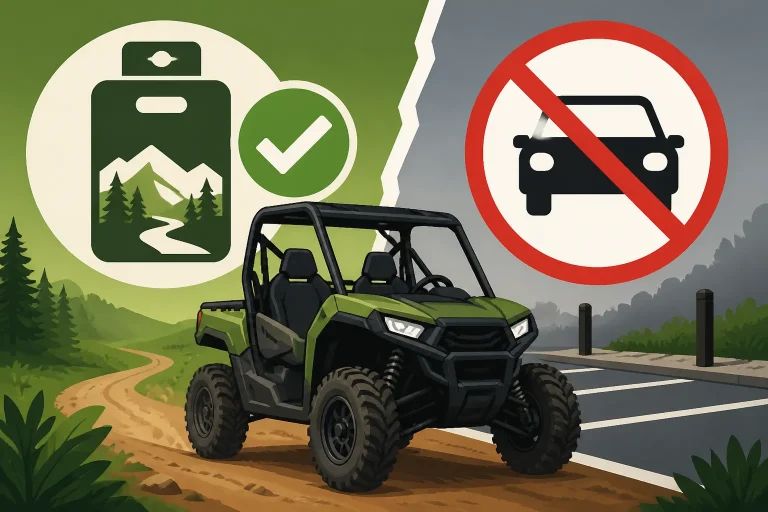
Oregon ATV permits cover machine operation, not every parking lot or staging area; check local day-use fees and pass rules before unloading.
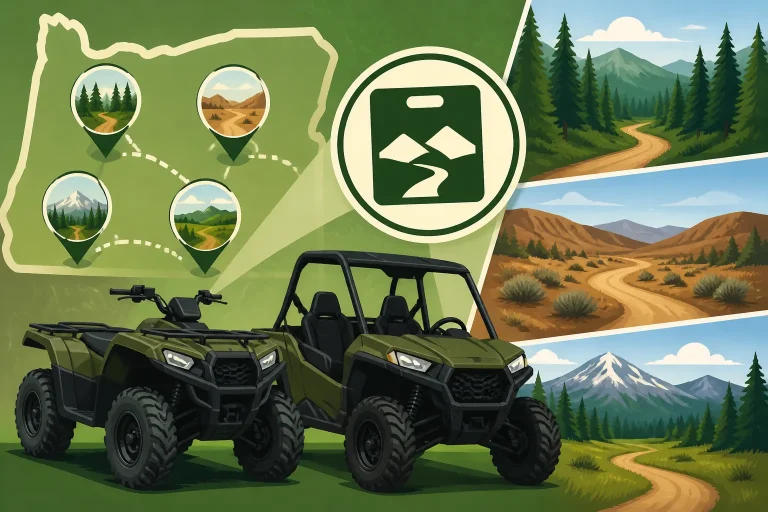
Oregon ATV and UTV riders can use some multi-site passes for parking, but they do not replace OHV permits or cover every riding site.
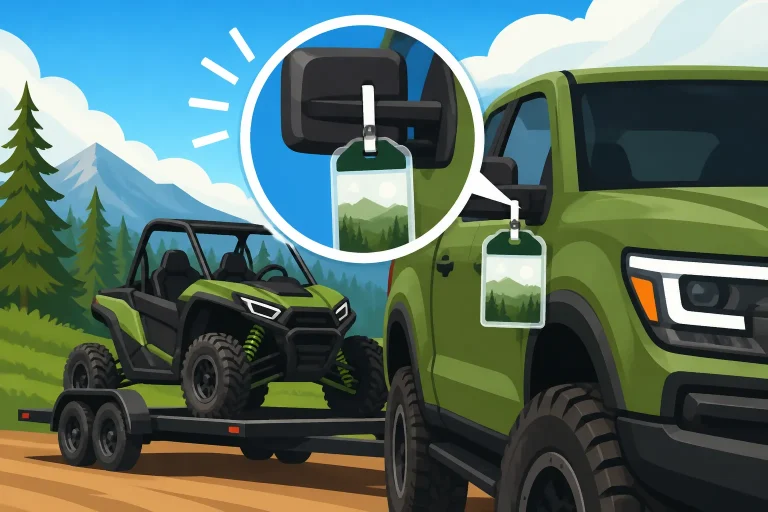
Displaying a day-use pass on an Oregon ATV tow rig: where to place it, what to verify at the staging area, and why parking fees differ from OHV permits.

Oregon staging-area fees cover site access and parking, remaining separate from ATV permits, camping charges, and day-use payments.

A Northwest Forest Pass or federal recreation pass may cover eligible Oregon coastal dune day-use fees, but it never replaces an ATV operating permit.

Buying an Oregon ATV permit can remove the need to track reciprocity days, but visitors should check machine class, decal rules, and day-use fees.

Riding Oregon all summer on an out-of-state registration depends on reciprocity, the 60-day limit, your machine, and separate site fees.