Displaying a Day-Use Pass on Your Tow Rig
A day-use pass can be easy to overlook when you arrive at an Oregon riding area with a trailer, an ATV or UTV, and a full load of gear. Displaying it on the tow rig is often the clearest way to show that the parked vehicle has paid, but the right location depends on the site’s instructions and the kind of pass you bought.
Put the pass where it can be checked
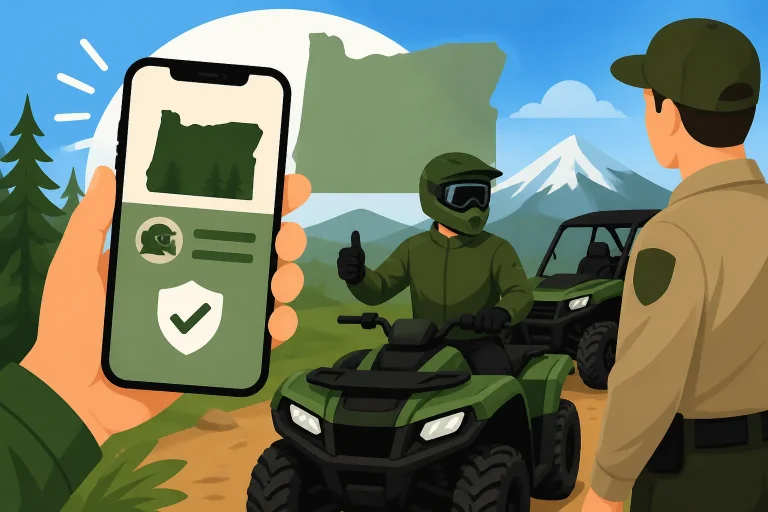
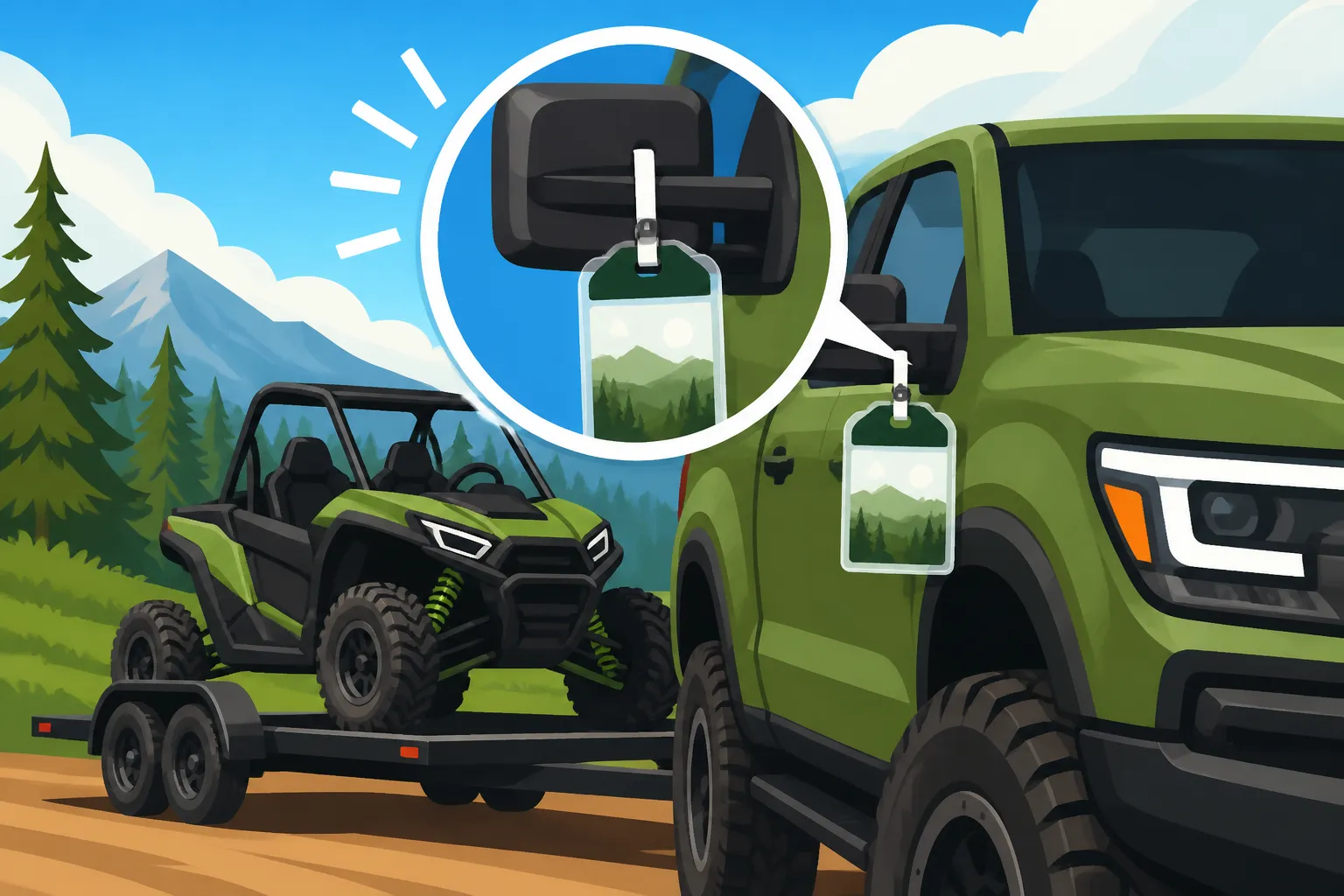
At a fee-managed staging area, the tow rig is usually the practical place to display a day-use pass: it is the vehicle left in the parking area while the ATV or UTV is unloaded and used on the riding area. If the site requires a visible paper pass, place it inside the tow vehicle where an attendant or ranger can see it without opening a door.
A common spot is the dashboard near the windshield. Set the pass flat and make sure it faces outward. Keep the date, site information, or other required details visible. Avoid covering the pass with a phone mount, sunshade, papers, or anything that makes it hard to read. If the instructions specify a different location, follow them instead.
The key is not simply to have proof of payment somewhere in the vehicle. A pass tucked in a glove box may be difficult to verify during a parking check. Likewise, a pass left on the ATV may be out of view once the machine is unloaded, or it may not be clear which parked vehicle the pass covers. Keep the pass in the vehicle that remains at the staging area unless the site’s rules say otherwise.
A few situations call for extra care:
- The tow rig has a tinted windshield or dashboard cover. Use a spot where the pass remains visible from outside. Do not place it where tint, glare, or a dashboard mat hides important details.
- The vehicle has no windshield. Check the posted instructions before attaching a pass outside. Do not assume a pass can be secured to a mirror, roll bar, or wiper.
- You are towing more than one machine. Do not assume that one pass covers every vehicle, trailer, or rider in the group. Confirm what the fee applies to at the kiosk or with the site manager.
- You bought the pass electronically. Check whether the site accepts a digital confirmation as proof or requires a printed pass or other display. A confirmation email on a phone is not automatically a substitute for a visible parking pass.
- You paid at a kiosk. Read the receipt and the nearby signs before leaving the parking area. Some systems provide a paper display item; others may use a different way to verify payment.
A clean, transparent sleeve can help keep a paper pass flat and legible on a wet or dusty day. If you use one, make sure it does not cover any part of the pass and does not cause glare. A basic clear document sleeve from Amazon may be useful for keeping a receipt dry, but it does not replace the site’s display instructions. Avoid relying on a loose receipt that can blow away when a door opens.
Confirm what kind of pass the site requires
Oregon riding areas can have different land managers, fee systems, and parking arrangements. A pass that works at one location may not be accepted at another, and a permit for operating an ATV is not the same thing as a day-use parking pass.
Before leaving home, check the rules for the particular staging area you plan to use. Start with Oregon Day Use Fees Explained and, for coastal riding, confirm whether the site has its own fee or accepts a broader pass. The Northwest Forest Pass and Oregon Sites covers a different kind of pass question: do not assume that a pass valid at one recreation site automatically covers every OHV staging area.
At the site, signs and payment instructions are the most useful final check. Look for information at the entrance, fee station, kiosk, or parking area. If the instructions say to display a pass in the vehicle, follow that direction even if you have paid online. If the sign describes a different proof-of-payment process, use that process rather than improvising.
| What you have | What it generally does | What to check before riding |
|---|---|---|
| Day-use pass or fee receipt | Shows payment for access or parking where that fee applies | Which vehicle or site it covers, and where it must be displayed |
| Oregon ATV operating permit | Applies to the OHV under Oregon’s permit rules | Whether the machine has the required permit and decal |
| Out-of-state permit or registration | May qualify under Oregon’s reciprocity rules in some circumstances | Whether your home-state credential is accepted for this trip |
| Northwest Forest Pass or similar recreation pass | May cover access or parking at certain recreation sites | Whether the exact staging area accepts it |
| Online payment confirmation | Records a transaction | Whether the site accepts the confirmation as visible proof |
The distinctions matter because buying the correct item for your machine does not necessarily pay for the place where you park the tow rig. Conversely, paying a staging-area fee does not satisfy the operating-permit rules for the ATV or UTV. For the machine’s requirements, see [Oregon ATV Permits Explained]. For the difference between riding permits and site charges, Why the Permit Does Not Cover Parking is also useful.
If you are unsure whether the fee is per vehicle, per day, or tied to a particular parking area, do not infer the answer from another rider’s pass. Read the current posted terms or ask at the payment point. Fee rules and accepted passes can vary by location and may change. Check the managing agency’s current information before the trip, especially if you are visiting a less familiar site.
Set up the tow rig before unloading
A little preparation makes the pass easier to display and prevents a hurried search after you have backed the trailer into a busy staging area. Keep any pass, printed confirmation, and payment details in one accessible place. A glove box folder or a small waterproof pouch works well for paperwork, but move the display copy to the required visible location after parking.
A simple arrival routine can help:
- Read the entrance signs before parking. Note whether payment is required, where to pay, and where proof should be displayed.
- Pay using the method the site accepts. Keep the receipt or confirmation until you have checked the display instructions.
- Place the pass in the tow rig if the site calls for a vehicle display. Use a visible, secure location, usually inside the windshield when the instructions allow it.
- Check it from outside. Make sure the information is readable and the pass is not hidden by glare, a sunshade, or other items.
- Keep a backup record. A photo or digital receipt can help you remember the purchase details, but use it only as backup unless the site specifically accepts it as proof.
- Secure the paperwork before driving away. Remove or retain the pass according to the site’s terms, and do not leave personal information exposed.
This routine is especially useful when a group arrives in separate vehicles. Decide which vehicle will display which proof before riders unload. If several tow rigs are parked, do not spread paperwork among the machines and assume a ranger will connect it to the right vehicle. Ask the fee station how the payment applies to the group.
Some sites use self-service payment, which means the posted directions may be the only immediate guidance available. Take a moment to read all of them. Keep the receipt accessible while you do, and do not leave the vehicle unattended with a door open or paperwork blowing around. If the instructions are unclear, contact the site manager or use another authorized payment method rather than guessing.
You can also plan the stop by checking Oregon Dunes Staging Areas From North to South or Paying the Day Use Fee at a Staging Area. These details can help you identify a fee station before you arrive, but still follow the instructions posted at the specific lot you use.
Avoid common display and payment mistakes
The most frequent problem is confusing an OHV permit with a day-use pass. Oregon’s operating permit and the decal on the machine address a different requirement from a fee charged for access or parking at a recreation site. Keep both obligations in mind: the vehicle may need its own visible parking proof while the ATV or UTV needs its required permit and decal.
Another mistake is treating a payment receipt as universally transferable. A receipt may be tied to a particular location, date, vehicle, or payment system. Do not move it to a different tow rig or assume it covers a second parking space unless the pass terms say it does. When in doubt, ask before relying on it.
A few other avoidable snags:
- Putting the pass on the trailer rather than the tow vehicle. A trailer can be detached, moved, or parked separately. Use the location specified by the site, and do not assume the trailer is the correct display point.
- Leaving the pass in the cab but out of view. Having proof available if asked is not the same as displaying it when the rules require visible proof.
- Relying on a phone screen without checking acceptance. A low battery, poor reception, or a site rule requiring a physical display can leave you without usable proof.
- Using a pass from another recreation area. Similar-looking passes can have different coverage. Verify the exact site and day.
- Forgetting the pass after unloading. Make a final check from outside the tow rig before walking away.
- Assuming a fee is included with an ATV permit. They serve different purposes. Review Oregon Day Use Fees Explained and the current permit rules separately.
If the pass is lost, damaged, or becomes unreadable, do not make a substitute from a screenshot or handwritten note unless the site expressly allows it. Return to the kiosk or contact the site manager for instructions. Keep a record of the payment transaction where possible, but remember that a record of payment may not satisfy a display requirement on its own.
Before driving away, gather the pass and any paperwork that should not be left in the vehicle. If the pass is valid for a period rather than a single visit, follow its terms for future use and check whether it must be displayed again at each location. When a site’s rules are not clear, the safest approach is to ask the managing agency before relying on a particular pass or display method.
Disclaimer
This article is for general informational purposes only and does not constitute professional advice. Laws, prices and regulations vary by location and change over time. Consult a qualified professional for guidance on your specific situation.