Where to Park a Trailer at a Staging Lot
Arriving at an Oregon OHV area with a truck, trailer, and a full day of riding ahead can turn frustrating fast if the lot is crowded or the parking layout is unclear. This guide explains how to choose a trailer space, unload without blocking others, and plan for different staging areas, from coastal dunes to forest trails.
Before You Leave, Check the Staging Area
Confirm the lot is open and suitable for your rig
A staging area is not automatically a good place to park every trailer. Lots differ in size, surface, layout, and the kinds of vehicles they can accommodate. A compact utility trailer may fit comfortably where a long enclosed trailer with a tow vehicle will feel cramped. Some lots also have distinct areas for day-use parking, unloading, or overnight camping, and those areas are not interchangeable.
Before you set out, check the current information provided by the land manager or site operator. Look for access restrictions, closures, parking directions, seasonal conditions, and any separate day-use or camping requirements. A map app can help you find the approach road, but it may not tell you whether the staging lot is open or whether parking is allowed overnight.
This is especially important if you are riding somewhere like the Oregon Dunes, where the route to a staging area and the parking rules at that location are part of the day’s plan. Read Oregon Dunes Staging Areas From North to South before choosing a launch point, and check the specific area information for the lot you intend to use.
Check the approach, not just the destination
A staging lot that looks roomy on a map can still be difficult to reach with a trailer. Narrow roads, sharp turns, loose gravel, steep grades, and limited places to pull over can make the final approach stressful. If you are towing a wide or long rig, review the route before you go and consider whether there is enough room to turn around if the lot is full.
Navigation tools, including onX Offroad, can help you review access roads and nearby riding areas before leaving home. Treat the mapped route as a planning aid rather than permission to travel on every road shown. Road ownership, seasonal closures, gates, and local restrictions can affect whether a route is usable. Check posted signs and land-manager notices as you travel.
If you are unfamiliar with the area, plan a backup staging location before you start towing. This is better than reaching a full lot and trying to improvise on a narrow road shoulder. For trail systems where road access and parking rules can be confusing, Oregon Trail Maps Worth Carrying is a useful related topic to review.
Understand parking and day-use requirements
Parking a trailer does not necessarily include permission to ride, camp, or stay overnight. The land manager may require a separate pass or fee, and the rules can differ by site. A day-use requirement may apply to the tow vehicle, the trailer, or both, so read the instructions rather than assuming that a permit for the machine covers the parking area.
At coastal locations, also distinguish between the OHV operating permit and site-access or parking requirements. These are separate questions. Oregon Day Use Fees Explained and Why the Permit Does Not Cover Parking explain why having the right riding permit does not always settle the parking question.
| Before the trip | What to verify | Why it matters |
|---|---|---|
| Staging lot access | Open status, seasonal restrictions, and posted closures | Avoid arriving at a closed or restricted site |
| Trailer fit | Lot layout, turning room, and space for the tow vehicle | Reduce the chance of being boxed in |
| Parking rules | Day use, overnight parking, and camping restrictions | Prevent an avoidable citation or move |
| Riding access | Which trails or riding areas connect to the lot | Make sure the location suits your machine and plan |
| Site fees | Whether parking or day use has a separate requirement | A machine permit may not cover site access |
| Backup plan | Another suitable staging area and route | Give yourself an option if the first lot is full |
Choosing a Trailer Space When You Arrive
Follow the layout and leave room for others
When you pull into a staging lot, pause long enough to read signs and understand the traffic pattern. Follow any marked lanes, designated trailer rows, unloading areas, or one-way arrows. If staff or volunteers are directing traffic, follow their instructions even if another spot looks more convenient.
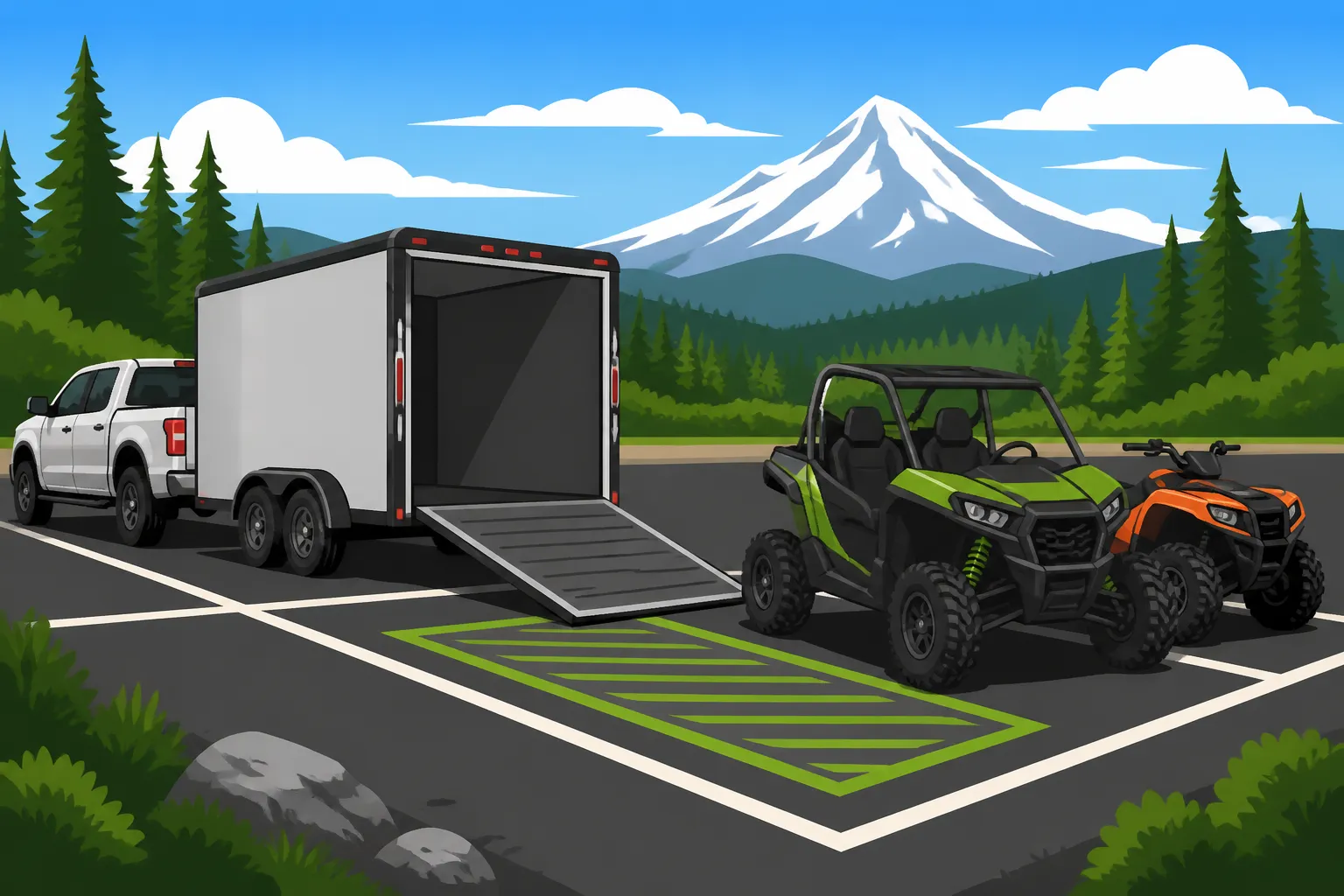
Choose a space that lets you park the entire combination—tow vehicle and trailer—without extending into a travel lane, blocking an access point, or taking up an unloading area you are not using. Avoid parking across several spaces simply because the lot is busy. A little patience while you identify a suitable space is usually less stressful than trying to reposition a long trailer after other rigs have parked around it.
Keep in mind that a spot that seems empty may be reserved, signed for a particular use, or needed to keep emergency access clear. Never assume an unmarked roadside shoulder is an overflow lot. If the staging area is full, move to a recognized alternative rather than creating a new parking area on vegetation, soft sand, or private land.
Think through your exit before you unhitch
Before unhitching, consider how you will leave. Can you pull forward when it is time to go, or will you need to back out between other trailers? Is the ground level and firm enough for the trailer jack? Is there enough space to open doors, load gear, and walk around the rig without stepping into the main traffic lane?
These small checks matter most when the lot is crowded or the trailer is long. A driver who backs into a tight spot may not have enough room to hitch up again once neighboring rigs arrive. If you can choose between a snug space that points toward an easy exit and a more convenient-looking spot that will require a complicated turn, the first option is usually the calmer choice.
At a busy location such as Spinreel, Hauser, or South Jetty, the pattern of incoming and departing vehicles can change through the day. Avoid leaving your rig in a position that relies on other drivers moving their machines or trailers before you can get out. For more background on individual coastal launch areas, see Riding Out of Spinreel Staging and Hauser Staging on a Busy Weekend.
Leave access lanes and unloading zones clear
Staging lots are shared workspaces, not just places to store trailers. Riders may be unloading machines, loading gear, checking tires, helping children get ready, or maneuvering a vehicle through a narrow lane. A trailer parked across a travel route can create a bottleneck for everyone, especially when several rigs arrive together.
Keep ramps, tie-downs, fuel containers, and loose gear within your own parking space. Do not leave a machine or trailer unattended in a marked unloading area while you take a long ride, unless the site instructions specifically allow that arrangement. If you need extra room to unload, look for a designated area or wait until the space is clear rather than setting up in the lane.
Be especially considerate of larger rigs and visitors who are still learning how to back a trailer. Give them room to maneuver, and avoid walking behind a moving tow vehicle. A calm, predictable lot is safer for children and riders on foot as well as drivers.
Unloading, Securing, and Leaving Your Trailer
Set up without spreading into neighboring spaces
Once parked, keep your setup compact. Lower ramps only when you are ready to unload, and check that they will not extend into a traffic lane or another person’s parking space. Load and unload on stable ground, and keep people clear of the area behind the trailer while a machine is moving.
Before riding away, secure anything that could blow away, roll into a lane, or attract unwanted attention. Put tools and riding gear inside the vehicle or trailer, close storage compartments, and remove items you do not want exposed. If you carry fuel, follow the site’s rules and transport it safely; do not leave fuel containers where they can be knocked over or exposed to unnecessary heat.
It is also worth taking a quick photo of your parking position and nearby landmarks. Large staging lots can look remarkably similar after a ride, especially when dust, fog, or low light changes the view. A photo of a row marker, sign, or nearby trailhead can save you from wandering around looking for your truck at the end of a long day.
Secure the trailer and keep valuables out of sight
If you are leaving the trailer in the lot while riding, make sure it is properly connected or secured according to your setup. Locking a coupler or using a wheel lock can make casual movement more difficult, though no lock replaces sensible site choice and keeping valuables out of view. Do not leave important documents, keys, or expensive equipment in an obvious location.
Keep the parking area tidy. Pick up straps, packaging, food waste, and anything else you brought with you. Leaving the lot clean is a basic courtesy to the next group and helps prevent trash from blowing into nearby habitat or trails.
For longer trips, store permits and ownership papers where they are protected from rain and sand but still accessible if needed. A sealed pouch or dry bag inside the tow vehicle is more practical than leaving paperwork on a dashboard. Keeping Paperwork in a Wet Climate offers additional ideas for protecting documents on Oregon rides.
Recheck local conditions before heading out
Conditions can change after you park. Wind can move loose gear, rain can make a soft surface difficult for a loaded rig, and a temporary closure can affect the route back to the highway. Before leaving the trailer for a long ride, check that your machine is allowed in the area and that you have a clear plan for returning to the same lot.
For unfamiliar trail networks, onX Offroad can help you review nearby routes and understand how the staging area connects to the riding area. Compare the app’s information with posted maps and signs at the site. Do not assume that a line on a digital map overrides a gate, closure notice, or land-manager instruction.
At the end of the ride, slow down as you approach the lot. Watch for pedestrians, riders loading machines, and vehicles backing into spaces. Give yourself room to line up with the trailer rather than trying to hitch in a crowded lane. If the setup is awkward, ask someone to spot you from a safe position instead of relying on guesswork.
Common Trailer Parking Problems and Better Alternatives
The lot is full when you arrive
A full staging lot is one of the most aggravating surprises for a towing driver: you have already navigated the access road, and turning around may be difficult. This is why it helps to identify a legitimate backup location before leaving. Confirm that the alternative is open to your vehicle and trailer, and do not assume that a nearby pullout, campground entrance, or roadside turnout is acceptable parking.
If there is no safe space, do not block the entrance while you wait for someone to leave. Move to a safe place where you are allowed to stop, then check the site information or ask a ranger or site contact for direction. Crowding the entrance can prevent other trailers, emergency vehicles, or maintenance equipment from getting through.
Popular weekends and holiday periods can bring heavier traffic, so arriving earlier may improve your options. It does not guarantee a space, however. A backup plan is more reliable than assuming the lot will have room because it did on your last visit. Oregon Riding Areas That Fill Up on Holidays can help you think about timing and crowding when choosing where to ride.
The trailer is too large for the available space
If your trailer cannot fit without blocking circulation, do not force it into a space that is clearly unsuitable. Consider whether the tow vehicle can be parked separately only if the site rules allow it and doing so will not create an additional hazard. Otherwise, use a different approved staging area that can accommodate the full rig.
This is one reason to think about trailer dimensions before choosing a riding destination. A narrow forest lot may work well for a pickup and a small open trailer but be a poor fit for a long enclosed trailer. Coastal dune lots may have different surfaces and traffic patterns again. Review access and parking details with the land manager, and use mapping tools such as onX Offroad to plan the route—not to make assumptions about the size or availability of a parking space.
If the lot is tight, arrive with a spotter who can safely guide the trailer. Agree on clear hand signals before backing, keep the spotter visible in the mirrors, and stop immediately if you lose sight of them. The goal is not to squeeze into the closest possible spot; it is to park without damaging equipment or disrupting other visitors.
You are unsure whether overnight parking is allowed
Do not treat a staging lot as overnight trailer storage unless the rules explicitly allow it. Overnight parking and camping permissions can differ from ordinary day use, and leaving a trailer after the riding area closes may create a problem even if you paid a day-use fee earlier.
Read posted signs and site information for the specific location. If the wording is unclear, contact the managing agency or site operator before leaving the rig. A nearby campground may be a better option, but confirm that it accepts trailers of your size and whether you need a reservation. Oregon OHV Campground Reservations is a useful next step when the trip includes an overnight stay.
A good trailer-parking plan is simple: confirm the lot, arrive prepared, park within the marked layout, secure your gear, and know how you will leave. That routine helps keep the staging area safer and makes the ride begin and end with less hassle.
Disclaimer
This article is for general informational purposes only and does not constitute professional advice. Laws, prices and regulations vary by location and change over time. Consult a qualified professional for guidance on your specific situation.