Oregon’s 2017 Road Access Change Explained
Before 2017, navigating Oregon's off-highway vehicle (OHV) rules, especially concerning road access, often felt like trying to solve a riddle without all the clues. Riders frequently faced the frustration of trail systems that were fantastic but fragmented, separated by paved roads that were strictly off-limits, forcing cumbersome loading and unloading or long detours. This guide will walk you through the significant changes introduced in 2017 that reshaped how ATVs and UTVs can access and utilize Oregon's road network, explaining what it means for you on the ground.
The Shifting Sands of Oregon's OHV Rules: Before 2017
For many years, Oregon's approach to ATVs and UTVs on public roads was, to put it mildly, restrictive. If you owned a quad or a side-by-side, your primary domain was strictly off-road areas – think designated OHV parks, sprawling dune complexes, or specific forest trails. The idea of riding your machine from a campground directly to a trailhead via a paved county road was often just a pipe dream, or worse, a quick path to a citation.
A Landscape of Limited Access
Prior to the 2017 changes, Oregon law largely treated ATVs and UTVs as off-road machines, full stop. The assumption was that if it wasn't a street-legal vehicle from the factory, it belonged exclusively off the pavement. There were some very narrow exceptions, such as crossing a highway at a ninety-degree angle after coming to a complete stop, or very limited agricultural uses on specific farm roads. But these were exceptions that proved the rule: public roads, especially paved ones, were largely no-go zones for most OHVs. This often meant a lot of extra effort for riders, requiring them to trailer their machines even for short hops between off-road sections. Imagine the hassle of unstrapping your rig from your truck, riding a mile down a dirt track, and then having to load it back up just to cross a paved road to reach the next section of trail. It was a major headache for many.
The Frustration of Disconnected Trails
This limited road access created significant challenges for the riding community. Trail systems, particularly in the vast national forests and BLM lands, are often bisected by county roads or state highways. Riders would be deep in a fantastic network of trails, only to hit a paved section and be forced to turn around, find an alternative, or trailer their machine to the next entry point. This wasn't just inconvenient; it limited the scope of epic rides, made multi-day trips more difficult to plan, and generally chipped away at the seamless experience that off-road enthusiasts crave. You might have had a route planned that would take you through some stunning backcountry, but if a mile of county gravel road connected two otherwise fantastic sections, that mile became an impassable barrier for your OHV. It was a common complaint echoing around campfires and staging areas across the state.
What Exactly Changed in 2017? Understanding the Legislation
The year 2017 marked a pivotal moment for OHV riders in Oregon. After years of advocacy from riding groups and a clear understanding that the previous laws were stifling responsible recreational access, the state legislature passed a significant bill that began to open up new possibilities for legal road use. It wasn't a free-for-all, but rather a carefully considered step towards integrating OHVs into specific parts of the state's transportation network.
Opening the Door Slightly to Road Use
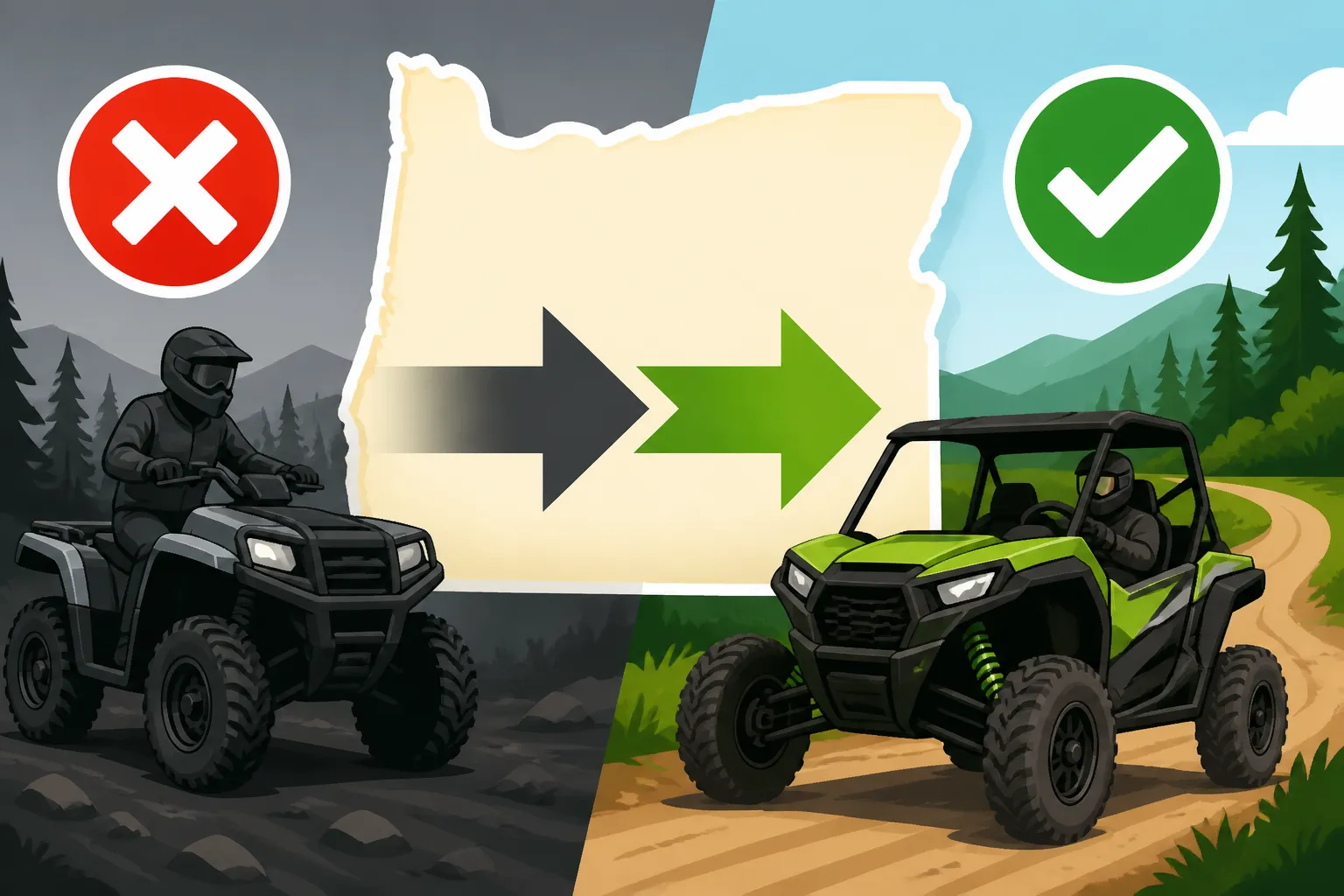
The core of the 2017 changes revolved around amending Oregon Revised Statutes (ORS) to provide a framework for allowing certain types of OHVs, specifically Class I (quads under 50 inches wide) and Class IV (side-by-sides), to operate on designated public roads. Before this, only Class II vehicles – typically those that met federal motor vehicle safety standards and were titled and registered for highway use – had any real path to street legality. The 2017 legislation acknowledged the growing popularity of Class I and IV machines and the need for more flexible access to riding areas. It basically said, "Hey, these machines are here to stay, and we need to figure out how to let them connect the dots." The change was a direct response to the fragmented trail experience and aimed to enhance the overall enjoyment and accessibility of Oregon's natural landscapes for OHV enthusiasts.
The Role of Counties and the State
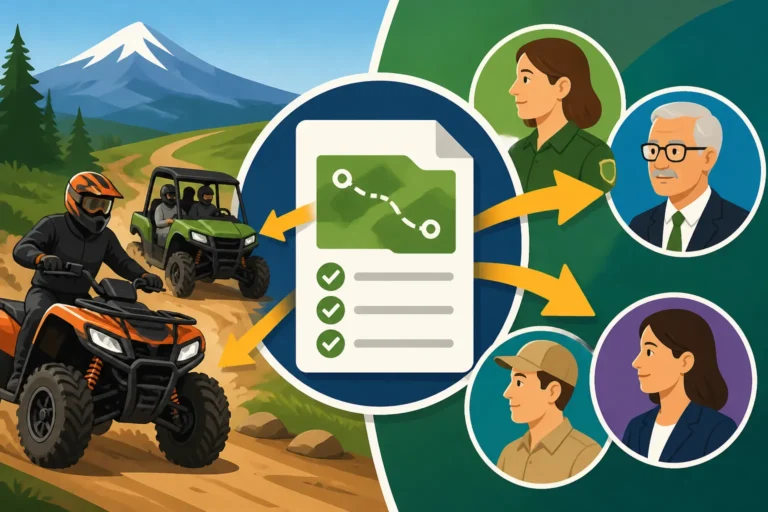
Crucially, the 2017 changes didn't just throw open all county roads to OHVs. Instead, they empowered individual counties, and the State Parks and Recreation Department (OPRD), to designate specific roads or routes where Class I and IV OHVs could legally operate. This "local control" approach meant that each county could assess its unique needs, traffic patterns, and local concerns before making a decision. This was a smart move, recognizing that what works in a rural, sparsely populated Eastern Oregon county might not be appropriate for a densely populated area in the Willamette Valley. The [The Oregon Parks and Recreation Department's Role] then became one of overseeing this process and setting statewide guidelines, while also managing the development of official [Oregon's Only Two Designated ATV Routes: Lakeside and Sumpter]. It was a collaborative effort, involving state agencies, local governments, and the OHV community, all working to create manageable and safe access.
Distinguishing Between OHVs: Not All Machines Are Equal
It's vital to remember that the 2017 changes didn't apply uniformly to all off-highway vehicles, nor did they suddenly make every quad or side-by-side street-legal. The legislation focused primarily on Class I ATVs (quads) and Class IV ATVs (side-by-sides, or UTVs, typically under 75 inches wide). These are the machines most commonly used for recreation on trails and dunes. Class III off-road motorcycles (dirt bikes) were already treated a bit differently, often having more access to certain types of unpaved roads and singletrack trails. And Class II vehicles, which are more akin to traditional automobiles and can be made fully street-legal, operated under their own distinct set of rules, which already allowed them on highways if properly equipped and registered. The 2017 changes specifically targeted the recreational machines that had previously been confined strictly to off-road environments, creating a pathway for them to legally connect segments of their rides on designated public roads.
Identifying Designated Highway Access Routes and County Roads
With the 2017 changes, understanding where you can and cannot ride on roads became paramount. It's not a free-for-all, but rather a system of designated routes and county-level decisions. This means you can't just assume any gravel or paved road is open to your OHV; you need to do your homework.
The "Designated Route" Concept
The most significant outcome of the 2017 legislation was the establishment of "designated highway access routes." These are specific, clearly marked routes, approved by the Oregon Transportation Commission and managed by the Oregon Parks and Recreation Department, where Class I and IV OHVs can legally operate. As of now, Oregon has two primary examples of these: [Oregon's Only Two Designated ATV Routes: Lakeside and Sumpter].
For instance, [Riding an ATV Through Lakeside] allows riders to navigate through the small town of Lakeside, connecting the northern and southern parts of the Oregon Dunes National Recreation Area without having to trailer their machines. This means you can ride from your camp, stop for gas or a burger in town, and then continue your adventure on the dunes. Similarly, [Riding an ATV Through Sumpter] provides critical connections in the Eastern Oregon high desert, allowing access between trailheads and services. These routes are a game-changer for regional riding experiences, providing a seamless flow that was impossible before. You'll typically find clear signage indicating where these routes begin and end, so keeping an eye out for those green OHV route signs is key.
County Ordinances and Local Decisions
Beyond the state-designated routes, the 2017 law also empowered individual counties to open their own roads to OHV use. This is where things can get a bit more localized and require more specific research on your part. A county might pass an ordinance that designates certain gravel roads or even some paved roads within its jurisdiction as open to Class I and IV OHVs.
The specifics of these county ordinances vary widely. Some counties might open a few key connector roads, while others might take a more expansive approach, particularly in areas with a strong OHV tourism economy. You'll need to check with the county sheriff's office or the county government website for the most up-to-date information on their local OHV road access policies. This decentralized approach ensures that each county can tailor its rules to its unique geography and community needs. For example, a rural county like Grant County, known for its vast expanses of public land and robust timber industry, might have a much different set of open roads than a coastal county with more residential areas. Always verify the rules for the specific county you plan to ride in, as an open road in one county might be off-limits just across the county line.
Forest Service and BLM Roads: A Separate Category
It's important to differentiate between roads designated by the state or counties, and the roads managed by federal agencies like the U.S. Forest Service or the Bureau of Land Management (BLM). These federal lands have their own complex web of regulations that existed largely independently of the 2017 state changes. Generally, many unpaved Forest Service and BLM roads were already open to OHV use, as long as the machine had a valid [Oregon's ATV Operating Permit] and the operator had an [Oregon's ATV Safety Education Card].
However, even on federal lands, not all roads are created equal. Some roads may be seasonally closed, others might be limited to licensed vehicles only, and some may have specific restrictions based on their classification or purpose. The 2017 state changes primarily addressed access to state and county-maintained roads, not federal roads, though they certainly complement each other. So, when planning a ride on federal land, it's always best to consult the specific motor vehicle use maps (MVUMs) provided by the local Forest Service district or BLM field office. These maps are the definitive guide for [Oregon Rules for Riding a Forest Road] and other federal roads, clearly indicating what is open, what is closed, and what restrictions apply.
Practical Implications for Riders: What You Need to Know Now
With these new road access opportunities, comes the responsibility to understand and comply with the specific requirements. The goal is to integrate OHVs safely into the road network, which means more than just having an open route.
The Mandatory Permit and Safety Card
Regardless of whether you're on a designated highway access route, a county road, or a federal trail, two things are non-negotiable for riding an OHV in Oregon: you need an [Oregon's ATV Operating Permit] and an [Oregon's ATV Safety Education Card]. The permit, a decal you affix to your machine, signifies that you've paid your fair share towards maintaining the state's OHV program. It's valid for two years and is required for virtually all OHV riding on public lands in Oregon.
The safety card is equally crucial. It proves you've completed an approved safety course, ensuring you have a basic understanding of safe riding practices and the rules of the trail and road. While the card is mandatory for all riders, regardless of age, there are some nuances, such as exemptions for those holding a valid driver's license when operating specific types of machines or within certain contexts. Always carry proof of both your permit and safety card when riding, as law enforcement or park rangers can and will ask to see them.
Equipment Requirements for Road Use
Just because a road is open to OHVs doesn't mean you can roll out of the dunes and onto the pavement without the right gear on your machine. For any OHV operating on a public road in Oregon, whether a designated route or a county road, specific equipment requirements generally apply. These often mirror what you'd expect for any road-legal vehicle, though with some OHV-specific considerations.
You'll need functional headlights and taillights, turn signals, at least one rearview mirror (often two are recommended for better visibility), and a horn. Your tires must be DOT-approved, and you'll need a spark arrester on your exhaust system to prevent wildfires. Many riders who plan to use these road access routes regularly invest in aftermarket kits to bring their machines up to spec. Companies like SuperATV offer a wide range of accessories, from turn signal kits to mirrors and horn setups, specifically designed for ATVs and UTVs to meet these types of requirements. This ensures your machine is not only visible but also capable of signaling its intentions to other traffic, a critical safety measure when sharing the road with cars and trucks.
Insurance and Licensing for Road-Legal Machines
This is where things can get a little more complex, especially concerning Class II vehicles versus Class I and IV. If you have a true [Oregon's Class II Under ORS 801.193] machine – something like an older military surplus vehicle, a large dune buggy, or a purpose-built overland rig that meets highway standards – it can be fully titled and registered for highway use, much like a car. For these machines, mandatory liability insurance is required, just as it would be for any other street-legal vehicle.
However, for Class I and IV ATVs that are using designated routes or county roads under the 2017 access changes, the situation is different. They are operating under a special exemption that allows them on specific roads, but it doesn't transform them into fully street-legal vehicles in the traditional sense. Generally, while you'll need a valid driver's license to operate any OHV on a public road, these Class I and IV machines typically do not require the same mandatory liability insurance as a Class II machine, unless specified by a particular county ordinance. It's always a good idea to check your personal insurance policy to see if it offers any coverage for OHV operation on public roads, even if it's not legally mandated, as incidents can still happen. The distinction is crucial: these are "road-permitted" machines, not "street-legal" machines in the broadest sense. Always check [Oregon Insurance Requirements for Class II] for a comprehensive understanding of what's mandated.
Navigating the Nuances: When and Where You Can Ride
The key to successfully enjoying Oregon's expanded road access for OHVs is diligent research and understanding the nuances. Just because a county opens some roads doesn't mean all roads are fair game.
Here's a breakdown of scenarios:
- Designated Highway Access Routes: These are clearly signed, often with green "OHV Route" markers. [Riding an ATV Through Lakeside] means you stick to the marked route through town, not just any street in Lakeside. You're expected to follow all traffic laws, including speed limits, stop signs, and yielding rules.
- County-Designated Roads: These will be specified by county ordinance. You might find signs, or you might need to carry a copy of the county's map or ordinance. A county might open gravel roads but keep paved roads closed. Or they might open only specific sections of a road. Always assume a road is closed unless you have explicit confirmation it's open. For example, if you're riding in Union County, you'll want to check their specific ordinances to see which roads are open, which might differ from a neighboring county.
- Federal Roads (Forest Service/BLM): These are usually unpaved. Check the MVUMs for the specific area you're in. Many are open to OHVs with a permit and safety card, but some are restricted to highway-legal vehicles only, or may have seasonal closures. These roads, while often used to connect trails, operate under a different set of rules than state or county roads.
- Crossing a Highway: Even with the new rules, crossing a state highway at a right angle, after a full stop, and yielding to traffic, is still often the primary way to get across major thoroughfares if a designated route isn't available. You cannot just ride down a state highway unless it's part of a specifically designated route.
Think of it this way: you are granted specific privileges on specific roads, not a blanket license to roam. Always ride defensively, wear your helmet (mandatory for all riders under 18, and highly recommended for everyone else!), and be aware of other vehicles.
| Road Type | Pre-2017 OHV Access | Post-2017 OHV Access (Class I & IV) | Key Requirements (Post-2017) |
|---|---|---|---|
| State Highways | Limited: 90-degree crossings only, no riding on roadway. | Limited: Only on officially designated "Highway Access Routes" (e.g., Lakeside, Sumpter). Otherwise, 90-degree crossings only. | OHV Permit, Safety Card, Driver's License, Road-legal equipment (lights, turn signals, mirror, horn). |
| County Roads (Paved/Gravel) | Generally closed, except for limited agricultural use. | Open only if designated by specific county ordinance. | OHV Permit, Safety Card, Driver's License, Road-legal equipment (lights, turn signals, mirror, horn). Check county specifics. |
| Forest Service/BLM Roads (Unpaved) | Often open with OHV permit. | Remains similar: Often open with OHV permit. | OHV Permit, Safety Card. Driver's License may be required for some roads. Consult MVUMs. Spark arrester mandatory. |
| Private Roads | Requires owner permission. | Requires owner permission. | Permission from landowner. |
| Off-Road Trails/OHV Parks | Open with OHV permit. | Remains similar: Open with OHV permit. | OHV Permit, Safety Card. Helmets (under 18), spark arrester, sound limits. |
The Ongoing Evolution: Beyond 2017 and Future Outlook
While 2017 brought about monumental changes, the landscape of OHV road access in Oregon is not static. It continues to evolve, shaped by ongoing discussions, new proposals, and a constant effort to balance recreational opportunities with public safety and environmental stewardship.
The OHV Advisory Committee's Role
A key player in this ongoing evolution is the Off-Highway Vehicle Advisory Committee, often simply called the OHV Committee. This group, made up of volunteers representing various aspects of the OHV community, landowners, law enforcement, and environmental interests, plays a crucial role in advising the Oregon Parks and Recreation Department. They review potential new designated routes, discuss changes to existing rules, and provide valuable input on grant programs that fund OHV facilities and law enforcement. If a community or county proposes a new road access route, it often goes through this committee for initial review and recommendation. Understanding [Who Sits on Oregon's OHV Advisory Committee] gives you insight into the diverse perspectives that shape these important decisions. Their work is vital to ensuring that the needs of riders are considered while also protecting the state's natural resources and the interests of other stakeholders. This means that if you're hoping for more areas to open up, these are the folks who help make it happen.
Challenges and Opportunities for Expansion
The expansion of OHV road access isn't without its challenges. Concerns about noise, dust, increased traffic, and potential environmental impacts are always part of the discussion. Local communities may have reservations, and finding suitable routes that minimize conflict with residents or sensitive wildlife habitats requires careful planning. For instance, the expansion of road access for OHVs needs to consider the impact on areas with species like the coastal marten or snowy plover, which are protected.
However, the opportunities are also significant. Increased road access can boost local economies by making OHV areas more accessible to tourists and recreational riders, who then spend money on gas, food, and lodging. It can also improve trail connectivity, allowing for longer, more varied rides and reducing the need for trailering. The success of routes like those in Lakeside and Sumpter provides a template for future expansion, demonstrating that with proper planning and community engagement, OHV road access can be a win-win. As new roads are proposed, for example, aftermarket companies like SuperATV continue to innovate, providing products that help riders meet road-legal requirements, from improved lighting to safer seating, further enhancing the viability of these machines on shared roadways.
Staying Informed: Your Responsibility as a Rider
Given the dynamic nature of these regulations, remaining informed is perhaps the most important responsibility of any OHV rider in Oregon. The rules can change, new routes can be designated, and existing ones might be modified or even closed due to various factors like environmental concerns, safety issues, or community feedback.
Don't rely on outdated maps or hearsay from friends. Always check official sources before you ride. This means:
- Oregon Parks and Recreation Department (OPRD) Website: This is your go-to for statewide permit information, safety card requirements, and details on official designated highway access routes.
- County Websites: If you plan to ride on county roads, check the specific county's government website for their OHV ordinances and maps of open roads.
- Federal Agency Websites: For riding on Forest Service or BLM lands, download and consult the most current Motor Vehicle Use Maps (MVUMs) for that specific district.
- Local OHV Clubs and Organizations: These groups are often on the front lines of advocacy and communication and can be excellent resources for up-to-date local information and upcoming changes.
By staying proactive and informed, you not only ensure your own compliance and safety but also contribute to the positive reputation of the OHV community, helping to secure and expand access for future generations of riders.
Disclaimer
This article is for general informational purposes only and does not constitute professional advice. Laws, prices and regulations vary by location and change over time. Consult a qualified professional for guidance on your specific situation.