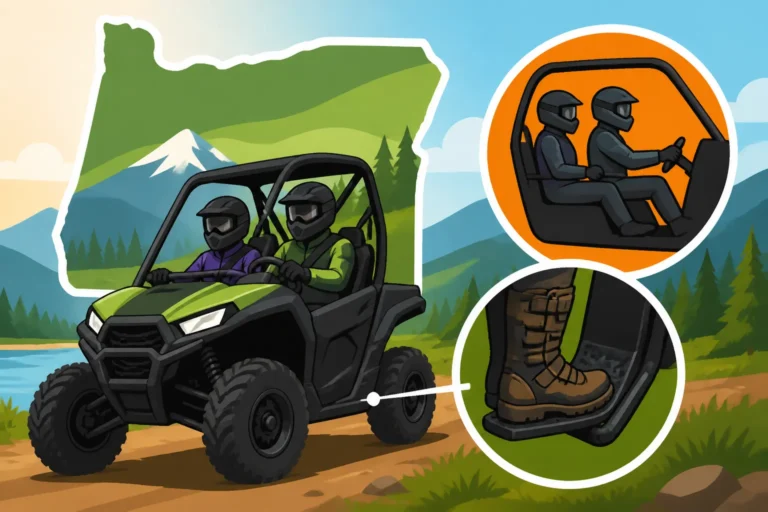
Why Lakeside Got a Designated Route
Navigating the winding roads of a small Oregon coastal town on an ATV or UTV can be a real head-scratcher. You've got the incredible Oregon Dunes practically in your backyard, but the rules for actually getting to them, or even just through town, have historically been a confusing mess, often leading to frustrated riders and concerned residents. This guide dives deep into the specific journey of Lakeside, Oregon, revealing why this picturesque town became one of the very few in the state to successfully establish a designated route, allowing off-highway vehicles (OHVs) to legally cruise its streets.
The Unique Challenge of ATV Access in Small Coastal Communities
For many small towns along Oregon's breathtaking coastline, the roar of an ATV engine isn't just noise; it's the sound of economic lifeblood. Communities like Florence, Winchester Bay, and particularly Lakeside, are deeply intertwined with the vibrant culture of off-highway vehicle (OHV) recreation, largely due to their proximity to the expansive Oregon Dunes National Recreation Area. Yet, for years, this vital connection presented a significant legal and logistical puzzle, creating friction between tourism, local safety, and state regulations.
The Economic Lifeline of OHV Tourism
Imagine a bustling weekend in Lakeside. The parking lots are filled with trucks towing trailers loaded with side-by-sides, quads, and sand rails. Local diners are packed, gas stations are seeing a steady stream of customers, and rental shops are working overtime. This isn't just a pleasant scene; it's the financial reality for towns like Lakeside. OHV enthusiasts bring considerable revenue, supporting local businesses from tackle shops to campgrounds. These riders, often equipped with gear from brands like SuperATV, are eager to spend their money, but they need clear, legal pathways to enjoy their passion. Without designated routes, visitors might bypass the town entirely, or worse, engage in illegal road use that jeopardizes their trip and the town's welcoming reputation. The very existence of some local establishments hinges on this steady influx of riders seeking adventure in the nearby dunes.
The Problem of Unregulated Road Use
Before designated routes became an option, riders in towns like Lakeside often faced a Catch-22. The dunes were calling, but getting from their lodging or a staging area to the sand usually meant navigating paved roads. Many riders, perhaps unknowingly or out of desperation, would simply "sneak" their machines down the street, hoping not to get caught. This led to a host of problems: significant safety concerns for both riders and other motorists, an increase in noise complaints from residents, and a general sense of unease. Local law enforcement was put in an awkward position, forced to enforce state laws that didn't quite fit the local recreational economy. The legal ambiguity created a gray area where no one felt truly comfortable, fostering resentment and an unorganized approach to a thriving recreational activity. It was clear a more structured, legal framework was desperately needed to protect both the riders and the community they visited.
Oregon's Legislative Path to Designated Routes
The journey to allowing ATVs and UTVs on specific town roads in Oregon wasn't a quick or easy one. It required significant legislative effort and a clear understanding of the unique needs of communities that serve as gateways to popular OHV recreation areas. Prior to 2017, the idea of legally riding an off-highway vehicle on a paved municipal street felt like a pipe dream for many.
The Groundbreaking 2017 House Bill 3369
The real turning point for towns like Lakeside came with the passage of Oregon House Bill 3369 in 2017. This landmark legislation was a game-changer, finally opening the door for counties and cities to designate certain public roads as open for OHV use. Before this, the state's vehicle code was largely silent or prohibitive on the matter, leaving no legal recourse for communities that wanted to embrace OHV tourism more formally. HB 3369 acknowledged the economic importance of OHV recreation and recognized that a one-size-fits-all approach to road use wasn't working for all areas of the state. It created the legal framework, essentially providing the instruction manual, for how a local government could apply to the Oregon Transportation Commission to establish such routes. This legislative shift was a direct response to the growing demand from both the OHV community and local economies seeking clarity and legitimacy. You can learn more about this pivotal change in [Oregon's 2017 Road Access Change Explained].
The Role of the OHV Advisory Committee
With the new legislation in place, a crucial step was the involvement of the Oregon OHV Advisory Committee. This committee isn't just a rubber stamp; it's a diverse group representing various stakeholders, including OHV enthusiasts, land managers, law enforcement, and local government officials. When a town like Lakeside submitted an application, this committee became the first line of review. They meticulously examine the proposed routes, assess potential impacts, and ensure that the designation aligns with both state objectives and local needs. They consider everything from safety measures, speed limits, and signage to the broader implications for traffic flow and resident quality of life. The committee's recommendations are vital, acting as a crucial filter before proposals move up the chain. Their role ensures that any designated route is not only feasible but also thoughtfully planned and supported by a broad range of expertise. [Who Sits on Oregon's OHV Advisory Committee] provides more insight into the composition and function of this important group.
Lakeside's Specific Case: A Perfect Storm of Need and Opportunity
Lakeside, Oregon, didn't just stumble into becoming a designated OHV route town; its journey was a deliberate and necessary response to its unique geography, economy, and community spirit. The town found itself in a situation where the benefits of a designated route far outweighed the challenges, setting it apart as an ideal candidate for this new legislative opportunity.
Unbeatable Proximity to the Oregon Dunes
Perhaps the most compelling argument for Lakeside's designated route status is its unparalleled access to the Oregon Dunes National Recreation Area. The dunes are literally on the town's doorstep, drawing thousands of OHV riders annually. For many riders, Lakeside is not just a town to pass through; it's the primary gateway to some of the most thrilling sand riding in the Pacific Northwest. Before the designated route, riders staying in town faced a dilemma: how to get their machines, sometimes heavy side-by-sides with SuperATV lift kits, from their campsites or rental homes to the sandy expanse without breaking the law. This close proximity meant that illegal road use was common out of sheer necessity and convenience. The designation legitimized what was already happening, providing a safe, legal, and clearly marked path for riders to access the very reason they came to Lakeside. You can envision the experience by thinking about [Riding the Dunes From South Jetty], which often starts from communities just like Lakeside.
Strong Community Initiative and Local Advocacy
The success of Lakeside's route designation wasn't just about geography; it was also a testament to powerful local advocacy. This wasn't a top-down mandate from the state; it was a grassroots effort. Local businesses, especially those catering to OHV enthusiasts (like rental shops that might outfit their machines with SuperATV winches or tire kits), residents, and active riding clubs understood the value of a designated route. They recognized that clear rules would not only boost the local economy but also improve safety and reduce conflicts. These groups actively engaged with local government, shared their perspectives, and rallied support. They presented a unified front, demonstrating to state officials that this was a community-wide desire, not just a fringe interest. This collective voice and organized effort were instrumental in showcasing the town's readiness and commitment to managing such a route responsibly.
Identifying Safe and Logical Routes
A crucial, yet often overlooked, aspect of Lakeside's application was the careful planning involved in identifying the specific roads for OHV use. It wasn't about opening every street; it was about strategically selecting routes that minimized potential conflicts with residential areas, schools, and busy commercial zones. Local officials and community members worked closely with state transportation experts to plot paths that were logical, direct, and, most importantly, safe. This involved considering factors like road width, existing traffic patterns, visibility, and proximity to staging areas. The goal was to create a seamless connection for riders, allowing them to travel safely at appropriate speeds, usually between parking areas or lodging and the main dune access points. This meticulous planning ensured that the designated route would enhance, rather than detract from, the overall livability and safety of the town. For a point of comparison, consider [Riding Through Town to the Dredge at Sumpter], which also involved careful route planning for a very different terrain.
The Application and Approval Process for Lakeside
Bringing a designated OHV route to life is a complex administrative journey, requiring diligent preparation, public engagement, and navigation through various state agencies. Lakeside's success serves as a clear example of how a community can effectively champion such an initiative by following the established protocols.
Data Collection and Public Hearings
Before any application could be formally submitted, Lakeside undertook extensive data collection. This wasn't just about counting vehicles; it involved documenting existing traffic patterns, analyzing accident data (or the lack thereof related to OHVs), and, critically, gathering input from its citizens. Public hearings became a vital platform for this. Residents, business owners, and OHV enthusiasts had the opportunity to voice their concerns, ask questions, and offer suggestions. These hearings served multiple purposes: they allowed the town to gauge public sentiment, identify potential problem areas, and demonstrate a commitment to transparency and community involvement. Every comment, every statistic, and every expressed concern contributed to a comprehensive package that underscored the genuine need and widespread support for the proposed route. This robust engagement ensured that the final proposal was not only well-researched but also reflective of the community's collective will.
Navigating State Bureaucracy
Once the local groundwork was laid, Lakeside's proposal entered the complex world of state bureaucracy. This involved direct engagement with several key state agencies, primarily the Oregon Parks and Recreation Department (OPRD) and the Oregon Department of Transportation (ODOT). OPRD, which manages Oregon's OHV program, played a significant advisory role, ensuring that the proposal met all safety and environmental guidelines. ODOT, on the other hand, was crucial for its expertise in road design, traffic engineering, and state highway regulations. The process involved submitting detailed maps, safety plans, traffic impact analyses, and robust justifications for the proposed routes. This back-and-forth negotiation, often requiring revisions and clarifications, ensured that all state-level concerns were addressed. The town had to demonstrate not just local need, but also adherence to statewide safety standards. You can understand more about one of these key players in [The Oregon Parks and Recreation Department's Role].
The Transportation Commission's Final Say
The ultimate decision on whether to approve a designated OHV route rests with the Oregon Transportation Commission. This is the highest authority in the state for transportation policy, and their review is rigorous. The Commission considers the recommendations from the OHV Advisory Committee, the findings from OPRD and ODOT, and the detailed proposal from the local jurisdiction. They weigh the local economic benefits against potential safety concerns, environmental impacts, and broader transportation goals. For Lakeside, securing their approval meant demonstrating a well-thought-out plan that integrated OHV access safely and effectively into the existing transportation network. Their decision for Lakeside, as well as for Sumpter, was a monumental step, establishing a precedent for how other communities might pursue similar designations. Understanding [What the Transportation Commission Decides] is key to appreciating the depth of this final approval step.
The Impact and Legacy of Lakeside's Designated Route
The approval of a designated OHV route in Lakeside was more than just a regulatory change; it heralded a new era for the town, transforming its relationship with OHV recreation. The impacts have been far-reaching, from bolstering the local economy to fostering a safer and more harmonious environment for both residents and visitors.
Economic Boost and Rider Satisfaction
Since the implementation of the designated route, Lakeside has seen a noticeable upswing in its OHV tourism. Riders, confident in the legal framework, are more inclined to visit, stay longer, and spend more. Local businesses, from restaurants and motels to gear shops stocking accessories like those from SuperATV, have experienced a tangible boost. The clarity of the rules means fewer anxieties for visitors and a more welcoming atmosphere. Riders no longer have to worry about the legality of getting their machines from their lodging to the dunes; they can simply follow the clearly marked signs. This ease of access translates directly into higher satisfaction, encouraging repeat visits and positive word-of-mouth. The route has effectively rolled out a red carpet for OHV enthusiasts, making Lakeside a premier destination for dune adventurers. For a deeper dive into the specific experience, consider reading [Riding an ATV Through Lakeside] or [Riding From a Campsite to the Sand at Lakeside].
Enhanced Safety and Local Harmony
One of the most significant, yet often understated, benefits of the designated route is the drastic improvement in safety. By providing legal, clearly marked paths, the town has effectively channeled OHV traffic away from sensitive areas and onto roads specifically designed and signed for their use. This has drastically reduced instances of illegal road use, which in turn means fewer dangerous encounters between OHVs and traditional vehicles, and a decrease in noise complaints. Residents now understand where OHVs are permitted, fostering a greater sense of order and reducing previous tensions. The visible signage and official recognition also encourage riders to operate more responsibly, knowing they are part of a legitimate system. This formal structure has replaced ambiguity with clarity, leading to greater safety for everyone and a more harmonious coexistence between the local community and its OHV visitors.
A Model for Other Oregon Towns
Lakeside's success hasn't gone unnoticed. As one of only two towns in Oregon with a designated OHV route (the other being Sumpter, as explored in [Oregon's Only Two Designated ATV Routes: Lakeside and Sumpter]), it has become a beacon for other communities contemplating similar initiatives. Its journey provides invaluable lessons on the importance of local advocacy, meticulous planning, and collaborative efforts with state agencies. While every town has its unique characteristics, Lakeside demonstrates that with perseverance and a well-structured plan, it is possible to integrate OHV recreation legally and safely into a municipal setting. However, it also highlights the challenges; the process isn't easy, which is why [Why Most Oregon Towns Have No Route] remains a pertinent question for many. Lakeside's legacy is not just about its own prosperity; it's about providing a roadmap and inspiring other Oregon communities to explore the potential of formally embracing their OHV tourism.
Here's a quick look at the typical criteria considered for designating an OHV route:
| Criterion | Description | Why it's Important |
|---|---|---|
| Community Support | Demonstrated local resident and business owner backing for the proposal. | Ensures the route serves community needs and minimizes friction. |
| Safety Assessment | Evaluation of road conditions, visibility, speed limits, and traffic volumes for OHV and vehicle safety. | Paramount for preventing accidents and protecting all road users. |
| Route Logic/Continuity | How well the proposed route connects key points (e.g., lodging, staging areas, and riding zones). | Maximizes convenience for riders and minimizes illegal detours. |
| Signage & Marking Plan | Clear proposal for signs, pavement markings, and educational materials for riders and drivers. | Ensures easy navigation and understanding of rules for all. |
| Economic Impact Analysis | Assessment of potential benefits to local businesses and tourism. | Justifies the designation from a financial and community development perspective. |
| Environmental Considerations | Review of potential impacts on natural resources, noise levels, and wildlife. | Ensures responsible land use and minimizes ecological disturbance. |
| Law Enforcement Capacity | Ability of local law enforcement to manage and enforce rules on the designated route. | Critical for maintaining order and addressing violations effectively. |
This detailed look at Lakeside's journey underscores the intricate balance between recreational opportunity, economic development, and community well-being. The designation of its OHV route is a testament to thoughtful planning and collaborative effort, paving the way for a more organized and enjoyable experience for all who visit and live in this special part of Oregon. Be sure to consult the [Oregon ATV Highway Access Route Map] for a visual representation of these crucial pathways.
Disclaimer
This article is for general informational purposes only and does not constitute professional advice. Laws, prices and regulations vary by location and change over time. Consult a qualified professional for guidance on your specific situation.