Oregon ATV Title Requirements
Figuring out the exact paperwork you need for your ATV or UTV in Oregon can feel like trying to ride a dune buggy through quicksand – confusing, frustrating, and often leading you to question if you're even going in the right direction. Many riders assume that just like a car, an off-road vehicle absolutely needs a title and registration. This guide is here to untangle the myths from the realities, explaining Oregon's unique approach to ATV titling and what it truly means for you, whether you're buying, selling, or just riding your machine.
The Core Truth About Oregon ATV Titles: It's Optional, But Why?
Let's cut right to the chase because this is where a lot of the confusion stems from: in Oregon, for most off-highway vehicles (OHVs) that are not street-legal, obtaining a title is entirely optional. That's right, optional. This often takes people by surprise, especially if they've dealt with vehicle ownership in other states or are accustomed to the standard car-buying process. But there's a good reason for this approach, and understanding it is key to navigating ATV ownership in the Beaver State.
Dispelling the Common Misconception
When you purchase a car, truck, or even a street-legal motorcycle, the very first thing you do is get it titled in your name. It's an automatic, non-negotiable step that formalizes your ownership in the eyes of the state and proves that you are the legal proprietor of that vehicle. This is such a fundamental part of vehicle ownership that it's natural to assume the same applies to your shiny new (or new-to-you) ATV or UTV.
However, Oregon treats off-highway vehicles differently from on-road vehicles. The primary reason a title is mandatory for street-legal vehicles is for identification, taxation, and law enforcement purposes when operating on public roads. Since most ATVs and UTVs are designed exclusively for off-road use, Oregon has a separate system for regulating their operation on public lands, primarily through an operating permit system managed by the Oregon Parks and Recreation Department (OPRD). This is why you'll often hear about getting an [Oregon's ATV Operating Permit] before you hit the trails, but rarely about a mandatory title. The state determined that for purely off-road machines, the burdens of mandatory titling outweighed the benefits, particularly since the machines are not part of the standard road system infrastructure that the Department of Motor Vehicles (DMV) oversees. So, if you've been scratching your head wondering why the title wasn't automatically transferred, or if you're agonizing over filling out DMV forms, take a breath. For many riders, that specific step isn't legally required.
Why the DMV Isn't Involved in Off-Road Machine Titling
This leads directly to another point of confusion: if I want a title, where do I get it? The answer, surprisingly to some, is not the Oregon Department of Motor Vehicles (DMV). The DMV handles vehicle registration and titling for vehicles intended for public road use. Since off-road ATVs and UTVs, by their very definition, are generally not designed for public roads, they fall outside the DMV's traditional purview for titling. This is a critical distinction that often catches new Oregon residents or first-time ATV owners off guard.
The Oregon Parks and Recreation Department (OPRD) is the agency responsible for managing the state's OHV program, including the mandatory operating permits you need to ride on designated public lands. They focus on safe riding practices, environmental protection, and trail maintenance, funded primarily by those permit fees. While they are deeply involved in permitting your machine, they do not handle titling it. They have no interest in who legally owns the machine as long as it's permitted for use. This creates a clear division of labor: the DMV for on-road vehicles, and OPRD for off-road permits. It’s why you'll never walk into a DMV office and ask to [Registering an ATV in Oregon] and leave with a title for your quad. They simply aren't set up for it, as their system is fundamentally linked to road-legal status. So, if you do decide you want an Oregon title for your off-road machine, you'll generally do so through a licensed dealer or the process set out by the state for optional vehicle titling, which still keeps the DMV out of the picture for off-road vehicles.
Situations Where an Oregon ATV Title Becomes Crucial (Even If Optional)
Even though Oregon law states that titling an ATV used exclusively off-road is optional, that doesn't mean it's without significant benefits or even practical necessities in certain situations. Skipping the title might seem like one less hassle, but it can create bigger headaches down the road. For many riders, the peace of mind and protection a title offers far outweighs the effort of obtaining it, especially when dealing with high-value machines or complex transactions.
Proving Ownership and Preventing Theft
Imagine you've poured your hard-earned money into a high-performance side-by-side, your pride and joy for tearing up the dunes. One day, you wake up to find it missing from your garage. This is every owner's nightmare, and in that moment, proving that machine is actually yours becomes paramount. While you might have a bill of sale, that piece of paper can easily be lost, damaged, or even challenged. A state-issued title, however, is the strongest, most universally recognized form of ownership proof for a vehicle. It's a formal record held by the state, linking your name directly to that vehicle's unique VIN.
Without a title, trying to recover a stolen ATV can turn into a bureaucratic nightmare. Law enforcement might face difficulties confirming your ownership, complicating the recovery process. While a detailed bill of sale and photographs can help, they simply don't carry the same legal weight as a title when it comes to irrefutably establishing who the rightful owner is. This is especially true if the thief attempts to sell the machine in another state where titles are mandatory, or if the VIN has been tampered with. Having a title on file makes it much harder for someone else to claim ownership and significantly streamlines the process of getting your machine back should the unthinkable happen. This is why many riders eventually realize [Why an Oregon Title Is Worth Having Anyway].
The Complications of Selling a Used ATV
If you've ever tried to sell a used vehicle, you know that buyers crave certainty and legal assurance. When it comes to an ATV, if you don't have a title, you might find your potential buyer pool shrinking significantly. Many savvy buyers, especially those familiar with states where titles are mandatory, will be wary of purchasing a high-value machine without a clear, state-issued document proving ownership. They want to avoid any potential legal disputes or the risk of unknowingly buying a stolen machine.
Even if you have a perfectly legitimate bill of sale, a buyer might perceive the lack of a title as a red flag, leading to lower offers or outright refusal to purchase. They might worry about [Buying From a Seller Who Kept No Records] if you can't produce a title. This can be incredibly frustrating if you're the original owner or have a clear paper trail, but the perception of risk is very real for potential buyers. Conversely, if you're the one [Buying a Used Quad in Oregon], you should always insist on a title if the seller has one. If they don't, ensure you have an ironclad bill of sale, possibly even notarized, and carefully check the VIN history. For a robust bill of sale that offers protection to both parties, resources like LawDepot can provide templates that cover all the necessary legal ground, ensuring you have clear documentation of the transaction, even without a formal title transfer. This helps mitigate the risks associated with [Selling an ATV in Oregon] when a title isn't available.
Financing, Insurance, and Out-of-State Transactions
Beyond buying and selling, there are other practical scenarios where an optional Oregon ATV title becomes a virtual necessity. For instance, if you plan to finance your ATV purchase, nearly all lenders will require a title. The title serves as their collateral; they will hold it until the loan is paid off, protecting their investment. Without a title, securing a loan for an ATV can be incredibly difficult, if not impossible, limiting your purchasing options.
Insurance companies, while primarily interested in the operating permit for covering liability on public lands, might also prefer or require a title for comprehensive or collision coverage on higher-value machines. While [Oregon Insurance Rules for a Class II Machine] primarily focus on liability for road-legal use, a title offers a clear line of ownership for claims purposes, simplifying the process if your machine is damaged or stolen.
Finally, consider out-of-state transactions. If you plan to move your ATV to a state where titling is mandatory, or if you sell your machine to an out-of-state buyer, having an Oregon title will make the process infinitely smoother. States with mandatory titling will expect a clear title from the originating state to transfer it into their system. Trying to explain Oregon's optional titling laws to another state's DMV can be a frustrating and time-consuming endeavor. Similarly, if you're bringing a machine into Oregon from another state, dealing with [Oregon Paperwork for a Machine Bought Out of State] is much easier if your home state provided a title. It provides a consistent, universally understood document for proving legitimate ownership across state lines.
How to Obtain or Transfer an Oregon ATV Title
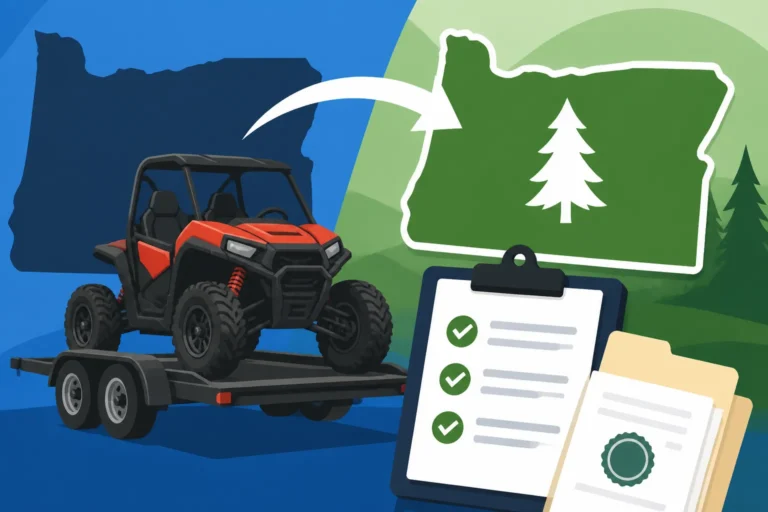
So, you've decided that the benefits of having an Oregon ATV title outweigh the optional nature, and you want to get one. Or perhaps you've purchased a machine that already has an Oregon title, and you need to transfer it into your name. While the process isn't handled by the DMV in the same way as a car, there is a clear pathway to securing this important document. Understanding the steps involved is crucial to ensure your ownership is legally documented.
Steps for Titling a New Machine
When you purchase a brand-new ATV or UTV from a licensed dealer in Oregon, the process of obtaining an optional title is generally the most straightforward. Dealers are accustomed to handling the paperwork for both titling and permitting, even for off-road machines.
Here's a general outline of what to expect:
- Dealer Facilitation: Your dealer will typically offer to process the title application for you. This is usually part of their service, and they'll have the correct forms and knowledge of the specific procedures. They understand that even though it's optional, many buyers prefer a title for their expensive new machine.
- Manufacturer's Statement of Origin (MSO) / Manufacturer's Certificate of Origin (MCO): For a new vehicle, the dealer receives an MSO or MCO from the manufacturer. This document serves as the "birth certificate" for your ATV and is essential for the initial titling.
- Application Form: You'll fill out an application for title (often a form specific to optional titling of off-road vehicles, not a standard DMV form). This form will require your personal information, the machine's VIN, and details about the dealer.
- Fees: There will be a fee associated with obtaining the title. Your dealer will collect this from you along with the purchase price of the ATV.
- Processing: The dealer will submit the MSO/MCO, your application, and the fees to the appropriate state agency (often still managed by a specific department within the state's motor vehicle division, but separate from the road-legal vehicle process). After processing, the title will be mailed to you.
- Simultaneous Permit: Don't forget that even with a title, you'll still need an [Oregon's ATV Operating Permit] to legally ride on public lands. The dealer can often help you purchase this permit at the same time, or direct you to where you can get one. For example, [Titling a Class I Without Registering It] is a common scenario, where the dealer facilitates the title, and you separately get the operating permit for your Class I quad.
Titling a Used Machine from a Private Seller
Titling a used ATV purchased from a private seller can be a bit more complex, especially if the previous owner never obtained a title or if the title has been lost. This is where meticulous documentation and careful VIN checking become absolutely critical.
- Insist on the Title (If Available): If the seller has an Oregon title for the ATV, insist on seeing it and having it properly signed over to you. The seller must sign in the designated "Seller" or "Assignment of Title" section. Make sure their signature matches the name printed on the title.
- Bill of Sale is Paramount: Whether a title exists or not, a comprehensive bill of sale is your best friend when buying from a private party. This document legally transfers ownership. It should include:
- Full names and addresses of both buyer and seller.
- The date of sale.
- The purchase price.
- A detailed description of the ATV (make, model, year, and most importantly, the full Vehicle Identification Number, or VIN).
- A statement that the seller warrants they are the legal owner and the machine is free of liens (unless otherwise specified and agreed upon).
- Signatures of both buyer and seller.
- Consider having it notarized for extra legal weight.
- For a legally sound document, consider using a customizable template from services like LawDepot, which can help ensure all critical details are included for your [Oregon Bill of Sale for an ATV].
- [Checking a VIN Before Buying Used]: Always, always, always inspect the VIN on the machine itself and compare it to both the title (if applicable) and the bill of sale. Check for any signs of tampering. Run the VIN through a stolen vehicle database (some private services or law enforcement agencies can assist). This protects you from unknowingly purchasing a stolen ATV.
- Application for Title Transfer: Once you have the signed-over title (or a robust bill of sale if no title exists and you plan to apply for one), you'll need to complete the state's title application form. Attach the original signed title or the bill of sale as proof of ownership.
- Submit Paperwork and Fees: Send or bring all the required documents and the associated title transfer fees to the designated state agency. They will process the transfer and mail a new title in your name.
What to Do If You Don't Have a Title (Lost or Never Issued)
This is perhaps the most challenging scenario. You've bought a used ATV, and the previous owner either never got a title, lost it, or simply doesn't have it. Don't despair, but be prepared for a bit more legwork.
- Contact the Previous Owner (If Possible): If the previous owner ever had a title, they might be able to apply for a duplicate title. This is often the easiest path. Offer to pay the duplicate title fee.
- Affidavit of Ownership / Bonded Title Process: If a title was never issued or cannot be recovered, Oregon typically has a process for applying for a title through an "Affidavit of Ownership" or a "Bonded Title" procedure. This involves:
- Comprehensive Bill of Sale: This becomes your primary proof. Ensure it's as detailed and legally sound as possible. If you need to create a new, legally robust bill of sale retrospectively, LawDepot can be a valuable resource for generating a custom document that meets state requirements.
- VIN Inspection: The state may require a physical inspection of the ATV's VIN by law enforcement or a certified inspector to confirm its identity and ensure it's not stolen.
- Lien Check: A thorough check for any outstanding liens on the machine will be performed.
- Affidavit: You will likely need to sign an affidavit, under penalty of perjury, attesting to your ownership and how you acquired the machine.
- Surety Bond (Bonded Title): In some cases, for vehicles without a clear chain of title, the state might require you to obtain a surety bond. This bond protects the state and any previous unknown owners against claims of ownership for a certain period. If no claim arises, the bond expires, and the title becomes clear.
- Waiting Period: There might be a mandatory waiting period during which the state publishes notice of your application to allow any potential claimants to come forward.
- Consult the Agency: It's always best to contact the specific state agency that handles optional ATV titling directly (often part of the DOT, but distinct from general DMV services) to get the precise forms and instructions for your unique situation. Procedures can vary, and they can guide you through the affidavit or bonded title process step-by-step. Navigating this without a clear title when [Buying From a Seller Who Kept No Records] can be tricky, but it's not impossible if you follow the correct legal channels.
Understanding Related Paperwork: Beyond the Title
While the optional nature of an Oregon ATV title is the focus, it’s essential to understand that a title is just one piece of the puzzle in legally owning and operating your off-highway vehicle. Several other documents play critical roles, especially in establishing ownership, proving legality for public land use, and ensuring smooth transactions. Confusing these different types of paperwork can lead to frustrating delays or even legal issues down the trail.
The Importance of a Bill of Sale
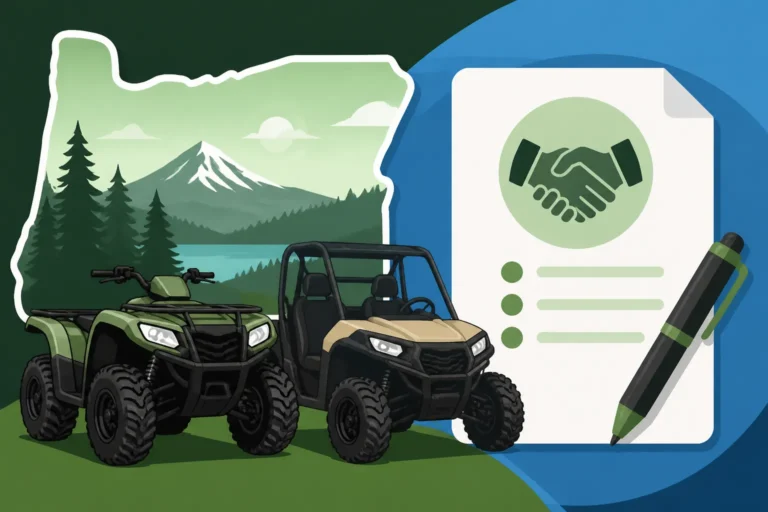
Even if you choose not to obtain an Oregon title for your ATV, or if you purchase a used machine that never had one, a robust bill of sale is absolutely non-negotiable. It is your primary, and often only, legal proof of ownership, detailing the transaction between you and the seller. Think of it as the foundational contract for your ATV. Without it, you could face significant challenges proving the machine belongs to you, especially if there's a dispute, a theft, or you later decide to sell it.
A good bill of sale goes beyond a simple scribbled note. It should be comprehensive and legally sound. Here's what it should always include:
- Full Legal Names and Addresses: Of both the buyer and the seller. This ensures clear identification of all parties involved.
- Date of Sale: Crucial for establishing the timeline of ownership.
- Purchase Price: Clearly state the agreed-upon price.
- Detailed Machine Description: Include the make, model, year, color, and most importantly, the full Vehicle Identification Number (VIN). The VIN is the unique identifier for your ATV and must be accurate.
- Odometer Reading (if applicable): While less common for off-road machines, if your UTV has an odometer, noting the reading at the time of sale can be helpful.
- "As-Is" Clause: Most private sales are "as-is," meaning the buyer accepts the machine in its current condition with no warranties from the seller. This clause protects the seller from future claims about the machine's condition.
- Statement of Ownership: The seller should affirm they are the legal owner and have the right to sell the ATV, and that it is free of any liens or encumbrances (unless explicitly stated otherwise).
- Signatures: Both the buyer and seller should sign and date the bill of sale.
- Notarization (Highly Recommended): Having the bill of sale notarized adds an extra layer of legal authenticity, making it much harder for either party to dispute its validity later.
For individuals looking for a reliable, customizable bill of sale, resources like LawDepot can provide excellent templates that cover all the necessary legal clauses and ensure you have a comprehensive document. Having a well-crafted [Oregon Bill of Sale for an ATV] provides peace of mind and legal protection, making it one of the most vital pieces of paperwork you'll possess for your off-road machine, whether you have a title or not.
The Distinction Between Titling and Permitting
This is where many newcomers to Oregon's off-road scene get tripped up. It’s absolutely vital to understand that an Oregon ATV title (optional for off-road machines) and an Oregon ATV operating permit (mandatory for riding on public lands) are two entirely separate things. They serve different purposes, are issued by different agencies, and cover different aspects of ATV ownership and use.
- Titling: As we've discussed, titling is about ownership. It's a formal, state-issued document that legally identifies you as the proprietor of the specific ATV by its VIN. It proves that the machine is yours. For off-road ATVs, Oregon makes this optional. If you choose to get a title, it's typically processed through a specific state division, not the standard DMV.
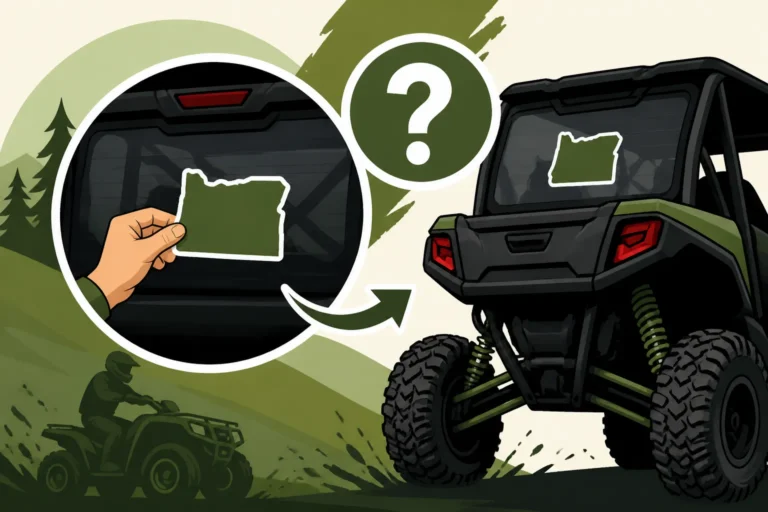
- Permitting: This is about legal operation on designated public lands. The [Oregon's ATV Operating Permit] is a sticker or decal that you must display on your machine, proving you've paid the necessary fee to use public OHV areas. This permit funds trail maintenance, safety programs, and administrative costs of the Oregon Parks and Recreation Department (OPRD), which manages the state's OHV program. Without this permit, you cannot legally ride on public trails, even if you own the machine outright and have a title.
Think of it this way: your house deed proves you own your house, but you still need to pay property taxes and get local permits for certain renovations to legally use and modify it. Similarly, an ATV title proves you own the machine, but the operating permit gives you permission to ride it on state-managed public lands. You can buy the permit online, from authorized vendors, or at specific state park offices. The [Oregon ATV Permit Cost] is the same regardless of your machine type (Class I, II, III, or IV) and typically covers a two-year period. You can find out [Where Oregon Sells ATV Permits] through the OPRD website or local dealers. Never confuse your ownership document with your permission-to-ride document – you need both for complete peace of mind and legal compliance.
| Feature | Oregon ATV Title (Optional for OHVs) | Oregon ATV Operating Permit (Mandatory for Public Land Use) |
|---|---|---|
| Purpose | Proves legal ownership of the vehicle. | Grants legal permission to operate the ATV on designated public lands. |
| Issuing Agency | Specific state agency (often related to DOT, but not standard DMV) | Oregon Parks and Recreation Department (OPRD) |
| Legality | Optional for off-road machines, but highly recommended for protection. | Mandatory for all ATVs operating on public OHV trails and riding areas. |
| Document Type | Paper certificate with VIN and owner details. | Physical decal/sticker displayed on the machine. |
| Primary Use Cases | Buying/selling, financing, insurance, theft recovery, out-of-state moves. | Riding on state forests, BLM land, Forest Service roads, Oregon Dunes, etc. |
| Cost | Varies (check current state fees). | Single fee, covers two years (check OPRD website for current rates). |
| Proof of Validity | Legal document to establish ownership. | Decal displayed clearly on the machine. |
Disclaimer
This article is for general informational purposes only and does not constitute professional advice. Laws, prices and regulations vary by location and change over time. Consult a qualified professional for guidance on your specific situation.