Oregon Roads Not Maintained for Passenger Cars
It's incredibly frustrating when you're geared up for an epic ride, looking at a map, and wondering if that promising gravel road or forest track is actually legal for your ATV or UTV. Oregon's backroads are vast and tempting, but the rules around what's "maintained for passenger cars" versus what's open to your off-highway vehicle can feel like a confusing maze. This guide is here to untangle those complexities, helping you understand where you can legally and safely ride your machine on roads less traveled across the state.
What "Unmaintained for Passenger Cars" Really Means in Oregon
When you're out exploring Oregon's vast natural landscapes, you'll encounter all sorts of roads. From perfectly paved highways to barely-there two-tracks, the spectrum is wide. For ATV and UTV riders, understanding which roads are legal is paramount. The term "not maintained for passenger cars" isn't just bureaucratic jargon; it's a key distinction that often opens the door for your off-highway vehicle (OHV) to travel where your sedan definitely shouldn't.
The Spectrum of Oregon's Backroads
Think about the roads you encounter in Oregon's forests and rural areas. On one end, you have the main paved routes, often state or county highways, where your OHV generally isn't allowed unless you're crossing or on one of Oregon's very few designated access routes, like those found in [Oregon's Only Two Designated ATV Routes: Lakeside and Sumpter]. Then, there are gravel roads. Some of these are meticulously graded, wide, and perfectly fine for a standard car, while others are rutted, potholed, and clearly designed for something more robust than a passenger vehicle. Beyond that, you'll find true "two-tracks," often just a couple of tire paths winding through the trees or across open land, frequently overgrown and sometimes barely discernible. These are the kinds of roads that begin to blur the lines, and knowing where your machine is welcome is crucial for avoiding an unwelcome citation.
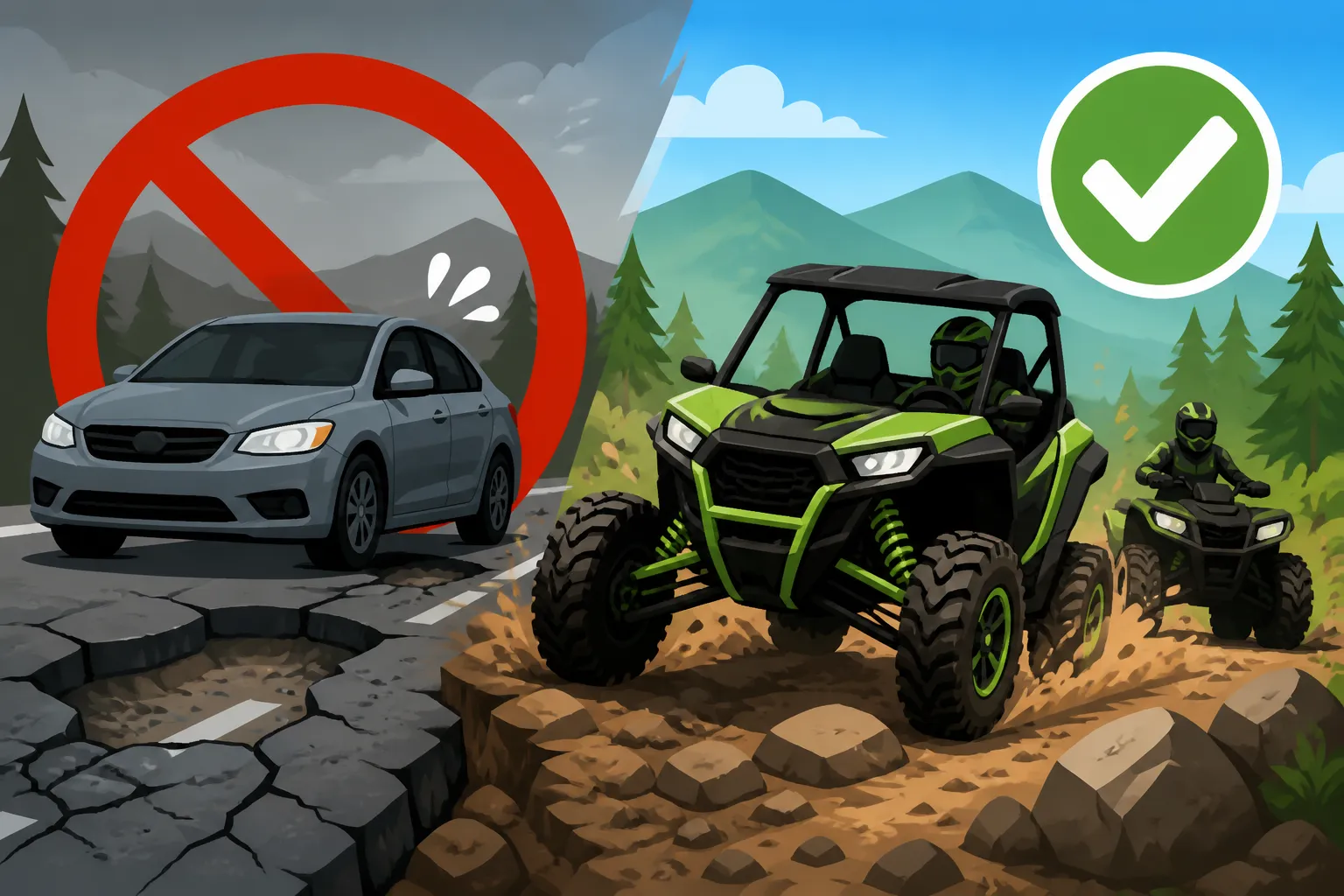
These roads, often built for timber harvest, fire access, or other resource management, are not designed with your average sedan in mind. They might have steep grades, loose surfaces, washouts, or unexpected obstacles. The lack of regular grading, snow plowing, or even basic signage makes them unsuitable for typical passenger car traffic. This is where your ATV or UTV, with its higher clearance, robust suspension, and all-wheel drive capabilities, truly shines.
Why the Distinction Matters for ATV/UTV Riders
The legal framework for OHV use on public roads in Oregon is largely built around this "passenger car" distinction. Generally, if a road is designated and maintained for conventional vehicle traffic, your ATV or UTV often isn't permitted, unless it meets specific street-legal requirements for Class II machines and is on an approved route, or you're crossing at a 90-degree angle. However, once you venture onto roads that aren't deemed suitable for passenger cars, the rules often change in your favor. [Oregon Rules for Riding a Forest Road] and [Oregon Rules for Riding a County Gravel Road] delve into this specifically.
This distinction is vital because it determines your legal access. Riding on a road where OHVs are prohibited, even if it looks like a perfect trail, can lead to significant fines. Conversely, knowing which unmaintained roads are open means you can confidently plan longer, more adventurous routes, connecting trails, and exploring remote areas that would otherwise be inaccessible. It allows you to use your machine to its full potential, transforming what would be a long hike into an exhilarating ride. Always remember that while these roads might not be maintained for passenger cars, they are still subject to regulations, including speed limits, right-of-way rules, and sometimes even seasonal closures.
Navigating Public Lands: Forest Service and BLM Roads
Oregon is blessed with vast tracts of public land managed by agencies like the U.S. Forest Service and the Bureau of Land Management (BLM). These lands are crisscrossed with countless roads, many of which fall under the "not maintained for passenger cars" category, making them prime territory for ATV and UTV riders. Understanding how these agencies manage their roads is key to a successful and legal ride.
Forest Service Roads and Their Numbering System
The U.S. Forest Service manages millions of acres in Oregon, and within these forests, you'll find an intricate network of roads. These roads are typically numbered, and familiarizing yourself with [Reading a Forest Service Road Number] can be incredibly helpful. Main forest roads might be single or double digits, while spur roads branching off them often have longer, more complex numbers. Many of these roads are gravel or dirt, and their maintenance can vary wildly. Some might be well-graded near popular campgrounds or trailheads, while others could be deeply rutted, rocky, or completely overgrown further into the backcountry.
For the most part, unless specifically signed as closed to OHVs or to all traffic, many Forest Service roads that are clearly not maintained for passenger cars are open to permitted ATVs and UTVs. However, it's crucial to check local Forest Service maps and regulations, as some areas or specific roads may have restrictions due to wildlife, watershed protection, or active logging operations. Always be on the lookout for signs indicating closures, even if your map shows the road as open, as conditions can change rapidly.
BLM Roads and Their Unique Characteristics
The Bureau of Land Management (BLM) also manages extensive public lands in Oregon, particularly in the drier, eastern parts of the state, but also some significant holdings in Western Oregon. BLM roads often have a different feel than Forest Service roads; they can be even more primitive, less consistently signed, and cover a wider variety of terrain from high desert to rolling timberland. Like Forest Service roads, many BLM routes are unpaved and fall squarely into the category of "not maintained for passenger cars."
Access on BLM lands generally mirrors Forest Service rules: if the road isn't specifically closed, and it's clearly not a paved or regularly maintained public highway, your permitted OHV is likely welcome. However, BLM lands can sometimes have unique considerations, such as grazing allotments or sensitive environmental areas, which might lead to unexpected closures or restrictions. Always consult up-to-date BLM maps and local field office information before heading out. Just like with Forest Service roads, a good aftermarket GPS with detailed mapping is invaluable, and always respect any posted signage.
Seasonal Closures and Fire Restrictions
A critical aspect of riding on public lands, especially on roads not maintained for passenger cars, is being aware of seasonal closures and fire restrictions. Many forest and BLM roads, particularly those at higher elevations or in more remote areas, are subject to [Roads Closed Seasonally by the Forest Service] due to snow, mud, or to protect wildlife during sensitive periods. It's not uncommon to find a gate across a road that was open just a month earlier. Attempting to bypass a closed gate can result in a significant fine and damage to the ecosystem or property.
Furthermore, Oregon experiences severe fire seasons, and during these times, many public lands, including their roads and trails, can be subject to [Oregon Fire Season and Trail Access] or outright closures. These restrictions are put in place for public safety and to prevent wildfires. Always check the fire danger level and any current restrictions with the relevant agency (Forest Service, BLM, or Oregon Department of Forestry) before you head out. Riding during a closure, even inadvertently, is not only dangerous but also illegal and can carry hefty penalties.
County Gravel Roads and Their Accessibility
Beyond federal lands, many of Oregon's counties maintain a vast network of gravel roads. These roads serve as arteries for rural communities, connect farms and timber operations, and often lead to various recreational opportunities. While some county gravel roads are regularly graded and suitable for most vehicles, many others fit the description of "not maintained for passenger cars," presenting both opportunities and challenges for ATV and UTV riders.
Understanding County Ordinances for OHV Use
The accessibility of county gravel roads for OHVs in Oregon is not uniform across the state. This is where things can get a bit tricky because each county has the authority to set its own rules regarding OHV use on county-maintained roads. Some counties have explicitly opened certain gravel roads to OHVs, recognizing their role in local recreation and transportation. Others may have stricter regulations, limiting OHV access to specific events or only allowing crossings of paved roads. It's crucial not to assume that just because a road is gravel, it's open to your side-by-side or quad. You need to investigate the specific county ordinances.
To find this information, you often have to do a bit of homework. Check the county's website, look for their public works or sheriff's department sections, or contact them directly. Local OHV clubs are also excellent resources, as they often stay up-to-date on local regulations and advocacy efforts. Without verifying the local rules, you risk running afoul of the law, potentially facing fines or even having your machine impounded.
Sharing the Road with Other Vehicles
Even on county gravel roads where OHVs are permitted, you're still sharing the space with other users. This means cars, trucks, logging vehicles, farm equipment, and sometimes even cyclists or pedestrians. These roads can be narrow, dusty, and have blind corners. Visibility is often reduced, especially when dust is stirred up by other vehicles, or [Dust and Blind Corners on a Logging Road] become particularly hazardous. It's imperative to ride defensively, keep your speed appropriate for conditions, and always be prepared to encounter oncoming traffic around any bend.
Wearing proper safety gear, including a helmet, even if your machine has a roll bar, is always a good idea, as are bright colors to enhance your visibility. [Oregon Helmet Law for ATV Riders] is particularly important to review. Your machine's headlights and taillights should be on, even during the day, to help others see you. Remember that larger vehicles, like logging trucks, often have the right-of-way and may not be able to stop or maneuver quickly on these surfaces. Always yield and give them plenty of space.
The Six Oregon Counties That Opened Their Roads
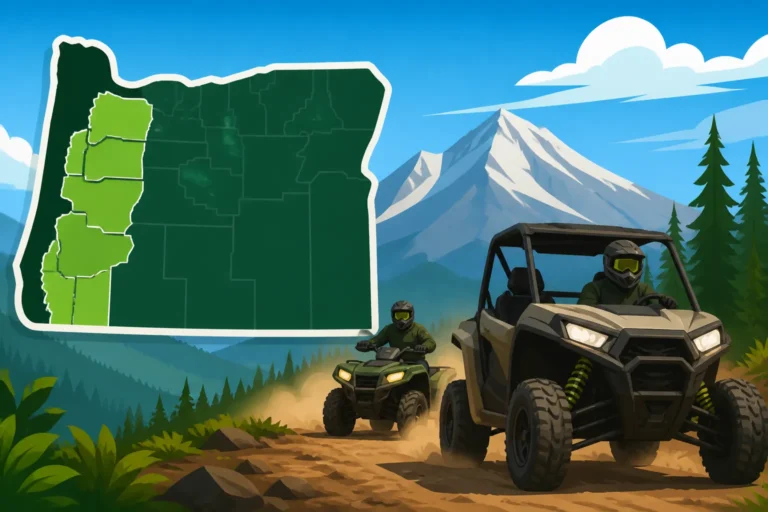
[Oregon's 2017 Road Access Change Explained] marked a significant shift, empowering counties to open certain roads to ATVs and UTVs. While many counties have been cautious, some have taken the lead in establishing designated OHV routes on their gravel road networks. As of now, six Oregon counties have actively pursued and designated routes for OHV use on their roads. These are Union, Grant, Baker, Wheeler, Malheur, and Lake counties. For example, [Riding a County Road in Grant County, Oregon] is a prime example of where such opportunities exist.
This means that within these counties, specific gravel roads or road networks have been identified and legally opened for OHV traffic. However, it's not a blanket allowance for all gravel roads in these counties. Riders must still consult county maps and ordinances to understand precisely which roads are open, what the operating hours might be, and any other specific rules that apply. It's always a good idea to seek out current maps from the county or the local OHV association to ensure you're on a legal route.
| Road Type | Typical Maintenance Level | Passenger Car Friendly? | OHV Access (General) | Common Considerations |
|---|---|---|---|---|
| Paved State Highway | High (regular paving, striping) | Yes | Limited (crossing/designated routes) | High speed limits, heavy traffic, strict OHV rules |
| Paved County Road | Moderate (patching, some grading) | Yes | Limited (crossing/some local routes) | Varies by county, check local ordinances |
| Graded Gravel Road (County/FS/BLM) | Moderate (periodic grading, dust control) | Sometimes (depends on quality) | Often Permitted (check signage/maps) | Dust, shared use, potential seasonal closures |
| Unmaintained Dirt/Gravel Road (FS/BLM) | Low (minimal, reactive) | No | Generally Permitted (check signage/maps) | Rough terrain, washouts, fallen trees, remote, few signs |
| Logging Road (Private) | Varies (active haul routes well-maintained) | No | Private Land (permission required) | Active logging operations, gates, private property |
| Two-Track/Primitive Trail | Very Low (natural degradation) | No | OHV Trail (designated as such) | Difficult navigation, narrow, potentially overgrown |
Private Timberland and Industrial Roads
Oregon's landscape is a patchwork of public and private lands, with vast stretches of the latter being actively managed timberland. These private holdings are crisscrossed by a network of industrial roads, vital for logging operations. While these roads are certainly "not maintained for passenger cars" in the traditional sense, their accessibility for recreational OHV use is distinctly different from public lands.
The Complexities of Accessing Private Lands
Unlike Forest Service or BLM roads, which are generally open to the public unless otherwise specified, private timberland roads are, by default, private property. This means that access for recreational activities like ATV or UTV riding requires explicit permission from the landowner. Without it, you are trespassing, which can lead to legal consequences, fines, and even the impoundment of your machine. This can be a hard pill to swallow when a tempting road appears to connect two public land parcels.
Many timber companies in Oregon do have programs or policies for public access, but these vary widely. Some might offer permits for specific areas, often with seasonal restrictions or for designated activities like hunting. Others might completely restrict public access due to active operations, fire danger, or liability concerns. [Oregon Rules for Crossing Private Timberland] are clear: always assume private roads are off-limits unless you have confirmed permission. It's a common misconception that if a gate is open, or there's no "No Trespassing" sign, access is implied. This is simply not the case on private industrial timberland.
When Gates and Signs Mean "No Entry"
You'll frequently encounter gates and signs on private timberland roads. A closed or locked gate, regardless of its condition or whether you could theoretically get around it, is a definitive "no entry." Even if a gate is open, a sign indicating "Private Property," "No Trespassing," or "Industrial Traffic Only" means you should not proceed without permission. These signs are there for a reason, often for your safety due to active logging, or for the protection of private assets and resources. [Riding Around a Locked Gate] is never a good idea and can have severe repercussions.
It's tempting to think you're just "passing through," but the landowners have a right to control who is on their property. Disregarding these indicators can lead to a confrontation with property owners, security patrols, or law enforcement. It's far better to err on the side of caution and find an alternative route on designated public land. Some aftermarket mapping systems from companies like SuperATV can show land ownership boundaries, which can be an invaluable tool for ensuring you stay on public land.
Permitting and Respecting Private Property
If you are fortunate enough to obtain permission or a permit from a timber company for access, it's paramount to understand and respect all conditions. This might include specific dates or times of access, designated routes, restrictions on fire use, or requirements for certain safety gear. Always carry a copy of your permit and be prepared to show it to anyone who asks, including company representatives or law enforcement.
Remember that these roads are active workplaces. You might encounter [Log Trucks and Weekday Riding] at any time, often moving at high speeds and having limited visibility. Yield to all industrial traffic, keep your lights on, and be highly visible. Leave no trace of your visit, pack out all trash, and respect the natural environment. Maintaining a good relationship with private landowners is essential for keeping any existing access opportunities open for all responsible riders.
Essential Gear and Safety Considerations for Rough Roads
Riding on Oregon's roads not maintained for passenger cars is an exciting prospect, but it also comes with inherent risks. These routes can be remote, challenging, and far from emergency services. Proper preparation, both for your machine and yourself, is not just recommended—it's absolutely essential for a safe and enjoyable adventure.
Preparing Your Machine for the Unpredictable
Your ATV or UTV needs to be in top condition before tackling rough, unmaintained roads. A thorough pre-ride inspection is crucial. Check your tires for proper inflation and tread wear; punctures are common on rocky, unpaved surfaces. Inspect your brakes, lights, and steering components. Ensure your fluids are topped off and there are no leaks. [Oregon Lighting Requirements for Road Use] become particularly important if you plan on riding near dusk or at night, even on unmaintained roads.
Consider upgrades that enhance durability and safety. Heavy-duty tires with aggressive tread are a must. Skid plates and A-arm guards from manufacturers like SuperATV can protect critical components from impacts with rocks and stumps that might be hidden by vegetation. A winch, especially if you're riding solo or in a small group, can be a literal lifesaver if you get stuck in mud, sand, or a challenging rut. Always carry a spare tire or a reliable tire repair kit, along with basic tools, a first-aid kit, and enough fuel for your planned route plus a reserve.
Visibility, Lighting, and Communication
On dusty gravel roads or through heavily wooded sections, visibility can be a major issue. Always run your headlights and taillights, even in broad daylight, to make your machine more visible to other road users, whether they're in a vehicle, on a bike, or on foot. In areas with significant dust, like some of Oregon's eastern high desert roads, following too closely behind another vehicle or riding in a large group without proper spacing can obscure your view completely. Consider adding auxiliary lights for better nighttime visibility, especially if you anticipate riding after dark.
Communication is also key. If riding in a group, two-way radios can be invaluable for warning others about hazards, slow traffic, or navigation issues. A fully charged cell phone is a good idea, but be realistic about cell service availability in remote Oregon areas. A satellite messenger or GPS device with emergency signaling capabilities can be a crucial investment for truly remote excursions, providing a lifeline when traditional communication methods fail. Always let someone know your planned route and expected return time.
Being Prepared for Emergencies
When you're far from paved roads and towns, even minor issues can become major problems. Carrying a well-stocked first-aid kit is non-negotiable, and knowing how to use its contents is just as important. Think about potential injuries from a fall, scrapes from branches, or even insect bites. Beyond first aid, prepare for potential mechanical breakdowns. A basic tool kit, zip ties, duct tape, and a small air compressor can get you out of many jams.
Survival essentials are also vital: extra water, high-energy snacks, a map and compass (and knowing how to use them, even with a GPS), a flashlight or headlamp, and a way to start a fire. Weather can change quickly in Oregon, so bring layers of clothing, including rain gear, even on a sunny morning. Getting stranded overnight in unexpected cold or rain can quickly turn a fun trip into a dangerous situation. Having [Keeping Paperwork in a Wet Climate] means you'll have your permits and ID protected as well.
Common Pitfalls and Staying Legal on Oregon's Backroads
Even with good intentions, it's easy to make mistakes when navigating Oregon's complex road access rules for ATVs and UTVs. A simple misunderstanding can lead to a frustrating encounter with law enforcement or a hefty fine. Being proactive and informed is the best defense against these common pitfalls.
Fines and Penalties for Misinterpreting Rules
One of the most common mistakes riders make is assuming access. Just because a road looks "unmaintained" doesn't automatically mean it's open to OHVs. Riding on a closed road, trespassing on private land, or operating an unpermitted machine can lead to significant penalties. [Oregon Fines for Riding Without a Permit] or [Oregon Fines for Riding an Unopened Road] can be substantial, and ignorance of the law is rarely an acceptable excuse. These penalties aren't just a minor inconvenience; they can put a serious dent in your wallet and potentially impact your ability to ride in the future.
Beyond financial penalties, repeated violations can sometimes lead to more severe consequences, like the impoundment of your machine. Furthermore, if you cause damage while riding illegally, you could be held liable for repair costs or environmental remediation. It's far better to invest the time upfront to understand the regulations for your specific riding area than to face the repercussions of a costly mistake.
The Importance of Up-to-Date Maps and Information
Maps are your best friend when exploring Oregon's backroads, but not all maps are created equal. Outdated maps might show roads as open that are now closed, or fail to delineate private property boundaries accurately. Relying solely on a general paper map or an old GPS unit can lead you astray. Always seek out the most current maps available from the relevant land management agency (Forest Service, BLM, State Parks, Oregon Department of Forestry) or county. Many of these agencies offer downloadable digital maps or interactive online mapping tools.
Additionally, consider using specialized OHV-specific mapping applications or GPS units that incorporate land ownership data, designated OHV routes, and current closure information. These resources are constantly being updated by communities of riders and land managers. Double-checking information with local ranger stations or OHV clubs before your trip can also provide invaluable, real-time updates on conditions, closures, or unexpected changes. [Maps That Disagree With Signs] are common, so always trust the sign on the ground.
Respecting the Environment and Other Users
Riding on roads not maintained for passenger cars gives you incredible access to Oregon's natural beauty, but with that privilege comes a responsibility to protect the environment and respect other users. Always practice "Leave No Trace" principles: pack out everything you pack in, and leave the natural environment as you found it. Avoid riding off designated roads or trails, as this can damage sensitive ecosystems, spread invasive species, and erode soil. [Oregon Rules for Riding Off a Designated Route] are strictly enforced.
Remember that you might encounter hikers, equestrians, mountain bikers, or even wildlife photographers on these roads. Slow down, be courteous, and yield the right-of-way. Minimize dust by reducing speed when passing others. Be mindful of noise, especially in quiet areas. Your actions reflect on the entire OHV community, and responsible riding helps ensure continued access for everyone. [Oregon Sound Limits for ATVs] are in place for a reason, and a loud exhaust can quickly turn public opinion against OHV use.
Disclaimer
This article is for general informational purposes only and does not constitute professional advice. Laws, prices and regulations vary by location and change over time. Consult a qualified professional for guidance on your specific situation.