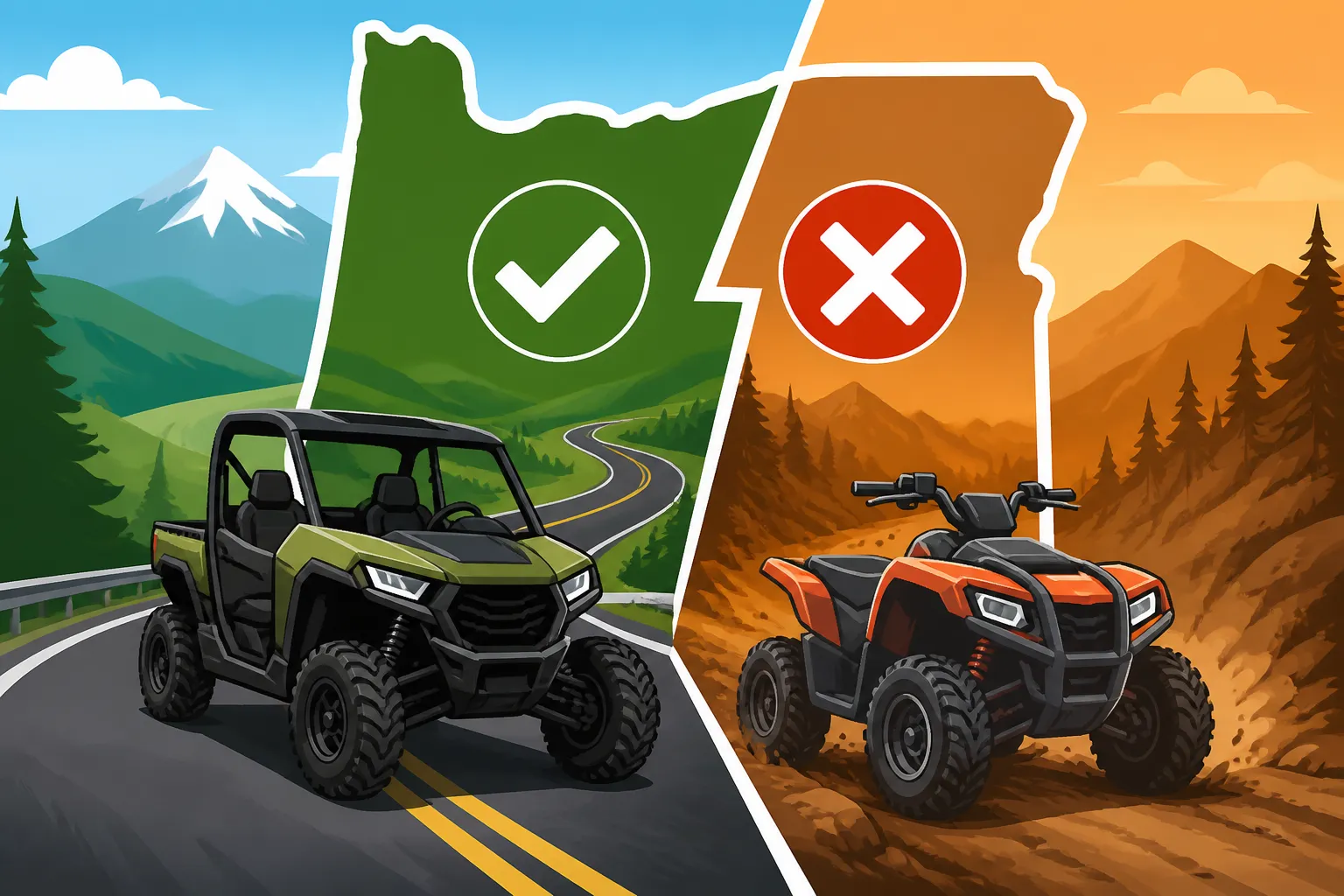
Which Oregon Roads You May Legally Ride
It can feel incredibly frustrating trying to figure out where you can actually ride your ATV or UTV in Oregon without running afoul of the law. You see folks on all sorts of roads, but knowing which ones are truly legal for your machine can be a confusing maze of state statutes, county ordinances, and agency rules. This guide is here to untangle that complexity, explaining the different types of roads in Oregon and what you need to know to ride legally and safely.
The Complex Web of Oregon Road Rules for OHVs
Oregon offers some truly breathtaking places to ride off-road, from the vast expanse of the Oregon Dunes to the dense, winding trails of the Tillamook State Forest. But when it comes to riding on actual roads – paved or unpaved, within a town or out in the wilderness – things get tricky fast. It's not as simple as just having a permit and hitting the pavement.
Why It's So Confusing for Riders
One of the biggest headaches for OHV enthusiasts in Oregon is the sheer lack of a single, straightforward answer to "Can I ride my ATV on this road?" The rules vary wildly depending on several factors: the specific type of machine you're riding, who owns or maintains the road (is it state, county, federal, or private?), and whether there are any specific local ordinances in place. It's a patchwork quilt of regulations, and trying to navigate it can leave even experienced riders scratching their heads.
You might be out exploring, thinking a gravel road looks perfectly fine, only to discover later that it's technically off-limits, potentially leading to a citation. Or you hear about a friend who rides through a small town, only to find out that your town has entirely different rules. This inconsistency can make planning a ride a real research project, which can definitely take some of the fun out of it. We've all been there, wondering if we're doing it right.
The Core Principle: Designated Access vs. General Road Use
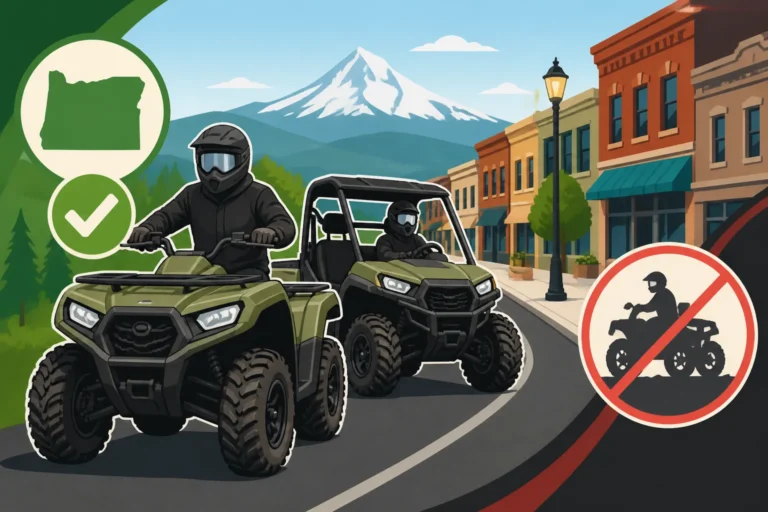
At its heart, Oregon's approach to OHVs on roads boils down to a fundamental distinction: "designated access" versus "general road use." For the vast majority of ATVs and UTVs (Classes I, III, and IV), riding on public roads – especially paved ones – is generally prohibited. These machines are built for off-highway use, and the state's laws reflect that. They are typically not considered [Are ATVs Street Legal in Oregon?].
However, there are specific, limited exceptions where OHVs are allowed on certain roads. These are almost always "designated routes" or roads within official OHV trail systems. Think of it like a carefully drawn map where only specific lines are open to you. It's not about being able to cruise down any road you please, but rather using specific, pre-approved paths to connect trails, access staging areas, or pass through very particular areas. Understanding this core principle is the first step to avoiding a costly mistake or an unpleasant encounter with law enforcement.
Navigating the Paved and Unpaved Labyrinth: Types of Roads
Oregon's road network is incredibly diverse, from bustling interstates to remote gravel tracks. Knowing which ones are fair game for your ATV or UTV is crucial. Let's break down the different categories you'll encounter.
State Highways and Paved County Roads: Mostly No-Go Zones
Let's get this out of the way upfront: if you're picturing yourself cruising down a major state highway like US 101 along the coast or a paved county road connecting two towns, stop right there. For most ATVs and UTVs, these roads are definitively off-limits. Operating a non-street-legal OHV on these roads is not only illegal but also incredibly dangerous. Passenger vehicles travel at high speeds, and your machine is simply not designed for that environment. The legal consequences can range from significant fines to vehicle impoundment, falling under [Oregon Fines for Riding an Unopened Road].
These rules exist for a reason – safety for you and for other drivers. Your quad or side-by-side lacks the standard safety features (like turn signals, proper headlights/taillights, and often even basic mirrors that meet street-legal specifications) and the speed capabilities of regular automobiles. Trying to blend in with traffic on a busy road is a recipe for disaster. It's a tough pill to swallow for some, especially if they're used to different rules in other states, but it's the reality in Oregon.
The Rare Exceptions: Designated ATV Highway Access Routes
Now for the glimmer of hope! While general road use is restricted, Oregon does have a few, very specific "designated ATV highway access routes." These aren't vast networks of roads; rather, they're carefully chosen, limited pathways that allow OHVs to connect to riding areas or travel through small towns where local commerce supports it. As of now, there are only two such designated routes in the entire state: Lakeside and Sumpter. These areas offer unique opportunities for riders to experience a more integrated riding experience.
In these specific locations, local ordinances and state agreements have created defined routes where permitted OHVs can legally operate. For example, [Riding an ATV Through Lakeside] allows riders to navigate specific town streets to access the Oregon Dunes National Recreation Area. Similarly, the route in Sumpter provides access to trails and local amenities. These routes are meticulously planned and require specific signage and clear boundaries. It's critical to remember that these are exceptions to the rule, and you must stick strictly to the marked paths. Veering off a designated route, even a short distance, can put you back in violation territory. The process for [Getting a Town Route Designated] is a lengthy one, involving local government, the Oregon Department of Transportation, and the Oregon Parks and Recreation Department, which is why there are so few of them. It's a testament to the dedication of local communities and OHV advocates that these routes even exist. You can learn more about these special areas in [Oregon's Only Two Designated ATV Routes: Lakeside and Sumpter].
Crossing a State Highway: Brief and Direct
Even though riding on state highways is largely forbidden, there might be times when you need to cross one to get from one legal riding area to another. Oregon law allows for this, but with very strict rules to ensure safety. You must approach the highway at a complete stop, look for traffic in both directions, and then cross directly at a right angle. This means no riding along the shoulder, no weaving, and no taking your time. It's a quick, direct traversal of the roadway, akin to how you might cross railroad tracks.
The emphasis here is on minimizing your time on the highway and ensuring you have clear sightlines. This isn't an excuse to try and sneak in a short ride down the pavement. It's a functional necessity, allowing access between approved riding zones. Always choose a crossing point with excellent visibility, and if there's any doubt about safety or legality, find an alternative route that avoids the highway altogether. [Oregon Rules for Crossing a State Highway] are explicit for a reason.
The Wild West of Unpaved Roads: Forest, BLM, and County Gravel
While paved roads are mostly off-limits, the vast majority of legal OHV road riding in Oregon happens on unpaved surfaces. These include the extensive networks of roads managed by federal agencies like the Forest Service and Bureau of Land Management (BLM), as well as some county gravel roads.
Forest Service Roads and BLM Land: Your Best Bets
If you're looking for vast expanses of road to explore on your ATV or UTV, roads within National Forests and on Bureau of Land Management (BLM) lands are generally your best bet. These agencies manage millions of acres across Oregon, crisscrossed with countless miles of unpaved roads primarily used for timber, recreation, and land management. Many of these roads are open to OHV use, often connecting to designated trail systems.
It's important to understand that "generally open" doesn't mean "always open." You still need to do your homework. Forest Service and BLM offices produce maps (both physical and digital) that clearly indicate which roads and trails are open to OHVs, which are restricted, and which might be seasonally closed. Look for signs at major intersections or trailheads that explicitly state "Open to OHV" or similar language. These roads offer incredible opportunities to access remote campsites, fishing spots, or simply enjoy a scenic ride. Always carry your [Oregon's ATV Operating Permit] when riding on these public lands. For more details, consult [Oregon Rules for Riding a Forest Road] and [Forest Service Roads Open to Oregon ATVs].
County Gravel Roads: A Mixed Bag
County gravel roads are where things can get particularly confusing, as their legality for OHVs varies significantly from one county to the next. Unlike federal lands, where the general rule leans towards openness unless otherwise stated, county roads are often treated more like paved roads. This means that, by default, many county gravel roads are not open to OHVs unless a specific county ordinance has been passed to designate them as such.
A prime example of a county that has enacted such an ordinance is Union County, which passed Ordinance 2019-01 to open specific county roads to OHV use. This is a huge win for riders in that area, allowing them to connect trails and access services. However, this is not the norm across Oregon. You cannot assume that just because a road is gravel, it's open to your ATV or UTV. Always check with the specific county's public works department or sheriff's office for their current OHV ordinances. Riding on a county road that hasn't been specifically opened can lead to a citation, even if it looks like a perfect riding surface. Knowing [Union County Ordinance 2019-01] is useful for riders in that area, but don't apply it elsewhere. For a broader overview, check [Oregon Rules for Riding a County Gravel Road].
Timber Company Roads and Private Land: Proceed with Extreme Caution
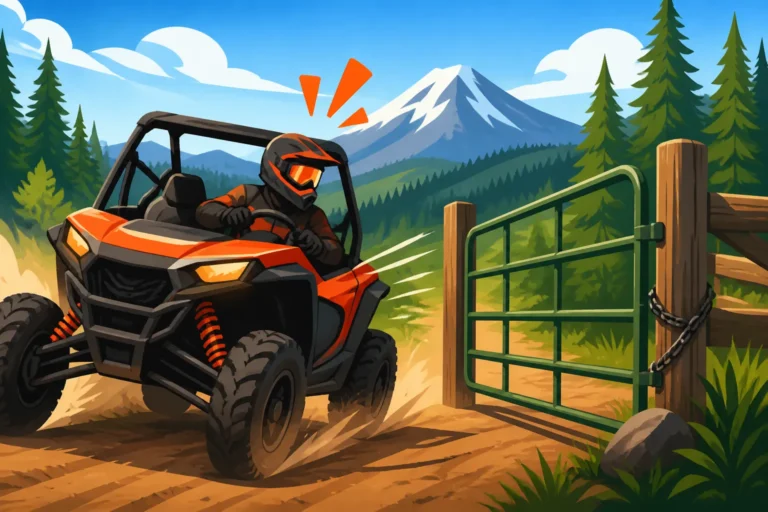
Beyond public lands and county roads, a vast amount of Oregon's unpaved roads exist on private timberland. These roads are typically built and maintained by logging companies for their operations. While they might look like tempting shortcuts or scenic routes, they are almost universally closed to public OHV use without explicit permission. Riding on these roads without permission is considered trespassing, and timber companies are serious about enforcing their private property rights.
Trespassing can lead to fines, impoundment of your machine, and even criminal charges. Some timber companies may offer permits or leases for recreational access during non-logging seasons, but you must acquire these in advance. Never assume a gate being open means you have permission to enter, and always be on the lookout for "No Trespassing" signs or active logging operations. These roads can be dangerous, with heavy equipment, blind corners, and changing conditions. Always respect private property boundaries and seek proper authorization. Further guidance can be found in [Oregon Rules for Riding a Timber Company Road] and [Oregon Trespass Rules for Riders].
What Makes a Machine "Street Legal" in Oregon (and Why Most Aren't)
The term "street legal" is often thrown around casually in the OHV community, but in Oregon, it has a very specific and narrow definition, especially when it comes to riding on public paved roads. For most ATVs and UTVs, achieving true street legality is either impossible or extremely difficult.
The Elusive "Street Legal" Class II Exception
Oregon's vehicle classification system is key here. While most ATVs fall under Class I and most popular side-by-sides are Class IV, there's a unique category: Class II. These are defined by being over 75 inches in width or having a dry weight exceeding 3,500 pounds, and they typically feature automotive-style controls (steering wheel, foot pedals) and bench seats rather than straddle seats and handlebars. Think of vehicles like sand rails, rock crawlers, or highly modified dune buggies. It is only certain Class II machines that can, under specific circumstances, be titled and registered with the Oregon Department of Motor Vehicles (DMV) as street legal.
To become street legal, a Class II machine must meet all the equipment requirements of a regular passenger vehicle, including turn signals, brake lights, headlights, taillights, windshields, mirrors, seat belts, and proper tires. Even then, its road use might be restricted to certain types of roads or specific times of day. Crucially, if you do get a Class II machine registered for street use, it will require mandatory liability insurance, just like a car. This is a significant distinction, as insurance is not typically required for other OHV classes used solely off-road. [Oregon's Class II Under ORS 801.193] and [Class II Machines That Can Be Plated in Oregon] provide more insights into this specific category.
Why Your Quad or Side-by-Side Likely Isn't Street Legal
For the vast majority of riders, if you own a standard quad (Class I) or a common side-by-side (Class IV), your machine cannot be made street legal in Oregon for general road use. This often comes as a surprise, especially for those who've seen people riding similar machines on roads in other states. The issue isn't just about adding a few lights or a horn. Oregon's DMV does not allow these classes of vehicles to be titled and registered for highway use, regardless of how many aftermarket accessories you bolt on.
Even if you install a full turn signal kit, mirrors, and a horn from a reputable brand like SuperATV, these modifications, while excellent for improving safety and signaling on designated OHV trails or permitted gravel roads, do not magically confer street legality for paved public roads in Oregon. The foundational classification of your vehicle dictates its road-legal status. [Why Oregon Will Not Plate a Quad] and [Why a Class IV Cannot Get Oregon Plates] spell out these restrictions clearly. It's a common misconception that simply modifying your OHV is enough, but in Oregon, the law looks at the vehicle's class first and foremost.
Essential Gear for Any Road Use (Even Off-Road)
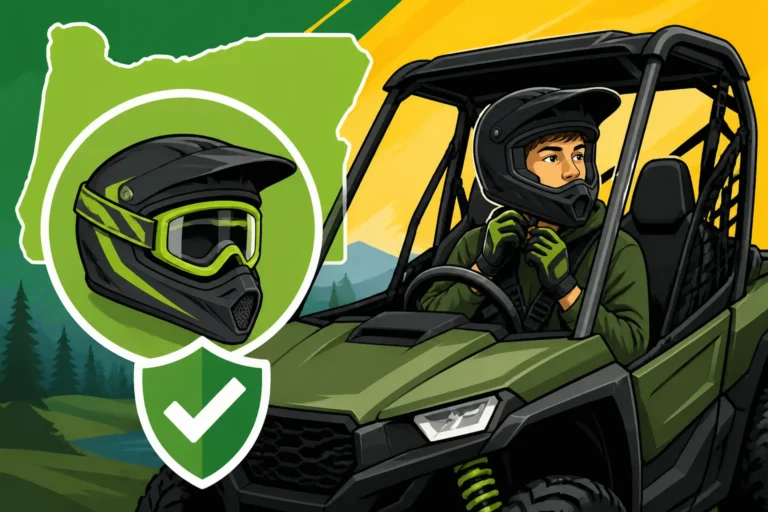
Regardless of whether you're on a strictly off-road trail or a legally designated road, certain safety equipment is non-negotiable in Oregon. First and foremost, helmets. The [Oregon Helmet Law for ATV Riders] is very clear: anyone under 18 operating or riding as a passenger on an ATV (Class I, III, or IV) must wear a DOT-approved helmet. For adults, while not always legally mandated on every machine type or location, it is always the safest choice, particularly when riding on roads where you might encounter other vehicles. Many operators choose to use safety features from manufacturers like SuperATV for their own protection.
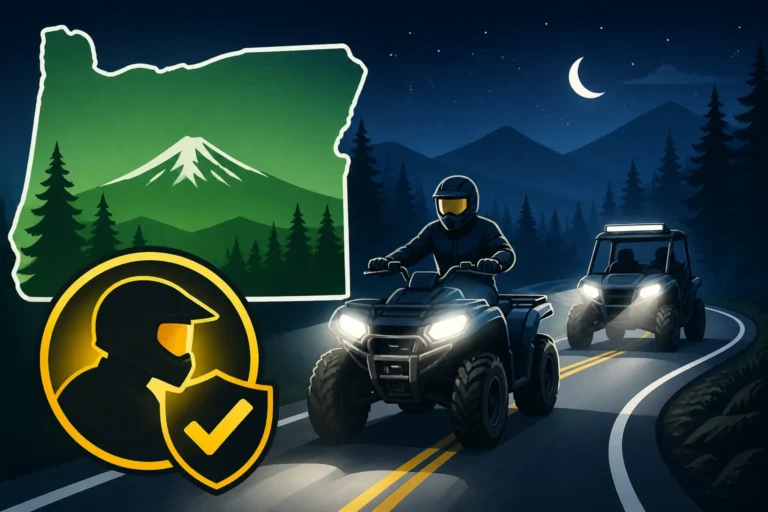
Beyond helmets, all OHVs operating on public lands (including roads) must be equipped with an approved spark arrester to prevent wildfires. This is a strict requirement, and rangers regularly conduct checks. Noise is another consideration, with specific sound limits in place to protect natural environments and local communities. If you plan on riding on designated routes at night, proper lighting (headlights and taillights) is also essential for visibility and compliance. Always check the specific requirements for the area you plan to ride, as regulations can vary. [Oregon Spark Arrester Requirement] is critical to avoid fines and protect our forests.
The Importance of Permits, Maps, and Local Knowledge
Riding legally and safely on Oregon's diverse road network requires more than just knowing the rules; it demands preparation, the right documentation, and a commitment to staying informed.
Your Oregon ATV Operating Permit: The Bare Minimum
Before you even think about hitting any public land, including roads where OHVs are permitted, you absolutely must have an Oregon ATV Operating Permit. This is a decal that you display on your machine, signifying that you've paid the required fee and are authorized to operate on public lands. It's not a registration that makes your machine street legal, but it's the fundamental requirement for recreational use.
This permit is issued by the Oregon Parks and Recreation Department (OPRD) and funds crucial OHV programs, trail maintenance, and safety education. Without it, you could face a citation even if you're on a legally open road or trail. The good news is that [What Oregon's $10 ATV Operating Permit Covers] is quite comprehensive, and it lasts for two years. Think of it as your passport to Oregon's fantastic riding opportunities. Always make sure your [Oregon's ATV Operating Permit] is current and properly displayed.
The Indispensable Role of Maps and Apps
Navigating Oregon's complex road system effectively requires good maps. Relying on memory or outdated information is a recipe for getting lost, trespassing, or riding on closed routes. Official Forest Service, BLM, and state park maps are your best friends. These maps often color-code roads and trails, clearly indicating which ones are open to OHVs, which are seasonal, and which are strictly off-limits. Many maps also provide critical information about amenities, staging areas, and rules specific to that region.
In addition to physical maps, modern GPS apps like Gaia GPS, onX Offroad, or Avenza Maps (which allows you to download geo-referenced PDF maps) can be invaluable. These apps often show public and private land boundaries, trail systems, and roads, helping you stay on the legal path. However, even with the best digital tools, always be vigilant for posted signs on the ground. A map might show a road as open, but a temporary closure sign due to fire, logging, or weather takes precedence. For help choosing the right tools, check [Oregon Trail Maps Worth Carrying].
Checking Local Conditions and Ordinances
Oregon's landscape is dynamic, and so are its rules. What was open yesterday might be closed today due to unforeseen circumstances. Fire season, heavy rainfall, logging operations, and wildlife closures can all lead to temporary restrictions on roads and trails. Therefore, it's absolutely critical to check with the local land management agency (Forest Service district office, BLM field office, or county sheriff) before you head out.
Their websites, social media pages, or a quick phone call can provide the most up-to-date information on closures, fire restrictions, and any changes to local ordinances. This is especially true for county gravel roads, where local rules can change without much statewide publicity. Being prepared means staying informed. Never assume a road is open; always verify, especially when planning a long trip or riding in a new area. Being aware of [Oregon Trail Closures to Check First] can save you a lot of time and frustration.
Planning Your Ride and Staying Safe on Oregon Roads
Riding ATVs and UTVs on any road, even a legal one, comes with its own set of responsibilities and safety considerations. Planning ahead and practicing good etiquette are key to an enjoyable and safe experience for everyone.
Respecting Other Road Users and Environmental Rules
When you're riding on gravel roads that are open to OHVs, remember that you're often sharing these spaces with a variety of other users. This could include passenger cars, hikers, cyclists, equestrians, and even heavy logging trucks. [Sharing a Gravel Road With Log Trucks] is a common reality in many parts of Oregon's forests, and those trucks always have the right of way – they are big, heavy, and have limited visibility. Always yield to larger vehicles, and be prepared to pull over safely to let them pass.
Dust control is another major concern, especially in dry conditions. Slow down when approaching other vehicles or residential areas to minimize dust kick-up. Beyond other users, it's vital to adhere to all environmental rules. Stay on designated routes, avoid riding in sensitive areas, and pack out everything you pack in. Our riding areas are a privilege, not a right, and responsible behavior helps ensure continued access for everyone.
Safety on the Road: Visibility and Awareness
Riding on roads, even unpaved ones, requires a heightened level of awareness compared to riding on a dedicated trail. You're sharing space with others, and visibility becomes paramount. Dress in bright colors and consider adding reflective elements to your gear. Your OHV should have working headlights and taillights, especially if there's any chance you'll be riding near dusk or in low-light conditions.
Many riders also opt for additional safety accessories. Mirrors, for example, are incredibly helpful for keeping an eye on traffic behind you on a shared road. LED light bars, often available from brands like SuperATV, can significantly increase your forward visibility and help other drivers see you, especially on dusty roads or in forested areas. Remember, you might be less noticeable than a standard car, so take every precaution to make your presence known. Always maintain a safe speed, especially around blind corners, and be prepared for unexpected obstacles or other vehicles.
What to Do if You Encounter Law Enforcement
It's inevitable that at some point, you might encounter a law enforcement officer while riding, whether it's a State Trooper, a County Sheriff's Deputy, or a Forest Service Ranger. The most important thing to do is remain calm, be polite, and cooperate fully. If an officer signals you to stop, pull over safely and turn off your engine. Keep your hands visible and wait for their instructions.
You'll likely be asked for your driver's license, your Oregon ATV Operating Permit, and potentially your Oregon ATV Safety Education Card (if applicable). Make sure these documents are easily accessible. If you're riding a Class II machine, you might also be asked for proof of insurance and registration. Clearly understand the classification of your machine and where you are legally allowed to ride it. If you're on a road you know is legal, confidently state that. If you're unsure, it's best to be honest. Understanding [What an Oregon Trooper Checks Roadside] can help you prepare and react appropriately. Knowing the rules and having your paperwork in order will make any interaction much smoother.
| Road Type | General Legality for Non-Street-Legal OHVs | Key Considerations | Examples |
|---|---|---|---|
| State Highways (Paved) | NO (Illegal) | Crossing allowed at right angles, only when safe. | US 101, OR-58, I-5 |
| Paved County Roads | NO (Illegal) | Unless specifically designated by local ordinance. | Most paved roads in any county |
| Designated Access Routes | YES (Legal, limited) | Only the two routes: Lakeside & Sumpter. Specific rules apply. | [Oregon's Only Two Designated ATV Routes: Lakeside and Sumpter] |
| Forest Service Roads | GENERALLY YES (Legal) | Check local maps for OHV-friendly routes. Observe closures/signs. | Roads in Tillamook State Forest, Mt. Hood National Forest |
| BLM Roads | GENERALLY YES (Legal) | Check local maps. Similar rules to Forest Service roads. | Roads in Millican Valley, Christmas Valley |
| County Gravel Roads | SOMETIMES (Varies by County) | Only if a county ordinance explicitly opens them (e.g., Union Co.). | Rural gravel roads outside designated OHV areas |
| Private Timberland Roads | NO (Illegal) | Unless explicit permission/permit obtained from timber company. | Many logging roads, especially active ones |
Disclaimer
This article is for general informational purposes only and does not constitute professional advice. Laws, prices and regulations vary by location and change over time. Consult a qualified professional for guidance on your specific situation.