Oregon Rules for Carrying a Firearm on an ATV
It’s a common scenario: you’ve got your ATV or UTV all prepped for a weekend in Oregon's stunning backcountry, perhaps a hunting trip, or maybe just a deep dive into some remote trails where peace of mind comes from being prepared. But then the questions start swirling: Can I actually carry my firearm on my machine? What are the rules? Am I going to get myself into trouble trying to do something perfectly legal? It’s not always straightforward, and navigating the nuances of Oregon’s firearm laws while also adhering to ATV regulations can feel like trying to hit a moving target. This guide is here to help you untangle those complexities, ensuring you can enjoy your time outdoors safely, legally, and without unnecessary stress.
The Intersection of Oregon ATV and Firearm Laws
One of the biggest misconceptions people have is that there’s some special, unique law governing firearms specifically when you’re on an ATV or UTV. The truth is, there generally isn’t. Instead, what you’re dealing with is a confluence of existing state and federal firearm laws, combined with the rules governing the specific land you’re riding on, and, if you’re hunting, the Oregon Department of Fish and Wildlife (ODFW) regulations. It’s a mosaic of rules, not a single, clear-cut ATV-specific statute. You wouldn’t just strap a rifle to your street bike without thinking about it, right? The same caution applies here, even if the terrain is wilder.
No Specific ATV Firearm Law (But General Laws Apply)
Oregon is, for the most part, an "open-carry" state, meaning that you can generally carry a firearm openly without a permit. However, if you intend to carry concealed, you absolutely need an Oregon Concealed Handgun License (CHL). This is a critical distinction that many riders overlook when thinking about their sidearm in a holster on their hip or in a console. The moment that firearm is not openly visible, you could be entering "concealed carry" territory, which carries different legal requirements.
Beyond open versus concealed carry, general prohibitions still apply. You can’t carry a firearm if you’re a prohibited person (e.g., convicted felon, subject to a restraining order). You also can’t carry in certain "gun-free zones" like federal buildings, courthouses, or schools, regardless of whether you're on foot or on your ATV. Even if you're deep in the forest, if you pull up to a visitor center that's a federal facility, those rules kick in. It’s not just about what you can do, but also about where you can’t. Always remember that your ATV is simply a mode of transport; it doesn't grant you special exemptions from existing firearm laws. [Oregon ATV Permits Explained] is a good resource for understanding the basic permissions you need for your machine itself.
Public vs. Private Land Considerations
Where you ride your ATV or UTV makes a huge difference in firearm regulations. Oregon offers a diverse range of riding opportunities, from the vast expanses of the national forests and Bureau of Land Management (BLM) lands to designated state parks and, of course, private property. Each of these land types can have its own set of rules, often layered on top of state and federal laws.
On National Forests and BLM lands, which make up a significant portion of Oregon's backcountry, general state and federal firearm laws typically apply. This means open carry is generally allowed, and concealed carry with a valid CHL. However, specific forest or BLM districts might have their own nuanced rules, particularly concerning hunting seasons, motorized travel, or sensitive wildlife areas. Always check with the specific ranger district or BLM field office for the area you plan to visit. You might find a sign at the staging area or an updated online notice that restricts certain activities. Think of it as knowing the speed limit on a new road—you wouldn't just guess. For more on these areas, check out [Oregon Rules for Riding a National Forest] and [Oregon Rules for Riding BLM Land].
Oregon State Parks are a different beast entirely. They tend to have much stricter regulations, often prohibiting the open carry of firearms in developed recreation areas (like campgrounds, day-use areas, or visitor centers) or requiring firearms to be unloaded and cased. If you're riding through a state park to access a trail or you're camping there, you need to be acutely aware of their specific policies. These are usually clearly posted or available on the Oregon Parks and Recreation Department website. Don’t assume that because you can carry openly in the forest, you can do so in a busy state park campground. That assumption could lead to a very unpleasant interaction. Find out more at [Oregon Rules for Riding a State Park].
Finally, private land is dictated by the landowner's rules. If you have permission to ride on private timber company land or a friend's property, they can set their own restrictions on firearms. Even if Oregon law allows open carry, the landowner can prohibit it on their property. Always ask permission and clarify any rules regarding firearms before you enter. Respecting these boundaries is crucial, not just for legal compliance but for maintaining good relationships with landowners. For more on this, see [Oregon Rules for Riding on Private Land].
Hunting Regulations and Transport
If your primary reason for carrying a firearm on your ATV or UTV is for hunting, then Oregon Department of Fish and Wildlife (ODFW) regulations become your guiding star. These rules are very specific about how firearms must be transported when hunting, especially concerning whether they are loaded or unloaded, and cased or uncased, and their proximity to game.
Generally, ODFW regulations state that you cannot have a loaded firearm in or on a motor vehicle (including an ATV/UTV) while off a public road, unless you are actively engaged in hunting from a stationary vehicle in an area where it's explicitly allowed. What constitutes "loaded" can vary, but typically it means a round in the chamber or magazine attached to the firearm. This rule is designed to prevent "road hunting" or shooting from a moving vehicle, which is unsafe and illegal. So, if you're just driving your ATV to a hunting spot, your firearm should be unloaded and ideally cased or secured in a way that it's not readily accessible for immediate use.
The ODFW hunting manual is your bible here. It outlines specific rules for different game animals, seasons, and weapon types. For example, some areas might have restrictions on rifle hunting but allow archery. Always consult the most current ODFW regulations for the specific unit and season you are hunting. This also includes rules around bright orange requirements during hunting season, even if you’re just riding. Mixing hunting with ATV recreation requires double-checking both sets of regulations.
Practical Considerations for Carrying a Firearm on Your Machine
Okay, so you’ve checked the laws, you know where you’re riding, and you’re cleared to carry. Now, how do you actually do it safely and effectively on an ATV or UTV? This isn't like slinging a rifle over your shoulder for a walk in the woods. Your machine vibrates, kicks up dust, gets wet, and can take a tumble. Your firearm needs to be protected, secure, and accessible (if the situation demands it) without compromising safety.
Safe and Secure Transport Options
The method you choose for transporting your firearm on your ATV or UTV is paramount. You need something that will hold the firearm securely, prevent accidental discharge, and protect it from the elements and terrain.
- Scabbards and Gun Boots: These are perhaps the most popular and practical options for rifles and shotguns. A hard-sided gun boot, often made from durable plastic, fully encloses the firearm, protecting it from dust, mud, rain, and impacts. They usually mount securely to your ATV rack or UTV roll cage. Brands like SuperATV offer robust gun cases and mounting solutions designed specifically for the rugged environment of off-road riding. They understand the challenges of vibration and exposure. Soft scabbards also exist, offering protection from dust and scratches, but less from impact or heavy rain.
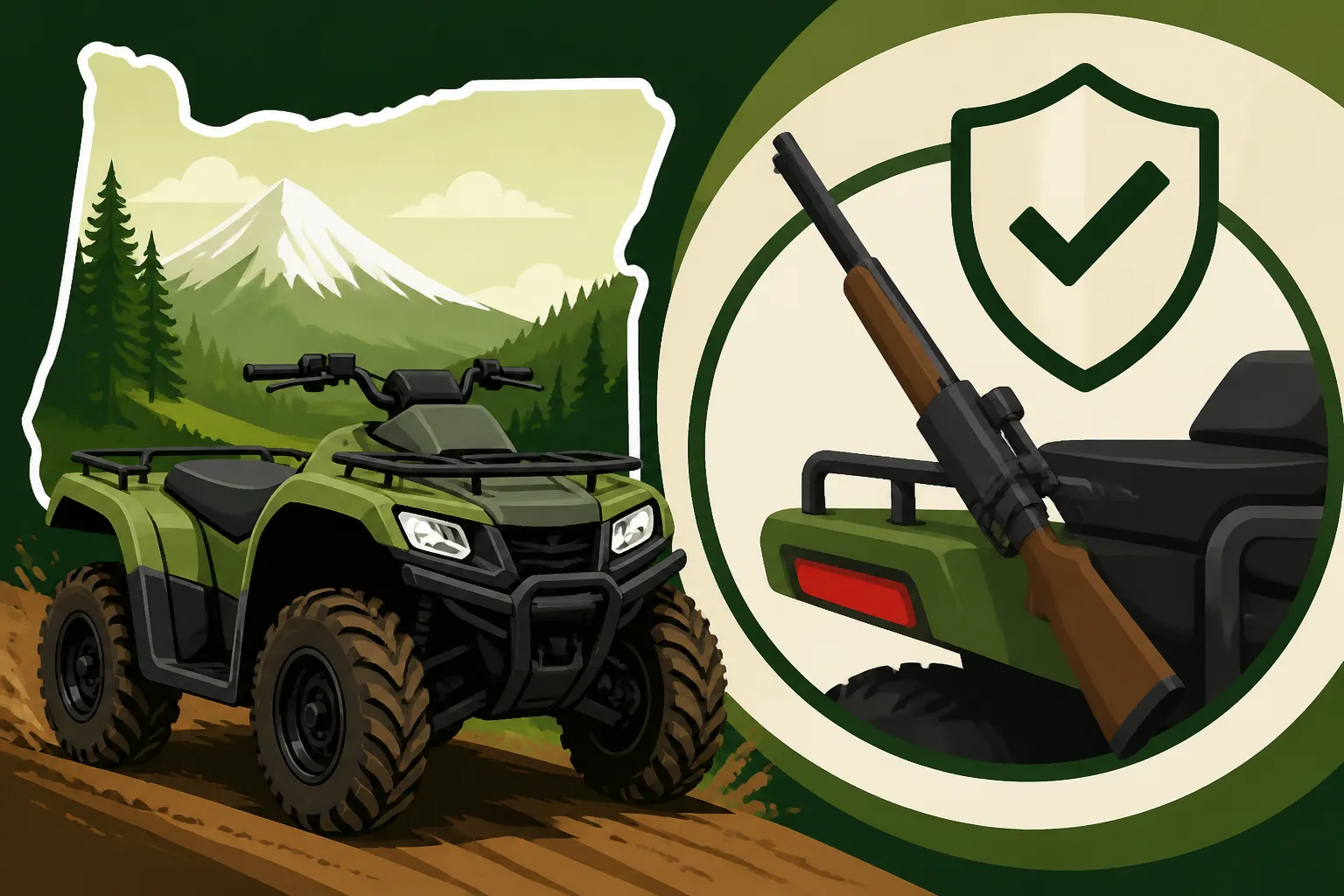
- Gun Racks: For quicker access, or if you prefer open carry (and it's legal in your location and context), gun racks hold the firearm securely in place, often with rubberized clamps. These are typically mounted across the front or rear rack of an ATV or inside the cab of a UTV. While they offer accessibility, they leave the firearm exposed to the elements. If you go this route, consider adding a cover or ensuring the firearm is unloaded and secured with a trigger lock, especially if you're traversing rough terrain where bumps could jostle it.
- Mounting Solutions: For handguns, specialized holsters or secure console mounts are available for UTVs. For ATVs, chest holsters or hip holsters are common, but consider their exposure to dust and debris, and how they might interfere with your riding position. Ensure any handgun carried on your person is secured and, if concealed, that you have your CHL. A high-quality holster that covers the trigger guard is non-negotiable.
When installing any of these, make sure they are attached firmly. A rattling rifle can be incredibly annoying, but worse, it can get damaged or, in extreme cases, even come loose. Consider how vibration might affect your scope or sights over time, and adjust your mounting system accordingly.
Protecting Your Firearm from the Elements and Terrain
Oregon's diverse landscapes mean your ATV ride could take you from dusty high desert trails to muddy coastal forests or through sudden downpours. Your firearm, especially its optics and delicate mechanisms, needs protection from these harsh conditions.
- Dust and Dirt: Fine dust can quickly foul firearm actions and optics, leading to malfunctions or decreased accuracy. Hard gun cases or fully enclosed gun boots are excellent for keeping dust out. If using an open rack, consider a dust cover or regularly cleaning your firearm.
- Moisture and Rain: Riding in the rain or splashing through puddles is common in Oregon. Water can lead to rust and corrosion. Waterproof cases are ideal. Even a light drizzle can cause issues if your firearm is exposed for prolonged periods.
- Vibration and Impact: ATVs and UTVs are not known for smooth rides. Constant vibration can loosen screws on scopes, affect zero, and generally wear on the firearm. Proper padding within cases and secure mounting are essential. If you frequently carry, consider investing in robust, off-road specific firearm accessories. Imagine hitting a deep pothole or getting airborne for a second – you want that firearm to stay exactly where you put it.
After every ride, especially if you’ve been in dusty or wet conditions, take the time to inspect and clean your firearm. This preventative maintenance will ensure its longevity and reliability. Don't forget to protect your internal documents from the wet climate, too; a dry bag for your [Oregon ATV Permit Decal] or other paperwork is always a good idea.
Accessibility vs. Safety
This is the classic dilemma when carrying a firearm: you want it readily accessible if you need it, but it must be safely stored to prevent accidents.
For hunting, accessibility often means the ability to quickly uncase and load your firearm once you've stopped and are in a legal hunting position. This doesn't mean having it loaded and ready while bumping down the trail. For self-defense in remote areas, a handgun might be carried in a chest holster for quicker access, but again, safety with a loaded weapon in a dynamic riding environment is paramount.
The key is to define "accessible" within the bounds of safety and legality. If your firearm is carried in a manner that allows for unsafe handling, accidental discharge, or non-compliance with "loaded vehicle" laws, it's not truly accessible in a responsible way. Always prioritize safety. A firearm that causes an accident is worse than one that was slightly harder to reach. This balance often comes down to individual scenarios and specific legal requirements. Consider the potential for a citation from a ranger, like for [Oregon's Class C Traffic Violation for No Permit], but in this case for firearm misuse.
Understanding Prohibited Areas and Specific Restrictions
Even with a permit and the right gear, certain places are simply off-limits for firearms, or have highly specific rules. Knowing these "no-go" zones is crucial for avoiding legal trouble.
Federal, State, and Local "No-Go" Zones
Beyond the general state laws, specific federal, state, and even local entities can impose their own restrictions on firearms.
- Federal Facilities: As mentioned, federal buildings (like ranger stations, visitor centers, post offices) are typically gun-free zones. Even if you're on a National Forest, if you enter a designated federal facility, you're subject to those rules.
- Wilderness Areas: Designated federal wilderness areas, found within National Forests and BLM lands, often have specific restrictions on motorized travel and, in some cases, can have unique rules regarding firearms, especially concerning hunting. Remember, ATVs and UTVs are typically prohibited in wilderness areas altogether, so if you're hiking into one with a firearm, you'd be leaving your machine behind.
- Local Ordinances: While less common in remote riding areas, some towns or counties might have specific ordinances that restrict firearm carry in certain public spaces. If your ride takes you through or near a town, like on [Oregon's Only Two Designated ATV Routes: Lakeside and Sumpter], you need to be aware of any local rules.
It's a lot to keep track of, but the general rule of thumb is: when in doubt, check with the local authority (Forest Service, BLM, State Park office, county sheriff) responsible for the area you're visiting. A quick phone call or website check can save you a lot of grief.
Oregon State Park and Campground Rules
To reiterate, Oregon State Parks are particularly stringent. While you might see people open carrying in town or on vast stretches of BLM land, this is generally not permitted in the developed areas of state parks. The rules often state that firearms must be unloaded, in a case, and stored out of sight. This applies to campgrounds, picnic areas, and interpretive sites.
If hunting is permitted within a designated hunting area of a state park, then the ODFW hunting regulations would apply in conjunction with any specific park rules for firearm transport to and from that area. However, merely passing through a state park with a loaded, uncased firearm on your ATV, even if you have a valid permit, is highly likely to lead to a citation. Be extra cautious around any state park facility.
Exceptions and Common Misconceptions
There are several common misconceptions that can lead riders astray:
- "My CHL means I can carry anywhere." No, a CHL allows concealed carry where otherwise legal. It doesn't override federal gun-free zones or specific restrictions by landowners or state agencies (like State Parks).
- "It's public land, so anything goes." This is far from the truth. Public land is managed land, and management agencies (Forest Service, BLM, ODFW) have rules that govern activities, including firearm carry.
- "I'm just transporting it, it doesn't need to be unloaded." If you're transporting a firearm in or on a vehicle and not actively hunting (as defined by ODFW), it generally needs to be unloaded. This is a common enforcement point.
- "A roof on my UTV exempts me from helmet laws." While some Class II machines might have different rules for helmets depending on the roof and roll cage, this has absolutely no bearing on firearm laws. [Helmet Rules for a Teenager in a Caged Side-by-Side] gives you details on those distinctions.
Always remember that laws are interpreted and enforced by authorities on the ground. Your interpretation, even if well-intended, might differ from theirs.
What to Expect During a Stop and Remaining Compliant
Even if you're doing everything right, you might still encounter law enforcement or a ranger. Knowing how to interact professionally and having your paperwork in order can make all the difference.
Interacting with Law Enforcement or Rangers
If you are stopped by an Oregon State Trooper, county sheriff, Forest Service law enforcement officer, BLM ranger, or ODFW game warden while on your ATV/UTV and you are carrying a firearm, here's some advice:
- Be Transparent and Calm: The moment you realize you're being stopped, if you have a firearm on your person or openly displayed on your machine, calmly inform the officer. Say something like, "Officer, I want to let you know I have a firearm in a scabbard on my machine," or "I have a concealed handgun on my person, and I possess an Oregon CHL." This transparency immediately builds trust and reduces potential tension. Do not reach for the firearm without explicit instruction.
- Follow Instructions: Whatever the officer instructs you to do, do it calmly and without argument. They might ask you to step off your machine, keep your hands visible, or show your license and permit.
- Provide Documentation: Have your ATV operating permit, identification, and if applicable, your CHL readily available. [Oregon ATV Permit Cost] is minimal compared to the cost of a citation for not having it. You should always carry your [Oregon ATV Safety Education Card] as well.
- Know Your Rights, But Be Respectful: You have rights, but asserting them aggressively during a roadside stop is rarely productive. Answer questions truthfully and politely. If you feel uncomfortable answering a question, you can state that you prefer not to, but remember an officer may have probable cause to search based on reasonable suspicion.
Remember, these officers are primarily concerned with safety and compliance. A respectful, cooperative attitude goes a long way.
Consequences of Non-Compliance
Violating firearm laws while on an ATV or UTV can have serious consequences, ranging from minor infractions to felony charges, depending on the nature of the offense and the location.
- Fines: Simple violations, like an uncased firearm where one is required, might result in a significant fine.
- Confiscation: In more serious cases, especially if there's an illegal loaded firearm or a firearm used in a prohibited manner, the firearm itself could be confiscated.
- Arrest and Charges: More severe violations, such as carrying a concealed weapon without a CHL, being a prohibited person in possession of a firearm, or discharging a firearm illegally, can lead to arrest, significant jail time, and felony charges, which would strip you of your firearm rights permanently.
- Loss of Hunting Privileges: If the violation involves ODFW regulations, you could lose your hunting license and privileges for a period of time.
These consequences are far more impactful than a simple ATV permit violation, so understanding and adhering to firearm laws is critical. Don't forget that mixing alcohol and firearms is also a serious offense, so be aware of [Oregon DUI Rules for ATV Riders].
Always Know Before You Go
The single most important piece of advice when it comes to carrying a firearm on your Oregon ATV or UTV is to "Know Before You Go." The responsibility rests entirely with you, the rider.
- Research Specific Areas: Before you head out, specifically research the firearm regulations for the exact public land agency (Forest Service, BLM, State Parks) or private property you plan to ride on.
- Check ODFW Regulations: If hunting, always consult the current ODFW hunting manual for the specific unit and season.
- Stay Updated: Laws and regulations can change. What was permissible last year might not be today. Always check for the most current information.
- When in Doubt, Don't: If you are unsure about a specific regulation or situation, err on the side of caution. An unloaded, cased, and securely stored firearm is almost always the safest and most legally compliant option when in transit.
By taking the time to understand and adhere to these regulations, you can ensure your Oregon ATV and UTV adventures are not only thrilling but also safe and within the bounds of the law, allowing you to carry your firearm with confidence and peace of mind.
| Land Type | General Firearm Rule | Key Considerations |
|---|---|---|
| Private Land | Owner's discretion; state/federal laws still apply. | Always obtain explicit permission from the landowner for riding and carrying firearms. Respect any specific rules they set. Ensure your activities comply with any local ordinances. |
| National Forests / BLM | Generally allowed under state and federal law (open carry, concealed with CHL). | Check specific forest/district/BLM field office for any localized restrictions, especially during hunting seasons or in sensitive areas. Loaded firearms in/on a vehicle are generally prohibited unless actively hunting per ODFW rules. Respect wilderness area boundaries (no ATVs). |
| Oregon State Parks | Highly restricted; often prohibited in developed areas. Firearms must be unloaded. | Firearms typically must be unloaded, cased, and securely stored in developed areas (campgrounds, day-use areas). Only allowed for hunting in designated hunt areas, adhering to ODFW and park-specific rules. Always check park regulations before entry. |
| County/Forest Roads | State and federal laws apply. | Loaded firearms are often prohibited in or on a vehicle unless actively hunting and meeting ODFW regulations. Be mindful of private property lines adjacent to roads. [Oregon Rules for Riding a Forest Road] and [Oregon Rules for Riding a County Gravel Road] apply. |
Disclaimer
This article is for general informational purposes only and does not constitute professional advice. Laws, prices and regulations vary by location and change over time. Consult a qualified professional for guidance on your specific situation.