Inside Oregon’s ATV Highway Access Routes Advisory Committee
The dream of many ATV and UTV enthusiasts in Oregon is to seamlessly transition from the dusty trail to grabbing a burger in town, or even just heading to the gas station without having to load up on a trailer. But the reality of street-legal operation for off-highway vehicles in our beautiful state can feel like navigating a dense, confusing forest. It's frustrating to hear about other states where it's easier, only to face a labyrinth of rules here. This guide is here to clear the mud, explaining Oregon's unique approach to road access for ATVs and UTVs, and shedding light on the crucial work of the Oregon ATV Highway Access Routes Advisory Committee in making these limited opportunities a reality.
Understanding the Oregon ATV Landscape
For most folks, the idea of an ATV or UTV immediately conjures images of tearing through the dunes, climbing a rocky trail, or navigating a muddy forest path. And largely, that's precisely how Oregon views these machines.
The General Rule: Off-Road Machines
By and large, Oregon classifies ATVs and UTVs as off-highway recreational vehicles. This means they are primarily designed and intended for use on designated trails, open riding areas, or private property, far from the hustle and bustle of public roads. The vast majority of quads and side-by-sides you see at staging areas like Sand Lake or Browns Camp fall into this category. The state's foundational regulations are built around keeping these powerful, often fast-moving machines separate from conventional traffic, largely for safety reasons. It's perfectly understandable from a governmental perspective, but for us riders, it's often a source of frustration. You’ve just finished a killer ride at Millican Valley and all you want to do is roll into Bend for some grub without loading up your rig, only to remember your machine isn't welcome on most paved roads. You absolutely need an [Oregon's ATV Operating Permit] to ride these machines on public lands, but that permit is for off-highway use.
This distinction is crucial because it sets the baseline expectation: most ATVs and UTVs in Oregon are not street legal by default. They lack many of the safety features common on road-legal vehicles, such as turn signals, mirrors on both sides, and Department of Transportation (DOT)-approved tires. While these machines are incredibly fun and capable in their intended environment, these missing elements are significant hurdles for general road use. The state prioritizes the safety of both the OHV rider and other motorists on public roadways.
Why Oregon's DMV Does Not Register ATVs
One of the most common points of confusion for new residents or riders coming from other states is why the Oregon Department of Motor Vehicles (DMV) isn't involved in the general permitting of ATVs. In many places, a single registration might cover both on-road and off-road use, or at least be handled by the same agency. Not in Oregon. Our system is set up quite differently.
In Oregon, the responsibility for managing off-highway vehicles, including the issuance of operating permits, falls under the Oregon Parks and Recreation Department (OPRD), not the DMV. This separation clearly signals the state's primary view of these machines as recreational equipment for off-pavement adventures. When you purchase an ATV or UTV, you don't take it to the DMV for registration in the same way you would a car or truck. You get an operating permit decal from OPRD or one of its many agents. [Why Oregon's DMV Does Not Register ATVs] explains this system in detail.
This distinct administrative structure means that the vast majority of ATVs and UTVs in Oregon operate entirely outside the DMV's traditional vehicle registration framework. For many riders, especially those new to Oregon, this can be a baffling and somewhat annoying bureaucratic hurdle. It forces you to understand two completely different sets of rules and agencies depending on where you want to ride. It underscores the off-highway focus and highlights the exceptional nature of any road access that is granted.
The Nuance of Oregon's ATV Class System
Before diving into road access, it's vital to understand how Oregon categorizes off-highway vehicles, as this classification profoundly impacts where and how you can ride, especially when it comes to paved surfaces.
Class I and Class IV: Off-Highway Exclusivity
Oregon's system defines several classes of ATVs, and for most riders, Class I and Class IV are the most common. Class I includes traditional quads – those four-wheeled machines with handlebars and a straddle seat, typically under 50 inches in width. Think of your standard sport quad or utility ATV. [Oregon's Class I Under ORS 801.190] provides the exact legal definition. Class IV refers to side-by-side (SxS) vehicles, often called UTVs, which have a steering wheel, foot pedals, and usually bench or bucket seating, with a dry weight less than 3,500 pounds and a width under 75 inches. These are your typical two- or four-seat recreational UTVs. For more on this, check out [Oregon's Class IV Side-by-Sides Under 75 Inches].
The critical takeaway for both Class I and Class IV machines is that they are almost exclusively considered off-road vehicles in Oregon. While you might occasionally see them briefly crossing a paved highway at a designated intersection, or operating on certain unimproved county roads to access trails, plating them for general street legality is simply not an option. You cannot register a Class I quad or a Class IV side-by-side with the DMV for regular road use. This fact often comes as a shock to riders coming from states with more permissive laws for UTVs on public roads.
This means that while your permit allows you to ride these machines on thousands of miles of trails and forest roads, it does not grant you the right to drive them down Main Street or on a state highway, outside of very specific, limited exceptions. These exceptions usually involve accessing private property or for [Oregon Rules for Agricultural Road Use]. It’s a frustrating limitation, especially when you see newer, highly capable side-by-sides that look every bit as sturdy as a small car. But in Oregon, their purpose is distinct.
Class II: The Street-Legal Exception and Its Implications
Now, here's where things get interesting and a bit less restrictive. Oregon's Class II designation carves out a specific niche for off-highway vehicles that can be made street legal. These aren't your typical quads or side-by-sides. Class II includes vehicles such as sand rails, dune buggies, and other similar specialty vehicles that are often equipped with a steering wheel and can be designed to meet federal highway safety standards with the right modifications. You can find the specific details in [Oregon's Class II Under ORS 801.193].
If you own a Class II machine, you have the unique opportunity to get it titled and registered with the Oregon DMV, essentially converting it into a street-legal vehicle. This is a significant difference from Class I and Class IV machines. To achieve this, your Class II vehicle must undergo a series of modifications to comply with all standard on-road vehicle requirements. This includes having DOT-approved tires, fully functional headlights and taillights, turn signals, brake lights, a horn, mirrors (typically on both sides), a windshield, and seatbelts. It's a comprehensive process, and you'll need to demonstrate to the DMV that your machine meets these standards, often through an inspection. [Registering a Street-Legal Class II in Oregon] is the pathway for this.
Once a Class II machine is properly titled and registered with the DMV, it gains the ability to legally operate on public roads, just like any other motor vehicle, with all the associated responsibilities. This also means [Mandatory Insurance on Every Oregon Class II] becomes a requirement. This is the true "street legal" status in Oregon for an off-highway type vehicle, allowing general road use rather than just limited access on designated routes. It's a crucial distinction that many riders overlook, often mistakenly believing their Class IV side-by-side can also achieve this full street-legal status, which it generally cannot.
Oregon's ATV Highway Access Routes: A Unique Solution
Given the strict stance on general road access for most ATVs, Oregon has developed a specific, localized solution to allow limited road use for off-highway vehicles: designated ATV Highway Access Routes.
What is a Designated Route and Where Can You Find Them?
An ATV Highway Access Route is a specially designated stretch of public road where off-highway vehicles, including Class I quads and Class IV side-by-sides, are permitted to operate under specific conditions. It's crucial to understand that these are not broad grants of street legality. Instead, they are specific corridors intended to allow riders to connect trails, access fuel, food, or lodging, or simply get from a staging area to a riding destination without having to trailer their machines. These routes are usually found within or immediately adjacent to popular OHV recreation areas.
Currently, Oregon has two primary designated ATV Highway Access Routes: one in Lakeside and one in Sumpter. [Oregon's Only Two Designated ATV Routes: Lakeside and Sumpter] details these areas. The Lakeside route, for example, allows riders in the Oregon Dunes National Recreation Area to travel into the town of Lakeside for services, then return to the dunes. Similarly, the Sumpter route provides access through the historic town of Sumpter, connecting riders to nearby trails and amenities. [Riding an ATV Through Lakeside] gives you a flavor of what this experience is like. These routes are a practical compromise, acknowledging the needs of the riding community while maintaining safety and order on public roads.
However, operating on these routes comes with its own set of rules and limitations. Riders must still adhere to all traffic laws, including speed limits, stop signs, and yielding to other vehicles. Your machine must be properly permitted for off-highway use, and you need to meet certain equipment requirements (more on that later). It’s a privilege, not a blanket right, and riders are expected to respect both the letter and spirit of the law to ensure these routes remain open and functional for everyone. These routes are a testament to the idea that thoughtful planning can create win-win situations for riders and local communities.
The Process of Establishing a New Route
The creation of an ATV Highway Access Route isn't a quick or easy decision; it’s a deliberate and often lengthy process that requires significant local initiative and state approval. It typically begins at the local level, with a county or city government identifying a need and proposing a specific route. This usually stems from community input, often from local businesses that see the economic benefit of allowing riders into town, or from rider groups advocating for better access.
Once a local government has developed a proposal, it submits an application to the Oregon Department of Transportation (ODOT) and ultimately to the Oregon Transportation Commission. This application must include detailed information about the proposed route, including maps, traffic analyses, safety assessments, and plans for signage and enforcement. It’s not just about drawing a line on a map; it's a comprehensive package that considers the impact on all road users and the local community. [Applying to Designate a New Oregon Route] explains the general requirements. This process often involves public hearings and opportunities for local residents and stakeholders to voice their opinions, ensuring transparency and addressing potential concerns.
This is precisely where the Oregon ATV Highway Access Routes Advisory Committee often steps in. While the Transportation Commission makes the final decision, the committee plays a critical role in reviewing these applications, offering expert advice, and making recommendations. They bridge the gap between the practical realities of OHV riding and the broader state transportation policies. Their involvement ensures that proposals are thoroughly vetted from both a rider's perspective and a safety/feasibility standpoint, providing the Commission with well-informed guidance before any new route is approved. It's a robust process designed to carefully balance access with safety and community impact.
The Role of the Oregon ATV Highway Access Routes Advisory Committee
The Oregon ATV Highway Access Routes Advisory Committee is a vital, though often unseen, player in shaping the landscape of ATV and UTV access on public roads in the state. They are the collective intelligence behind many of the decisions that affect our riding freedom.
Who Sits on Oregon's OHV Advisory Committee and What Do They Do?
The Oregon ATV Highway Access Routes Advisory Committee isn't just a group of state bureaucrats. It's a diverse body comprised of individuals who bring a wide range of expertise and perspectives to the table. Members typically include representatives from the off-highway vehicle community (riders like us!), local government officials from counties with significant OHV activity, law enforcement agencies (like the Oregon State Police or county sheriffs), and representatives from the Oregon Department of Transportation and the Oregon Parks and Recreation Department. This broad representation ensures that decisions are made with input from all angles – from the practical realities of riding to the intricacies of public safety and infrastructure management. [Who Sits on Oregon's OHV Advisory Committee] provides more insight into the composition.
The committee's primary role is advisory. They don't have the power to enact laws or unilaterally open roads. Instead, they serve as expert consultants to the Oregon Transportation Commission, which holds the ultimate authority for designating highway access routes. Their work involves thoroughly reviewing proposed routes, analyzing their feasibility, safety implications, and potential impacts on local communities and the environment. They'll pour over maps, traffic data, and accident reports, and they'll consider public input collected during local hearings. This meticulous work ensures that any recommendation they make is well-researched and considers the interests of all stakeholders, from the off-road enthusiast to the local resident and the general motoring public.
For example, if a county in Eastern Oregon proposes a new route to connect a popular trail system to a small town, the committee would evaluate everything from the road's current condition and traffic volume to potential environmental concerns and the logistical challenges for local law enforcement. They might recommend specific speed limits, signage requirements, or even seasonal restrictions based on their findings. This deep dive into the specifics means that their advice is highly valued by the Transportation Commission.
How the Committee Influences Policy and Rider Access
While the Oregon ATV Highway Access Routes Advisory Committee's role is advisory, their recommendations carry significant weight and directly influence the policies and decisions made by the Oregon Transportation Commission. They are, in essence, the technical and experiential backbone for the Commission when it comes to OHV road access. By providing informed, balanced assessments, the committee helps shape which routes are approved, what conditions are placed on their use, and how existing policies might need to be adjusted over time.
For instance, if the committee reviews a proposal for a new access route and identifies specific safety concerns – perhaps a blind corner or a high-traffic intersection – they might recommend that the route only be approved if certain mitigating measures are implemented, such as improved signage, lower speed limits, or even a different route segment. Their insights directly guide the Transportation Commission in making responsible choices that benefit riders while safeguarding public safety. They also play a role in reviewing the effectiveness of existing routes, gathering feedback from local communities and riders to see if adjustments are needed.
The committee's work is crucial for both expanding and maintaining rider access. Their ability to speak from both a rider's perspective and a regulatory perspective makes them indispensable. They ensure that the voices of the OHV community are heard at the state level, advocating for reasonable access opportunities while also ensuring those opportunities are implemented safely and sustainably. The success stories of Lakeside and Sumpter are, in part, a testament to the careful consideration and expert recommendations provided by the committee, making [Oregon's 2017 Road Access Change Explained] a significant step forward. Without their dedicated efforts, the limited road access we currently enjoy would likely be even more restrictive, highlighting their vital role in shaping the future of off-highway vehicle recreation in Oregon.
Navigating Designated Routes: Rules and Responsibilities
While the existence of designated ATV Highway Access Routes offers exciting opportunities, it's not a free-for-all. Riding on these routes comes with a clear set of rules and responsibilities that every rider must understand and respect.
Essential Equipment and Rider Requirements
When you venture onto a designated ATV Highway Access Route, you're transitioning from the wild trails to shared public roads, and with that comes increased accountability. First and foremost, every ATV or UTV operating on these routes, regardless of its class, must have a current [Oregon's ATV Operating Permit] decal displayed properly. No permit, no road access, and a potential fine. Additionally, all riders must adhere to Oregon's helmet laws. For anyone under the age of 18, a DOT-compliant helmet with the chin strap fastened is mandatory, regardless of the vehicle type or whether it has a roll cage. For adults, while it's highly recommended, the rules can vary slightly for certain Class II vehicles with roofs, but for most quads and side-by-sides, it's the safest bet to always wear one. For specific details on this, refer to [Oregon Helmet Law for ATV Riders].
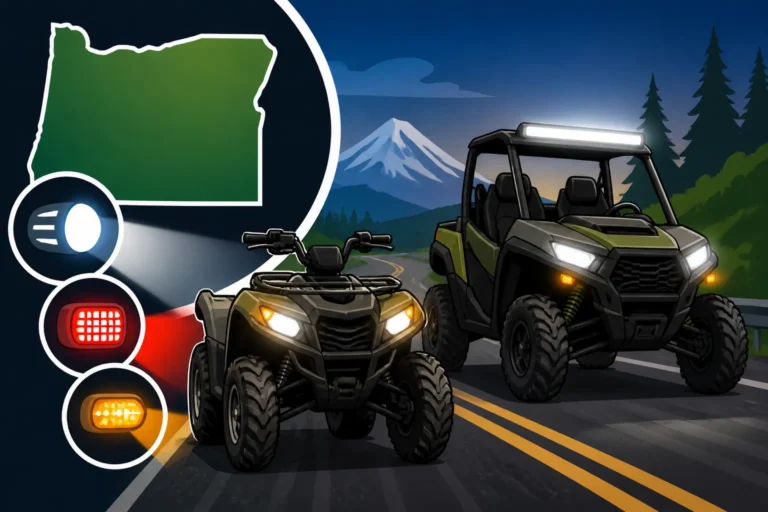
Your machine also needs to be equipped for road use, even if it's not fully street-legal. This means having functional headlights and taillights, which must be on during operation, especially during dawn, dusk, or in adverse weather. A working horn is also required for signaling. Furthermore, all ATVs and UTVs must have a spark arrester that is approved by the U.S. Forest Service or an equivalent agency, to prevent wildfires. [Oregon Lighting Requirements for Road Use] and [Oregon Spark Arrester Requirement] are critical to review. These aren't just suggestions; they are enforceable laws designed to ensure both your safety and the safety of others on the road.
Beyond equipment, riders themselves must abide by all standard traffic laws when on a designated route. This includes obeying posted speed limits (which are often lower for ATVs/UTVs on these routes than for cars), stopping at stop signs and traffic lights, yielding to pedestrians and other vehicles, and riding on the right side of the road. It's a hybrid environment where OHV rules meet traditional traffic laws, and ignorance is no excuse. Getting caught without the right permit or equipment, or violating traffic laws, can lead to [Oregon Fines for Riding Without a Permit] or other citations, quickly turning a fun ride into a costly headache.
Understanding Local Ordinances and Enforcement
While the state designates the routes, local jurisdictions – the counties and cities through which these routes pass – often have the authority to implement additional ordinances and regulations. This means that while a route might be state-approved, the specific rules for riding in Lakeside might differ subtly from those in Sumpter. It's incumbent upon every rider to not only know the state laws but also to investigate and understand any specific local ordinances that apply to the route they are using. This might include specific hours of operation, noise restrictions, or even designated parking areas for OHVs. [Union County Ordinance 2019-01] is an example of a county taking action to regulate OHV use.
These local ordinances are designed to integrate OHV traffic safely and respectfully into the existing community, minimizing disruption for residents. For example, some towns might have stricter noise limits, especially during evening hours, or impose limitations on where you can park your side-by-side once you've ridden into town. It's always a good practice to check the local government's website or visitor information for the most current and specific rules before you head out.
Enforcement of these rules and regulations comes from a combination of authorities. Oregon State Police patrol state highways and can issue citations for violations. County Sheriff's deputies are responsible for county roads, and local city police departments oversee municipal streets. Additionally, Oregon Parks and Recreation Department rangers may be present in and around staging areas, checking for permits and compliance. These officers are looking for proper permits, required equipment, and adherence to traffic laws. A common roadside stop might involve an officer checking for your valid operating permit, helmet compliance, and basic functional equipment like lights. [What an Oregon Trooper Checks Roadside] gives an idea of what to expect. Riders need to be prepared to present their permit and any relevant documentation, just as they would in a standard vehicle.
Considering Modifications and Accessories for Road Use
Whether you're aiming for full street legality with a Class II machine or simply want to enhance safety on a designated access route, modifications and accessories play a significant role.
Making a Class II Machine Road-Ready
For those fortunate enough to own a Class II machine (like a sand rail or certain types of larger buggies) and aspire to full street-legal status in Oregon, a comprehensive series of modifications is absolutely necessary. This isn't just about bolting on a few extras; it's about transforming an off-highway vehicle into one that can safely and legally share the road with cars and trucks. Key modifications typically include installing Department of Transportation (DOT)-approved tires that are designed for pavement use and can handle higher speeds and impacts than off-road tires. Functional, DOT-compliant turn signals, brake lights, and a horn are non-negotiable. You'll also need a windshield (which may require wipers), rearview mirrors (often one on each side), and seatbelts for all occupants.
Beyond these basic necessities, Class II machines often require robust lighting systems, including high and low beam headlights, and proper illumination for the license plate once it's issued. The exhaust system must meet sound requirements, which means aftermarket "race" exhausts are generally out. It’s a substantial undertaking, often requiring expertise to ensure all components integrate correctly and meet the specific legal standards. You'll need to prepare your machine for a detailed inspection by the DMV, where they will meticulously verify that every required modification is present, correctly installed, and fully functional. It's a rigorous process designed to ensure the safety of everyone on the road.
The investment in time, parts, and sometimes professional installation for these conversions can be considerable. But for those who value the freedom of driving their Class II machine directly to the dunes, to a local event, or simply around town without the need for a trailer, it's a worthwhile endeavor. This distinct pathway for Class II machines truly sets them apart as the only OHV type in Oregon that can achieve genuine street-legal status for general road use, transcending the limited access provided by designated routes.
Aftermarket Parts and Compliance
When it comes to outfitting any ATV or UTV for road interaction, whether it's full street legality for a Class II machine or simply adding safety features for designated access routes, the aftermarket parts industry is a rider's best friend. Companies like SuperATV specialize in creating a vast array of accessories and kits specifically designed to help riders achieve compliance and enhance safety. From complete street legal kits for UTVs that bundle all the necessary lights, mirrors, and horns, to individual components for upgrading existing machines, the options are extensive.
However, the key is to choose wisely. Not all aftermarket parts are created equal, and simply installing a component doesn't guarantee compliance with Oregon law. It's vital to select parts that are explicitly DOT-compliant where required, such as tires, headlights, and turn signals. For instance, a simple turn signal kit from SuperATV can be a fantastic upgrade for a Class IV side-by-side using a designated route, enhancing visibility and communication with other motorists. But for a Class II seeking full street-legal status, every component must stand up to DMV scrutiny. Always read product descriptions carefully to ensure they meet the specific legal standards for your intended use.
Consulting with reputable dealers, experienced mechanics, or even reaching out to the Oregon DMV directly for clarification on specific requirements can save a lot of headaches down the road. While companies like SuperATV make it easier to find the necessary components, the ultimate responsibility lies with the owner to ensure their machine is fully compliant with all state and local regulations. Investing in high-quality, compliant parts is not just about avoiding fines; it's about ensuring your safety and the safety of others, making your road-going experience as smooth and legal as possible.
| Aspect | Most ATVs/UTVs (Class I, IV) | Class II Machines (e.g., Dune Buggies, some UTVs) |
|---|---|---|
| Primary Use | Off-highway recreation | Can be off-highway or street-legal |
| DMV Registration | No | Optional (for street legal conversion) |
| Permit Required | Yes, OPRD Operating Permit | Yes, OPRD Operating Permit (for off-road use) |
| General Road Use | Generally prohibited | Legal if registered street-legal with DMV |
| Designated Routes | Allowed with OPRD permit | Allowed with OPRD permit (if not street-legal) |
| Required Equipment | Helmet, spark arrester, lights, horn for routes | Full road-legal equipment (lights, horn, mirrors, windshield, DOT tires, etc.) |
| Mandatory Insurance | No | Yes (if street-legal) |
| Example Scenario | Riding a quad on Browns Camp trails, or accessing gas in Lakeside | Driving a titled sand rail to the grocery store, or using it on the dunes |
Disclaimer
This article is for general informational purposes only and does not constitute professional advice. Laws, prices and regulations vary by location and change over time. Consult a qualified professional for guidance on your specific situation.