Are ATVs Street Legal in Oregon?
One of the biggest head-scratchers for anyone passionate about riding ATVs and UTVs in Oregon is figuring out where you can actually take your machine. It’s not as simple as just firing it up and heading down the road to the trailhead, and many riders face real frustration trying to understand the complex rules. This guide will untangle the dense web of Oregon's regulations, helping you understand when and where your ATV or UTV might be considered "street legal" and what steps you'd need to take to make it happen.
The Tricky Question of Street Legality in Oregon
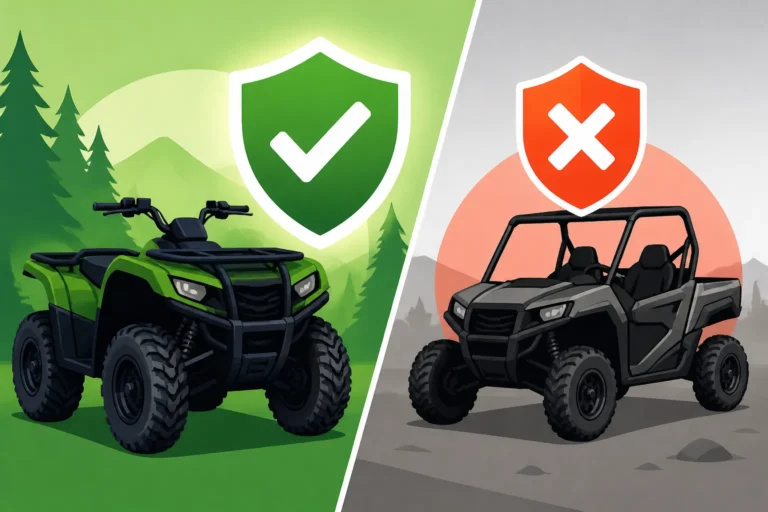
Let's get right to it: the straightforward answer for most traditional ATVs, the kind with handlebars and a straddle seat (Oregon's Class I machines), is a resounding "no." These machines are generally not street legal in Oregon for general road use. You can't just slap a license plate on your quad and commute to work. However, like many things in life, the full answer is a lot more nuanced and depends heavily on what type of off-highway vehicle (OHV) you're actually riding and where you intend to ride it.
The confusion often comes from seeing different types of OHVs on paved roads in certain areas, leading many to believe there's a blanket rule. But Oregon has a very specific classification system and strict rules about what can and cannot be operated on public roadways. It's designed to keep both riders and the general public safe, even if it feels incredibly restrictive at times. Understanding the nuances here is key to avoiding costly citations and ensuring you're riding legally and safely.
The General Rule: No Street Legal Quads
For the vast majority of four-wheeled ATVs, those fun-loving machines you typically ride at the Oregon Dunes or in the Tillamook State Forest, the answer is pretty definitive: they are designed for off-road use only. Oregon law, specifically through the Department of Transportation and the Oregon Parks and Recreation Department (OPRD), classifies these as Class I all-terrain vehicles. These machines, with their straddle seats, handlebars, and typically less than 50 inches in width (though this isn't the sole defining factor), are simply not built or equipped for highway speeds and mixed traffic.
The reasons are practical: they lack many of the safety features common on road vehicles, like robust turn signals, proper headlights and taillights for highway visibility, and often the stability needed for higher speeds on paved surfaces. Imagine trying to make a quick lane change on a busy highway on a machine primarily designed for soft sand or muddy trails. It’s just not practical or safe for anyone involved. This is why you won't find a way to get a traditional quad registered with a standard license plate from the DMV for street use. [Why Oregon's DMV Does Not Register ATVs]
The Class II Exception: Not Your Typical ATV
Now, here's where it gets interesting, and where the "no" starts to have a very big "but." Oregon law does allow a specific category of off-highway vehicle to be made street legal: the Class II All-Terrain Vehicle. These aren't your typical sport quads. Think more along the lines of certain sand rails, dune buggies, or larger, often custom-built, off-road machines that can meet specific requirements. They typically feature a steering wheel, side-by-side seating, and a roll cage, moving them closer in design to a car than a motorcycle.
The key distinction for a Class II machine is that it is often capable of being built or modified to meet specific highway safety standards. This capability is what opens the door to potential street legality, a path not available to Class I (quads) or Class III (off-road motorcycles) machines. Many UTVs, particularly the larger, more powerful models, often fall into this category. If you own a UTV and are wondering about street legality, this is the class you'll need to focus on.
What Defines a Class II Machine in Oregon?
Oregon Revised Statute (ORS) 801.193 is where you'll find the nitty-gritty definition for a Class II All-Terrain Vehicle. It's really particular, and you'll want to check the most current statutes to ensure your machine fits the bill. Generally, a Class II ATV is defined as a motor vehicle that:
- Is 75 inches or less in width.
- Has a dry weight of 3,500 pounds or less.
- Travels on four or more pneumatic tires (this rules out track vehicles).
- Is designed for or capable of travel over unimproved terrain.
- Is not a Class I, III, or IV ATV.
The critical distinctions here, especially from a Class I quad, often come down to the steering mechanism and seating. Class II machines typically have a steering wheel (like a car) rather than handlebars, and they usually offer bench or bucket seating, not a straddle seat. They also often come equipped with a roll cage right from the factory, which is a major safety difference. These design features are what allow them to be adapted for road use more readily. [Oregon's Class II Under ORS 801.193]
The Path to Street Legality for Class II Machines
So, you have a machine that fits the Class II definition – maybe a purpose-built sand rail or a robust side-by-side. Great! But simply being a Class II doesn't automatically make it street legal. There's a journey involved, and it requires diligence, modifications, and dealing with paperwork. This isn't a quick weekend project; it's a commitment to transform your off-road warrior into a road-worthy cruiser.
Titling and Registering Your Class II
Unlike Class I and Class IV machines where titling is optional and registration for road use is generally impossible, Class II vehicles can indeed be titled and registered with the Oregon Department of Motor Vehicles (DMV) if they meet the necessary criteria. This is the first and most crucial step in making your machine street legal. You'll need to present proof of ownership, complete the necessary forms, and pay any applicable fees.
The DMV will inspect your vehicle to ensure it meets all the safety and equipment requirements for on-road operation. This inspection can be quite thorough, so don't expect to just show up with a basic OHV and get a plate. If your machine is approved, you'll receive a standard Oregon vehicle title and registration, complete with a license plate and stickers. [Titling and Registering a Street-Legal Rail]
Mandatory Insurance for Class II
Once your Class II machine is registered for road use, it falls under the same mandatory insurance requirements as any other street-legal vehicle in Oregon. This means you must carry liability insurance. There’s no getting around this; it’s not an option. Driving an uninsured, registered vehicle on public roads is a serious offense and can lead to significant penalties, including fines and suspension of your driving privileges.
Many off-road enthusiasts are used to carrying insurance that only covers off-road incidents or property damage. But for a street-legal Class II, you'll need a policy that specifically covers liability for on-road incidents. It’s always a good idea to chat with your insurance agent and be very clear that you are registering your Class II ATV for public road use. They'll help you get the right coverage that meets Oregon's minimum requirements. [Mandatory Insurance on Every Oregon Class II]
Equipment Requirements for Road Use
This is often the most significant hurdle for many Class II owners. To be deemed street legal, your machine must meet a comprehensive list of equipment requirements, similar to a regular car. This isn't just about having lights; it's about having the right kind of lights, and much more. Here’s a general rundown of what's typically needed:
- Headlights: Must have at least one, properly aimed, and capable of high/low beam.
- Taillights and Brake Lights: Functioning, visible from a specific distance, and illuminating when brakes are applied.
- Turn Signals: Front and rear, amber in color, and clearly visible.
- Mirrors: At least one rearview mirror, typically two (one on each side) for optimal visibility.
- Horn: A functional horn audible from at least 200 feet.
- Windshield: Often required, or if not, you must wear eye protection.
- Wipers: If a windshield is present, functional wipers are usually necessary.
- Brakes: Fully functional braking system on all wheels.
- Tires: DOT-approved tires, suitable for highway speeds.
- Fenders: To prevent debris from being thrown up.
- Seatbelts: For all occupants, securely mounted and functional.
- Roll Cage: For protection in the event of a rollover (usually factory-installed on Class II machines).
- License Plate Mount and Light: To display your plate legally, day and night.
- Muffler and Spark Arrester: Must meet Oregon's sound limits and have a Forest Service-approved spark arrester if operating off-road.
Many aftermarket companies, like SuperATV, offer kits specifically designed to help UTV owners meet these street-legal requirements, from full turn signal kits to DOT-approved windshields and mirrors. Investing in these quality components is essential, not just for passing inspection, but for your safety on public roads. It's not enough to have some lights; they must function correctly and meet the state's very specific standards.
Designated Highway Access Routes
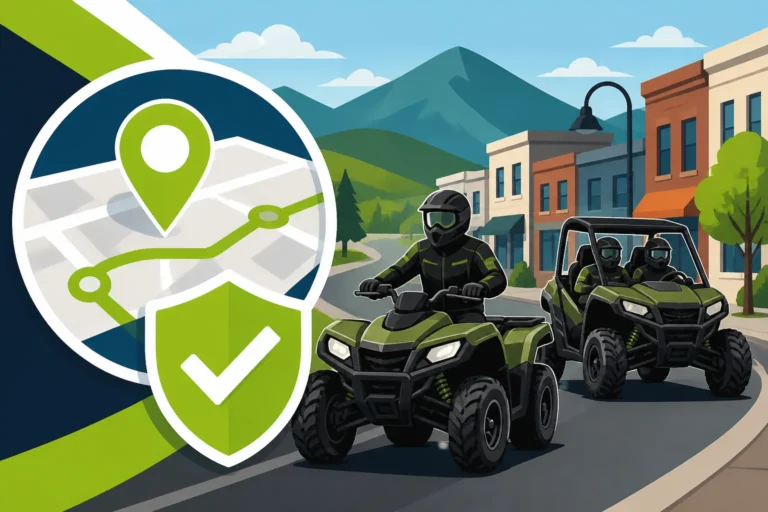
Even if your machine isn't a street-legal Class II, Oregon isn't entirely closed off to road riding. There's a separate, often misunderstood, concept of Designated Highway Access Routes. These are specific, limited stretches of public roadway where all classes of ATVs (Class I, II, III, and IV, provided they have an Oregon ATV Operating Permit) are allowed to operate, usually to connect trails or access staging areas. This is a crucial distinction: your quad isn't street legal statewide, but it can use these specific routes.
What Are Highway Access Routes?
Highway access routes are local roads, usually maintained by a county or city, that have been officially designated by the Oregon Transportation Commission for OHV use. They are established after a rigorous application and review process, often driven by local communities and OHV advocacy groups. The purpose is not to allow general touring, but to provide a safe, legal way for riders to get from point A to point B without having to load their machines back onto a trailer.
These routes are typically well-marked with signs indicating where OHVs are permitted. When riding on these routes, all applicable traffic laws apply, just as they would for any other vehicle. This includes speed limits, stop signs, yielding to other traffic, and proper signaling. You'll still need your [Oregon's ATV Operating Permit] and your [Oregon ATV Safety Card] to ride on these routes.
Lakeside and Sumpter: Oregon's Pioneers
Currently, Oregon has two primary designated highway access routes: one in the coastal town of Lakeside and another in the historic mining town of Sumpter.
- Lakeside, Oregon: This route provides access to the breathtaking Oregon Dunes National Recreation Area. Riders can cruise from certain staging areas or campgrounds through parts of town, directly to the sand. It’s an incredible convenience for riders who want to maximize their time on the dunes without constantly trailering their machines. [Riding an ATV Through Lakeside]
- Sumpter, Oregon: Nestled in the eastern Oregon mountains, Sumpter's route connects riders to a vast network of forest trails. This allows riders to explore the historic area, grab a bite in town, and then head back out to the trails, all from the seat of their ATV or UTV. [Riding an ATV Through Sumpter]
These routes are excellent examples of how local communities and riders can work together to create safe, legal access, enhancing the riding experience and benefiting local businesses.
How Other Counties Can Designate Routes
The process for designating new highway access routes is set out by the Oregon Department of Transportation (ODOT) and involves significant local effort. A county or city must submit an application to the Oregon Transportation Commission, detailing the proposed route, demonstrating public need, conducting traffic studies, and ensuring community support. There's a lot of collaboration required, often involving local law enforcement, emergency services, and transportation planners.
While it's a lengthy and involved process, it highlights the potential for other communities to open up similar access where it makes sense. If you're a rider in an area with a strong OHV presence and limited access, getting involved with local advocacy groups or government can be a powerful way to initiate this process. [Applying to Designate a New Oregon Route]
Other Road Uses and Restrictions
Beyond designated routes and street-legal Class II machines, there are other scenarios where you might encounter ATVs and UTVs on roads. Understanding these specific rules is crucial, as misinterpreting them can lead to tickets and frustration.
Crossing Paved Highways
Even if your machine is not street legal, Oregon law generally permits ATVs and UTVs to cross a public highway. This isn't about riding down the highway, but rather making a direct, perpendicular crossing to get from one section of an off-road trail system to another.
There are strict rules for these crossings:
- Perpendicular Crossing: You must cross at approximately a 90-degree angle to the highway.
- Stop and Look: You must come to a complete stop before entering the highway and yield to all traffic.
- Shortest Practical Route: The crossing should be made via the shortest practical route.
- Safety First: Only cross when it is safe to do so, with clear visibility in both directions.
This rule is designed for convenience and practicality, recognizing that many trail systems are bisected by paved roads. However, it's not an invitation to ride parallel to the highway for any distance. [Oregon Rules for Crossing a State Highway]
Riding Forest and County Roads
Many riders are often confused about riding on gravel forest roads or unmaintained county roads. The rules here can be very specific and depend heavily on who manages the land (Forest Service, BLM, State Forests, counties) and what their specific ordinances or land use plans dictate.
- Forest Service Roads: National Forests often have extensive networks of gravel roads. While many are open to licensed vehicles, not all are open to ATVs and UTVs. Some may be designated for specific types of vehicles, or they may be seasonally closed. It’s absolutely critical to check with the local Forest Service district office for maps and current closures before you ride. Just because it's gravel doesn't mean it's open season for your quad. [Forest Service Roads Open to Oregon ATVs]
- County Roads: Similarly, counties can have different rules for their unpaved roads. Some counties have explicitly opened certain gravel roads to OHVs, while others maintain a strict "no" policy. Always check with the county sheriff’s office or public works department in the specific county you plan to ride in. For example, Union County has its own specific ordinance. [Union County Ordinance 2019-01]
- Roads Not Maintained for Passenger Cars: Some regulations refer to roads "not maintained for passenger cars." This doesn't automatically mean ATVs are allowed. It typically refers to very primitive roads that are unsuitable for typical vehicle traffic but still may have specific restrictions on OHV use.
The best practice is always to consult up-to-date maps and check with the managing agency before heading out. Don't rely on assumptions or old information.
Private Land and Agricultural Use
If you own private land, you can generally ride your ATV or UTV on your own property without an Oregon ATV Operating Permit, provided it's exclusively on your land. The permit and safety card requirements primarily apply to public lands.
For agricultural use, there are often exceptions in place. Farmers and ranchers frequently use ATVs and UTVs as utility vehicles for work on their land, and sometimes for short distances on public roads to move between fields or access remote parts of their property. These uses are typically tied to legitimate agricultural operations and may have specific exemptions, but they are not a loophole for general recreational riding. You'd need to verify these specific agricultural exemptions with the local authorities. [Oregon ATV Rules for a Farm Machine]
Consequences of Non-Compliance
Riding an ATV or UTV illegally on Oregon's roads can lead to more than just a stern talking-to. The state takes these regulations seriously, and enforcement officers – whether state troopers, county sheriffs, or OPRD rangers – are well-versed in the laws. Ignorance of the law is not an excuse, and the penalties can quickly put a damper on your riding season.
Fines and Penalties
If you're caught operating a non-street-legal ATV or UTV on a public road where it's not permitted, or operating a Class II without proper registration and insurance, you're likely facing a Class C traffic violation. These fines can be substantial and add up quickly. For example, riding without an [Oregon's ATV Operating Permit] or without the required [Oregon ATV Safety Card] can result in separate citations.
Each violation can carry its own monetary penalty. And if you're found to be operating a registered Class II without mandatory insurance, that's another serious offense with its own set of fines, which can be even higher. Plus, these violations can go on your driving record, potentially impacting your auto insurance rates or even leading to license suspensions in severe cases.
Impoundment and Other Repercussions
In some instances, especially for repeat offenders or particularly egregious violations, law enforcement has the authority to impound your machine. Imagine your riding day ending with your ATV being loaded onto a tow truck, leaving you stranded, and facing towing and storage fees on top of the fines. This can be incredibly costly and inconvenient.
Beyond direct penalties, you could face liability issues if you're involved in an accident while riding illegally. Your personal insurance might deny coverage, leaving you personally responsible for damages, injuries, or legal fees. It's a situation no rider ever wants to be in, and it underscores the importance of understanding and adhering to Oregon's ATV and UTV laws. Always prioritize legal and safe riding to protect yourself, your machine, and your wallet.
| ATV Class | Street Legal Potential (General Roads) | Primary Defining Characteristics | Registration/Titling for Road Use | Mandatory Insurance for Road Use |
|---|---|---|---|---|
| Class I | No (Traditional Quads) | Straddle seat, handlebars, typically < 50" wide, < 800 lbs dry weight | Not possible | No |
| Class II | Yes (Specific machines only) | Steering wheel, bench/bucket seat, roll cage, < 75" wide, < 3500 lbs dry weight | Required with DMV | Yes |
| Class III | No (Off-Road Motorcycles/Dirt Bikes) | Two wheels, motorcycle-style | Not possible | No |
| Class IV | No (Side-by-Sides, >75" wide) | Steering wheel, bench/bucket seat, roll cage, > 75" wide, < 3500 lbs dry weight | Not possible | No |
Disclaimer
This article is for general informational purposes only and does not constitute professional advice. Laws, prices and regulations vary by location and change over time. Consult a qualified professional for guidance on your specific situation.