Prospect Trails Opening July First
Prospect’s July 1 opening date can make it tempting to load the trailer and head for southern Oregon as soon as the calendar turns. But seasonal access does not always mean every route is open or ready to ride. This guide explains how to plan around the date, check conditions, prepare your machine, and avoid a disappointing trip to the Prospect OHV area.
What July 1 Means for Prospect Trails
Treat the date as a seasonal milestone, not a guarantee
Prospect is an off-highway vehicle riding area near Crater Lake in southern Oregon. Some trails and play areas may have seasonal closures, and July 1 is an important date to check when planning a summer ride. It is not a promise that every route will be open, dry, or in suitable condition that day. Access can depend on the specific area, trail conditions, weather, fire restrictions, and current land-manager notices.
That distinction matters if you are making a long drive with a group. A family might plan a full day around the Woodruff Play Area, while a group of experienced riders may be hoping to connect several trails into a longer route. If one section is still closed or damaged, the day can look very different from what the map suggested. Before leaving, check current notices from the land manager responsible for the area and confirm the status of the particular trails you want to ride.
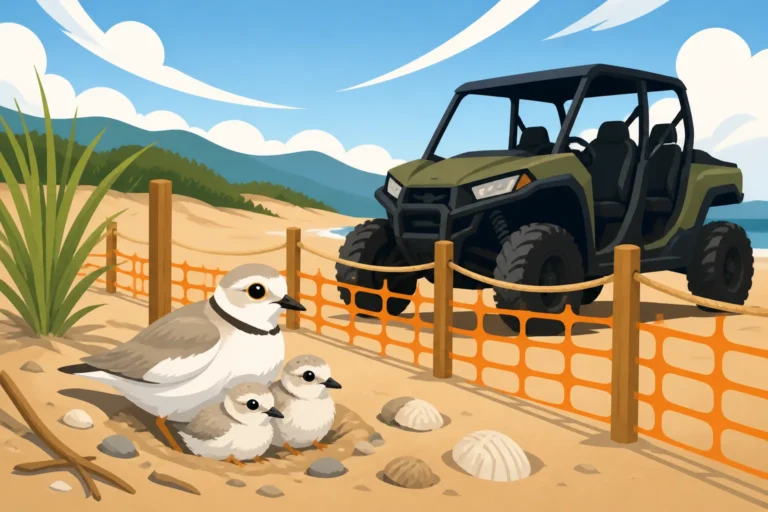
The seasonal timing is also connected to wildlife and land-management needs. Prospect has closures associated with elk, so the date and boundaries of restrictions matter—not just the general idea that “the area opens in July.” For background on the seasonal closure pattern, see Why Prospect Closes for Elk in Late October. If you are planning a later-season visit, Prospect Closing at the End of November can help you understand why access may change again as the year progresses.
Check individual routes, not just the area name
“Prospect is open” can be too broad to guide a real ride. A staging area might be accessible while a particular trail remains closed, or one part of the riding area might be in better shape than another. Before setting a route, look for notices that name the trail or zone, explain the restriction, and give any conditions for reopening.
Use at least two kinds of information: current official notices for closures and access rules, plus a map for orientation. A mapping app such as onX Offroad can help you understand where a planned route sits relative to staging areas and connected roads. Still, treat a map as a planning aid rather than proof that a route is open. A line shown on a screen does not necessarily reflect a temporary closure or a change posted on the ground.
When the sources do not agree, take the more cautious view. If a sign at the trailhead indicates a closure, do not ride past it because a digital map looks clear. You can also leave room in your itinerary to turn around or choose another open route. Oregon Trail Closures to Check First offers a broader checklist for avoiding that kind of surprise, and Oregon Trail Maps Worth Carrying explains why it is useful to have reliable route information with you while riding.
How to Plan a Ride Around the Opening
Confirm access before you leave home
A quick check the evening before departure is useful, but it should not be your only check if weather or fire conditions could affect access. Look for closure updates, road access information, and any notices related to the specific trail or staging area you plan to use. If you are unsure whether a notice applies to your route, contact the relevant land manager rather than assuming that a nearby open road means the OHV trail is open too.
Build your plan around a primary route and a backup. For example, if your group wants to ride a particular loop but that loop is unavailable, identify a shorter alternative that still works for your machines and riders. Agree on a turnaround point before setting out. That makes it easier to adapt without having to settle the question at a confusing junction or after someone has already ridden too far.
| Before you go | What to confirm | Why it matters |
|---|---|---|
| Seasonal access | Whether the specific trail or riding area is open | A seasonal date does not automatically open every route |
| Current conditions | Rain damage, downed trees, erosion, or other hazards | A route can be technically accessible but difficult or unsafe |
| Fire information | Active restrictions and closures | Fire rules can change where and when riding is allowed |
| Machine and rider requirements | Applicable permit, safety card, and equipment rules | Requirements can depend on the machine and rider |
| Backup plan | Another suitable route or a shorter ride | Gives the group options if access changes |
For conditions that may follow a wet spring, review Oregon Trail Closures After Heavy Rain. In summer, fire restrictions may be just as important as seasonal wildlife closures. Check Oregon Fire Closures That Shut Trails before your trip, particularly if you are traveling a long distance or planning to ride several areas.
Match the route to your group and machines
A route that sounds manageable to one rider may not suit a mixed group with different experience levels, vehicle types, or comfort with uneven ground. Before choosing a loop, consider how wide your machine is, how it handles tight turns, and whether everyone in the group can comfortably manage the expected terrain. Do not rely on a trail name or a short description alone to judge difficulty.
Use maps and posted trail information to think through the whole outing: where you will unload, where you expect to ride, and how you will return. If the route includes junctions or changes in direction, agree on how the group will stay together. On busy days, stop in a safe place to regroup rather than blocking a trail or assuming a rider behind you has seen the turn.
A route-planning tool such as onX Offroad can help you discuss the general shape of a ride before you arrive. Check the map against official information and signs at the site, and carry a backup way to navigate if your phone loses signal or battery. If the group includes beginners, pick a conservative plan with room to shorten the ride. Oregon Trail Ratings and What They Mean can help you think about difficulty more carefully, while Oregon Riding Seasons by Area provides wider context for how conditions vary across the state.
Getting Ready for the First Summer Ride
Check your paperwork, equipment, and machine
A seasonal opening does not replace the usual preparation. Confirm that your machine has the required Oregon operating permit for the places where you plan to ride, and make sure the decal is displayed correctly and can be read. If you are unsure about placement, see Oregon ATV Permit Decal Placement. Rules can differ depending on the machine and situation, so do not assume that a permit or registration from another state automatically covers every Oregon requirement.
Riders should also check the safety-card rules that apply to them. The requirements can depend on the rider’s age and machine class, so sort this out before you reach the trailhead. Oregon ATV Safety Card Requirements is a useful starting point. If your group includes children or visiting riders, take time to confirm the requirements for each person rather than assuming the same rule applies to everyone.
Give the machine a careful pre-ride check. Look at tires, controls, brakes, lights where required, fuel, and anything that may have worked loose during storage or transport. Bring basic repair items suited to your machine and the trip. A small issue is easier to deal with at the staging area than beside a trail, especially if the group is far from the trailer or cell service is limited.
Prepare for early-season trail conditions
A calendar date does not tell you whether a trail has dried out or whether recent weather has left hazards behind. Be alert for soft ground, ruts, loose material, fallen branches, and washouts. Slow down where visibility is limited, especially around corners, junctions, and places where riders may be approaching from the other direction. If a section looks damaged or unstable, do not try to force your way through simply because it appears on your planned route.
Pack for a longer day than you expect, without treating extra supplies as permission to take unnecessary risks. Water, food, a first-aid kit, navigation, and a way to communicate are sensible basics. Tell someone where you plan to ride and when you expect to return. If you are riding with others, agree on a simple response if a machine breaks down or someone becomes separated.
Cell coverage can vary in remote riding areas, so do not make a phone your only plan. Use onX Offroad or another mapping tool as one part of your navigation setup, but download or prepare what you need before arriving and know how to use it. Oregon OHV Areas With Cell Signal can help set expectations about connectivity at different locations, but signal should never be assumed on every trail.
What to Do If a Trail Is Still Closed
Respect signs and find a legal alternative
If a trail is closed on July 1, do not ride around a barrier, move a sign, or look for an unofficial way through. A closure may protect wildlife, allow repairs, reduce damage to wet ground, or address another safety or land-management concern. Riding around it can cause additional damage and may put your group in conflict with the rules that apply to the area.
Instead, check whether another designated route or riding area is open and appropriate for your machine. Make sure you understand where that alternative begins and ends; a nearby road or track is not automatically legal for OHV use. If you cannot confirm that a route is open to your machine, choose a different option. A shorter ride—or a change of destination—is much better than turning a closure into a citation or a rescue problem.
Keep a backup destination in mind when planning a trip to Prospect. The broader guide Prospect OHV Near Crater Lake can help with area context, while Oregon Trail Closures to Check First is useful for reviewing access before setting out. If your group is traveling from far away, a flexible schedule may save the day: you can spend time at another open riding area rather than waiting at a closed trailhead.
Leave the area in good shape for the next visit
Opening day can bring a lot of riders, and the way people behave during the first weeks of the season can affect the area’s condition. Stay on designated routes, avoid widening trails, and do not cut across closed or sensitive ground to get around a difficult patch. Keep speeds appropriate to visibility and traffic, and give other riders space at staging areas and junctions.
Pack out trash and secure loose items before heading back to the trailer. If you see a new hazard or a closure sign that is damaged or unclear, report it to the responsible land manager when possible; do not try to repair or reposition official signs yourself. A useful trip report is specific: note the trail or location, what you observed, and when you saw it.
Most of all, treat July 1 as a reason to check access—not a reason to assume everything is ready. Confirm the route, prepare for changing conditions, and stay flexible once you arrive. That small amount of planning makes it much easier to enjoy Prospect without putting yourself, other riders, or the riding area in a difficult spot.
Disclaimer
This article is for general informational purposes only and does not constitute professional advice. Laws, prices and regulations vary by location and change over time. Consult a qualified professional for guidance on your specific situation.