State Forest Roads and Their Own Rules
It can be incredibly frustrating to head out for a fantastic day of ATV or UTV riding in Oregon, only to discover that the very roads you planned to use are governed by a different set of rules than the ones you expected. Many riders assume all public lands are the same, but Oregon's vast state forests, while offering incredible opportunities for off-road enthusiasts, often come with their own distinct regulations that can easily trip up even experienced adventurers. This guide is here to unravel those specific rules, helping you understand the unique landscape of state forest roads so you can plan your rides confidently and avoid unexpected issues.
Understanding Oregon's State Forests and Their Purpose
Oregon is blessed with an abundance of natural beauty, and a significant portion of that includes its state forests. These aren't just pretty places for recreation; they serve multiple purposes, from timber production to watershed protection, and yes, even public access for activities like ATV and UTV riding. But because their management objectives are often different from federal lands (like National Forests or BLM areas), the rules for using them, especially for motorized vehicles, can vary. It’s not just a matter of having your [Oregon ATV Permit for a Side-by-Side] or [Oregon ATV Permit for a Dirt Bike]; it’s about understanding the nuances of the land itself.
The Mission of Oregon's Department of Forestry
The Oregon Department of Forestry (ODF) manages these state forests, and their mission is broad. They're tasked with ensuring the long-term health and productivity of the forests, which means balancing timber harvests, wildlife habitat, water quality, and recreation. This multi-use approach is fantastic for us riders, but it also explains why certain areas might have specific access limitations or operating rules. You might find active logging operations midweek, or temporary closures to protect sensitive wildlife, or even restrictions based on fire danger. Ignoring these distinctions can lead to serious safety risks or, worse, a hefty fine.
Differentiating State Forests from Other Public Lands
It’s easy to lump all "forest land" together, but Oregon's state forests, such as the Tillamook State Forest, the Clatsop State Forest, or the Santiam State Forest, have management plans distinct from the U.S. Forest Service or the Bureau of Land Management (BLM). Federal lands often have overarching regulations, but ODF can implement specific rules tailored to local conditions, timber operations, or particular conservation efforts within their boundaries. This is why a road that looks perfectly open on a county map might have a different status once you cross into a state forest, or why certain [Oregon Spark Arrester Requirement] rules might be enforced with particular vigor. Always double-check whose jurisdiction you're in!
Navigating the Rules: What's Different on State Forest Roads?
When it comes to riding your ATV or UTV on state forest roads, there are several key areas where the rules might diverge from what you'd find on federal or even county roads. These differences aren't meant to make your life harder; they're in place to protect the resources and ensure safety for everyone using the forest. Understanding these distinctions is crucial for a trouble-free ride.
Road Closures and Access Restrictions
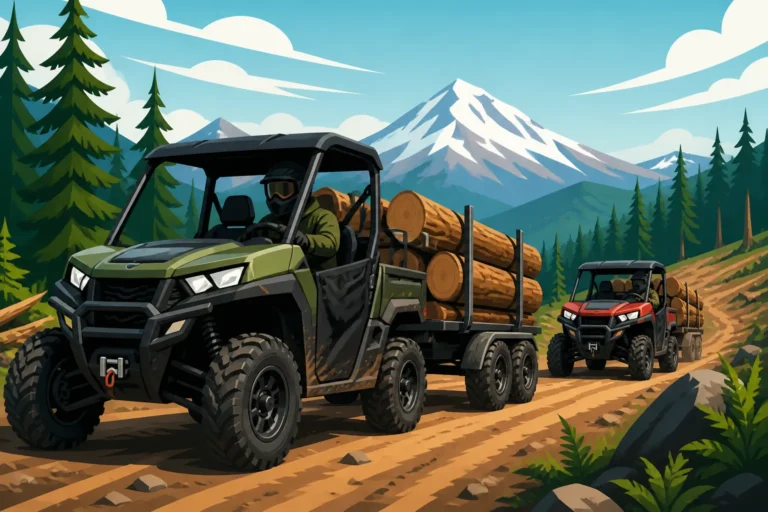
One of the most significant differences you'll encounter on state forest roads is the frequency and reason for closures. Unlike some other public lands, state forests often have active timber harvesting, road maintenance, or reforestation projects underway. This means roads can be temporarily or seasonally closed for safety. Imagine heading out with your new SuperATV winch ready for adventure, only to find a gate across your favorite route due to active logging. It's not uncommon to see signs indicating "Active Logging Area – No Public Access," or "Road Closed to Protect Young Trees." These closures are non-negotiable and strictly enforced. Always check the ODF website or contact the local district office before you head out, especially if you're planning a midweek ride.
Vehicle Requirements and Operation
While the basic requirements for operating an ATV or UTV in Oregon, like having your [Oregon ATV Permits Explained] and a valid [Oregon's ATV Safety Education Card], apply universally, state forests might have specific operational nuances. For instance, some roads within state forests might be designated for specific types of vehicles, or have stricter enforcement on speed limits. It's also worth noting that while some class II machines can be street-legal on certain county roads, that doesn't automatically mean they can be plated and ridden on all state forest roads that might technically be "public." The rule of thumb is that if it's not explicitly designated as an ATV/UTV trail or an open forest road for licensed vehicles, assume it's closed to motorized use. Always look for signage.
Environmental Protections and Sound Limits
State forests are often at the forefront of environmental management, which can translate into tighter restrictions on things like noise and environmental impact. While [Oregon Sound Limits for ATVs] apply everywhere, enforcement might be particularly keen in state forests, especially near wildlife habitat areas or residential boundaries. Beyond sound, rules regarding erosion control, stream crossings, and staying on designated routes are strictly enforced. Going off-trail, even for a short detour, can lead to significant fines and damage to sensitive ecosystems. Remember, the privilege of riding in these beautiful areas comes with the responsibility of protecting them.
Fire Season Rules and Forest Product Permits
Oregon's fire seasons can be intense, and state forests are often the first to implement strict fire restrictions, which can include motorized vehicle use. This might mean "hoot owl" restrictions where riding is only allowed in the morning, or complete closures of certain areas. These aren't just suggestions; they're critical safety measures. Additionally, if you're combining your ride with collecting firewood or other forest products, remember that state forests have their own permit systems for such activities, separate from federal or private land rules. Always verify current fire restrictions and permit requirements before you leave home.
Here's a quick comparison of common rule considerations across different land types:
| Rule Category | State Forests (Oregon ODF) | National Forests (USFS) | BLM Lands (Bureau of Land Management) | County Roads (Local Jurisdictions) |
|---|---|---|---|---|
| Primary Focus | Multi-use (timber, habitat, recreation) | Multi-use (timber, recreation, conservation) | Multi-use (grazing, energy, recreation, etc.) | Public thoroughfare, local access |
| Road Closures | Frequent due to logging, maintenance, fire | Common due to fire, wildlife, maintenance | Moderate, often for seasonal, fire, grazing | Less frequent, primarily for construction, weather |
| Permit Requirement (OHV) | [Oregon ATV Permit for a Side-by-Side] (State) | [Oregon ATV Permit for a Dirt Bike] (State) | [Oregon ATV Permit for a Dune Buggy] (State) | [Oregon ATV Permit for an Electric Machine] (State) |
| Safety Card | [Oregon's ATV Safety Education Card] (State) | [Oregon's ATV Safety Education Card] (State) | [Oregon's ATV Safety Education Card] (State) | [Oregon's ATV Safety Education Card] (State) |
| Fire Season Rules | Can be very strict, early implementation | Strict, often widespread restrictions | Moderate to strict, localized | Generally less restrictive unless statewide ban |
| Forest Product Permits | Required, specific to ODF | Required, specific to USFS | Required, specific to BLM | Generally not applicable, or local permits for private timber |
| Enforcement Body | Oregon State Police, ODF Rangers | Forest Service Law Enforcement, OSP | BLM Rangers, OSP | Sheriff, OSP |
Essential Gear and Best Practices for State Forest Riding
Riding in Oregon's state forests demands a slightly more prepared approach than just hitting a designated OHV park. Because these are working forests with active operations and unique environmental considerations, being well-equipped and riding responsibly is paramount. It’s not just about having fun; it’s about staying safe and preserving access for future generations.
Navigation and Communication Are Key
First and foremost, never rely solely on your phone for navigation in state forests. Cell service is notoriously spotty or non-existent in many of these areas. Always carry a physical map, a GPS device, or a reliable app with downloaded maps. Knowing your location is crucial, especially if you encounter a sudden closure or need to re-route. Consider carrying a satellite messenger or a two-way radio, especially if you're riding with a group or venturing into more remote areas. A communication device could be a lifesaver if you have an accident or breakdown. When you add a light bar or a sound system to your rig from SuperATV, make sure you also invest in robust navigation tools.
Be Prepared for Varying Road Conditions
State forest roads can range from well-maintained gravel to deeply rutted, muddy, or overgrown tracks. They are not always graded for passenger car traffic. [Oregon Trail Closures After Heavy Rain] can happen quickly, turning a pleasant ride into a challenging slog. Carry appropriate recovery gear, like a winch, tow strap, and shovel, even if you think you won't need it. Pack a first-aid kit, extra water, snacks, and warm clothing, as weather can change rapidly in Oregon's forests. Your machine should also be in top mechanical condition, with properly inflated tires suitable for diverse terrain. Always have a small toolkit for on-the-spot repairs.
Respect All Users and the Environment
State forests are shared spaces. You might encounter log trucks, hikers, mountain bikers, horseback riders, or even wildlife researchers. Always yield to non-motorized users and be courteous. Keep your speed appropriate for conditions and visibility, especially around blind corners or crests. Remember, dust can be a major issue on gravel roads, so slow down when passing others. Adhering to [Oregon Spark Arrester Requirement] and [Oregon Sound Limits for ATVs] isn't just about avoiding a ticket; it's about minimizing your impact on the environment and other forest users. Pack out everything you pack in, and leave no trace of your visit. Following these simple etiquette rules ensures a positive experience for everyone and helps maintain the good reputation of the ATV/UTV community.
Finding and Interpreting Road Status in Oregon's State Forests
One of the biggest headaches for riders looking to explore Oregon's state forests is figuring out which roads are open, which are closed, and what specific rules apply. It often feels like you need a secret decoder ring just to get accurate information! However, with a bit of proactive research, you can significantly reduce the chances of encountering a frustrating and ride-ending surprise.
Utilizing Online Resources from the Oregon Department of Forestry
The Oregon Department of Forestry (ODF) maintains websites and often social media channels for its various districts, such as the Tillamook, Astoria, or Clatsop districts. These are your absolute best source for up-to-date information on road closures, fire restrictions, and special operating rules. Look for sections specifically dedicated to recreation or public access. Often, they'll have maps or lists of closures that are updated regularly. It's a good habit to check these sites the day before, or even the morning of, your ride. Don't just look for "general" forest updates; seek out information specific to the state forest you plan to visit, as conditions can vary wildly from one area to another, even within the same county.
Contacting Local ODF Offices Directly
Sometimes, the online information might be vague, or you might have a very specific question about a particular road or trail. In these cases, don't hesitate to call the local ODF district office. The staff there are typically very knowledgeable about local conditions and can provide clarification on everything from [Oregon Rules for Riding a Forest Road] to specific area closures. They can also advise on things like active logging operations, which might not always be posted prominently online but are critical to know for your safety. A quick phone call could save you hours of driving to a locked gate. They can also clarify if any special permits are needed for your specific type of vehicle, or if current conditions mean your [Oregon ATV Permit for a Dune Buggy] might be better used elsewhere for the day.
Heeding On-Site Signage and Gates
Even with all your pre-trip research, always remain vigilant once you're on the ground. Road status can change rapidly due to unexpected events like landslides, storm damage, or emergent logging needs. Pay close attention to all signage, gates, and barriers you encounter. If a road is gated and locked, it means "no entry," even if your map shows it as open. If a sign indicates "Private Timberland – No Trespassing" or "Active Logging – Authorized Personnel Only," respect it. Ignoring these warnings can lead to citations, vehicle impoundment, or even dangerous encounters with heavy equipment. While your SuperATV rock sliders might protect your machine from trail damage, they won't protect you from a legal infraction. Always assume posted signs override any information you might have gathered from older maps or anecdotal advice. Remember, it's better to turn around and find an alternative route than to risk your safety or break the rules.
Disclaimer
This article is for general informational purposes only and does not constitute professional advice. Laws, prices and regulations vary by location and change over time. Consult a qualified professional for guidance on your specific situation.