Timber Roads With Active Hauling
It's incredibly frustrating when you're all geared up for an epic day of riding Oregon's vast, scenic timber roads, only to round a bend and come face-to-face with a massive logging truck or a "Road Closed – Active Hauling" sign. Suddenly, your adventure turns into a safety concern or a dead end. This guide is here to cut through the confusion and help you understand how to safely and legally navigate Oregon's timber roads, especially when active logging operations are underway, so you can enjoy the ride without unnecessary risks.
Understanding Active Timber Roads in Oregon
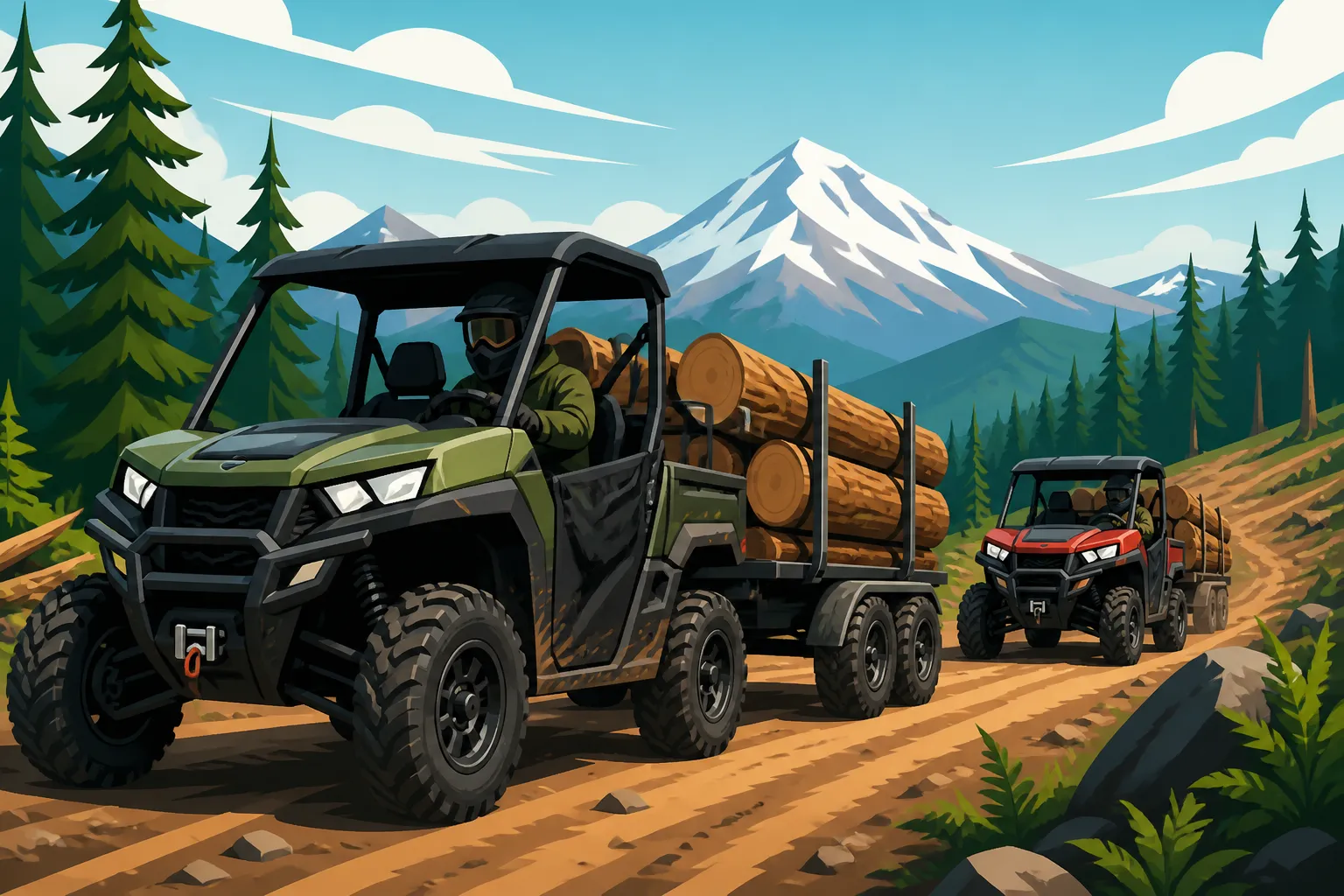
Oregon is a state rich in forests, and with forests comes timber harvesting. Many of the unpaved roads crisscrossing these vast landscapes are primarily built and maintained for logging operations. While these roads often offer incredible access to remote areas and stunning views for ATV and UTV riders, they also come with a unique set of challenges and dangers when timber harvesting is active. It's crucial to understand what "active hauling" really means and who controls these roads before you even load up your machine.
What "Active Hauling" Really Means
When you see a sign indicating "active hauling" or "logging operations ahead," it's not just a suggestion; it's a critical warning. This means that heavy industrial equipment is actively moving on or near the road. We're talking about massive logging trucks, often fully loaded with thousands of pounds of timber, traveling at speeds that might surprise you on gravel. These aren't your typical delivery vans. They're often oversized, can kick up enormous amounts of dust, and have very limited maneuverability and stopping power, especially on downhill grades or in wet conditions. Beyond the trucks, you might encounter feller bunchers cutting trees, skidders dragging logs to a landing, or loaders piling timber onto trucks. These machines operate within active work zones, and getting too close can put both you and the operators in extreme danger. Their focus is on the job, and they might not be expecting a recreational rider to appear around a blind corner. Always assume these roads are industrial workplaces first, recreational trails second.
Who Owns These Roads? Public Versus Private
One of the biggest sources of confusion for riders is figuring out who actually owns the timber roads they're on. In Oregon, these roads can fall under several different umbrellas: federal land (like National Forests and Bureau of Land Management or BLM land), state land (managed by the Oregon Department of Forestry), or private industrial timberland. Each type of ownership can come with its own set of rules and access policies.
Federal and state lands generally have more public access, but even these areas can have extensive logging operations. When timber sales occur on public land, the logging company often has exclusive rights to the roads for their operations during active hauling periods. They will post signs and may even lock gates to ensure safety and prevent interference. Private timber companies, on the other hand, manage vast tracts of land, and their roads are primarily for their commercial use. While some private companies historically allowed recreational access, particularly for hunting or firewood gathering, this access is often granted through specific permits or is subject to change at any time due to fire danger, active operations, or liability concerns. It’s always your responsibility to know if you're on public land or private land and what the current access rules are. Ignoring signs or gates on private land can quickly lead to trespassing charges, and doing so on any land during active hauling can put you in a very dangerous situation. Always check current forest access maps and local ranger district information before you head out. [Oregon Rules for Riding State Forest Land] can differ significantly from [Oregon Rules for Riding BLM Land] or [Oregon Rules for Riding a National Forest].
Navigating the Hazards of Logging Roads
Riding timber roads can be an exhilarating experience, offering miles of open trail and stunning natural beauty. However, the presence of active hauling operations introduces a layer of hazard that demands extreme caution and preparation. It's not just about avoiding big trucks; it's about understanding the environment and being ready for whatever it throws at you.
The Dangers of Encountering Logging Trucks
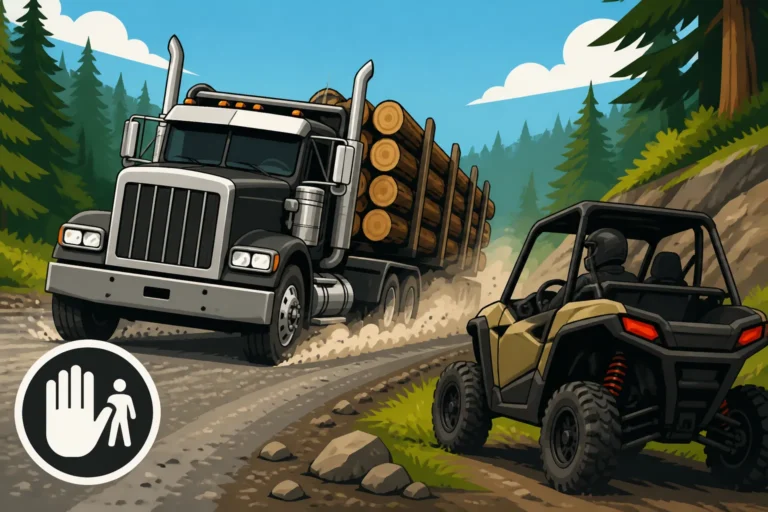
Picture this: you're cruising down a beautiful, tree-lined gravel road, enjoying the quiet hum of your engine, when suddenly, a cloud of dust billows from around the next sharp corner. Before you know it, a monstrous logging truck, loaded to the brim, is bearing down on you. This isn't a rare occurrence; it's a very real possibility on active timber roads. These trucks are often much wider than your ATV or UTV, and they move with serious momentum. On blind corners, especially those with steep grades or limited visibility due to vegetation, the risk of a head-on collision is terrifyingly high. Even if you see them coming, they take a long time to slow down, and their drivers may not see a smaller ATV or UTV until it's too late.
The golden rule on these roads is simple: always assume there's a logging truck around every corner, and always yield the right-of-way. They are working, and their schedule is tight, making them less likely to take evasive action or slow down significantly for recreational traffic. If you hear a truck approaching, pull over to the side of the road immediately, put your machine in neutral, and wait for it to pass. If you're on a narrow stretch, look for a wider pull-out or even back up to a safer spot. The dust they kick up can also be a major hazard, obscuring your vision and making the road surface unpredictable. [Sharing a Gravel Road With Log Trucks] is a skill you absolutely must master for safety. The dangers of [Dust and Blind Corners on a Logging Road] are very real and require your undivided attention.
Road Conditions and Machine Readiness
Beyond the trucks themselves, the roads themselves can present significant hazards. Timber roads are designed for heavy industrial vehicles, not necessarily for smooth recreational riding. This means you can expect conditions to be rough, often very rough. Deep ruts from heavy tires, washboards that shake your fillings loose, and loose, sharp rock are common. After a rain, these roads can turn into muddy, slick quagmires, and even small potholes can hide dangerously large rocks or fallen debris. You might encounter sections of fresh gravel, which can be loose and tricky, or areas where fallen logs, branches, or other forestry debris litter the shoulders or even part of the roadway.
For your machine, this means you need to be prepared. Good tires with aggressive tread are essential for traction on varying surfaces. Your suspension needs to be in top shape to absorb the constant bumps and impacts. It's also wise to consider extra protection for your machine. Factory skid plates might be sufficient for light trail riding, but on a timber road, you might want to consider some upgraded heavy-duty components, like an aftermarket skid plate or a stronger A-arm kit from a company like SuperATV, to better protect your machine's underside and crucial components from sharp rocks and impacts. Ensure your brakes are well-maintained, and always carry a spare tire or a tire repair kit, especially for UTVs. [Oregon Rules for Carrying Fuel] also apply, so make sure you have enough to get through these often remote areas.
Here's a quick comparison of what you might encounter:
| Road Type | Common Characteristics | Primary Hazards | Riding Recommendations |
|---|---|---|---|
| Paved Haul Roads | Main arteries, sometimes private | High-speed logging trucks, sudden turns | Treat as major highway, extreme caution at junctions |
| Main Gravel Haul | Well-graded, wide, frequently used by trucks | Dust, blind corners, heavy truck traffic, washboards | High visibility, yield to trucks, assume trucks are present |
| Secondary Spur | Narrower, rougher, less frequent truck use | Uneven surface, ruts, sharp rocks, less maintenance | Slower speeds, watch for debris, potential for active cutting |
| Abandoned/Deactivated | Overgrown, deeply rutted, potential culvert washouts | Fallen trees, impassable sections, environmental hazards | Proceed with extreme caution, often impassable for wheeled vehicles |
Rules and Best Practices for Riding Safely
Riding timber roads, especially those with active hauling, isn't just about knowing the potential dangers; it's about proactive safety and adherence to rules. Your safety, and the safety of those around you, depends on your responsible choices and preparedness.
Access Rules and Permits for Timber Roads
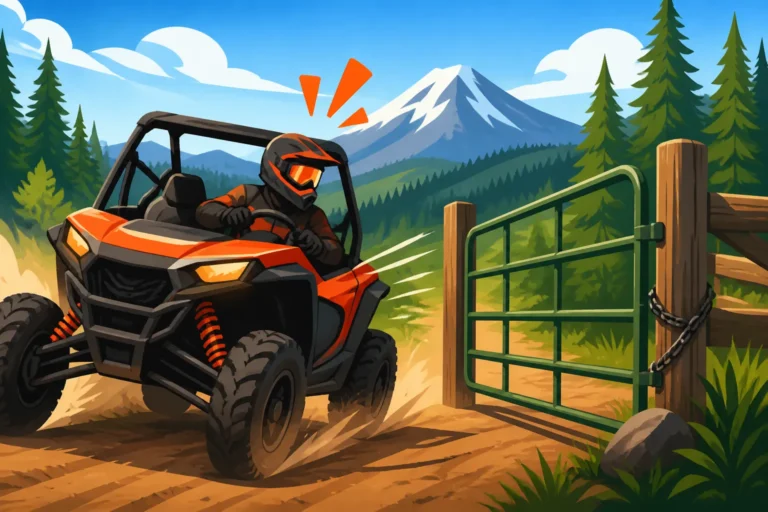
This is perhaps the most critical aspect: knowing if you're even allowed on the road, and when. The rules for [Oregon Rules for Riding Around a Locked Gate] are very clear: if a gate is locked, or if there's a "No Trespassing" sign, you cannot enter. Period. Gates are there for a reason, whether it's for safety during active logging, fire prevention, or to protect sensitive areas. Attempting to go around a gate, or worse, cutting a lock, is illegal and dangerous.
Many timber companies also post signs indicating active operations, sometimes even listing specific dates or hours. These are not suggestions. If a sign says "Active Hauling Mon-Fri," that means you should absolutely avoid riding those roads during those times. Weekends might be clearer, but always assume some activity could occur. Before you even leave home, check with the local Forest Service, BLM office, Oregon Department of Forestry, or private timber company websites for their current access policies and closures. Many now use online maps and alerts to communicate closures, fire restrictions, and active logging areas. Don't rely solely on an old map or hearsay. Sometimes, a private timber company might offer a specific permit for recreational access. [Getting a Riding Permit From a Timber Company] can be a great way to legally access some otherwise closed areas, but these permits will always come with strict conditions, especially regarding active hauling.
Rider Etiquette and Visibility
On timber roads, you are sharing the space with industrial vehicles that are large, loud, and often fast. Your primary goal is to be seen and to get out of their way.
- Assume the worst: Always ride defensively. Assume there's a truck just over the next rise or around the next bend. Approach blind corners slowly, hugging the right side of the road. If you’re riding in a group, maintain appropriate spacing and communicate hazards.
- Maximize your visibility: Wear bright, high-visibility clothing. Even in daylight, having your headlights and taillights on is crucial. Consider adding a bright flag or whip to your machine, especially if you're in areas with rolling terrain that might obscure your profile. While more common on the dunes, it's a smart idea for any area where visibility is key. [Oregon Lighting Requirements for Road Use] are enforced, and being visible could save your life.
- Yield to the big guys: Logging trucks have the right-of-way, always. If you see or hear one, pull over to the far right side of the road immediately and stop. Make eye contact with the driver if possible to confirm they see you. [Riding the Right Edge of a Roadway] isn't just a courtesy; it's a safety imperative.
- Communicate: If you have a two-way radio, tune into common industrial frequencies if you know them, or use CB channels that truckers might monitor. A simple "ATV at milepost X, heading north" can make a huge difference. If you don't have a radio, a loud horn blast can alert drivers on blind approaches, but use it judiciously so as not to startle them.
- Minimize dust: If you're following another vehicle or a truck, maintain a safe distance to avoid their dust cloud. If you're kicking up a lot of dust, consider slowing down or pausing if it compromises visibility for others.
What to Do When Roads Are Closed or Active
So you've done your research, but sometimes, despite your best efforts, you encounter a closed road or active logging right in the middle of your planned route. How you respond in these situations is critical, both for your safety and to maintain good relationships with land managers and private landowners.
Respecting Closures and Signed Warnings
It can be incredibly frustrating to hit a locked gate or a "Road Closed" sign, especially after a long drive to the trailhead. However, it's paramount that you respect these warnings. Ignoring a closure sign or attempting to bypass a gate, as tempting as it might be, is not only dangerous but also illegal. [Oregon Fines for Riding an Unopened Road] can be substantial, and you could face citations for trespassing, not to mention the potential for serious accidents. Operators of logging equipment are often working on tight schedules and may not be expecting recreational traffic, leading to dangerous encounters.
Closures are put in place for a variety of reasons: active logging, road construction or repair, environmental protection (like protecting sensitive wildlife habitat), or high fire danger. Sometimes, a gate might appear seemingly out of nowhere on a road that was previously open. This could be due to a sudden change in operations or a new fire restriction. If you find yourself in a situation where you've ridden past a sign you didn't notice, as described in [Riding Past a Gate You Did Not Notice], the best course of action is to safely and immediately turn around and exit the area. Always have a backup plan or an alternative route in mind when riding in areas crisscrossed by timber roads. This flexibility can save your day and keep you out of trouble.
Preparing for the Unexpected
When you venture out onto timber roads, especially in remote areas where active hauling might be taking place, preparedness is your best friend. Cell service is often nonexistent, meaning you can't rely on your phone for help if something goes wrong.
- Communication is key: Carry a satellite messenger or a two-way radio (like a GMRS or amateur radio if you have the license) so you can communicate even without cell signal. Let someone know your detailed route and your expected return time. This "float plan" is crucial for search and rescue if you don't check in.
- Carry essential gear: A well-stocked first aid kit is non-negotiable. Beyond that, consider carrying extra fuel, a tire repair kit, a small air compressor, and a basic tool kit for minor repairs. A good winch, maybe from a brand like SuperATV, can get you unstuck from mud or help move small obstacles. Shovels, recovery straps, and an axe or saw can also prove invaluable. [Keeping Paperwork in a Wet Climate] is also a good reminder to protect your permit and registration documents in a waterproof bag. Many riders swear by durable gear from companies like SuperATV for these kinds of situations, knowing that robust equipment can make all the difference when you're far from help.
- Navigation tools: Don't just rely on your phone. Carry physical maps and a compass, and know how to use them. A GPS unit that doesn't require cell service, with downloaded maps of the area, is also highly recommended. Understanding your location relative to main roads and potential exit points is critical if you need to find an alternative route due to a closure.
- Emergency supplies: Always have extra water, high-energy snacks, and appropriate layers of clothing. Weather can change quickly in Oregon's forests, and being stuck overnight unprepared is a dangerous situation.
By understanding the nature of timber roads, respecting the rules, and preparing for any eventuality, you can safely enjoy the incredible riding opportunities that Oregon's forests offer, even when sharing the road with active logging operations.
Disclaimer
This article is for general informational purposes only and does not constitute professional advice. Laws, prices and regulations vary by location and change over time. Consult a qualified professional for guidance on your specific situation.